


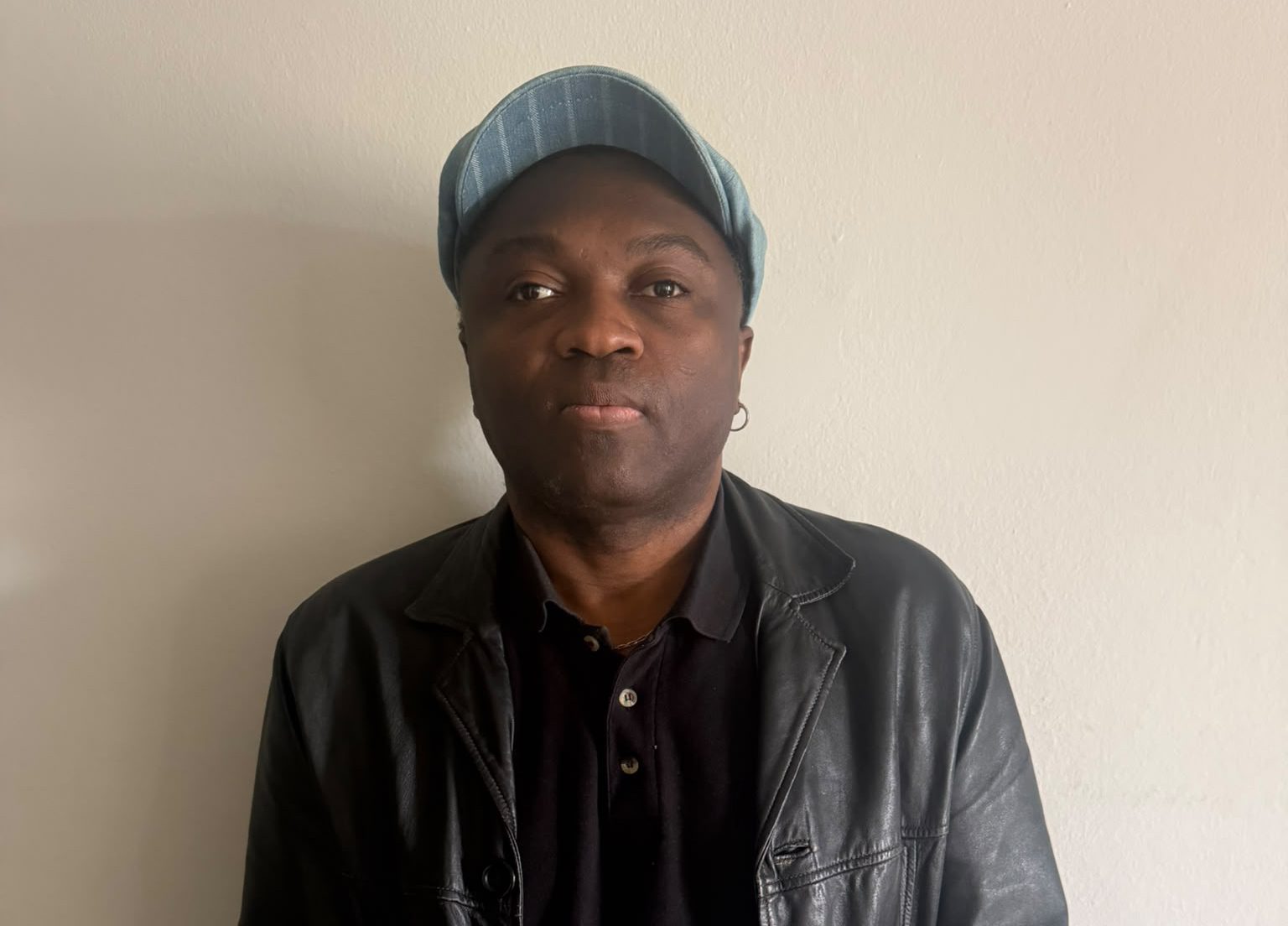
For filmmaker, author, and entrepreneur Mason Ewing, imagination has never been limited by what the eyes can see. Drawing on his childhood visual memories, his sensitivity to sound and emotion, and years of experience in filmmaking and creative design, he’s building Eli Tilmann, an original fantasy saga that he hopes to bring from the pages of his books to movie theaters around the world. Through Ewing Power Production and his plans for EPP Studios, Mason is working to create an immersive cinematic universe while pursuing a larger mission: demonstrating that blind and visually impaired artists can lead ambitious creative projects and help shape the future of entertainment.
Hi Mason, thanks so much for joining us today. We’re thrilled to have you share your thoughts and insights with our readers. You’re preparing to bring your fantasy saga, Eli Tilmann, from the pages of your books to the big screen. Can you take us back to the moment this magical universe first came to life in your imagination, and what inspired you to create a world that could eventually extend across books, films, and beyond?
Hello everyone!
I’m delighted to be here with you today, and I would especially like to thank VoyageLA, a magazine that knows how to shine a spotlight on entrepreneurs, artists, and influential individuals who contribute to the vibrancy and reputation of our wonderful city of Los Angeles.
The story of Eli Tilmann truly began five years ago, when I was still living in Europe. At the time, my mind was overflowing with ideas. I have always been passionate about four creative worlds that, in my view, blend beautifully together: reading, writing, cinema, and television series. It was this passion that inspired me to create a major fantasy saga with one particular ambition: to inspire children and teenagers around the world to dream.
I wanted to give them a character they could relate to before discovering his extraordinary destiny. That character is Eli Tilmann, a 17-year-old teenager from a Californian family consisting of his parents, Anthony and Kathy Tilmann, his twin sister Kimberly, and his younger brother Conrad, who is 10 years old in the saga.
I conducted extensive research into the great enchanted, fairy-tale, and fantasy universes that have captured the collective imagination, from the world of Alésia to Harry Potter and La Caverne de la Rose d’Or. Having been an avid reader since childhood and having devoured thousands of books over the years, I certainly did not want to reproduce something that had already been done. I wanted to build a universe with its own identity, its own rules, its own mysteries, and, above all, genuine human depth.
That is why I made a very deliberate storytelling choice: not to reveal Eli’s true nature right away. I first wanted readers to discover an ordinary teenager living in a fictional city called Jonathanland, located in the heart of California. It is a city of approximately 150,000 residents, known as the Johnlandais.
Readers get to discover his everyday life, his family, his friendships, and his first experiences of love. Eli shares wonderful adventures with his two best friends, Logan Lost and Johnny Glanderwood, and develops a romantic relationship with the beautiful Ashley. He is a teenager fascinated by anything strange, mysterious, or unexplained. Alongside his two friends, he enjoys investigating unusual events and searching for answers to things that defy explanation. Yet none of them realizes that their lives are about to change forever and that an extraordinary destiny awaits them.
The saga began to take shape with the publication of the first book in October 2023, titled “The Mystery of Athon Forrester”. The second book, “The Secret of Madala Magic”, was released in December 2024. Starting with this second volume, the story takes on an entirely new dimension. Revelations unfold, the mysteries grow deeper, and readers gradually begin to discover what truly lies behind Jonathanland. We then enter an enchanted kingdom where magic holds many surprises.
However, I would rather not reveal too much today. A saga like Eli Tilmann should be discovered, felt, and experienced page by page. I want to give VoyageLA readers the pleasure of setting out on their own journey into this universe.
There is also a deeply personal dimension to this creation. I am an author who lives in darkness today, but I experienced sight for the first fourteen years of my life. I have never forgotten what I saw: the images that shaped my childhood, the colors, the landscapes, and the emotions. My imagination has been shaped by those memories, but also by everything I continue to discover through literature, music, human connections, and my passion for cinema.
I firmly believe that creativity is not limited to what we see with our eyes. It also comes from what we feel, what we imagine, and what we carry within ourselves. This is an integral part of my artistic identity, and it is something I want to convey through my work.
Finally, Eli Tilmann is much more than a literary saga. I have envisioned a universe designed to live across multiple platforms: books, cinema, merchandise, and many other experiences. This universe is also part of a broader vision led by Mason Ewing Corporation, including a connection with our iconic character, Baby Madison, one of the flagship figures of our holding company.
My ambition is to build a universe that can transcend generations, inspire families, and encourage both children and adults to believe in magic again. Because, ultimately, that may be the true power of a great story: reminding us that something extraordinary can always be hiding just around the corner of our everyday lives.
As a blind filmmaker working across directing, screenwriting, costume design, and set design, you bring a distinctive creative perspective to your projects. Can you share a specific moment when your way of imagining or experiencing a scene led to a creative decision that might not have emerged through a more conventional filmmaking process?
This is a question that is particularly close to my heart because it lies at the very core of my artistic identity and the way I approach filmmaking.
At the moment, Eli Tilmann, which is part of our Jonathanland Universe franchise, exists in literary form. Naturally, I am eager to move on to the next stage and begin bringing the first feature film in this saga to life on screen. I realize that the word “visually” may sound paradoxical when discussing a blind filmmaker. Yet I believe that this is precisely where the richness of our difference lies: blind people have other ways of perceiving, imagining, and creating images. Our other senses become genuine creative tools.
For the production of Eli Tilmann, we are planning to co-direct the film with Massi Trevis. What makes this collaboration particularly interesting is the complementary nature of our approaches. Massi will bring his perspective as a sighted filmmaker, while I will contribute my experience and perception as a blind director. Two sensibilities, two ways of approaching a scene, and two different experiences of the world coming together to create a shared cinematic vision.
I am convinced that this creative partnership could open up new perspectives within Hollywood’s audiovisual industry. This is not simply about making a film together. It is about demonstrating that difference can become a genuine creative strength, and that cinema can be enriched by perspectives we are not accustomed to seeing behind the camera.
In fact, Eli Tilmann is far from being my first audiovisual project. Before even considering directing this ambitious saga, I had already written and directed several short films and teasers in different countries. I deeply enjoy traveling, discovering new horizons, and capturing the extraordinary landscapes our planet has to offer. Every location has its own atmosphere, energy, and story, all of which can inspire a cinematic creation.
More recently, here in Los Angeles, I directed my latest feature-length documentary, “The Pietroforte Family: War Memories“, produced by my company, Ewing Power Production (EPP). This time, I directed the project on my own rather than sharing the directing responsibilities.
I thoroughly enjoyed the experience, particularly during the editing process. There was even a rather amusing moment when I sometimes felt as though my editor was the one who couldn’t see, and that I was the one bringing the light to the project! It was quite a paradoxical situation, but it perfectly illustrates my approach to filmmaking.
When you lose your sight, you develop a heightened awareness of many details. And because I experienced sight during the first fourteen years of my life, I have retained visual memories that continue to fuel my imagination today. I am particularly sensitive to atmosphere, emotions, rhythm, sound, and all those subtle elements that can transform a scene.
Let me give you a concrete example. The cinematographer I worked with on the documentary had his own vision of the images and the storytelling. I had a different approach. When we reached the editing stage, his first proposed version did not reflect what I wanted to communicate at all. I couldn’t find the emotion, rhythm, or intention I wanted to convey to the audience. Since the documentary was produced by my company, Ewing Power Production, I naturally took responsibility for the final decision. We therefore reworked the edit according to my instructions and artistic direction.
Today, I am particularly satisfied with the result.
You see, I may be blind, but I have never stopped trusting my instincts as a filmmaker. They guide me, push me to look for details others might overlook, and allow me to stand by an artistic vision all the way through.
I believe cinema is not simply about what we see; it is first and foremost about what we want people to feel. And sometimes, seeing the world differently is precisely what allows us to tell a story in a different way.
You’ve assembled an extraordinary collection of more than 100,000 film props for EPP Studios, with plans to create elaborate sets for Eli Tilmann. Is there a particular object or set piece in that collection with a fascinating story behind it, and how do you envision transforming these physical details into the magical world audiences will experience on screen?
Since childhood, cinema has always held a special place in my life. Several major figures have deeply inspired me, including Steven Spielberg, Whoopi Goldberg, Meryl Streep, Robert Zemeckis, Eddie Murphy, Spike Lee, and many others. As I discovered their work, whether as directors, producers, or actors, I gradually began asking myself a question: How could I, too, bring something different to this industry?
I didn’t want to limit myself to production and directing. I also wanted to demonstrate that I could express my creativity in areas such as costume design and set design, drawing on my experience and sensitivity as a blind person.
Fashion, in particular, allowed me to develop my interest in clothing, fabrics, and dressing actors and actresses. As for set design, it is an area in which I particularly enjoy expressing myself. I can find myself in a room plunged into darkness, listening, sensing its dimensions, atmosphere, and vibrations, and then allowing my imagination to build an entire world. To me, a set should never simply be beautiful; it must have a soul, a story, and an emotion.
This is also what inspired me to travel around the world for more than ten years. I visited India, Cameroon, Senegal, Mexico, Italy, Spain, Portugal, Poland, the Netherlands, France, Ireland, and many other countries. My goal was to discover authentic objects, rare pieces, and historical elements that could give a genuine identity to the films, television series, and music videos we wanted to produce through Ewing Power Production.
I have always loved objects, their history, and what they can communicate. So I spent years searching, exploring, researching, and sometimes traveling great distances to find genuine treasures. Over the years, we have built a collection of more than 30,000 film props and production objects, some of which are over 100 or even 200 years old, and sometimes older. These are pieces that have stood the test of time and often carry extraordinary stories within them.
I don’t like objects without a soul. I am blind, but that certainly doesn’t mean I cannot appreciate an object’s richness, its history, or what it could bring to a scene. On the contrary, I am particularly sensitive to its authenticity, its texture, and the emotions it can convey. That is also why we have decided to create certain pieces ourselves whenever we cannot find exactly what we are looking for. We want to bring something exceptional to Hollywood.
With EPP Studios, which is planned for Georgia, in the Atlanta area, our ambition is to create magnificent soundstages and spaces capable of transporting directors, production designers, and creative teams into entirely different worlds. We want to offer magical, mysterious, and spectacular environments, with sets that can inspire some of the industry’s leading professionals.
I know that many production companies sometimes struggle to find specific props, costumes, or other items. I hope that, as EPP Studios develops, these professionals will one day be able to turn to us. Our collection and our future online platform showcasing these objects will allow them to explore what we have available without necessarily having to travel around the world to find the piece they need.
We also hope to develop partnerships with major studios, particularly Tyler Perry Studios. I would love for their teams to discover our collection, our application, and the opportunities our future soundstages will offer. With tens of thousands of objects at their disposal, the creative possibilities will be tremendous.
But if there is one object whose story touches me particularly deeply, it is a notebook I purchased a little over two years ago. It belonged to a young French soldier named André Brissiaud, who was only 21 years old when he lost his life during the First World War.
This notebook is authentic and genuinely belonged to him. It contains several beautiful poems that he wrote himself. When I discovered this object, I immediately felt a connection to what it represented. Behind those pages lies the life of a young man: his thoughts, emotions, words, and a story that has survived across the decades.
For me, owning this notebook is a genuine honor. It is not simply an antique item intended to be displayed on a film set. It is a historical and human testimony. I hope we can pay tribute to him, as well as to all veterans, particularly through the war film I wish to make. The memory of André Brissiaud deserves to be preserved and passed on to future generations.
To transform all these objects into cinematic worlds, I will also be able to count on Vittorio Sodano, a friend and collaborator with whom I am particularly happy to work. He has remarkable talent in special effects and makeup effects. His career is impressive, particularly his work on Apocalypto, a film that received several Academy Award nominations. He has a genuine ability to transform an idea into something tangible and spectacular. He also has a star on the Hollywood Walk of Fame.
I am convinced that our complementary talents will be a real strength. The objects will bring their own history and authenticity; Vittorio will help give them a spectacular visual dimension; and I will contribute my artistic vision, my instincts, and my particular way of experiencing spaces and textures. My other senses, my imagination, and the work of our entire team will all play a part in this creative process.
This is exactly what I want to achieve with Eli Tilmann. I don’t want audiences to feel as though they are simply looking at sets built for a movie. I want them to feel as though they are stepping into Jonathanland, discovering places that seem to have existed for centuries, almost touching objects filled with history, and allowing themselves to be carried away by the magic of this universe.
Ultimately, a beautiful object can tell a story before an actor even delivers the first line. All it takes is knowing how to give it the right place. And with EPP Studios, Vittorio Sodano, and all our teams, that is precisely what we want to achieve: to make every object, every set, and every detail a living part of our cinema.
You’re planning to co-direct the saga with Massi Trevis, bringing together your different experiences and approaches to filmmaking. How did your creative partnership begin, and can you share a moment when collaborating with Massi helped you discover a new possibility for telling a story visually?
Our collaboration with Massi Trevis began a few years ago here in the United States, in Los Angeles. At the time, I was looking for a cinematographer for a feature film project. It was thanks to Vittorio Sodano that we met: he acted as an intermediary and introduced us. There is also a funny little coincidence in this story: all three of us have Italian roots!
But even before discussing cinema and professional projects, Massi and I first built something essential: a friendship, a strong connection, and a genuine relationship of trust. For me, that is fundamental. When you are a blind director and producer working with sighted people, there is an important dimension that many people may not fully understand. We need to know that we can rely on the people around us, that communication will come naturally, and that everyone will respect one another’s sensitivity and creative vision.
That trust has also grown within our artistic circle, alongside Vittorio Sodano, Andrea Miraglia, and other collaborators. Over time, we have built a genuine team, united by a shared passion for cinema and creativity. Today, I know that we are ready to embark on the wonderful adventure that is the Eli Tilmann saga. I have no concerns about it. On the contrary, I feel completely confident and cannot wait to get started.
I have had the opportunity to discover Massi’s work, follow his career, learn from his experience, and understand his approach to filmmaking. In turn, he has been able to discover my creative universe, my work, and the way I develop a story. Massi has an impressive professional background, including extensive experience working on productions for Prime Video and other major players in the audiovisual industry. We each bring something valuable to this collaboration.
And that is precisely where our partnership takes on its full meaning. Massi brings his perspective as a sighted director and cinematographer, while I contribute a sensitivity shaped by my experience as a blind director, my visual memory, and my own way of experiencing and interpreting scenes. I firmly believe that our differences are not obstacles; they are a genuine source of artistic richness.
I sometimes like to describe our collaboration with a rather unusual expression: four eyes to explore the magic, four ears to bring fantasy to life, two senses of smell to enrich the sensory experience, and, on my side, the sense of touch to enhance and elevate our creative universe. It is a visual way of expressing the fact that we do not necessarily perceive the world in the same way, but that we can bring our different sensitivities together to create something even richer.
I deeply believe that filmmaking is a collective effort. A great saga is never built around a single vision. It comes to life through the meeting of different talents, experiences, and sensibilities. With Massi, that is exactly what I want to achieve: to turn our complementarity into a strength in the service of Eli Tilmann.
Our ambition is to offer audiences a powerful, immersive, and sensory cinematic experience. And I believe that when viewers discover what Massi Trevis and I are capable of creating together, they will understand why I place so much importance on this collaboration. For us, the magic will not exist only on screen; it will also emerge from the way we work together.
Bringing an ambitious fantasy franchise to life requires more than imagination. It also means building a production company, securing financing, finding collaborators, and navigating the realities of independent filmmaking. What has been the most difficult part of turning Eli Tilmann from a creative vision into a production plan, and what has that process taught you about perseverance and entrepreneurship?
Embarking on the production and directing of a fantasy saga like Eli Tilmann, part of our Jonathanland Universe franchise, is certainly an undertaking that requires an enormous amount of work, determination, and patience. Imagination is the starting point, but turning a literary universe into a true cinematic experience means building an entire structure around the project: bringing together talented people, organizing production, securing financing, and convincing partners to believe in the vision.
We are currently in the pre-production phase. The three companies involved in developing this adventure, Ewing Power Production, EPP Studios, and Madison Channel, are working, among other things, to secure the funding needed to bring the first installment of the saga to life. We envision a feature film of approximately two hours, with the ambition of giving it a truly international reach.
Our hope is to collaborate with a major distributor or leading studio such as Warner Bros., Paramount, Disney, 20th Century Studios, Universal, or another major industry player that might be interested in our universe. We dream of seeing Eli Tilmann released in movie theaters around the world: across the Americas, Europe, Asia, Africa, Oceania, and beyond. It would be a tremendous achievement for our entire team and a wonderful recognition of all the work that has gone into creating this universe.
The greatest challenge, therefore, remains financing. But we have to be realistic: securing the resources needed to produce an ambitious feature film is a challenge faced by many producers, including those in Hollywood. It is not a difficulty related to my disability. It is simply a reality of the independent film industry, where you constantly have to champion your project, present your vision, and convince partners to commit to it.
That is also why we want to use our various media appearances to raise awareness of Eli Tilmann and attract the attention of investors, particularly in Los Angeles. We hope to meet people who will take the time to discover our project and place their trust in us: Massi Trevis, Vittorio Sodano, myself, and our entire team. I am convinced that once people truly discover this universe, they will understand its potential.
A great adventure is taking shape in Jonathanland: a war between magicians and sorcerers, filled with mysteries, characters, and stakes that will gradually grow in significance. I can assure you that we have some wonderful surprises in store, and audiences will not be disappointed!
I would also like to thank the people who have stood by me and supported me from the very beginning. My godparents, Eric and Eliza Roberts, have given me invaluable support across my various projects. Eric Roberts notably wrote the foreword to the second volume of the Eli Tilmann adventures, The Secret of Madala Magic. As for the first volume, The Mystery of Athon Forrester, its foreword was written by Stephen Nemeth, a producer at Rhino Films and a member of the Academy of Motion Picture Arts and Sciences. These expressions of trust mean a great deal to me, and I am deeply grateful to them.
I would also like to take this opportunity to reach out to investors and partners who may wish to become part of this adventure. Anyone interested in financing or helping develop the saga can contact me directly, particularly through my social media channels or LinkedIn, under my name or through the Mason Ewing Corporation page.
Above all, this process has taught me one important lesson: you have to believe in your dreams, but you must also believe in your projects strongly enough to fight to make them happen. Having an idea and simply waiting for it to become reality is not enough. You have to work, persuade people, start over, accept obstacles, and keep moving forward, even when the road seems difficult.
Personally, I love fighting for the things I am passionate about. The audiovisual industry is part of my life, and it is a field in which I want to continue building, creating businesses, and innovating. I believe in my work, my team, our projects, and our ability to see them through to the end. I also have faith in God and trust in our good fortune.
Ultimately, entrepreneurship has taught me that perseverance is essential to turning a vision into reality. Today, Eli Tilmann is no longer simply an idea I have been carrying with me for several years. It is a universe that is growing, a team preparing to bring it to life, and a cinematic adventure that we want to share with the entire world.
Your ambitions for Eli Tilmann extend beyond a single film, with plans for an interconnected universe, merchandise, and stories that can reach audiences of different ages and abilities. When you imagine the first audience experiencing Jonathanland on screen, what do you most hope they will feel or discover, and what would bringing this project to life mean to you personally after more than a decade of working in film?
Above all, I hope audiences will discover that Eli Tilmann is much more than just a fantasy film. I want them to feel the passion, teamwork, and family spirit behind this production. At EPP Studios, we want to build this adventure together by bringing together talented people with different backgrounds, skills, and creative perspectives.
I am thinking in particular of Vittorio Sodano, Massi Trevis, Andrea Miraglia, and Samantha Kuester, who will be responsible for the costumes and bring her own artistic signature to the saga. Other collaborators will also play an important role, including Claudius Erhardy, COO of Mason Ewing Corporation, who has extensive professional experience, including his time working with Walt Disney in Europe. Each person will contribute their expertise, experience, and creativity to bring Jonathanland to life.
The first film will be a great adventure, filled with mysteries, discoveries, and unexpected twists. But it will represent only the gateway to a much larger universe. We want audiences to be eager to discover what comes next, reconnect with the characters, and perhaps even immerse themselves in the various products and experiences that will accompany the franchise.
We are also developing merchandise that will have its own stories. For example, there will be Cocoum Valoum, a carbonated drink imagined within the world of Jonathanland and created by Lili Smooth, a resident of the city. There will also be Madala Magic lollipops, which conceal an astonishing story involving elves. I would rather not reveal too much just yet, because some surprises deserve to be discovered at the right time!
But our audience will always be at the heart of this adventure. We are creating this saga for them, and we will need their support. I like to say that viewers will be our eyes and ears: their reactions, impressions, and feedback will help us understand what works, what moves them, and what we can still improve. We want to grow alongside them, listen to their expectations, and continue delivering work that becomes more accomplished with every new installment.
On a personal level, seeing Eli Tilmann become a feature film would already be an extraordinary achievement after all these years of working in the audiovisual industry. But my dream goes even further. I would love to see the saga supported by a major American company, such as Warner Bros. or another leading industry player, and receive an international release.
I am also very eager to find the actor who will portray Eli Tilmann. He is a character I imagined, created, and developed throughout the writing of the books. I am looking forward to meeting the person who will bring him to life and truly match the image I have carried within me from the very beginning. I am convinced this could be an exceptional role.
The universe continues to expand. The third book, Le Sortilège des Nesh, is currently in development and promises to explore magic and fantasy even further. Readers and, hopefully, moviegoers in the near future will therefore have many more discoveries ahead of them.
Another tremendous source of pride would be seeing Hollywood actors agree to join this adventure and, above all, place their trust in me as a blind director. I would like this project to help change perceptions and demonstrate that visual impairment does not prevent someone from leading a team, pursuing an artistic vision, or directing an ambitious film. I am not asking people to trust me out of compassion. I want them to discover my work, my abilities, and what I can create alongside my collaborators.
And then I imagine one very specific moment: the day Eli Tilmann finally premieres in movie theaters across the United States before making its way to audiences on other continents. Being able to share that moment with all the teams who contributed to this adventure, perhaps shed a few tears of joy, and celebrate everything we have accomplished together… That would be an extraordinary gift, a deeply personal recognition, and an emotion that would be difficult to describe.
I even dream that one day, at our future theme park, Madison Park, we could create an entire attraction dedicated to Eli Tilmann and his universe. Imagine visitors stepping into Jonathanland and experiencing part of the adventure for themselves! To me, that would be the natural next step for a franchise that would no longer be limited to books and films, but would become a fully immersive experience to share with others.
Finally, there is another dimension that is particularly close to my heart: opening more doors to the creative industries for blind and visually impaired people. I want to show them that they can find their place in film, fashion, music, and many other fields. This is also one of the reasons I am developing AGIA, A Glance Into Art, a school designed for blind and visually impaired people, which would be located within EPP Studios and Track Records. The goal would be to give them the opportunity to receive training, develop their talents, and build their professional futures in the creative industries.
Ultimately, the success of Eli Tilmann would mean much more to me than a successful film. It would represent the fulfillment of a dream, the reward for a collective effort, and proof that a vision can become reality when you give yourself the means to achieve it. And if this adventure can also open doors for other people with disabilities, then its impact will be even greater.
That is what I want to convey through Eli Tilmann: magic, dreams, sharing, and, above all, a deep conviction. The limits society imagines for us must never become the limits of our ambitions.
Links:
Popular
-

Mason Ewing Is Bringing a World of His Imagination to Life Through Film
-

Dr. NanaEfua Afoh-Manin Is Rethinking What It Means to Be Healthy, Not Just Healed
-

Portraits of the Valley
-

LA’s Most Inspiring Stories
-

Greg Hex Is Turning the Everyday Kitchen Knife Into a Modern Design Object
-

Rick Norris Learned That Building a Successful Business Means Building a Life You Actually Want to Live