


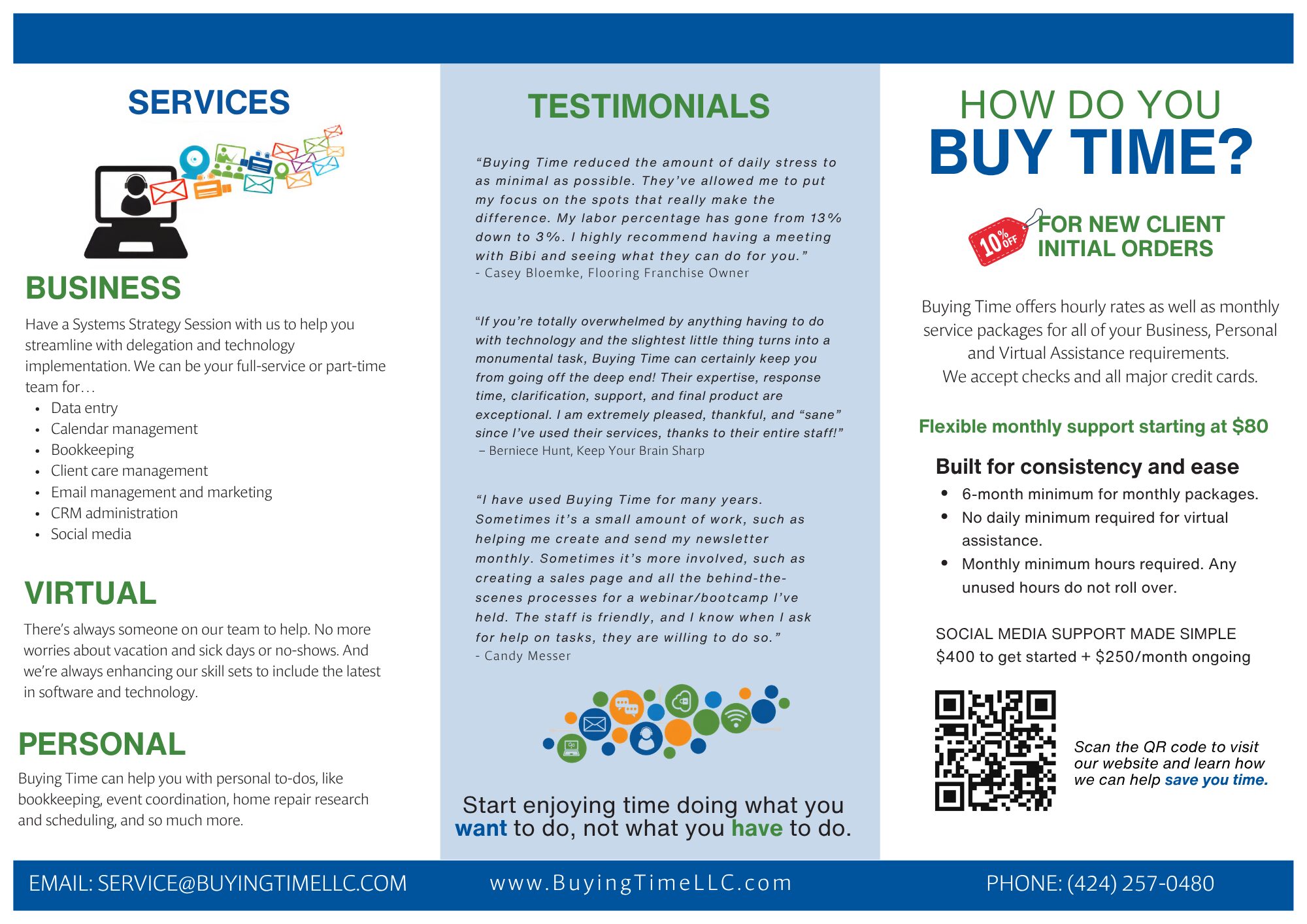
After more than two decades in corporate leadership, Bibi Goldstein founded Buying Time to help entrepreneurs spend less time managing every detail and more time growing their businesses. Drawing on years of operational experience, she works with business owners to overcome the mindset barriers that make delegation so difficult, replacing overwhelm with confidence and sustainable systems. Through coaching, workshops, and hands-on operational support, Bibi is helping entrepreneurs discover that the greatest transformation often comes not from doing more, but from learning they don’t have to do it all alone.
Hi Bibi, thanks so much for joining us today. We’re thrilled to have you share your thoughts and insights with our readers. After more than two decades in corporate leadership, you chose to launch Buying Time to help entrepreneurs reclaim one of their most valuable resources. Looking back, what was the defining moment that made you realize your experience could have an even greater impact helping small business owners than staying in the corporate world?
I’m not sure I ever really thought about the impact; really, it was often difficult to try things out in corporate with so much red tape – you couldn’t just try a new software platform or put people resources to something to see if it would work. I think my defining moment was when I began to move towards the virtual-only services at Buying Time. I had a client that asked if we could help her with a PowerPoint presentation, and I had done so many of those during my corporate career. There was this moment when I realized how many skills I had acquired over the years that could benefit a solo entrepreneur.
Throughout your career, you’ve helped organizations become more efficient, but you’ve also seen the human side of leadership. Can you share a story about a business owner or team whose transformation surprised you not just because their systems improved, but because their confidence, culture, or quality of life changed as well?
We had a coaching client who was working primarily one-to-one with her clients and some workshop-type things, and she was using virtual assistants or contractors to help manage some aspects of her business, but then she was also managing those individuals now. She came to us because of our team approach and having one point of contact, and from 2013 to 2022, we were the entire operations team. When she decided she wanted to hire employees, we helped in the screening process, hiring, onboarding, and training. She still utilizes our team when someone is out sick or going on vacation. I never anticipated that someone would use us in this way, and now it’s an example I use often with potential clients to show the benefits and flexibility of our team vs individual approach.
Letting go of day-to-day tasks can be one of the hardest things for entrepreneurs. Was there a conversation or experience that showed you the biggest obstacle isn’t usually the workload itself, but the mindset around delegation? How did that shape the way you coach clients today?
The biggest obstacle is always mindset, primarily ego, when it comes to delegating. I don’t mean ego in a negative way either; there’s this idea we all have, whether it’s things that get done around the house or the way a report needs to be completed, that it needs to be done our way. Getting entrepreneurs to back down and give someone the space to get to the same outcome regardless of process or method is literally the paralysis of delegating. This encompasses the “it’s just easier if I do it myself”, “I don’t have time to train someone”, “I don’t even know what to start delegating”.
You helped implement operational improvements that generated significant savings during your corporate career, yet you’ve chosen to focus on smaller businesses where every decision feels personal. What have you learned about the unique strengths and challenges of entrepreneurs that you didn’t fully appreciate until you started working alongside them?
When you’re operating on a smaller budget, you have to make decisions that are grounded much more in what the urgent priority is today, and so entrepreneurs have a tendency to focus much more on what things will cost them instead of what value they could bring in. This was a tough shift for me because in corporate there was a timeline: it’s going to cost us this much now for this long, but then it will bring in this – entrepreneurs don’t often have the luxury of that kind of timeline. As far as strengths go, it takes a strong constitution to even take the leap into entrepreneurship, and so that being a foundational piece makes most of them so much more resourceful than anyone I ever encountered in the corporate world.
As a speaker and workshop facilitator, you’ve watched business owners have “aha” moments in real time. Is there one workshop, question from an audience member, or breakthrough you’ve witnessed that perfectly captures why you’re so passionate about helping people work on their businesses instead of in them?
I did a workshop once for a company in the real estate industry for about 15 of their management team going through some best practices on time management and delegation techniques. There was one individual who was quiet for most of the 2 1/2 hours until close to the end, when we talked about color coding calendars based on the appointment type; you could see there was a lot of processing going on but no real interaction. Finally, after this portion, he says, “I’m not sure if I feel dimwitted for not knowing this stuff already because it all seems so simple, but now I understand why I have obfuscated so much in my life”. I had to look up the word and realized that he did it even in his observation……
Looking ahead, what do you hope the lasting legacy of Buying Time will be? Beyond helping clients become more organized or productive, what kind of freedom or transformation do you hope they’ll experience because they learned to spend their time differently?
I have always believed that by trying to make things easy for our team to support clients, it would then give them the ability to continue to seek out support regardless of whether it was with us or not. Exercising that delegation muscle is critical to growth, and it’s even more important for our overall wellbeing. When our clients share with us that they felt relief or comfort that everything wasn’t on their shoulders is where the real transformation occurs. By speaking it, they empower themselves to continue seeking out help.
Links:
- Services: https://buyingtimellc.com/services/
- Book a Consultation: https://buyingtimellc.com/book-consultation/
Popular
-

Portraits of the Valley
-

LA’s Most Inspiring Stories
-

Greg Hex Is Turning the Everyday Kitchen Knife Into a Modern Design Object
-

Rick Norris Learned That Building a Successful Business Means Building a Life You Actually Want to Live
-

How Olivia Rush Turned Survival Into a Mission to Help Others Keep Going
-

How Bibi Goldstein Is Helping Entrepreneurs Reclaim Their Time by Embracing the Power of Delegation