




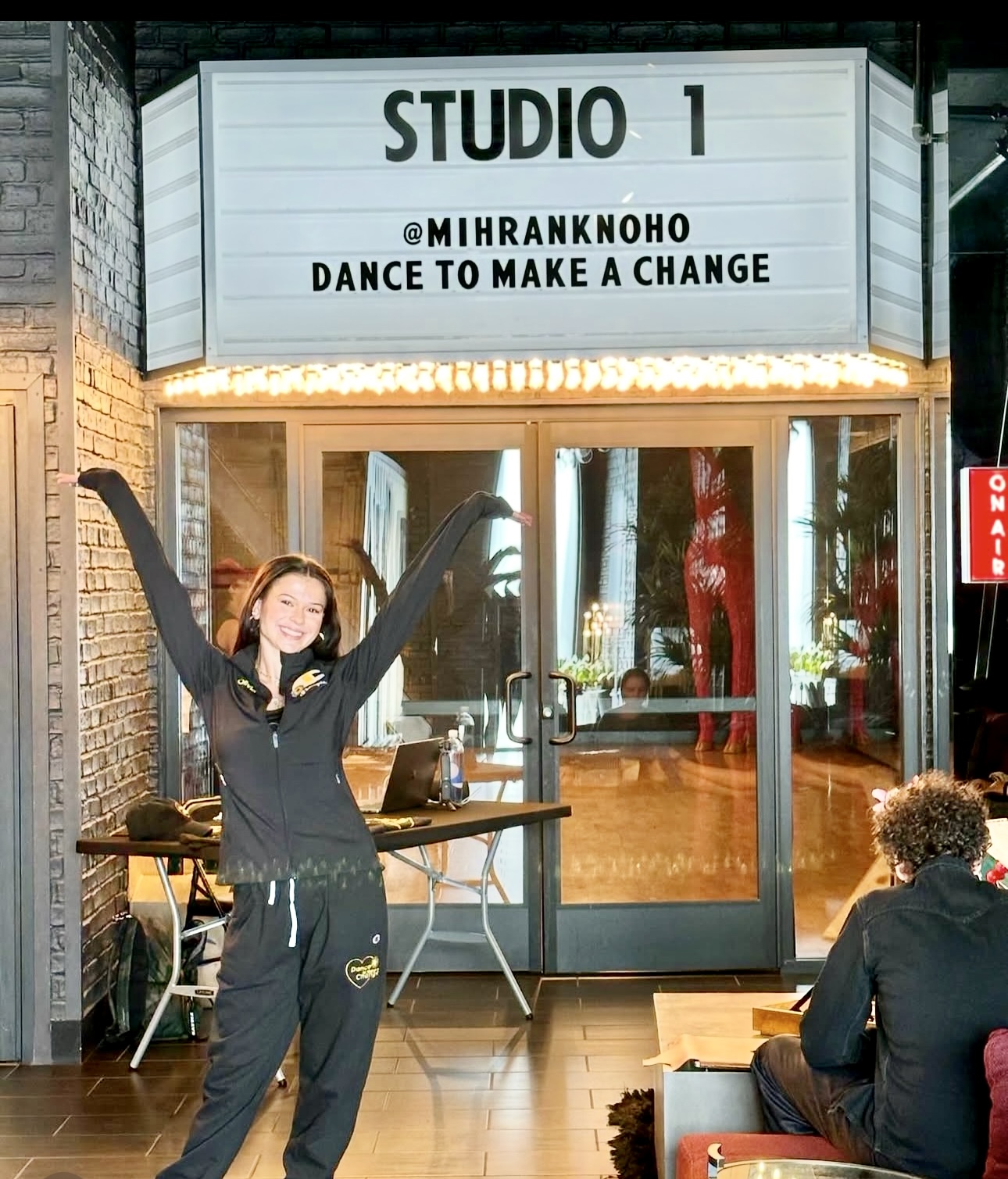
For Olivia Rush, dance became a lifeline long before it became a career — and the experiences that challenged her most ultimately shaped the mission behind her work. As a dancer, choreographer, model, and founder of Dance to Make a Change, she is using creativity to create safer spaces, open conversations around mental health, and remind people that they are never alone. Her story is one of resilience, faith, and the belief that sometimes the most meaningful legacy is simply helping someone feel seen.
Hi Olivia, thanks so much for joining us today. We’re thrilled to have you share your thoughts and insights with our readers. Your work spans dance, modeling, choreography, philanthropy, and leading your own nonprofit. Looking back, what life experiences inspired you to use your creative career as a platform for mental health awareness and suicide prevention?
Growing up, dance was my safe space. I struggled with my mental health for as long as I can remember, and I experienced a tremendous amount of loss and instability at a very young age. My dad became sick and disabled when I was six, my oldest sister was terminally ill with cancer for years, and I essentially grew up in the chemotherapy wing of a hospital. I lost both of my grandparents by the time I was nine and ten, along with so many of the family members I had actually been close to, and my home life wasn’t always stable or safe. Dance became the one place where I could escape everything happening around me. It gave me somewhere to put emotions I didn’t have the words for yet, and for a long time, it was the place where I felt most like myself.
Unfortunately, even that safe space didn’t always stay safe. I experienced severe bullying throughout my childhood and adolescence in the dance industry. At 12 years old, I was the youngest member of my studio’s adult company, with the next youngest dancer being 17, and as the years went on, the bullying and abuse only became worse. Just after my 14th birthday, it culminated in an incident that left me with a traumatic brain injury. I was told by doctors that I would never dance again and that I should simply be grateful to be alive.
What followed was an incredibly dark period of my life. I spent over a year going through extensive therapies with very little improvement, physically or mentally, and I genuinely didn’t know what my future looked like. I had already experienced so much loss in my life, and suddenly I felt like I had lost the one thing that had always helped me survive everything else.
Then, somewhat against my will at the time, my mom pushed me to try dancing again. And somehow, the very thing I thought had been taken away from me became the thing that helped bring me back to life. Dance reached a part of me that therapy and rehabilitation hadn’t been able to reach yet. It reminded me who I was.
Those experiences completely changed the way I looked at my creative career. I knew firsthand how powerful dance could be, but I also knew how much damage could be done when the spaces that are supposed to nurture young artists fail to protect them. Mental health and bullying are very real issues, especially within the dance industry, and I wish I could say the bullying I experienced ended with that chapter of my life. Unfortunately, I have continued to encounter it in different forms throughout my career, even today.
But that has only made my purpose clearer. I didn’t want dance to simply be something I performed. I wanted to use the platform and the second chance I had been given to help change the culture of the industry I love and create the kind of spaces I wish I had always had-spaces where people feel seen, heard, valued, and welcome.
Dance gave me a voice before I always knew how to use words, and ultimately, it gave me a piece of myself back when I thought I had lost it forever. That is a huge part of why I knew my creative career had to stand for something bigger than myself.
Your upcoming September nonprofit event supports an incredibly important cause. Can you share the story behind how your organization began, and was there a particular moment that made you realize this mission was one you felt called to champion?
For a long time, I hesitated to share my story. Part of that was because of the stigma surrounding mental health, but I think an even bigger part was that I never wanted the things that happened to me to define me. I never wanted to be seen only through the lens of what I had survived. I had fought incredibly hard to reclaim my life, my identity, and my future, and I wanted to be known for what I chose to do with those experiences—not simply for having endured them.
My relationship with mental health and suicide prevention is incredibly personal. I’ve struggled with my mental health for as long as I can remember, including depression, anxiety, eating disorders and body dysmorphia, among other things. I’ve survived multiple suicide attempts of my own. I’ve lost close friends to suicide. I’ve also been on the other side of those moments—talking people down when they were considering taking their lives and intervening when people were actively attempting. I know what it feels like to be the person who can’t see a way out, and I know what it feels like to desperately try to convince someone you love that there is still a reason to stay.
But growing up, you didn’t talk about those things. Mental health was something people whispered about, hid, or were ashamed of. For a long time, I carried my experiences the same way.
That began to change when I met the team behind a clothing brand called Izzy Be at DancerPalooza. Their brand centered around female empowerment and anti-bullying, and they asked me to be a part of one of their shoots. I was incredibly reluctant. At the time, I had braces, struggled with cystic acne, and was deeply insecure about the way I looked. I remember seeing the beautiful, polished Disney girls who modeled for them and thinking, I’m not one of those girls. I couldn’t understand why they would want me in front of a camera alongside them.
But the Izzy Be team never made me feel like I didn’t belong there. They welcomed me exactly as I was, encouraged me, and slowly brought me out of my shell. What started as something I was honestly terrified to do became an experience that helped me build confidence in myself and begin seeing myself differently. As they got to know me beyond what I looked like and learned more about what I had been through, they began encouraging me to share my story. They kept telling me there were people who needed to hear it and that what I had survived could help someone else.
I didn’t believe them.
I genuinely didn’t think anyone would care about what I had been through or what I had to say. But one night, reluctantly and with absolutely no expectations, I decided to share part of my story on YouTube.
By the time I woke up the next morning, everything had changed. My messages and DMs were filled with people thanking me for sharing, telling me their own stories, asking me for advice, and telling me that hearing what I had survived made them feel understood or less alone. That same morning, I was already talking to people, giving advice, sharing what I had learned through my own experiences, and trying to help however I could.
I remember walking into my mom’s room and telling her, “This is it. This is why it happened. I’m supposed to help people with my experiences.”
That moment meant so much more to me than simply realizing people cared about my story. I have always been someone who believes that everything happens for a reason. Even when I don’t understand something, I try to find meaning in it and trust that God can have a purpose for things I can’t make sense of yet. But for years, this was one of the things I couldn’t understand. I couldn’t figure out why it had happened to me, what I had done to deserve it, or what possible reason there could be for something that had caused so much pain.
And then, almost overnight, I could finally see something on the other side of it.
It didn’t make what happened okay, and it didn’t mean I suddenly understood every reason behind it. But for the first time, I could see that something meaningful could grow from it. I realized that telling my story didn’t make me a victim of it. I could talk about what happened to me without giving those experiences the power to define who I was. I wasn’t sharing my story because I wanted anyone to feel sorry for me. I was sharing it because I had survived it—and if my survival could help someone else survive too, then I was going to use it.
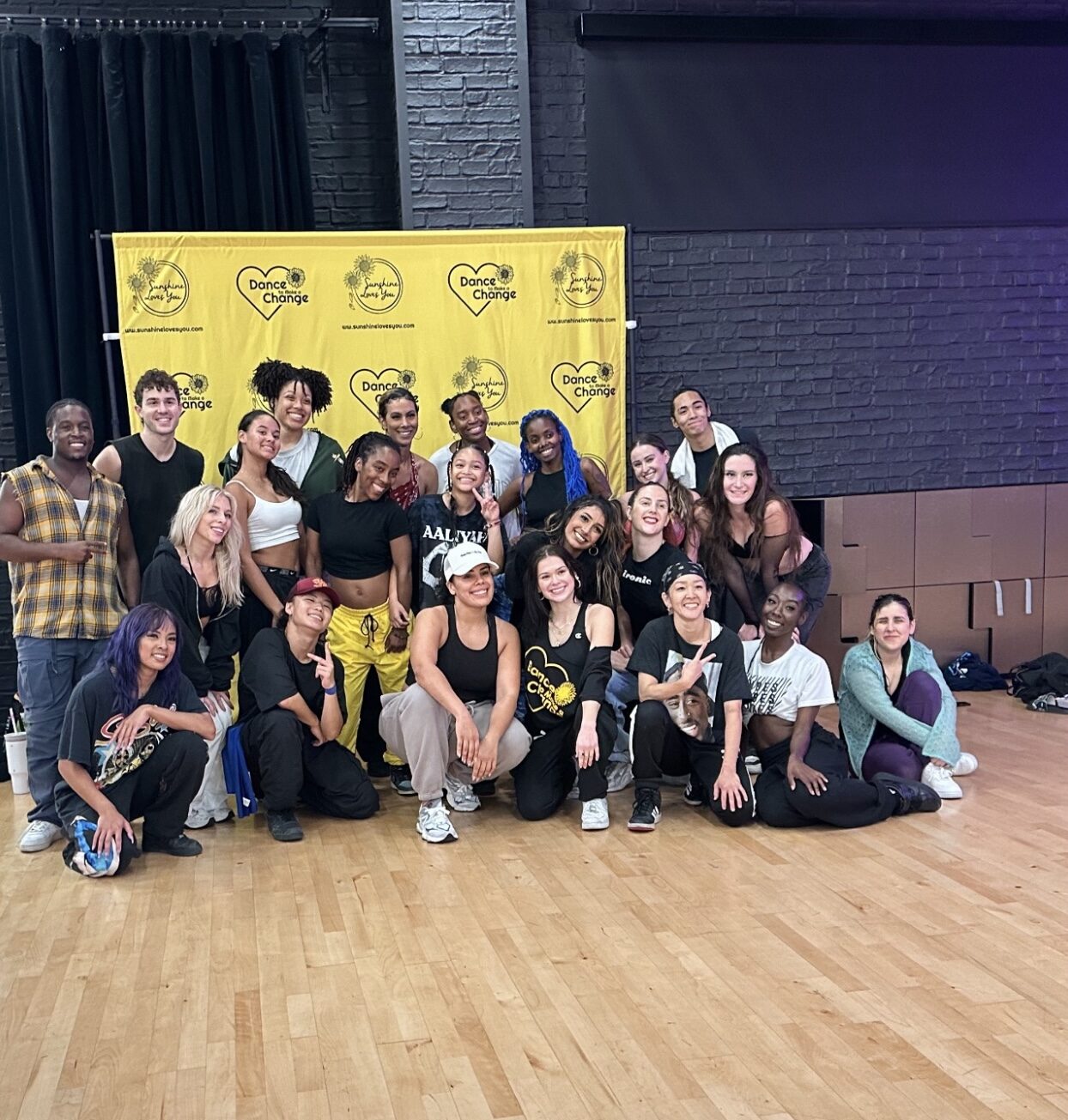
Less than a week later, I created Sunshine Loves You, an anonymous, peer-based support system where people could talk openly about what they were going through without fear of judgment. And only three months after that, I knew I had to bring dance into the mission.
At 17 years old, with no idea what I was doing other than trusting that this was what I felt called to do, I decided to host a free, donation-based dance class in New York City. I didn’t know if anyone would show up. I didn’t have a massive organization or an elaborate plan behind me. I had an idea, faith, and this overwhelming feeling that I needed to follow where it was leading me.
More than 30 people showed up.
For me, that was the confirmation.
That first class became Dance to Make a Change. What had started only three months earlier with me reluctantly pressing “upload” on a YouTube video had become a room full of people coming together through dance for something bigger than any one of us.
I truly believe helping other people is part of my soul’s purpose here on Earth. I can’t change what happened to me, and I can’t bring back the people I’ve lost. But I can decide what I do with the life and the second chances I’ve been given. If sharing my story makes one person feel less ashamed of theirs, if creating a safe space gives someone somewhere to turn, or if using dance can help someone find even a fraction of the hope it gave me, then every time I chose to keep going becomes part of something bigger than just my own survival.
Balancing a creative career while running a nonprofit can’t always be easy. Was there a season when you found yourself questioning whether you could do it all, and what helped you keep moving forward with both your artistic and philanthropic goals?
Absolutely. The few years leading up to my move to Los Angeles were some of the darkest and lowest years of my life. I actually attempted to move to LA twice before finally making it here on my third attempt. Looking back, that period taught me more about perseverance, faith, and what it really means to keep going than almost anything else I’ve lived through.
The first time I was supposed to move, I was 20 years old and only about a month away from leaving. Almost unbelievably, just a month earlier, my mom had transferred both her and my dad’s Power of Attorney to me, never imagining I would actually need to use it anytime soon.
A month later, my mom was in the ICU with COVID pneumonia, where she remained unconscious for almost two months. She coded twice and had to be resuscitated. At 20 years old, I suddenly found myself responsible for making medical decisions for my mother while she couldn’t make them herself. I had my five siblings beside me and we made those decisions as a family, but the weight of having the final responsibility fall to me was enormous.
My dad was already disabled and my mom had been the sole provider for our family, so LA stopped mattering. Dance stopped mattering. My career stopped mattering. My family needed me.
I went through everything I had saved from my career helping cover our mortgage, bills, groceries, and whatever else I could. When my mom finally came home, she was still incredibly sick, on oxygen, and needed care for a long time. I stopped dancing completely to help take care of her, and when my savings eventually ran out, I started working full-time at Ulta Beauty to contribute whatever income I could.
But somewhere along the way, I could feel myself disappearing. Without dance, I was lost again.
Eventually, I fought my way back to it. My days became 5 a.m. work shifts, a noon bus to New York, training all day, and getting home around 1 a.m. It was exhausting, but I could finally feel pieces of myself coming back. By the end of 2022, my family was becoming more stable, I had spent a month training in Los Angeles, and I finally felt ready to try again. I had a flight booked for the second week of January 2023 to come back and look for apartments.
Then, on January 5th, my childhood home burned to the ground.
We lost everything.
There was no packing a bag or grabbing the important things. There was no preparing for what came next. One minute we had a home filled with our lives, our belongings, our memories-and the next, we were standing in the cold, pouring rain in the middle of the night with nothing but the clothes on our backs and whatever happened to already be in our cars, trying to figure out where my entire family was going to sleep that night.
We ended up at an extended-stay hotel off the highway. Everything I owned was gone. And somehow, the next morning, the rest of the world kept moving. I still had a job. I still had responsibilities. I had to go buy makeup, skincare, and whatever inexpensive clothes I could find just so I could get dressed and go to work. I still went to New York to assist and teach.
My entire life had burned down, and somehow I was still expected to keep living it.
Then, two days later, my dad suffered a massive stroke.
The bleeding was so severe that he was unconscious, and we were told to prepare ourselves and say goodbye. I called family members who needed the opportunity to see him. We met with a grief counselor. Our pastor prayed over him. Doctors told us we would be lucky if he survived the weekend.
By the grace of God, he did.
He’s still here today, although the stroke left the entire right side of his body paralyzed and took away his ability to speak. But at that moment, within 48 hours, I had gone from losing my childhood home and everything I owned to preparing myself to lose my father too.
The year that followed brought even more. We spent months living in a hotel and over a year displaced from our home. Contractors took advantage of our family and our insurance claim and nearly left us homeless. My relationship of almost five years ended when I discovered the person I had loved since high school had been cheating and essentially living a double life. All of that existed alongside work, financial, and family responsibilities that never stopped simply because I was struggling.
Eventually, my depression reached one of its lowest points. My doctor told me I had become treatment-resistant, and as my condition continued worsening, I was prescribed Abilify. That medication ultimately helped save my life, but its side effects—particularly significant weight gain and the comments that followed—eventually contributed to a relapse of my eating disorder.
There were moments when, logically, I felt like I had absolutely no reason to believe anything was going to get better.
And yet, somewhere deep inside of me, there was this tiny voice that kept whispering, “Have faith. It’s going to be okay.”
Sometimes I believed it. A lot of the time, I didn’t. But I believed God had put that message on my heart for a reason, so when I couldn’t find enough hope within myself, I held onto His.
In November of 2023, I came back to Los Angeles alone for a month to train, perform, and see what my life could look like if I actually chose it. Deep down, I knew I wouldn’t survive another year living the life I had been living. I had spent years taking care of everyone and everything around me, and I realized it was finally time to choose myself.
Almost serendipitously, while I was talking about wanting to move, this bubbly girl jumped into the conversation and asked if I’d ever consider having a roommate. We exchanged information, went to breakfast a few days later, decided we liked each other enough, and went to look at and apply for apartments that same day.
I knew I needed to sign a lease before I went home. If I didn’t, I knew another responsibility, another crisis, or my own fear would find a way to keep me there.
So I took the leap.
What kept me moving forward wasn’t an endless supply of strength. There were plenty of times when I had none. It was hope, and it was faith. It was that tiny voice reminding me that God had allowed me to survive far too much for me to hide myself away and never fulfill the purpose He had placed on my heart.
Moving to Los Angeles hasn’t magically made life easy. But I’ve been living on a prayer, sometimes quite literally, and I believe God has been holding my hand the entire way.
When I question whether I can balance my career, my nonprofit, and everything else life asks of me, I remember that I don’t have to know exactly how I’m going to do it all. Sometimes all I have to do is take the next step, hold onto hope, and trust that the reason I’m still here is bigger than the circumstances that tried to convince me to give up.
As a dancer and choreographer, you’ve likely witnessed how movement can communicate emotions that words sometimes cannot. Is there a performance, rehearsal, or interaction with someone in your community that reminded you of the healing power of the arts?
I’ve been incredibly lucky and grateful to witness so many moments where dance has helped someone heal, both through my nonprofit and through teaching and mentoring others. But when I think about the healing power of art, there is one very personal moment that I will never forget.
Almost exactly two years after my traumatic brain injury, after fighting my way back to dance with what truly felt like blood, sweat, and tears, my dance teacher Leann Hoffer created a solo for me to “Warrior” by Demi Lovato.
That dance was my story.
It represented everything I had survived, everything it took to get back on my feet, and the person I had become because I refused to stay down. Two years earlier, I had been told I would never dance again. Now I was back onstage, competing with that solo and winning multiple competitions with it. Every time I performed it, I felt like I was reclaiming another piece of myself.
But there was one performance that meant more to me than any trophy ever could.
I was given the opportunity to perform that solo face-to-face, in real life, in front of some of the very people who had bullied me, abused me, and played a role in one of the darkest chapters of my life.
There was something incredibly surreal about standing in front of people who had once made me feel powerless and telling my story without saying a single word.
They were looking at the person they had tried to break-and I was standing in front of them doing the very thing I had been told I would never be able to do again.
I danced.
And when it was over, I got to look at them, smile, and walk away.
That moment taught me something about healing that I still carry with me today. Healing isn’t always forgetting what happened. It isn’t pretending it didn’t hurt, and it doesn’t always come from receiving an apology, an explanation, or closure from the people who hurt you. Sometimes healing is realizing that you don’t need anything from them anymore.
I didn’t need them to understand what they had done. I didn’t need them to be sorry. I didn’t need their approval. I didn’t even need them to see me differently.
I saw myself differently.
Dance gave me the opportunity to take something that had caused me so much pain and turn it into art. It allowed me to stand in front of people who once held so much power over me and realize that they didn’t have that power anymore.
That is what art can do. It can take something you don’t have words for and give it somewhere to live outside of you. It can turn pain into purpose, fear into freedom, and survival into something beautiful.
I walked away from that performance with a smile because I knew something then that I still know now: by the grace of God, they didn’t take me down. And neither they nor anyone else will ever get to take away who I am or what I was put here to do.
Mental health advocacy is deeply personal for many people. Has there been a conversation with someone impacted by your nonprofit’s work that reaffirmed why creating awareness and fostering hope is so important to you?
There is one interaction that has stayed with me for years, and strangely enough, I don’t remember the first time I met this person. I remember the second.
When we saw each other again, they thanked me. I didn’t know what they were thanking me for, so I asked. They explained that the first time we met, I had randomly approached them and asked if they were okay. Apparently, something about them had made me feel like I needed to check in. We talked for a while, I listened, and I tried to offer whatever support or perspective I could in that moment. Then I carried on with my life.
What I didn’t know was that they had already made the decision that they were going to go home that night and take their own life.
They told me that our conversation changed that decision.
I had helped save someone’s life, and I had absolutely no idea.
That has stayed with me because it reminded me that we rarely understand the full impact we have on other people. To me, it had simply been a conversation. I saw someone who didn’t seem okay, so I asked if they were. I didn’t know the weight they were carrying. I didn’t know what they had planned for later that night. And I never would have known what that small act of compassion meant if they hadn’t eventually felt safe enough to tell me.
I’ve been fortunate enough over the years to have people come back and tell me how something I’ve said, shared, taught, or created has affected them. Those moments are another part of what keeps me going.
We live in a world where impact is so often measured by numbers—likes, views, comments, followers, attendance. But I’ve learned that some of the most important impact will never be visible that way.
People are watching, even when they’re quiet. Someone may never comment on a post about mental health but read every word. Someone may never tell you they’re struggling but remember something you said when they need it most. Someone may walk into a dance class carrying something no one else in the room knows about and leave feeling a little less alone.
I know there are people I’ve helped who I will probably never hear from, just as I almost never knew about that person.
And that’s okay.
I don’t do this work because I need to see proof that it matters. I do it because I’ve been shown enough times that it does. If simply noticing someone, asking if they’re okay, and taking the time to genuinely listen can change the course of a person’s life, then this mission will always be worth it to me.
Sometimes changing someone’s life doesn’t begin with some extraordinary gesture. Sometimes it begins with three words: “Are you okay?”
As your career and nonprofit continue to grow, what do you hope people remember most about your journey? Beyond your performances and accomplishments, what kind of lasting impact do you hope to leave on the lives of those who encounter your work and your mission?
I hope people remember that I loved people.
Not selectively, not because of what someone could offer me, and not because of who they were in the eyes of the world. I hope they remember that I genuinely cared. That if someone needed me and I had something to give-whether that was my time, my support, my voice, my experience, or simply a person to sit beside them-I gave it.
I’ve never been motivated by the superficial parts of this world. Of course I have dreams. I have goals for my career, things I want to accomplish, stages I want to dance on, work I want to create, and places I still want this life to take me. But I’ve never wanted success simply for the sake of being successful. I’ve always wanted there to be a reason behind it.
I want to know that I walked through this life with purpose.
I hope the people I’ve encountered remember how I made them feel more than anything I ever accomplished. I hope they felt safe with me. I hope they felt listened to and genuinely cared for. I hope I made people feel like they mattered, especially during the moments when they were struggling to believe that themselves.
Because when everything else is stripped away, that’s what matters to me.
I’ve experienced enough in my own life to understand how quickly everything we think is permanent can disappear. Homes can disappear. Careers can change. People can leave. Accomplishments eventually become memories. None of those things are what I want to build my life around.
I want to build something that lasts.
That’s what Dance to Make a Change means to me. It isn’t just an organization I created or something I want attached to my name. It’s something I believe was placed on my heart for a purpose much bigger than me.
I fully believe Dance to Make a Change will exist beyond my lifetime. I believe it will continue growing, reaching new people, creating safe spaces, starting conversations, and changing lives long after I’m no longer the person standing at the front of the room. And honestly, that’s the dream.
I don’t need every person it eventually reaches to know who I was.
If someday a young dancer walks into a Dance to Make a Change space and feels like they finally belong, that’s enough. If someone who is struggling finds a community that gives them one more reason to stay, that’s enough. If someone feels comfortable speaking about their mental health because generations before them fought to make that conversation normal, that’s enough.
Maybe that’s what legacy means to me. Not making sure the world remembers your name, but making sure something good remains in the world because you were once here.
I believe my time on Earth is incredibly small compared to the purpose God has placed on my life. So while I’m here, I want to love as many people as I can, help as many people as I can, use whatever platform I’m given for something meaningful, and leave behind work that keeps doing good when I no longer can.
I don’t need my impact to end where my life does. I want to spend the time I’m given planting seeds for things I may never get to see fully grow-and trust that the purpose was never meant to stop with me.
Link:
Popular
-

Greg Hex Is Turning the Everyday Kitchen Knife Into a Modern Design Object
-

Portraits of the Valley
-

LA’s Most Inspiring Stories
-

Rick Norris Learned That Building a Successful Business Means Building a Life You Actually Want to Live
-

How Olivia Rush Turned Survival Into a Mission to Help Others Keep Going
-

How Bibi Goldstein Is Helping Entrepreneurs Reclaim Their Time by Embracing the Power of Delegation