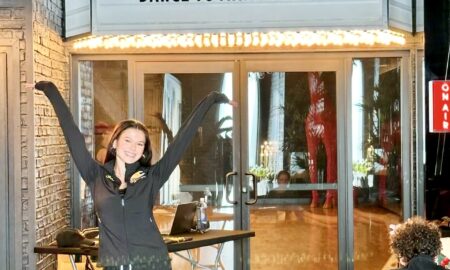



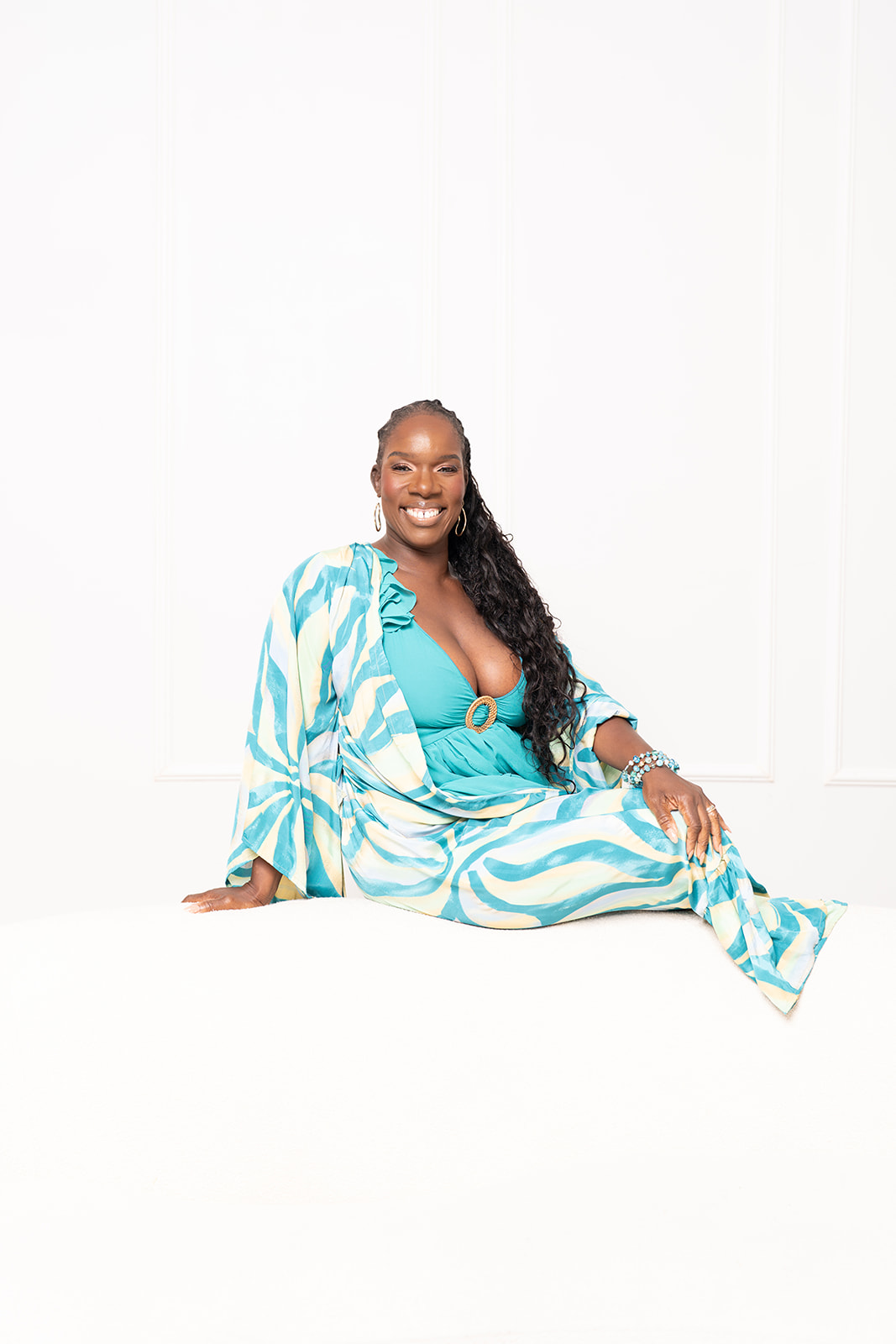
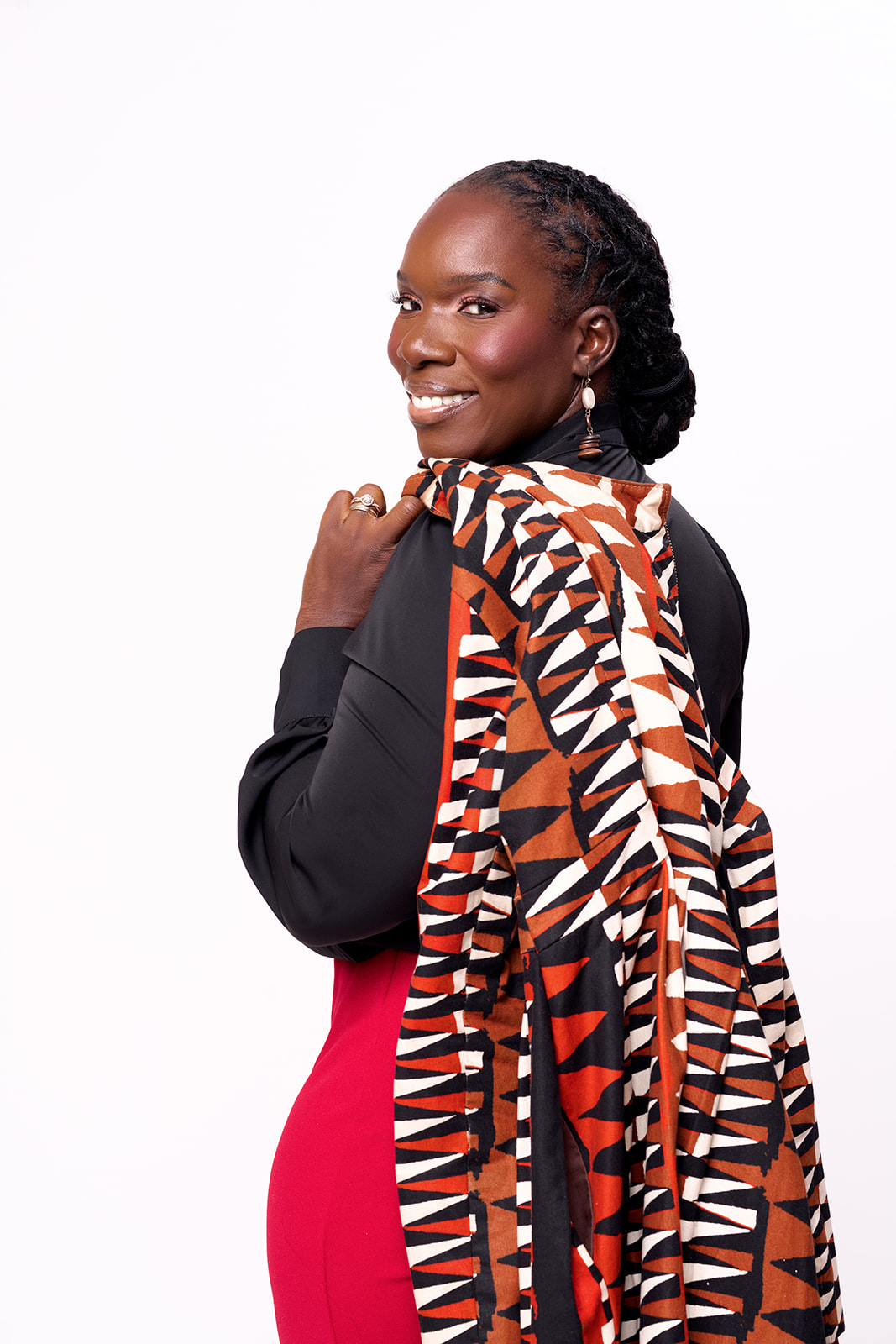
As an emergency physician, Dr. NanaEfua Afoh-Manin spent years treating patients whose health challenges often extended far beyond what medicine alone could address. Her work in community health, combined with her own experience of losing and rediscovering a sense of wellbeing, led her to explore a bigger question: what if health were built into the way we live, work, and connect with one another? Through Well Around the World and her concept of the Healthy Genius Zone, she’s bringing together medicine, culture, travel, movement, and leadership to help people pursue meaningful work without sacrificing the wellbeing that makes it possible.
Hi Dr. Nana, thanks so much for joining us today. We’re thrilled to have you share your thoughts and insights with our readers. Your work brings together medicine, health innovation, leadership, and a broader vision of what it means to live well. Can you take us back to an experience in your journey as a physician that first made you realize your impact could extend beyond traditional medical practice?
I wrote my medical school essay about dancing. It was called “Medicine Made Me Dance,” and I meant every word. I came into medicine in rhythm with my body, my community and my purpose.
Then I spent years in emergency departments watching the same story repeat. I would stabilize a patient, discharge them, and send them right back into the conditions that made them sick. No transportation. No caregiver. No money left after rent. I could fix the crisis. I could not touch the cause.
The pandemic made it impossible to look away. Testing and vaccines were not reaching the neighborhoods that were burying the most people. So we built myCovidMD and took care to where people actually lived.
That was the moment I understood. The exam room is one door. Health has a whole house. I have been building that house ever since.
Your growing platform, Well Around the World, explores the intersections of health, culture, and leadership. What inspired you to create this platform, and was there a particular encounter, experience, or realization that changed the way you understood wellness across different communities and cultures?
Honestly? I lost my rhythm.
After a thousand patients, a pandemic, and broken promises, the music got quiet. I was still performing. I was not well.
Then my child went to soccer camp in Barcelona, and I went with them. I watched grandparents and toddlers share the same plaza at ten at night. I watched people linger over meals like time was something you spend on each other, not something you save for later. Nobody there was following a wellness plan. Wellbeing was simply built into how the city was designed to live.
That changed everything for me. I had been taught to see blue zones as rare oases of longevity. I started to see them as a mindset. A community collectively deciding to trust each other, to move, to eat together, to protect a third place between home and work.
I gave what I found a name: Your Healthy Genius Zone. Gay Hendricks taught us that each of us has a zone of genius, the work only we can do. The blue zones research taught us that long, good lives are built through movement, food, purpose and belonging. Your Healthy Genius Zone is where those two meet.
Here is what it means in plain terms. Your best thinking needs sleep, movement, food and other people, because it is your body doing the thinking. Your Healthy Genius Zone is the place where you do your finest work and still have something left for the people you love. Both. At the same time.
Well Around the World is how we find it. We journey the world to discover how people flourish, then translate the stories, science and traditions into practices that truly take root. Find your zone. Take it home.
As a physician and multidisciplinary leader, you’ve had opportunities to approach health from different perspectives. Can you share a moment when something you witnessed outside a traditional healthcare setting challenged what you had learned through your medical training and ultimately influenced how you approach your work today?
After the Eaton Fire, our work at Shared Harvest went straight into Altadena. Not to deliver medicine. To deliver case management, care coordination, and the kind of help that never shows up on a chart.
I sat with families filling out insurance inventories, listing the shower chair and the walker and the hospital bed they lost right alongside the dining table. I met a woman who had cared for her aunt for more than ten years. No title. No paycheck. No paperwork that said she was allowed to make decisions. She was the entire care team, and the system could not see her.
Medical school taught me that health happens in clinical settings. Disaster recovery taught me that health lives in the paperwork, the caregiver, the neighbor who checks on you, the case manager who returns your call.
Now I design for the people the system forgets to count. They are the ones holding it up.
Building something that connects multiple disciplines often means navigating expectations about what a physician or healthcare leader should be doing. Have you faced a moment when pursuing your broader vision required you to step outside a familiar role or take an unexpected risk? What did that experience teach you about leadership and trusting your own direction?
I am first generation. No one in my family had walked this road before me, so no one could tell me which lanes I was allowed to stay in.
That was a gift. It was also a burden.
Every time I built something new, a nonprofit, a research agenda, a wellness company that puts dance at the center as a credentialed science, I heard some version of the same question. Shouldn’t a doctor be doing something more serious?
Here is what I learned. Stepping outside the role was never the real risk. Staying inside it and slowly disappearing was.
A friend once said something to me that I carry everywhere. No one is coming to save us, but we were always meant to save ourselves. Leadership does not wait for permission. You build the thing you needed, and then you hold the door open.
The idea of living well can mean very different things depending on someone’s culture, environment, and personal circumstances. Through your work and experiences, is there a particular story or conversation that has stayed with you because it revealed a dimension of well-being that people often overlook?
Belonging.
I came home after my freshman year of college convinced I knew everything about health. It was Christmas, and my mom was cooking. Instead of helping, I stood in her kitchen and grilled her about what she was putting in one of the dishes. I was not listening to the room. I was definitely not emotionally intelligent. I just kept talking.
Within a minute, she picked up the pot, threw the whole thing in the trash, and said, “If you want to fix dinner, do it.” Then she walked away.
Everyone turned and looked at me. I had ruined Christmas dinner. And I was not even the number two cook in that house.
What I did not understand yet was that I had broken her heart. It had nothing to do with the food. It was about the moment we were all sharing, and I had made her feel like an outsider in her own kitchen. So I went to work to salvage not just dinner, but her sense of belonging, and the love I needed her to know I had for her. I was not too late.
I have spent years of Christmases without my mom now. And here is what surprises people: I have nothing to forgive myself for. I am glad I said what I said. That memory is indelible because it was real. Authentic engagement is rare. Most of us never get the chance to unpack. We travel with so much baggage, and we just keep adding to the bag.
Love has taught me the same lesson. I met my husband at UCLA, and we have been married twenty six years. He is vegan. I am not. Love is not a destination. It is a daily decision, and some seasons it is the hardest one you make.
That is why Well Around the World exists. It is a wellness systems strategy for leaders. A chance to unpack, and then repack what you want to carry home, thoughtfully and intentionally, alongside people who are doing the same work together.
As Well Around the World continues to evolve, what conversations or perspectives are you most excited to bring forward? When you think about the long-term impact of your work, how do you hope to change the way people understand the relationship between health, culture, leadership, and living a meaningful life?
I want to talk about roots.
So many of us are high achievers who do very well and are not sturdy. We are first generation. We watched our parents work brutally hard. We inherited their ambition and sometimes their wounds. We want a different relationship with where we come from, especially for our children.
That is why every Well Around the World journey follows the same path. Read. Travel. Dance. Write. Build. You find your Healthy Genius Zone, and you leave with one finished project, the book or the article or the memoir you have been carrying for years. Along the way, you keep your Living WATW Passport, a book of the places and spaces where you found inspiration or something tangible that aligns with your Healthy Genius Zone, explored together.
I am also launching a series of short interviews. Some will be with leaders in the longevity and wellbeing space who have inspired so many of us. Others will be with everyday people who do one unique thing extraordinarily well. Sometimes you just want to dial in and learn how they mastered it.
Candidly, I have never arrived at my own Healthy Genius Zone. That is not the point. It is a walk, a journey we take together, learning from each other.
Our first cohort travels to Zanzibar in June 2027. I am building it now, and it is not too late to join. Applications close January 31.
The cohort meets for four weeks before the trip and eight weeks after for health accountability. We load the principles before we go, let them settle while we are there, and hold on to what we bring home so it does not fizzle out.
For anyone who is not ready to travel yet, our Substack lets you follow along, understand these places, and maybe one day visit them yourself.
Long term, I want to build a global directory of wellness practitioners across the diaspora, unbound by insurance codes and borders, and give everyday healthcare workers a place to unmute and tell their stories.
This work has also made me a better doctor.
When I lost my rhythm, I was still a good clinician on paper. But I was listening the way I listened in my mom’s kitchen that Christmas. Half present. Already sure I knew the answer.
Walking toward my Healthy Genius Zone changed that. When I am rested, moving, fed and connected, I hear what my patient is not saying. I lead my team with patience instead of adrenaline. I stay curious at hour ten of a shift. I stay in medicine.
A well physician is a patient safety strategy. A well care team is how a community heals. Every clinician I help find their zone carries it back to hundreds of patients.
I hope this work transforms even policy. The kind of policy that starts with you. How you treat yourself, and how you treat the people around you. That is where every healthier institution begins.
My hope is simple. That we stop treating wellbeing as a reward for surviving, and start treating it as the soil we grow in.
The steps were never secret. They just were never taught. So I went looking, and now I’m showing the way.

Popular
-
Dr. NanaEfua Afoh-Manin Is Rethinking What It Means to Be Healthy, Not Just Healed
-

Portraits of the Valley
-

LA’s Most Inspiring Stories
-

Greg Hex Is Turning the Everyday Kitchen Knife Into a Modern Design Object
-

Rick Norris Learned That Building a Successful Business Means Building a Life You Actually Want to Live
-
How Olivia Rush Turned Survival Into a Mission to Help Others Keep Going