





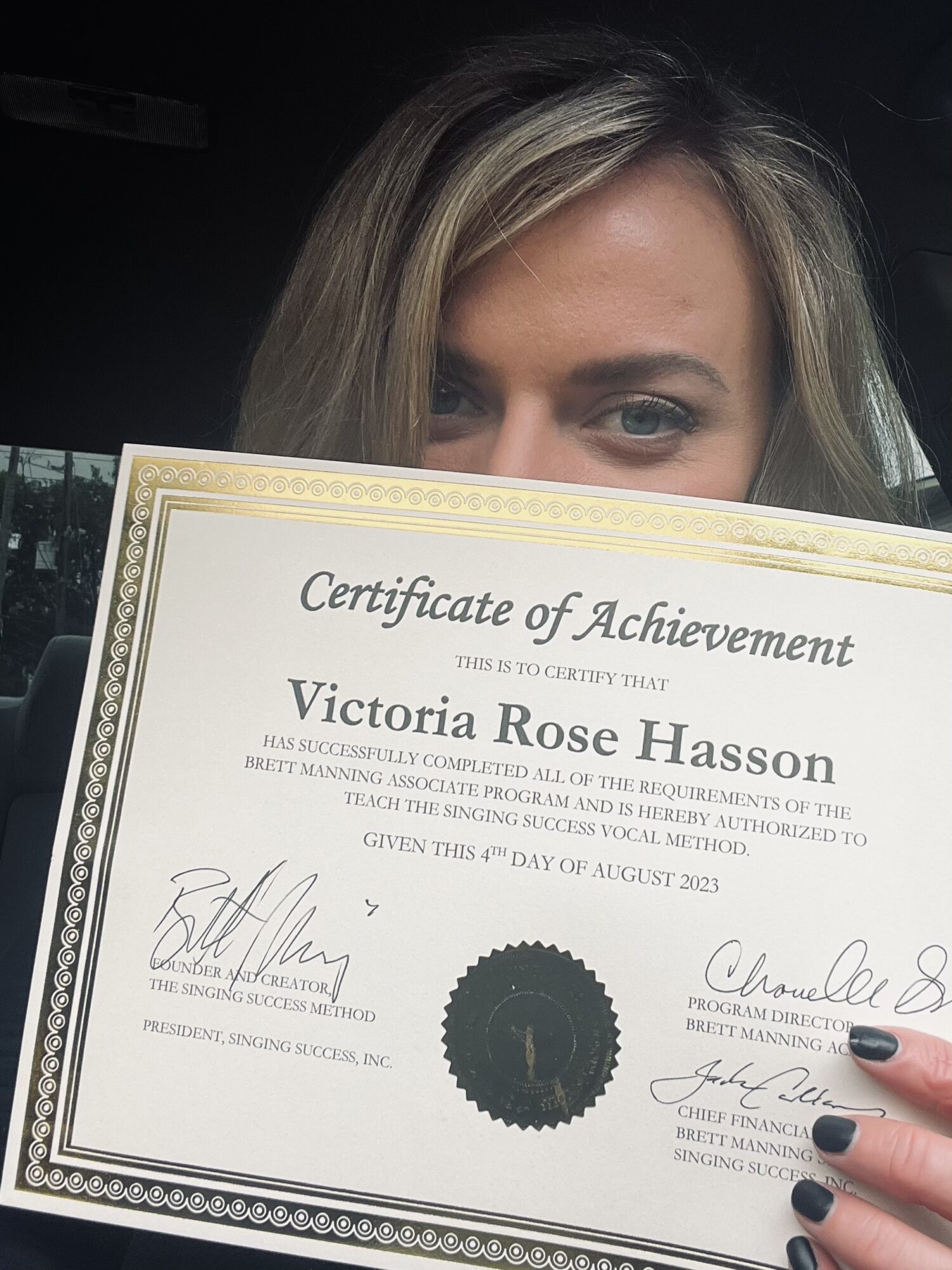
Through her vocal coaching practice, Victoria Rose Hasson helps singers strengthen both their technique and their confidence by focusing on authentic self-expression, vocal health, and performance psychology. Drawing from her own journey as a performer, she teaches students how to develop a voice that is uniquely their own rather than relying on imitation, while also helping them navigate the fears that often accompany live performance. By combining technical skills like vocal mixing with strategies for managing stage fright, Victoria empowers singers to connect more deeply with their audiences and discover the freedom that comes from performing with confidence, vulnerability, and authenticity.
Victoria, you’ve built your vocal coaching business around helping singers find their authentic voice, master vocal technique, and overcome stage fright. What inspired you to focus on these areas, and how did your own musical journey shape your approach?
As an artist myself, I found so much joy in my own performances when I began to confidently lean on the new technique I was learning instead of feeling overwhelmed by potentially missing the mark vocally. I also felt that even though I was growing technically, I still had a lot of fear around performing live. After gaining more and more experience over the years playing in front of an audience and doing my own research on the psychology behind what was making me nervous, I’ve been able to truly get a grip on stage fright. This is now something I prioritize when teaching a student.
Many singers struggle with comparing themselves to other artists. How do you help clients discover and develop a voice that feels genuinely their own?
Singers are using their bodies as an instrument. Nobody else on this planet has the same body as you. I believe it is a disservice to the unique instrument you’ve been given if you lean solely on copying someone else. There’s a huge difference between inspiration and being a copycat and I love introducing new tools to my students to show them all they have to play with in their own voices. Discovering all your voice can do really shows you all the “paint you can paint with” that you might not have realized you had access to on your own.
Vocal mixing can be a game-changer for singers. What is it, and why is it such an important skill for both performance and vocal health?
Mixing can be so confusing for a lot of singers! I like to look at it as a new pathway to connect your notes by blending the different resonators of the voice intentionally while traveling up and down the range. Mixing is simply using more than one resonator at a time to create a more pleasant tone, alleviate tension and build longevity in the voice. It’s much easier than you think!
Stage fright affects performers at all levels. What are some of the most common causes you see, and how do you help singers build confidence on stage?
Stage fright is our insecurity around being perceived by others. It’s very human and not something to get rid of necessarily (if you’re nervous it’s because something matters to you). I like to shift my students’ focus towards excitement instead of fear while leaning on built up muscle memory around foundational technique so the body knows how to create beautiful sound even in the midst of heightened emotions.
What has been the most rewarding part of growing your vocal coaching business and helping singers transform both their voices and their relationship with performing?
We live in a world where things are and are becoming more and more curated. Human connection is so needed and there are few things more powerful than an authentic and vulnerable singer connecting with an audience who needs permission to feel something. It’s a beautiful thing to be a part of and I feel honored to help that connection from any stage in someone’s journey.
Links:
- Website: https://www.victoriarosevocal.coach/
- Instagram: https://www.instagram.com/hassonstudios?utm_source=qr

Popular
-

Portraits of the Valley
-

LA’s Most Inspiring Stories
-

Rick Norris Learned That Building a Successful Business Means Building a Life You Actually Want to Live
-

How Olivia Rush Turned Survival Into a Mission to Help Others Keep Going
-

How Bibi Goldstein Is Helping Entrepreneurs Reclaim Their Time by Embracing the Power of Delegation
-

Victoria Hasson is Redefining Voice Coaching Through Community and Collaboration