




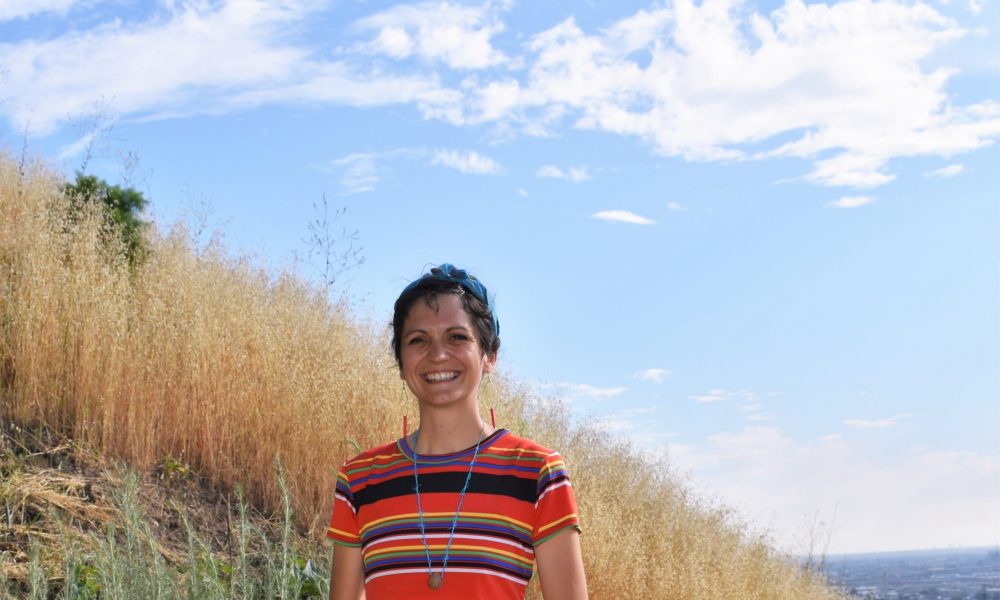
Today we’d like to introduce you to Sarita Dougherty.
Thanks for sharing your story with us Sarita. So, let’s start at the beginning and we can move on from there.
I started painting portraits of my room because it felt like the flux of cultures in my identity were visually located there. Since moving to Los Angeles in 2009, I fell in love with the Tongva (native people of this area) ecosystems, which are rapidly pushed out, like the cultures who made the Los Angeles we know today. I paint on site to find layers of culture, beauty, and transition. I make relationships to and propagate the California native plants that have inspired me, hoping to participate in maintaining the biodiversity that’s left here. In the mix of Ethnoecology – how people relate to their environments – and plein air painting, I have found my way on this planet, cogenerating habitat, documenting it, and teaching about it. All of these practices have been deepened through my DIY Ph.D.; a deeper and higher education program I started with my friend David Whitaker. We’ve met almost weekly for the past five years to unlock the learning our soul’s yearned for; one that, in my case, could incorporate art, ecofeminism, and earth-based spirituality. My Dissertation will be published as a Textbook with images and activities for connecting to the self, community, and planet. All of this is for the Ecocene; a mythical time when humans live in reciprocity with their environments again. I gotta do this, even if it’s too late, for my daughter’s generation, for the love of this gorgeous planet and all her beings.
Great, so let’s dig a little deeper into the story – has it been an easy path overall and if not, what were the challenges you’ve had to overcome?
Coming into being an artist with a career that includes community and environmental activism, academic teaching, and painting sales to support my family has not always been the easiest path but continues to nourish my spirit, feed infinite inspiration, and build the future I wish to see reflected around me. Mostly, I was met with roadblocks from gallerists who believed in my work but needed it to conform to a traditional commercial path. I’ve been lucky to find organizations like the Women’s Center for Creative Work who are dedicated to systematic change towards reducing the wealth gap, confronting Western cultural hierarchies in the production of art, and unapologetically support women artists of color who are mothers, gender non-conforming and committed to liberation. We don’t have to fit into contemporary conceptual trajectories of market-driven art-making and we can still find patrons who buy our work, platforms to showcase our talents, and lifestyles that seek balance rather than fame. Contentment is our compass and we are the change we seek. Enough with critique; we co-create!
What else should our readers know?
In workshops that range from cosmology-mapping to ancestral medicine-making, I love to share skills and visioning with students of all ages. I am in a network of folks taught by Olivia Chumacero. In her philosophy and classes called Everything is Medicine, Olivia shows us how to rehabilitate indigenous ecosystems, offer to the Earth before taking, and connect to our ancestors. Being of a background that includes both Western education and white privilege, it’s challenging for me to relearn reciprocity. However, Olivia reminds us that we are all in the tribe of human beings, and that, at some point, all of our ancestors knew how to live in a way that enhanced rather than destroyed out immediate habitats. As we strive for zero-waste and other sustainable habits, we can help each other connect to those communal care-taking knowledge dormant in our bloodlines. My Cajun, Irish and Bolivian ancestors are smiling, I think, and I can connect to them, as well as the plants around me, to keep my spirit going when I feel pessimistic about our human selfishness. Painting the habitats I’m learning how to take care of helps me share these practices with a wider audience, and can educate around the incredible plants that have sustained life here for so long, cultivated and interacted with by Native Californians whose descendants today still share this invaluable knowledge.
So much of the media coverage is focused on the challenges facing women today, but what about the opportunities? Do you feel there are any opportunities that women are particularly well positioned for?
Women are well positioned to work collaboratively, to know how to nurture communities, ecosystems, and families. I’m grateful for all the women who light me up with the ways they empower me, with the ways we can come together in ceremony to process, transform, and regenerate. The Filipinas in my life, in particular, demonstrate Kapwa, a coming together where the boundaries of self disappear and collective creativity holds the power to do anything!
Pricing:
- Commissioned Painting of Place: $500 – $5000, variable for income bracket and size
- Personalized Cosmology-Mapping Session for your Ideal Scene: $50 for one hour
- DIY Ph.D. Creative Content starting at $2 through www.Patreon.com/saritadoe
Contact Info:
- Website: www.roomportraits.com
- Email: saritadough@gmail.com
- Instagram: @saritadoe
- Facebook: Sarita Doe
- Other: www.patreon.com/saritadoe


 Image Credit:
Artist portrait: Armando Cortes, Painting images: Sarita Dougherty
Getting in touch: VoyageLA is built on recommendations from the community; it’s how we uncover hidden gems, so if you know someone who deserves recognition please let us know here.
1 Comment
Leave a Reply
Cancel reply
Popular
-

Que Johnson on Building Brands That Last: From Visibility to True Market Authority
-

Christina Wren Steps Into the Director’s Chair to Tell Stories That Feel Like Home
-

Portraits of the Valley
-

LA’s Most Inspiring Stories
-

JordanL on ‘Breathe,’ Belief, and Building a Movement Beyond the Music
-

Megan Birney Rudert on How Access to Light Is Powering a More Sustainable and Equitable Future





Bebot Gamora
June 26, 2019 at 08:23
this is a very inspirational piece. i like what she shares about her native teacher and giving a shout out to my tribe called human beings. great paintings!