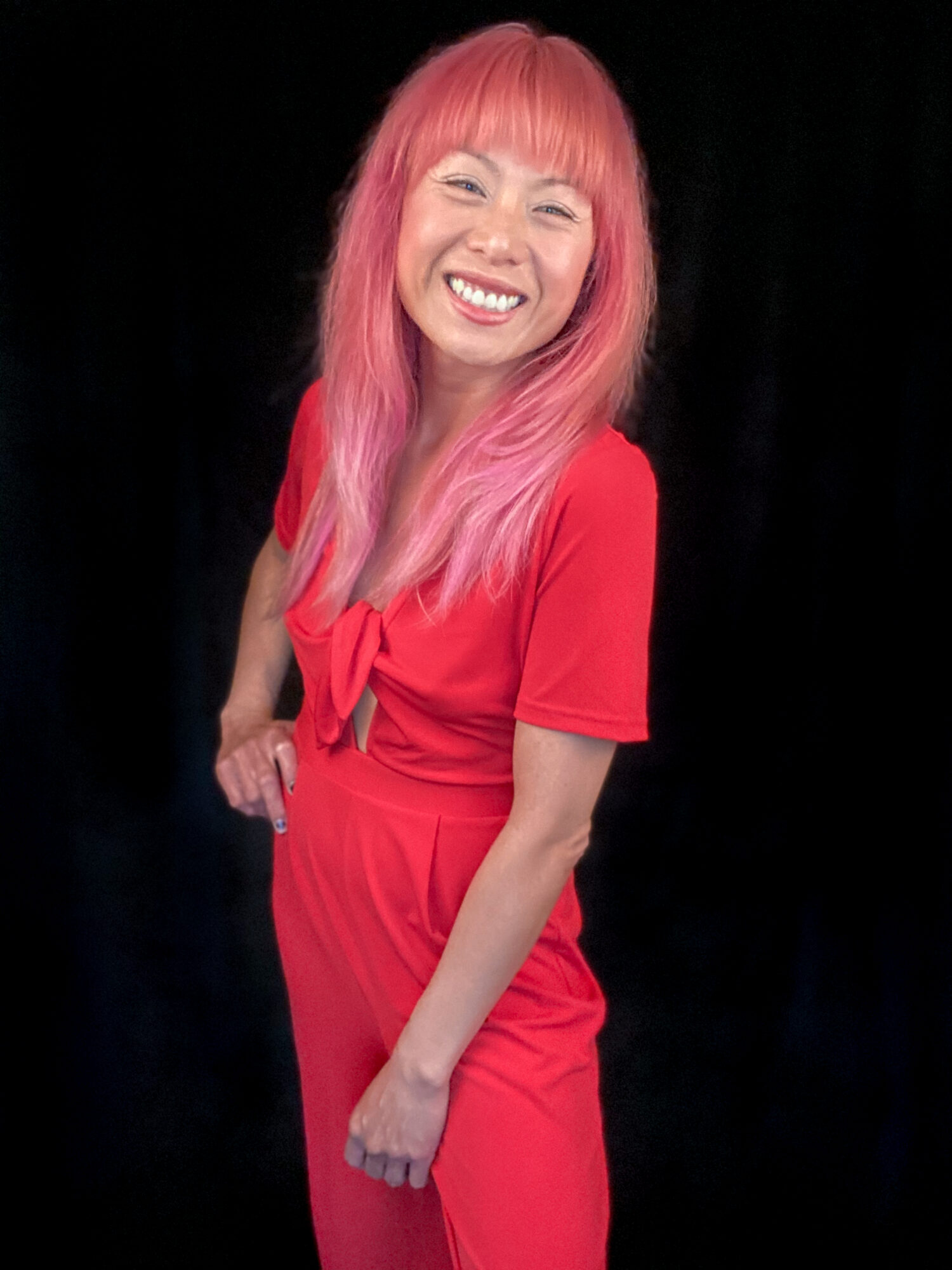
Linda Villines’ work is rooted in a powerful realization: struggle isn’t just a mindset — it’s a stored emotional imprint in the body. After years of deep personal healing and somatic practice, she now helps others move beyond intellectual understanding and into true release through her course, Liberation from Struggle. By guiding people to reconnect with their bodies, process emotions safely, and let go of conditioned tension, Linda empowers individuals to rediscover ease — not as something earned, but as their natural, unburdened state.
Linda, after years of coaching and personal healing, what was the defining moment that led you to realize struggle is stored in the body — not just the mind?
I was doing an emotional release meditation last year, something I was doing about five times a week as part of my daily healing practice then. I’ve had a deeply loving and committed relationship to emotional health for a long time. That depth of practice is what made this discovery possible. I have access to my emotional body at a level that most people haven’t cultivated yet because I don’t intellectualize my emotions. I don’t suppress them. I feel them, intentionally, in a contained, consistent, and purposeful way.
My intention that day was to release struggle and to grieve the programmed struggle I’d carried my whole life — the belief that I had to struggle to learn, to succeed, to be seen, to heal. And in that grieving, I started giving love to all the parts of me that believed struggle was necessary. That was the opening, because that’s when I felt it.
Not the frustration of my experiences. Not the memory of hard things. But a distinct, singular, deep emotional pain in my body, which I then realized was the emotion of struggle itself. It wasn’t a mix of feelings. It wasn’t helplessness or grief or anxiety. It was its own thing. A unique feeling of pain I didn’t have access to before.
And the more I leaned into it, the more my body released it. Because after grief and after self-love, I had finally given my body permission and safety to feel, not just think about struggle. That’s when I had the aha moment: struggle isn’t a mindset. It isn’t just a circumstance. It’s a distinct emotion stored in the body. And like any emotion, it can be felt, released, and healed.
You describe struggle as a somatic imprint rather than a mindset issue. How does this change the way people should approach healing and personal growth?
It changes everything, because if struggle is a stored emotional pattern in the body, then no amount of understanding it, reframing it, or working on your mindset will fully release it. That’s why you can be in therapy for years, have an intellectual understanding of your patterns, and still feel like you struggle through life and your goals. You can do years of healing work and still wake up tense. You can have self-awareness about why you do the things you do and still do them. People often think they’re dealing with a discipline problem or a lack of commitment. But really, it’s the body holding onto a deep somatic imprint that the mind can’t think its way out of.
So true liberation from struggle has to happen at the body level. Even though insight and awareness are essential, knowing something doesn’t change the pattern at the level of the nervous system, the somatic memory, and the emotional imprint itself. But once you do release the emotional imprint from the body, the shift isn’t something you have to maintain or keep practicing. It’s gone. Because the body is free of the old programming, and it’s the body that’s been holding on.
Your course Liberation from Struggle focuses on releasing this stored tension. What are some of the key practices or shifts that make this approach different from traditional methods?
The biggest shift is that in my course, we work primarily with the body and the subconscious directly. Most approaches try to help you cope better, think differently, or build habits that work around how struggle persists. But Liberation from Struggle gets to the root instead of treating the surface. The course walks people through understanding what struggle actually is at the emotional and somatic level, why it got conditioned into the body in the first place, and then how to actually feel and release it, intentionally and safely. We treat the body as intelligent and something to love, not something to fix or shame. The course features intentional emotional release work, somatic awareness practices, and a specific process for reconnecting with ease as your baseline state rather than something you’re working toward.
What makes it genuinely different is that it reinforces that ease isn’t the reward for enough healing. Ease is what’s already in your body when the conditioned layer of struggle is released. So the course isn’t about becoming someone new without struggle. It’s about remembering that your true self naturally operates without it.
Many people feel frustrated after doing “all the work” but still feeling stuck. What would you say to someone in that exact position right now?
Nothing is wrong with you and you don’t need to be fixed. What you’ve invested in is real. All the self-awareness, intention, and effort were worthwhile and none of it was wasted. But if you’re still waking up stressed, spending your day stressed, feeling exhausted about how little return you’re getting on your investment, tired of waiting for the inner work to show up in your outer life, it’s because what you’ve been doing has only reached your mental awareness. What has yet to be reached is the physical layer where the pattern of struggle actually lives.
Fixating on mindset and thinking differently will only get you so far when the root lives below your cognition. Develop a loving relationship with your emotions and your body. Because until you meet yourself at that level, no amount of self-awareness or insight will get you unstuck when the stuckness is in your breathing pattern, the way you hold your shoulders, how you brace when nothing is wrong, and the way you guard your emotions.
And when you learn to perceive that frustration as a signal from your body letting you know it’s ready to release something it’s been carrying for a long time, that’s when you give yourself an opening to feel what needs to be felt and let your body do what it already knows how to do, which is heal.
You emphasize that ease is our natural state. How can people begin reconnecting with that sense of ease in their everyday lives?
Start by questioning the assumption that ease has to be earned. Most of us were conditioned to believe that if something comes easily, it doesn’t count, wasn’t earned, and isn’t valuable. That rest has to be deserved. That joy is the reward after enough hard work. Those aren’t truths. They’re distortions normalized by generations of people passing down unresolved trauma. And recognizing those assumptions as inherited conditioning rather than innate truths is the beginning of reclaiming ease as your natural state.
And again, develop a loving relationship with your body. Stop fearing it, judging it, and numbing it. Begin to listen to your body to notice where you’re holding tension and when. Begin to trust your emotions, which is trusting your body. Because a lot of what hijacks ease is chronic tension in the body, suppressed emotions, and negativity toward self and the body. You can’t reconnect to ease when you’re attached to stress and self-criticism. Learn to give yourself and your body grace. That will create space for ease in your everyday.
Links: