




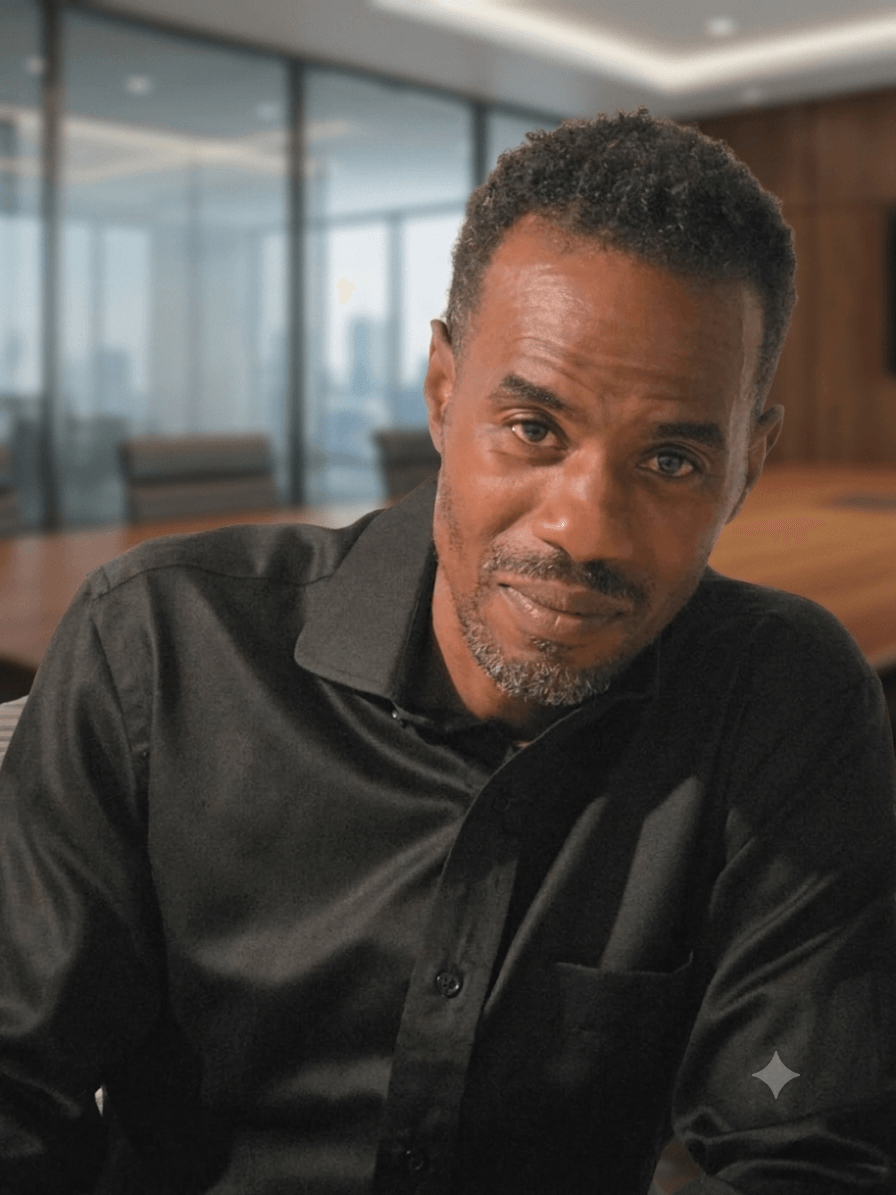
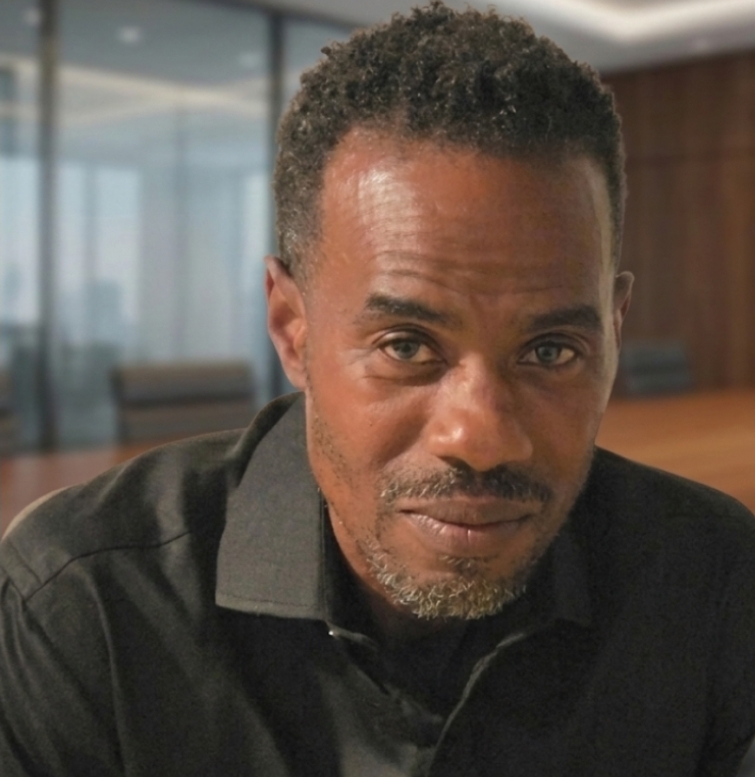
Today we’d like to introduce you to Maurice Manley.
Hi Maurice, so excited to have you with us today. What can you tell us about your story?
My story has never really followed the traditional straight path. It has been a combination of trial and error, reinvention, and a lot of learning through experience—especially in business and finance.
I started my entrepreneurial journey at the ripe age of 10. By the time I was 18, I had started my barbering career, but I was also constantly trying different things on the side. I promoted for nightclubs, tried my hand at business consulting, ran a vending machine business, sold home security systems, started a record label, and even dabbled in acting.
At 22, I found myself in the financial services industry, and that became the career that really cemented my business acumen. I held a Series 7 securities license as well as Life & Health insurance licensing, and I eventually reached the level of Senior Vice President.
At the firm I worked with, we structured in-house real estate syndicates, which became the impetus for me becoming a real estate investor myself. By the time I was 28, I owned 10 pieces of property between Los Angeles and Ohio.
After the 2008 real estate collapse, my path shifted again. I began looking at different types of deals that I could structure and raise capital for, which led me to create R.E.C Fund Group LLC—Real Estate, Entertainment and Corporate. Through R.E.C Fund Group, we raised capital for opportunities in real estate, entertainment, and corporate ventures while providing annual returns for investors.
In 2011, that experience ultimately led me to raising capital for my first brick-and-mortar business, M Barbering.
Owning a location-based business was very different from operating in financial services, consulting, or other service-based businesses. It exposed me to another side of entrepreneurship entirely and eventually pushed me to begin studying business, finance, tax, credit, and related areas of law in much greater depth.
As my understanding grew, I started integrating what I had learned from financial services, investing, entrepreneurship, business ownership, capital raising, and consulting into a much broader way of looking at business and finance.
I began applying some of those ideas with barbering clients who either owned businesses or were preparing to start them. Many would take the strategies we discussed back to their attorneys or accountants. Sometimes those professionals immediately validated the ideas; other times they researched the concepts further and came back with guidance about how the strategy could be implemented and what the client needed to consider.
After several years of developing and testing that broader perspective, I decided to create an agency dedicated to helping business owners think more strategically about how they build, grow, and protect what they create.
That became The Westhevan Agency.
We initially developed several areas of focus. Our media division created and produced the Lead Up Podcast, which I hosted. We later launched United Trust Credit, focused on credit building and restoration, business strategy, and related financial services.
Most recently, that journey has led to the launch of something I am especially proud of called Structural Intelligence.
For me, what is interesting is that none of these experiences felt like they were leading to one particular destination while I was going through them. Financial services, real estate, barbering, capital raising, consulting, credit, and business ownership all looked like separate chapters at the time.
Looking back, I can see that each one taught me something different about business, money, risk, ownership, and entrepreneurship—and ultimately helped shape the work I am doing today.
We all face challenges, but looking back would you describe it as a relatively smooth road?
It definitely has not been a smooth road. One of the biggest lessons I have learned is that entrepreneurship rarely moves in a straight line. There have been periods where things were going extremely well, and there have also been periods where I had to completely rethink what I was doing and rebuild.
One of the most significant examples was the 2008 real estate collapse. By the time I was 28, I owned 10 properties between Los Angeles and Ohio. I had built something that, at the time, felt like a major accomplishment. Then the market collapsed, and I lost everything.
That experience forced me to look at business, investing, and risk very differently. I had to figure out how to move forward without relying on what had worked before. Instead of walking away from entrepreneurship, I started looking for other types of opportunities I could structure and raise capital around. That period eventually led to the creation of R.E.C Fund Group and opened an entirely different chapter of my career.
Owning M Barbering presented another set of challenges.
A brick-and-mortar business teaches you very quickly that revenue and responsibility do not always move together. Rent is still due. Operating expenses are still due. People are depending on the business. Customers change. Employees change. Economic conditions change. And when something goes wrong, the owner is often the person responsible for absorbing the impact.
The pandemic amplified all of that.
Like many small-business owners, I had to navigate a business environment that changed almost overnight. What I learned afterward was that the effects of a major disruption do not necessarily disappear when the immediate crisis ends. Businesses reopen, but customer behavior may have changed, expenses may have increased, revenue may not return at the same pace, and the financial impact can continue for years.
There have also been times when revenue from one business was delayed while obligations from another business continued. Those moments can force you to make difficult decisions because the business does not care that another client has not paid you yet. The rent is still due. Expenses are still due. And as the owner, you often become the financial shock absorber.
I have also had ideas that worked, ideas that did not work, businesses that evolved into something completely different from what I originally imagined, and situations where I had to admit that a strategy needed to change.
That has probably been one of the most valuable parts of my journey.
Some of my best business lessons did not come from the things that worked perfectly. They came from having to understand why something failed, why something was vulnerable, or why working harder was not always enough to solve the underlying problem.
Over time, I stopped viewing setbacks simply as failures and started looking at them as information. They showed me where I had weaknesses in my thinking, where a business needed more protection, where I was too dependent on one source of revenue, where circumstances outside of my control could create pressure, and where preparation mattered just as much as ambition.
I would not say I am grateful for every difficult experience while I am going through it, but I can say that many of those experiences have shaped the way I approach business today. They taught me resilience, but more importantly, they taught me that resilience cannot only mean surviving problems after they happen. At some point, you have to start asking how to build businesses that are better prepared to withstand pressure in the first place.
Appreciate you sharing that. What should we know about The Westhevan Agency ?
The name of my business is The Westhevan Agency, or TWA.
The Westhevan Agency was created as a business and financial strategy platform designed to help entrepreneurs think more intentionally about how they build, protect, and grow their businesses.
Over time, the agency developed several different areas of focus. Our media division created and produced the Lead Up Podcast, which I hosted. We also launched United Trust Credit, which was developed to assist clients with credit building and restoration, business strategy, and related financial matters. Most recently, we launched the platform I am probably most excited about, called Structural Intelligence.
Structural Intelligence grew out of something I had been noticing for years: business owners are taught to focus heavily on revenue, sales, marketing, customers, credit, and growth, but very few are ever taught how to evaluate the actual structure underneath the business.
A company can be making money and still have significant vulnerabilities. The owner may still personally guarantee most of the company’s obligations. Valuable assets may be sitting inside the same entity carrying the operating risk. The business may depend almost entirely on the founder. There may be little planning around continuity, ownership changes, debt, reserves, governance, or what happens as the company becomes more complex. That is the problem Structural Intelligence is designed to help identify.
The platform evaluates what we call structural exposure—areas where the structure supporting the business may not have matured at the same pace as the business itself. Our flagship diagnostic is the Structural Exposure Audit™, which examines five major areas of the enterprise: ownership architecture, asset insulation, capital flow design, debt and liability mapping, and governance and continuity.
The audit produces a Structural Exposure Score that helps the owner understand where the company may be vulnerable, which areas require the most attention, and what should be prioritized first.
What I believe sets Structural Intelligence apart is that it looks across multiple areas of the business at the same time.
A business owner may already have an accountant, attorney, banker, insurance professional, bookkeeper, or financial advisor. Each of those professionals may be very good at what they do, but they are often looking at the business through the lens of their individual discipline. Structural Intelligence is designed to look at how those different areas interact as one business structure.
It is not intended to replace attorneys, accountants, tax professionals, financial professionals, or other specialists. In many cases, those professionals are exactly who the business owner will need to implement certain recommendations. Our role is to help identify the structural issues, understand how they relate to one another, establish priorities, and help the owner arrive at those professional conversations with a much clearer understanding of what needs to be addressed.
One of the principles behind the platform is that structure should mature as the business matures.
A very small business may not need a complicated structure. But as the company adds revenue, employees, assets, debt, contracts, partners, locations, or investors, the consequences of structural weaknesses become much greater.
What I am most proud of brand-wise is that Structural Intelligence is beginning to give language to a problem that many business owners experience but may not know how to define. We measure revenue. We measure profit. We measure credit. We measure valuation.
I believe businesses should also be able to understand their structural health. The long-term vision is bigger than a one-time audit. We are developing Structural Intelligence toward a continuous platform that can eventually maintain an ongoing understanding of the business and help owners evaluate major decisions—such as new debt, investors, acquisitions, partnerships, or expansion—against the company’s existing structure.
Ultimately, I want Structural Intelligence to help business owners answer a very simple but important question:
“Is the business we are building structurally prepared for where we are trying to take it?”
What do you like best about our city? What do you like least?
When you live in Los Angeles, it’s easy to have a love hate relationship with the city. For example, I love the weather (for the most part) and I absolutely love the variety of things to do. On the flip side I hate the traffic, and I don’t like the fact that all goods and services are priced higher just because it’s Los Angeles. I suppose every state, county, country has its pros and cons.
Pricing:
- Full Exposure Audit $3,000
- Assistants with business restructuring $5,000
- White glove business restructuring $10,000
Contact Info:
- Website: https://www.structuralexposure.com
Popular
-

Portraits of the Valley
-

LA’s Most Inspiring Stories
-

Rick Norris Learned That Building a Successful Business Means Building a Life You Actually Want to Live
-

How Olivia Rush Turned Survival Into a Mission to Help Others Keep Going
-

How Bibi Goldstein Is Helping Entrepreneurs Reclaim Their Time by Embracing the Power of Delegation
-

Victoria Hasson is Redefining Voice Coaching Through Community and Collaboration


