


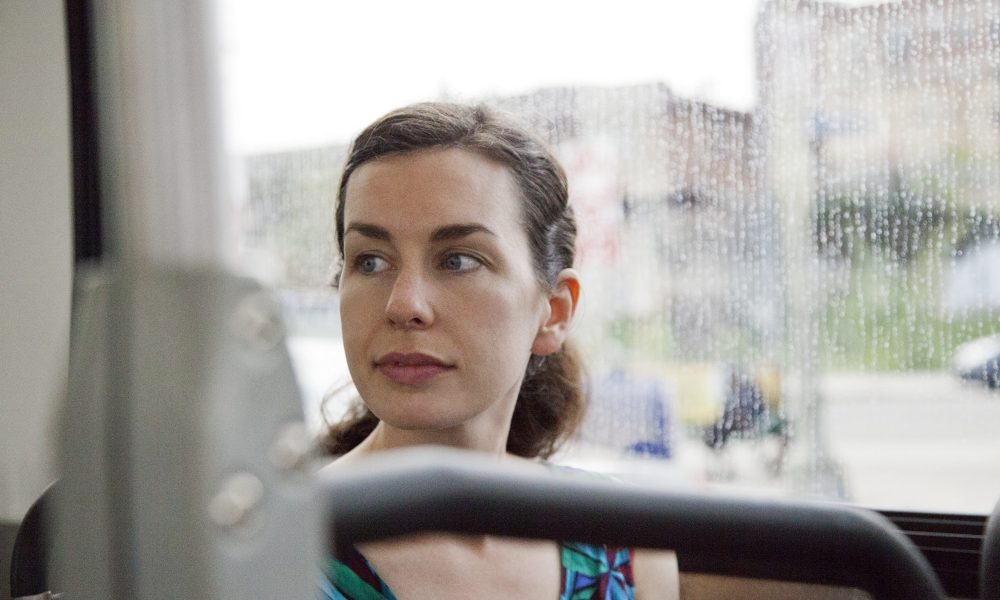
Today we’d like to introduce you to Corrie Siegel.
Thanks for sharing your story with us Corrie. So, let’s start at the beginning, and we can move on from there.
I had a speech impediment until I was a teenager. I could not shape my mouth to let out sounds that people recognized, so art became my primary means of sharing what I saw and thought. Despite the fact I was mostly unintelligible I still tried to speak. My mom would patiently ask me, “is there another way you could say that?” I often forgot she asked this because she could not understand me, and instead took her question as some sort of important mental training regimen. I attempted to create new forms with words to convey what I meant. There was something crucial about this exercise of wrapping my mind around a thought.
Though I can now shape my mouth to make discernible language, the habit of re-articulating ideas, images, relationships, and translating thought through objects and language has continued to shape my world and artistic practice. My work is about creating spaces and forms for people to think, make, and be together. It is equally about considering these forms and spaces and the way they affect our understandings, relationships, and positions. An artwork is something we can all have in common. We share it together in space, even when we come from very different places with widely divergent views. Art can create possibilities to hold spaces for attention and thought together. When we do this the complexity of what and who is present can unfold and generate new terrain for exploration.
My role as a creative practitioner can be classified as artist, curator, and educator, and often my approach weaves through varied mediums. However, my interest in audience and engagement is a through line in the various forms of my practice. I create objects, spaces, and texts that ask for participation and layers of authorship or intimacy with work between myself, other creators, and the audience. My goal is to shift traditional hierarchies of viewership and participation in an arts space as well as blur the definitions of creator and audience.
My artwork is sometimes generated or activated through collaboration with viewers. The shape of my maps are determined by community stories, the text in some of my projects is written with audience response, and gallery visitors are asked to interview and engage with each other as a component of numerous projects. Through placement in intimate settings, or performance to specific audiences, I hope to amplify certain relationships between viewer and creator, necessitating a certain social dynamic or interaction with the work and experience of viewing. When there are just a few people in a space together, conversations are bound to happen, or if they don’t, it can emphasize awareness of certain social norms.
When I am creating interpretive content for museums, presenting intricate works on paper that share my research, collaborating with other artists, or drafting invasive questionnaires that mirror social media data mining, I want to foster inclusive and thoughtful spaces open to people with all levels of experience and education in the arts. I try to use clear language to express complex ideas or research in a way that invites a range of people to the conversation. I have found that the more clearly ideas are expressed, the more nuanced and complicated an understanding can be. There can be multiple interpretations and divergent ideas within an experience, but I want the art and the people who read the work to engage in this labor, rather than cloak an object or statement in mystery or unnecessary abstraction.
Though I am interested in directing my work towards a diverse audience, I am aware that art, in the traditional western sense, is not set up to be inclusive. The physical spaces art is presented in, the gallery, museum, and school, or even the conceptual space of labeling something as art, brings forth conditions that have historically excluded certain people. I create projects that put the space of the arts into question and explore the limitations of this way of interacting with the world and each other. There’s something essential about this reflexive function that often feeds into the subject matter of each project.
At the same time, there’s this funny ethical bind because as I am critiquing arts institutions, I am simultaneously supporting them through the use of aesthetic tools and by echoing legacies of critique.
Overall, has it been relatively smooth? If not, what were some of the struggles along the way?
Though hybridized identities in the arts and elsewhere are increasingly commonplace it can still be challenging to communicate what I do and the goals of my projects since they are often about dealing with several audiences and objectives. However, this proposition is often a generative one.
An essential part of each project is finding a way to communicate these layers through what I do. I’m also continually attempting to improve the way I share support with my friends and members of the communities I’m part of and realize that accepting help is a fundamental component of the project.
It’s hard to work towards sustainability as an artist or “business” model when the fun part is championing others and making projects for the community, but a healthy society and practice is about mutual aid and give and take.
Actual Size Los Angeles – what should we know?
I am the Director of Actual Size Los Angeles, an artist-run gallery and arts space located in Chinatown, L.A. We have hosted experimental and formal exhibitions for emerging and established artists since April 2010. In that time we have worked with over 400 artists, curators, and creative practitioners to create installations, exhibitions, and events to engage the public on an intimate scale.
Events have included a 12-hour long continuous song performed by over 100 artists; a day, organized by artist Katie Herzog, where visitors read to dogs; a collaborative sculpting event based for the revolving principle of speed dating; intimate performances of original compositions in Audrey Hope’s glittering installation with virtuosic violinist Keir GoGwilt; the chance to touch human and whale brains and learn about sleep in cetaceans from a neuroscientist; a part-fictional postcolonial interactive slide show that projected into the street by Prima Jalichandra-Sakuntabhai; and a free haircut day.
Actual Size collaborates with its creative community to make projects that challenge the form of traditional exhibitions and shift power relations between artist and audience.
What has been the proudest moment of your career so far?
The first time my mom reviewed my exhibition on her Facebook wall.
Contact Info:
- Address: 741 New High Street Los Angeles CA 90012
- Website: corriesiegel.com actualsizela.com
- Email: actualsizela@gmail.com
- Instagram: @actualsizela @corriesiegel
- Facebook: @actualsizela


 Image Credit:
Portrait by Gaea Woods
Getting in touch: VoyageLA is built on recommendations from the community; it’s how we uncover hidden gems, so if you know someone who deserves recognition please let us know here.
Popular
-

Que Johnson on Building Brands That Last: From Visibility to True Market Authority
-

Christina Wren Steps Into the Director’s Chair to Tell Stories That Feel Like Home
-

Portraits of the Valley
-

LA’s Most Inspiring Stories
-

JordanL on ‘Breathe,’ Belief, and Building a Movement Beyond the Music
-
Megan Birney Rudert on How Access to Light Is Powering a More Sustainable and Equitable Future