




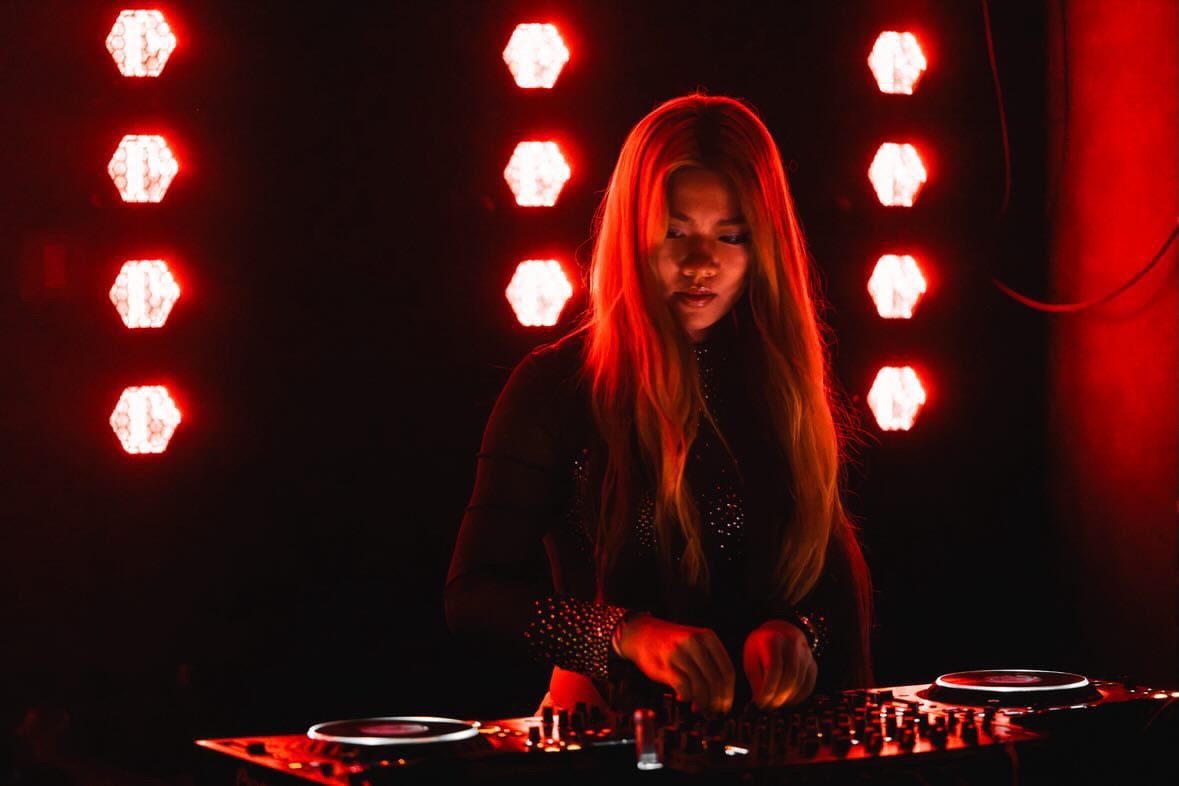
Today we’d like to introduce you to Roksana Zhang.
Alright, so thank you so much for sharing your story and insight with our readers. To kick things off, can you tell us a bit about how you got started?
From Architecture to Immersive Music
My work has always been somewhere between music, space, and technology. I started my career in music as an A&R in London, working with artists and music projects. At the same time, I studied architecture and urban design at the University of Sheffield. During my architecture studies, I became interested in a question that was not commonly explored in my department: How can different spaces become places for music, and how can sound and spatial design change the way people experience a performance? I was the only student in my department focusing on music space design and soundscapes through my research project, “How to Transform Building Construction Noise into Pleasant Auditory Soundscapes?” I often felt like an outsider because my work did not fit neatly into either architecture or music, but that position allowed me to look at music from a different perspective-not only as something people listen to, but as something that can shape how people experience a place.
I later moved to New York to study Live Music Production and Design at Berklee College of Music, where I began exploring live performance from a much more technical and production-oriented perspective. At Berklee, I worked with live sound, lighting, visuals, event production, and real-time media, and began bringing together the different disciplines I had been exploring separately. When I started DJing and producing music more seriously, I began experiencing this question from the other side. I became interested in immersive performances where music, lighting, visuals, and space work together as one experience. At the same time, I saw artists and communities already bringing music into places far beyond traditional venues-from cafés and skateparks to boats, aircraft, rooftops, forests, spaces beneath bridges, and many other unexpected environments. This made me think about the next challenge: If people are already finding new places for music, how can we make it easier to create truly immersive experiences in those spaces? That question became the foundation of my work.
We all face challenges, but looking back would you describe it as a relatively smooth road?
Making Immersive Experiences More Accessible
The challenge is not a lack of creativity, or even a lack of technology. People are already experimenting with new spaces and new formats for live music. The challenge is that creating a convincing immersive audiovisual experience can still require significant production resources-professional lighting and video systems, specialized software, technical knowledge, and multiple people operating different parts of the production. For a major artist, festival, or large venue, that infrastructure may be possible. But for an emerging artist, independent promoter, small club, warehouse, rooftop, gallery, or community space, the cost and complexity can become a much bigger barrier. This creates a gap between the places where people want to experience music and the resources required to make those experiences immersive. I wanted to explore whether that barrier could be lowered.
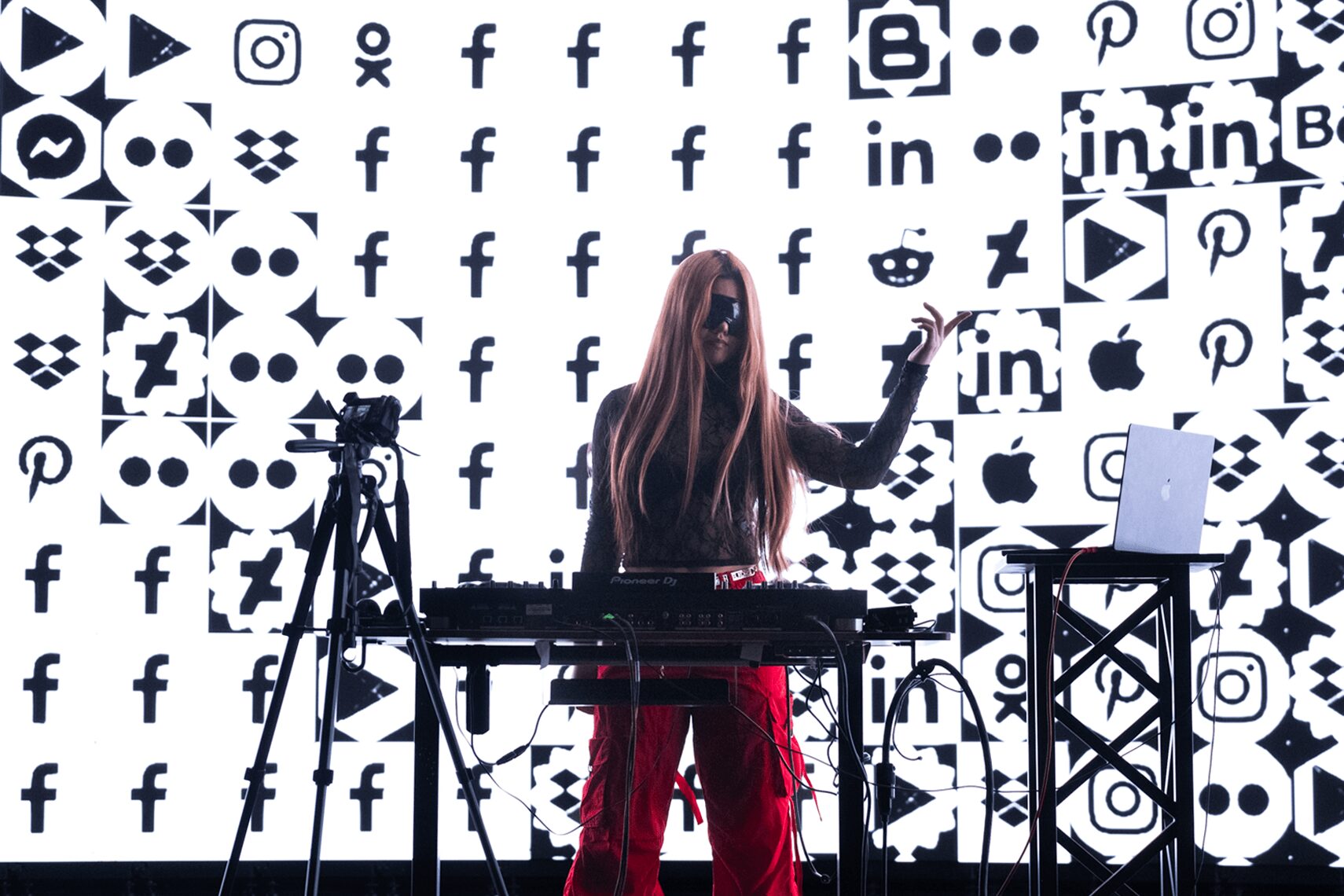
I started looking at the DJ as a natural starting point because the DJ is already at the center of many electronic music performances. Instead of requiring a completely separate system for every part of the show, I began exploring how the DJ’s existing equipment could also become an interface for lighting and visuals. I taught myself and combined MIDI, DMX, GrandMA/ETC, TouchDesigner, Unreal Engine, networking, and show control to build and test these workflows. The challenge was not simply making different technologies communicate. It was creating something reliable enough for a real performance while keeping the system flexible and scalable enough to work across different types and sizes of spaces. I tested these ideas through live productions with Kawa Lighting in New York City, where I worked on different types of live events and experienced firsthand the technical and creative demands of real-time show operation. These experiences showed me that the goal was not to replace lighting designers, VJs, or production teams, but to lower the barrier to creating an immersive experience in the first place.
Can you tell our readers more about what you do and what you think sets you apart from others?
From DJ to Show Controller
My current work focuses on building real-time audiovisual systems that connect DJ hardware, MIDI, TouchDesigner, Unreal Engine, and DMX, allowing the performance itself to interact with lighting and visuals. Instead of treating music, lighting, and visuals as completely separate parts of a show, I explore ways for them to become connected elements of the same performance. A control on the DJ setup can trigger a lighting change, a transition can influence a visual effect, and elements of the performance can become inputs for the environment. The DJ does not simply provide the soundtrack-the performance itself becomes part of the control system. I have applied this approach through my work in New York City, programming, addressing, and operating lighting systems, including DMX routing, live busking, cue programming, timecode, and real-time show operation. I have worked on productions involving Ellie Goulding, DJ Habibeats, Acraze, and Arjun Rampal, where I was responsible for lighting design.
I am also developing a DJ-controlled visual system, a more accessible audiovisual tool that allows DJs and performers to create real-time visual and lighting interactions without the infrastructure normally associated with large-scale immersive productions. Since its release, the system has reached over 700 customers, while related content has generated over 2 million views on Instagram. But the DJ system is not the final destination of my work. It is one step toward a larger goal: making immersive music experiences possible in more places and at more scales. I want to develop systems that allow artists, promoters, and communities to bring immersive audiovisual experiences into different environments without requiring the production resources of a major concert or festival. A café, a skatepark, a boat, a rooftop, a warehouse, a gallery, a forest, or an unconventional urban space can all become part of a musical experience. I don’t see these spaces as replacements for traditional venues, but as opportunities to expand where and how people encounter music.
Ultimately, I want to make music part of the environment we live in-not something we only experience when we walk through the doors of a venue. My goal is to use technology to make immersive musical experiences more accessible, allowing more spaces to become places for music.
Is there anything else you’d like to share with our readers?
No, we’re good.
Contact Info:
- Instagram: https://www.instagram.com/roksanazhang/
Popular
-

Portraits of the Valley
-

LA’s Most Inspiring Stories
-

Rick Norris Learned That Building a Successful Business Means Building a Life You Actually Want to Live
-
How Olivia Rush Turned Survival Into a Mission to Help Others Keep Going
-

How Bibi Goldstein Is Helping Entrepreneurs Reclaim Their Time by Embracing the Power of Delegation
-

Victoria Hasson is Redefining Voice Coaching Through Community and Collaboration


