




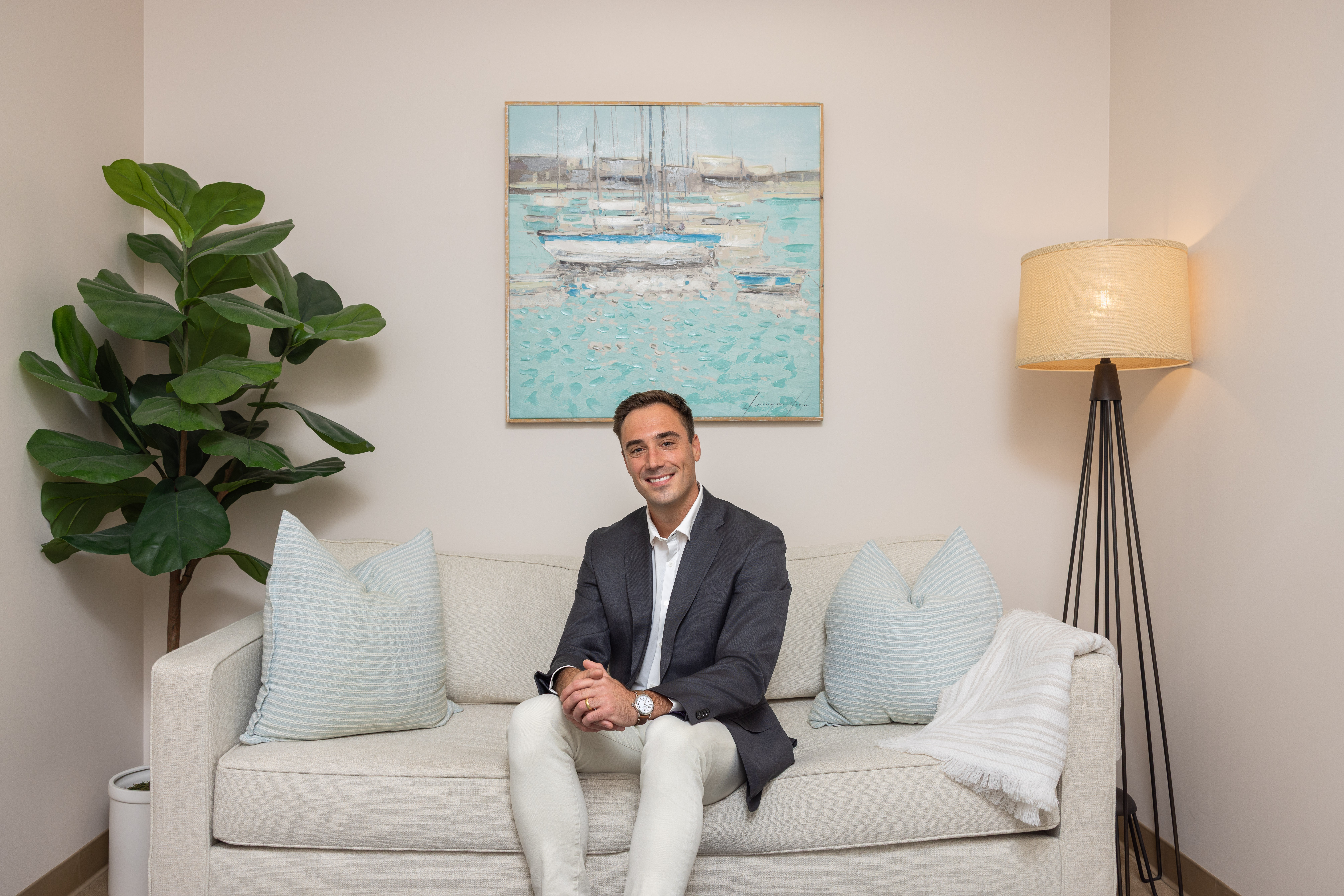
Today we’d like to introduce you to Nick Leggio.
Hi Nick, thanks for sharing your story with us. To start, maybe you can tell our readers some of your backstory.
My path to becoming a clinical psychologist wasn’t necessarily a straight line. However, when looking back, I think each stage helped shape the kind of psychologist I am today. I’m originally from Tucson, Arizona and I’ve always been curious about people—why we think the way we do, how our experiences shape us and why certain patterns seem to follow us. That curiosity eventually led me to pursue my doctorate in clinical psychology and spend several years in Chicago for graduate school, where I received extensive training working with a wide range of people and psychological concerns.
Toward the end of my doctoral training, I matched for my clinical internship in Long Beach, California. It was my first time living in California and marked the beginning of a new chapter for me both personally and professionally. From Long Beach, I gradually made my way farther south into Orange County and eventually settled in Irvine, where I currently live and practice.
Along the way, I worked in different clinical settings such as hospitals and community mental health centers and eventually joined a group private practice. Those experiences were incredibly valuable because they gave me the opportunity to develop my own style as a therapist and better understand the type of work I found most meaningful. Over time, I started to have a clearer vision for the kind of practice I wanted to create—one that reflected not only my clinical training but also my personality, values and beliefs about what makes therapy effective.
That ultimately led me to found Ledge Psychology, Inc. in 2024. Starting my own practice was both exciting and humbling. There are so many aspects of running a business that you aren’t necessarily taught when becoming a psychologist. I had to learn about everything from building a website and managing the business side of a practice to marketing, networking, and figuring out how I wanted to communicate what I actually do differently.
As the practice has grown, I’ve become more intentional about who I work with and the kind of experience I want therapy to provide. I work primarily with teens, young adults and adults and I’ve developed a particular passion for working with men. I’ve found this work especially meaningful because therapy can offer men a space to explore the full range of their emotional experiences—anxiety, sadness, fear, anger, confidence, relationships, identity, and purpose—while also opening up parts of themselves that may be harder to express or understand. I want therapy to be a place where someone can bring more of their whole self into the room, including the parts they may not often share with others and approach those parts with greater curiosity, compassion and understanding. My approach to therapy has also continued to evolve. I value evidence-based tools and practical strategies but I don’t think therapy should stop at symptom management. I’m equally interested in helping people understand the deeper patterns, relationships, experiences and parts of themselves that have shaped who they are.
I also see therapy as a way of strengthening people emotionally—building their capacity to sit with difficult emotions, navigate uncertainty and adversity and respond to life with greater awareness and intention. The goal isn’t to create a life without pain or struggle but to help people become better equipped to meet those experiences when they inevitably come. Ultimately, I hope people leave therapy not only feeling better but understanding themselves more deeply and feeling more capable of navigating whatever life brings.
More recently, I’ve also started creating short educational psychology videos as another way of sharing ideas that I find meaningful. That has pushed me creatively and allowed me to take psychological research and concepts outside of the therapy room and make them approachable and useful in everyday life.
I’m still very much building and evolving and I’ve come to appreciate that process. As my practice has grown, I’ve learned to pay attention to what feels meaningful, what resonates with the people I work with and how I can continue developing both personally and professionally. I think there is something valuable about allowing a practice—and yourself—to evolve rather than becoming too fixed on a particular outcome. That same idea is reflected in how I think about therapy. Growth is rarely a straight line or a final destination. It’s an ongoing process of becoming more aware, more capable and more connected to who you are and how you want to live. That is ultimately what I hope Ledge Psychology continues to represent.
Would you say it’s been a smooth road, and if not what are some of the biggest challenges you’ve faced along the way?
It definitely hasn’t always been a smooth road but I think many of the challenges have helped clarify what I want my practice to be. Starting a private practice means taking on a lot of roles that have very little to do with being a psychologist. Suddenly, you’re also learning how to run a business, build a website, market yourself, manage finances, navigate insurance, develop professional relationships and make decisions without always knowing how they are going to turn out.
I think one of the biggest challenges for me has been learning to tolerate that uncertainty. As a psychologist, I can spend years developing my clinical skills, continuing my education, reading research and becoming better at the work itself. Running a business is different. You can put a tremendous amount of thought and effort into something and still not completely control the outcome. There have certainly been moments when I’ve questioned whether I was making the right decision or worried about what would happen next.
One of the more significant decisions recently was transitioning Ledge Psychology to an out-of-network practice. Changes in insurance reimbursement made it increasingly difficult to provide care in the way I wanted while also building a sustainable practice. Leaving insurance meant accepting some financial uncertainty and knowing that not every existing or prospective client would be able to continue working with me. That was difficult because I care deeply about the people I work with but it also forced me to think carefully about what was sustainable and what kind of practice I wanted to build for the long term.
Another challenge has been learning that growth doesn’t always mean getting bigger. Especially when starting a business, it can be easy to focus on numbers—more clients, more visibility and more referrals. Over time, I’ve become much more interested in building something sustainable and finding the right fit. Therapy requires a lot of emotional presence and there is a limit to how much of yourself you can meaningfully give. I would rather maintain a caseload where I can be genuinely engaged and thoughtful with each person than grow simply for the sake of growth.
In some ways, building a practice has required me to practice many of the same things I encourage in therapy: tolerating uncertainty, being willing to experience discomfort, adjusting when something isn’t working and continuing to move toward what matters even when the outcome isn’t guaranteed. I’m still learning those lessons but I think the struggles along the way have made Ledge Psychology more intentional and have helped me become clearer about the psychologist and business owner I want to be.
Great, so let’s talk business. Can you tell our readers more about what you do and what you think sets you apart from others?
Ledge Psychology, Inc. is a private psychology practice based in Irvine, California, where I work primarily with teens, young adults, and adults. I help people navigating concerns such as anxiety, depression, OCD, relationship difficulties, life transitions, self-esteem, and patterns that may be getting in the way of how they want to live. I’ve also developed a particular passion for working with men, which has become an important part of the identity of my practice.
What I hope sets Ledge Psychology apart is the way I think about what therapy can be. I certainly want people to experience relief from the symptoms or difficulties that bring them in and I draw from evidence-based approaches that can provide practical tools for doing that. But I don’t believe therapy has to stop there. I’m also interested in what is underneath those struggles—the experiences, relationships, beliefs, and patterns that have shaped someone over time. Sometimes we can understand intellectually why we do something and still find ourselves repeating it. Therapy gives us an opportunity to become curious about those deeper patterns and begin relating to ourselves and others differently.
I also think of therapy as a process of building emotional capacity. The goal isn’t to remove every difficult emotion or create a life without discomfort. Sadness, anxiety, uncertainty, loss, disappointment and other painful experiences are part of being human. Therapy can help us become more capable of experiencing those emotions without being completely governed by them. It can create a space to open up parts of ourselves that may be difficult to express elsewhere, understand them more fully and develop greater flexibility in how we respond to what life brings.
That philosophy influences the way I’ve chosen to grow the practice as well. I’m less interested in seeing the greatest number of people possible and more interested in working with people where there is a strong therapeutic fit. I try to be thoughtful about that from the initial consultation. Therapy is deeply relational work, and I believe the relationship between psychologist and patient matters tremendously. Maintaining a manageable caseload also allows me to bring the level of attention, curiosity, and emotional presence to each person that I believe this work deserves.
One of the things I’m most proud of from a brand perspective is that Ledge Psychology has gradually become an extension of how I genuinely think about psychology rather than simply being the name of my practice. More recently, I created a short-form educational series called On the Edge with Dr. Ledge, where I take psychological research, theories, and concepts and try to make them approachable through everyday examples, visuals, and metaphors. I’ve covered topics ranging from anxiety and acceptance to relationships, self-perception, inner-child work and our pursuit of happiness. It has given me another creative outlet for sharing psychology beyond the therapy room.
Ultimately, I want Ledge Psychology to represent a view of therapy that isn’t simply about fixing what feels wrong. It’s about understanding more of yourself, strengthening your ability to experience the full range of being human and creating greater freedom in how you choose to live. Whether that happens through individual therapy or through the educational content I create, I hope people encounter something that encourages curiosity about themselves and reminds them that growth is an ongoing process.
Can you talk to us about how you think about risk?
I think taking risks is essential to growth but I also believe there is an important difference between taking a risk and being reckless. For me, the risks that have been most worthwhile have usually been calculated ones—taking the time to understand what I’m stepping into, listening to my intuition and asking whether the decision is consistent with my values even when I can’t know exactly how it will turn out.
Starting Ledge Psychology, Inc. was certainly one of those risks. There is security in working within an established practice or system and stepping away from that meant accepting more responsibility and uncertainty. More recently, transitioning my practice to being fully out-of-network was another significant risk. I knew there could be financial consequences and that some people might not be able to continue working with me. At the same time, I felt increasingly clear that it was the right direction for the kind of practice I wanted to build and the quality of care I wanted to provide.
I’ve learned that intuition plays an important role in these decisions but I don’t think intuition means simply acting on a feeling. To me, it’s paying attention when something continues to pull you in a particular direction, then pairing that instinct with thoughtful consideration of the realities involved. Sometimes you can do all of the research, planning, and preparation possible and still reach a point where there is no guarantee. You eventually have to decide what you’re willing to step toward without knowing exactly what will happen.
Having a clear value behind the risk makes that uncertainty easier for me to tolerate. In my case, one of those values is helping people and doing work that I genuinely believe in. When the reason behind a decision is bigger than simply achieving a particular outcome, I think you can relate to risk differently. Success is no longer defined only by whether everything turns out exactly as you hoped but also by whether you acted in a way that was consistent with what matters to you. In that sense, I don’t necessarily think of risk as something to seek out for its own sake. I think of it as something we sometimes have to be willing to accept in order to move toward a meaningful life. You can prepare, calculate, and be thoughtful, but at some point growth usually asks us to step beyond what feels completely certain. For me, the goal is to make sure that when I take that step, I understand why I’m taking it.
Contact Info:
- Website: https://www.ledgepsych.com
- Instagram: https://www.instagram.com/drnickledge/
- LinkedIn: https://www.linkedin.com/in/nick-leggio-psy-d/
- Youtube: https://www.youtube.com/@Drnickledge
- Other: https://www.psychologytoday.com/us/therapists/nick-leggio-irvine-ca/997703



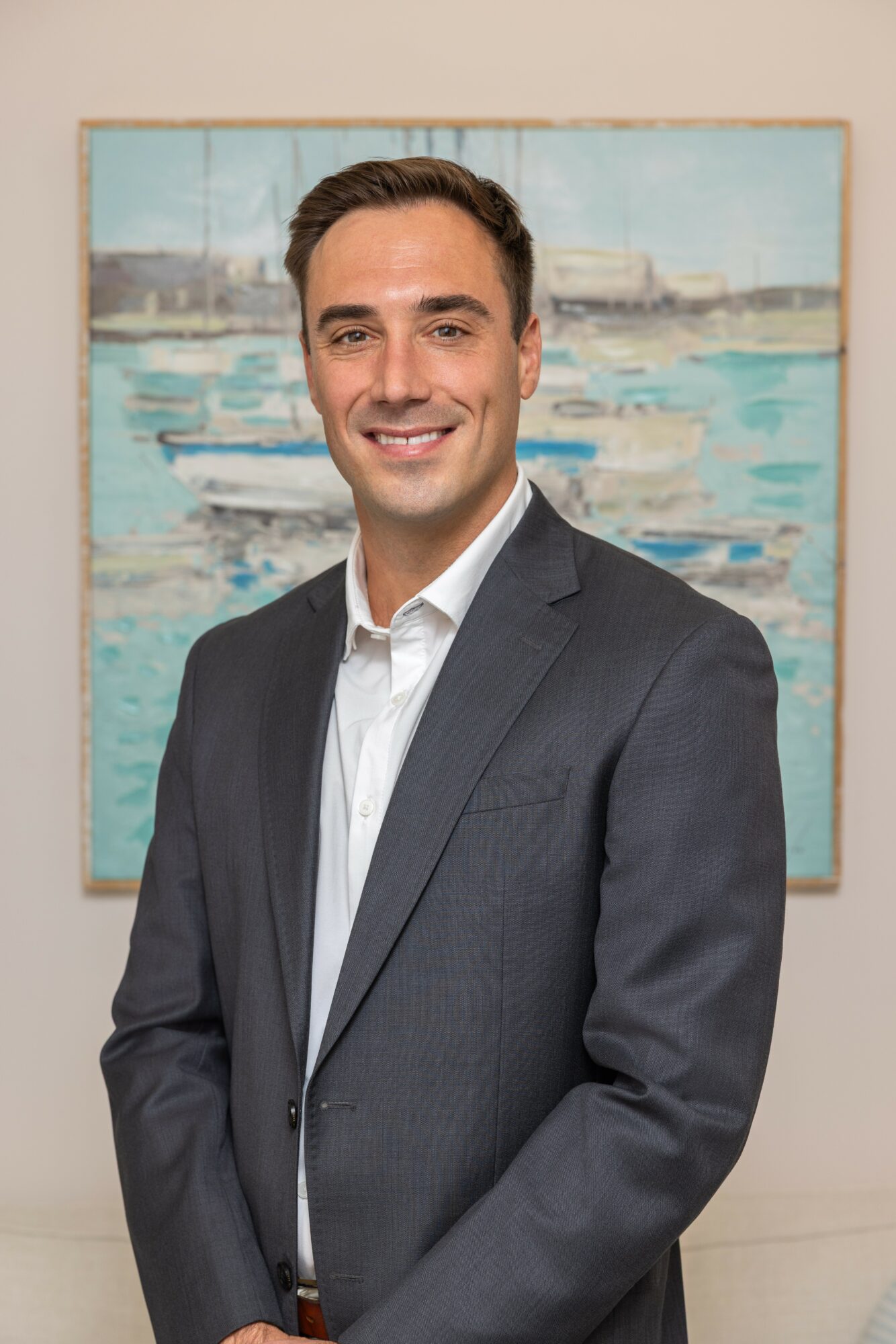
Image Credits
RedBelt Creative
Popular
-

LA’s Most Inspiring Stories
-

Portraits of the Valley
-

Rick Norris Learned That Building a Successful Business Means Building a Life You Actually Want to Live
-

How Olivia Rush Turned Survival Into a Mission to Help Others Keep Going
-

How Bibi Goldstein Is Helping Entrepreneurs Reclaim Their Time by Embracing the Power of Delegation
-

Victoria Hasson is Redefining Voice Coaching Through Community and Collaboration


