




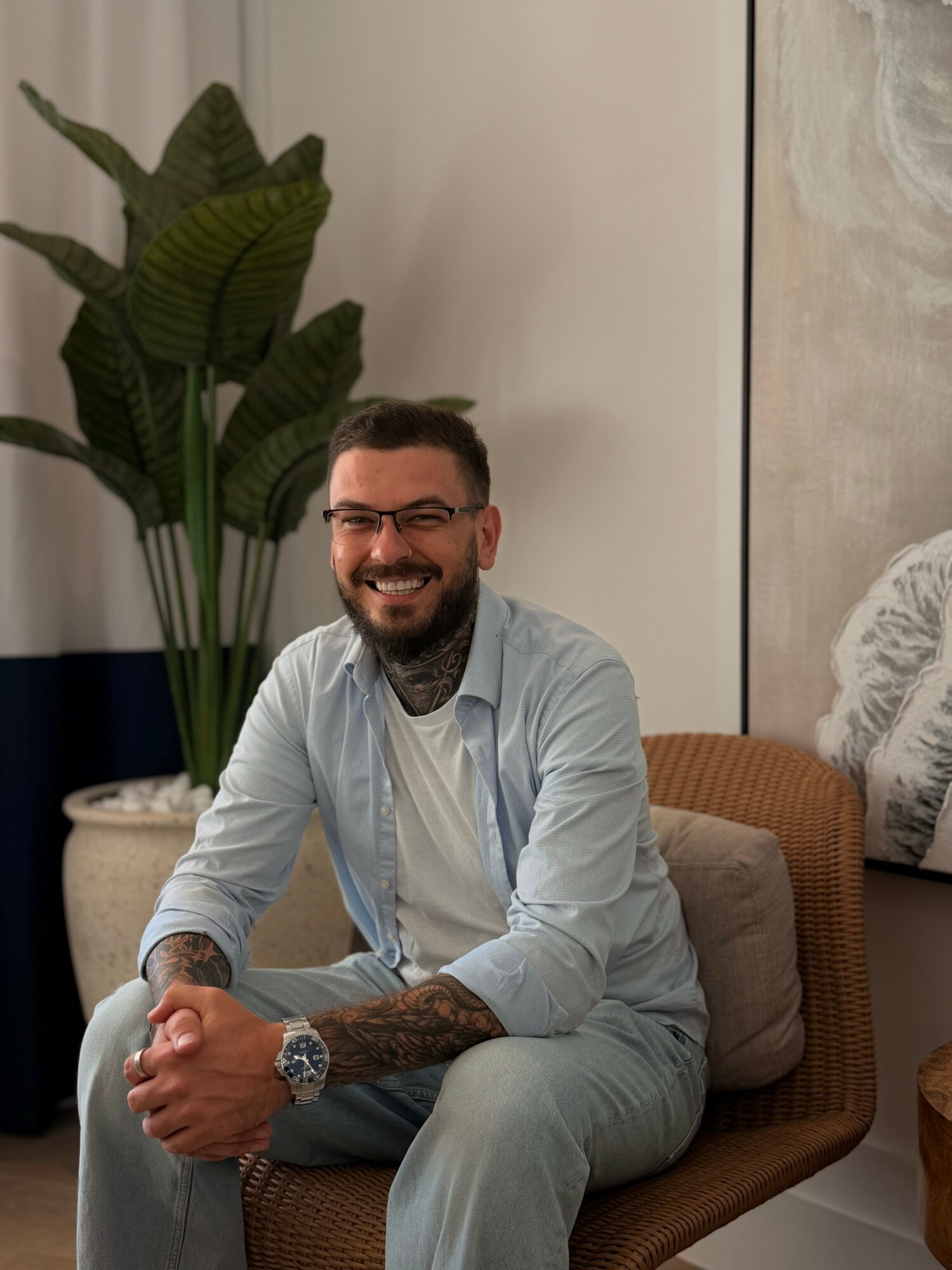
Today we’d like to introduce you to Dmytro Nechytailo.
Hi Dmytro, we’re thrilled to have a chance to learn your story today. So, before we get into specifics, maybe you can briefly walk us through how you got to where you are today?
My path definitely wasn’t a straight line—and honestly, I think that’s exactly why I ended up where I am.
I started in performance marketing back in 2016, but not in the way most people do. I jumped straight into international digital products, gaming, and tech. I was buying traffic for entertainment platforms, working with Facebook and Google, and eventually managing campaigns with multimillion-dollar budgets. Pretty early on, I learned a crucial lesson: driving traffic is only half the battle. If the product or the unit economics don’t work, no amount of ad spend will save the business.
That realization pushed me beyond media buying. I became obsessed with what happens after the click—the entire customer journey, the real cost of acquisition, why people buy or don’t buy. I moved into product marketing and operations, and that’s where things really started to take shape.
At WePlay! Esports, we rebuilt the entire funnel and dropped customer acquisition cost from $8 to $2 while tripling product revenue in just four months. Later, as Head of Marketing Operations at PIN-UP Global, I scaled a team from 10 to 20 people and managed massive monthly ad volumes. Then I led international media buying for Everad, a global affiliate network. Each role taught me something new about systems, scale, and the gap between good advertising and a healthy business.
But the real turning point came when I moved to South Florida around 2023. I started spending time around tattoo artists, and something really stood out. These were incredible professionals—internationally recognized, award-winning, doing projects worth thousands of dollars. But the business side of what they did was surprisingly fragile. One month they’d be fully booked, the next they’d have empty weeks. Most were relying almost entirely on Instagram and referrals. When an algorithm changed, their inquiries would just… drop.
I started asking myself: Could the approaches I used in large digital businesses work here? Not by copying a tech model—that would be lazy and ineffective—but by truly understanding how this particular industry works. How far will someone travel for a specific artist? How does style affect demand? How does seasonality shift across different cities?
That question became the foundation of NEDS Marketing.
I started working with individual artists, and the results were compelling. In Miami, a black-and-gray realism artist generated over $316,000 in confirmed bookings on about $24,000 in ad spend—a 13x ROAS. Then we repeated that success in San Francisco, Ohio, Philadelphia, Toronto, and other markets. Different cities, different styles, different price points—but the underlying system kept delivering.
At some point, I realized we weren’t just running ads anymore. We were building an actual infrastructure—a system that combines detailed artist briefs, AI-assisted data processing, geographic targeting down to ZIP-code level, and real human strategy. We called it NEDS GRID™.
Today, I see what we do as more than advertising. Yes, we still work directly with artists and studios across the U.S. and Canada—we’ve supported over 50 professionals so far. But around that work, we’ve built our own tools, data sets, and resources: a Tattoo Seasonality Calendar, a sponsorship database, a convention tracker, and practical guides like Get Booked Out for artists who want to take control of their own client flow.
The goal was never to automate creativity. Tattooing is a deeply personal, human craft. But the business around it doesn’t have to be unpredictable. I want artists to spend less time worrying about where their next client is coming from and more time doing what they do best—creating incredible work.
That’s where I am today: building systems that make client acquisition more stable, more data-driven, and more human at the same time. And honestly, I’m just getting started.
Can you talk to us a bit about the challenges and lessons you’ve learned along the way. Looking back would you say it’s been easy or smooth in retrospect?
Not at all. And honestly, I think if someone tells you it was smooth, they’re probably not being completely honest—or they haven’t been doing it long enough.
One of the first and biggest struggles was realizing that the marketing models I had spent years perfecting in digital products and entertainment simply didn’t translate the way I expected them to. In tech and gaming, you have relatively predictable funnels. You run ads, you track conversions, you optimize. There’s a certain logic to it that, while not easy, is at least familiar.
But tattooing? It’s completely different. A high-level tattoo artist isn’t selling a typical local service. You can’t just draw a five-mile radius around a studio and say, “This is our audience.” People will travel across states, wait months, and spend thousands of dollars for the right artist. That completely broke my usual assumptions about geographic targeting and audience behavior.
So I had to unlearn a lot of what I thought I knew. We had to move away from standard local marketing logic and build something from scratch. That meant developing our own geographic data models, studying seasonality patterns, and understanding how different styles—realism, fine line, botanical—attract completely different audiences with completely different behaviors.
Another major challenge was that every artist is essentially a unique business. Two artists in the same city, working in similar styles, can have completely different pricing, goals, and ideal clients. One may want a steady flow of smaller pieces; another may only want large, multi-day projects. Marketing them the same way would be a disaster. So we had to build a system that could adapt to each individual artist rather than applying a one-size-fits-all solution.
Then there was the credibility gap. When I started, I was an outsider. I had years of experience in performance marketing, but I wasn’t a tattoo artist. I had to earn trust by delivering results, not by talking about my past achievements. That took time. Our first major case in Miami—$316,000 in bookings on $24,000 in ad spend—was a turning point. It proved that the approach worked, not just in theory but in the real world.
And honestly, building the infrastructure itself has been a constant challenge. We didn’t set out to build a big system. We kept running into specific problems that needed real solutions. Over time, those solutions accumulated into what is now NEDS GRID™—but it wasn’t a master plan from day one. It was messy, iterative, and full of trial and error.
I think the biggest ongoing struggle is balance. I believe in using AI and automation where they genuinely help—processing data, structuring information, saving time. But tattooing is a deeply human craft. If someone is preparing to spend thousands of dollars on a custom piece, they want to feel that a real person is paying attention to them, not that they’re being pushed through an automated funnel. So we constantly have to ask: where does technology help, and where does it hurt? That line isn’t always obvious.
At the end of the day, the struggles have been real. But they’ve also been necessary. Every challenge forced us to think more deeply, build more carefully, and understand the industry on its own terms rather than imposing our own assumptions. That’s what makes the results genuine, not just lucky.
Alright, so let’s switch gears a bit and talk business. What should we know?
At its core, NEDS Marketing is a client acquisition and marketing infrastructure company. But that sounds a bit technical. What we actually do is help highly skilled tattoo artists and studios build a stable, predictable flow of clients—so they can stop worrying about where their next booking is coming from and focus on what they do best: creating incredible art.
We specialize in the tattoo industry, but we don’t treat it like a typical local service business. Tattooing is unique. Clients don’t choose the closest studio; they choose a specific artist, their style, their portfolio, their reputation. People will travel across states, wait months, and spend thousands of dollars for the right artist. That completely changes how marketing should work.
What we’re known for is building systems that actually understand this dynamic. Our proprietary framework, NEDS GRID™, combines detailed artist briefs, AI-assisted data processing, geographic modeling down to ZIP-code level, and real human strategy. We don’t just run ads—we build the entire infrastructure around client acquisition: CRM integration, workflow automation, analytics, and reporting.
What sets us apart? A few things.
First, we’ve worked with over 50 tattoo professionals across the U.S. and Canada—realism artists, fine line specialists, botanical artists, in cities from Miami to San Francisco to Toronto. We’ve accumulated real-world data on what works across different styles, price points, and markets. We don’t guess; we know.
Second, we’ve developed our own tools and resources for the industry: the U.S. Tattoo Seasonality Calendar, a database of brands and sponsorship opportunities, a convention tracker, and practical guides like Get Booked Out. These aren’t just marketing materials—they’re genuinely useful resources that artists can use independently.
Third, we believe in balance. We use AI and automation where they save time and improve efficiency, but we never let technology replace the human element. Tattooing is built on trust, creativity, and personal connection. Our systems support that, not replace it.
What am I most proud of brand-wise? Honestly, it’s not one campaign or one number, although the results speak for themselves—13x, 17x, 21x ROAS across different markets. What I’m most proud of is that we’ve built something that genuinely works for artists. When an artist tells me they finally feel like their business is stable, that they can plan ahead, that they’re not constantly stressed about Instagram algorithms—that’s what matters.
What do I want readers to know? That the tattoo industry deserves better than unreliable Instagram reach and word-of-mouth. The business side can be just as professional and predictable as the art itself. We’re here to make that happen—not by automating creativity, but by building a smarter business infrastructure around it. We’re not just an agency; we’re a partner in helping artists build sustainable careers.
Is there anyone you’d like to thank or give credit to?
Our business, NEDS Marketing, helps tattoo artists and studios across the U.S. and Canada build stable, predictable client acquisition systems. We specialize in the tattoo industry and combine data-driven marketing, AI-assisted tools, and human strategy to make bookings more consistent. What sets us apart is our proprietary NEDS GRID™ system and the fact that we’ve worked with over 50 professionals across different styles, cities, and price points. We’re proud to be more than just an agency — we’re a partner in building sustainable creative careers.
Contact Info:
- Website: https://neds.marketing/
- Instagram: https://instagram.com/neds.me
- LinkedIn: https://www.linkedin.com/company/neds-solutions-inc and linkedin.com/in/dmytronechytailo
Image Credits
Dmytro Nechytailo, NEDS Marketing
Popular
-

Portraits of the Valley
-

LA’s Most Inspiring Stories
-

Rick Norris Learned That Building a Successful Business Means Building a Life You Actually Want to Live
-

How Olivia Rush Turned Survival Into a Mission to Help Others Keep Going
-

How Bibi Goldstein Is Helping Entrepreneurs Reclaim Their Time by Embracing the Power of Delegation
-

Victoria Hasson is Redefining Voice Coaching Through Community and Collaboration


