





Today we’d like to introduce you to Anthony Flynn.
Hi Anthony, it’s an honor to have you on the platform. Thanks for taking the time to share your story with us – to start maybe you can share some of your backstory with our readers?
YouBar started in 2006 in a home kitchen. Anthony Flynn, our founder and CEO, was a senior at USC making his own protein bars because his food allergies ruled out most of what was on the shelf. Friends started asking for their own versions. Around the same time he was shopping for a laptop on Dell’s website, where you could build your own computer, and he thought: why can’t you do that with a protein bar? He took a web design class at a community college, built the site, and YouBar was born.
Orders came in for 50 boxes, then 100, then 1,000, and they weren’t from people who were very hungry. They were from yoga instructors, CrossFit gym owners and diet book authors using the site to launch their own bar lines. That was the real business, so we followed it. We moved from the home kitchen to a 750 square foot rental kitchen, then a 3,500 square foot facility, then a 15,000 square foot plant in Monterey Park that we still run today, and then our 50,000 square foot headquarters in City of Industry. In 2012 we shut down direct-to-consumer entirely and went all in on co-manufacturing. In 2018 we expanded past bars into cookies, donuts, toaster pastries, baking mixes and protein powders, because our clients kept asking and saying no was costing everyone opportunity.
Today we produce more than a million units a week, and field over 100 inbound leads a week from brands looking for a protein partner. Our clients’ products sit on shelves at Whole Foods, Target and Walmart and lead their categories on Amazon. In 2024 our products contained more than a billion grams of protein. Revenue grew 85% from 2022 to 2024.
Last summer The New York Times spent a day in our facility and called us the food lab “fueling the big protein boom.” That is a fair description of how we work. We don’t spend money on marketing. We spend it on innovation, so that when a client launches a product, it lands. Anthony keeps a replica of Willy Wonka’s purple coat behind his desk, and the philosophy behind it is serious: if a brand can dream up a product, our job is to figure out how to make it real.
Alright, so let’s dig a little deeper into the story – has it been an easy path overall and if not, what were the challenges you’ve had to overcome?
No. The road has been anything but smooth, and most of the hard parts came from growing faster than our infrastructure could handle.
The first struggle was capacity. We went from one person making bars in a home kitchen to 30 or 40 people cranking them out in a 750 square foot rental space, and every facility we moved into felt enormous on day one and cramped within a year. Scaling a food manufacturing operation is not just square footage. It is equipment, food safety systems, certifications, staffing and process documentation, all of which have to be built before the volume arrives, not after.
The second is technical, and it never goes away. High protein products are genuinely difficult to make. Protein fights you on texture, it hardens over shelf life, and the more ambitious the concept gets, the more the formulation and the equipment have to be reinvented. Layered bars, coatings that survive a summer truck, baked goods that hit a real protein claim and still taste like a donut. Most manufacturers avoid this work for good reason. We built the company around doing it, which means we absorb a lot of failed trials that clients never see.
We also chose to run low minimum order quantities so emerging brands could actually launch, and that decision cost us for years. Short runs mean constant changeovers, and changeovers are where margin goes to die. We had to design custom changeover processes and invest in equipment specifically to make small runs viable. It was expensive and slow to solve, and it is now one of the main reasons brands come to us.
The last one is the risk we live with permanently: trends move. We have watched low carb, paleo, keto and clean label rise and fall. Protein is the biggest wave we have ever ridden, and we do not take it for granted. Our answer is to keep our clients innovating so the category keeps earning its shelf space instead of aging out.
Thanks for sharing that. So, maybe next you can tell us a bit more about your business?
We are a contract manufacturer, or “co-man,” of high protein food. Most people have never heard of us, but they have eaten our work. Brands come to us with an idea, and we handle the formulation, the sourcing, the production, the packaging and the compliance that turns it into something a retailer will stock. Our clients range from household names with sales in the hundreds of millions to founders with a concept and a first order.
We started with bars and that is still what we are best known for, but the portfolio now includes protein toaster pastries, cinnamon rolls, cookies, donuts, nut butter balls, rice crispy treats, baking mixes and protein powders. A protein churro is in development. And we produce more than a million units a week.
Three things set us apart.
The first is that we are an innovation shop that happens to own factories. Our test kitchen is at the center of the building, and we take on the products other co-manufacturers turn down. Dual extrusion, layered bars, coatings engineered to survive a summer trailer, baked goods that hit a real protein claim and still taste indulgent. If a client can describe it, our job is to figure out how to make it real at scale.
The second is our minimum order quantities. The industry standard minimum in the industry is 100,000+ units, which means a new brand cannot get in the door. We built custom changeover processes and bought specific equipment so we could run far smaller batches profitably. That decision took years and a lot of money to solve, and it is why brands that later become big start with us.
The third is speed to market on trends. We learned this in 2009 when a customer asked for a paleo bar and we had no idea what paleo was. Within months we were producing thousands of them. Being first on an emerging trend changes a brand’s trajectory, and we are built to move at that pace.
What we are proudest of is that our clients’ products win on the shelf. They sit in Whole Foods, Target and Walmart and lead their categories on Amazon. We do not spend money on marketing. We put it into innovation so that when a client launches, it works.
What matters most to you? Why?
What matters most to us is the people who make it work, on both sides of the door. Inside our plants, we have people who have been with us since the 750 square foot kitchen days, who have learned to run equipment and solve formulation problems that most of the industry avoids, and who built their careers alongside the company as it grew. Outside, we have clients who came to us as one person with an idea and a first order, and are now on shelves at Target and Walmart. Neither of those things happens because of a machine or a recipe. They happen because someone stayed late to fix a coating that kept cracking, or because a client trusted us with the only shot they had at a launch. We are in a business where the product is anonymous by design. Nobody picks up a bar and thinks about who made it. So what we hold onto is the part that is not anonymous to us, which is the group of people who built this and the founders whose businesses we helped make real.
Contact Info:
- Website: https://youbars.com/
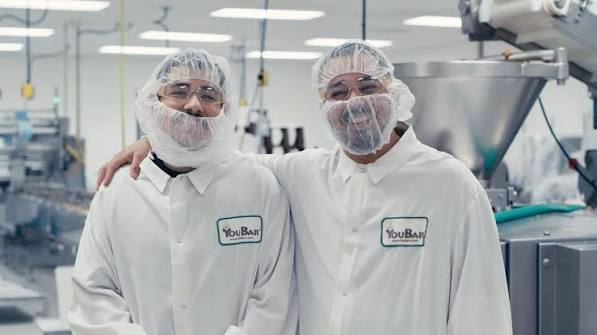
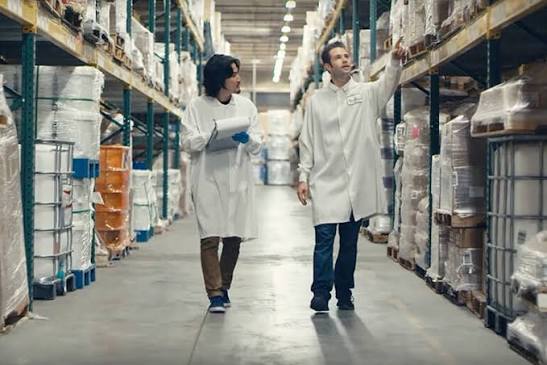
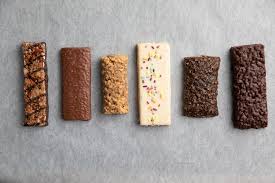
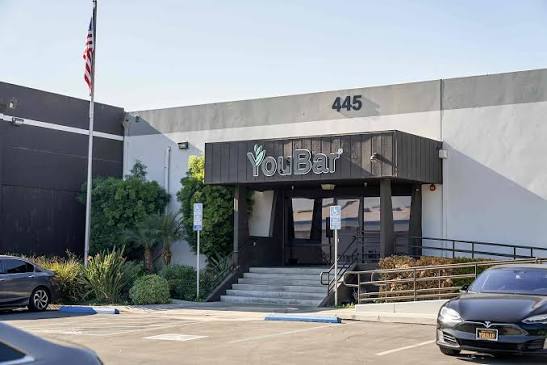
Image Credits
All images are owned by YouBar
Popular
-

Portraits of the Valley
-

LA’s Most Inspiring Stories
-

Rick Norris Learned That Building a Successful Business Means Building a Life You Actually Want to Live
-

How Olivia Rush Turned Survival Into a Mission to Help Others Keep Going
-

How Bibi Goldstein Is Helping Entrepreneurs Reclaim Their Time by Embracing the Power of Delegation
-

Victoria Hasson is Redefining Voice Coaching Through Community and Collaboration


