




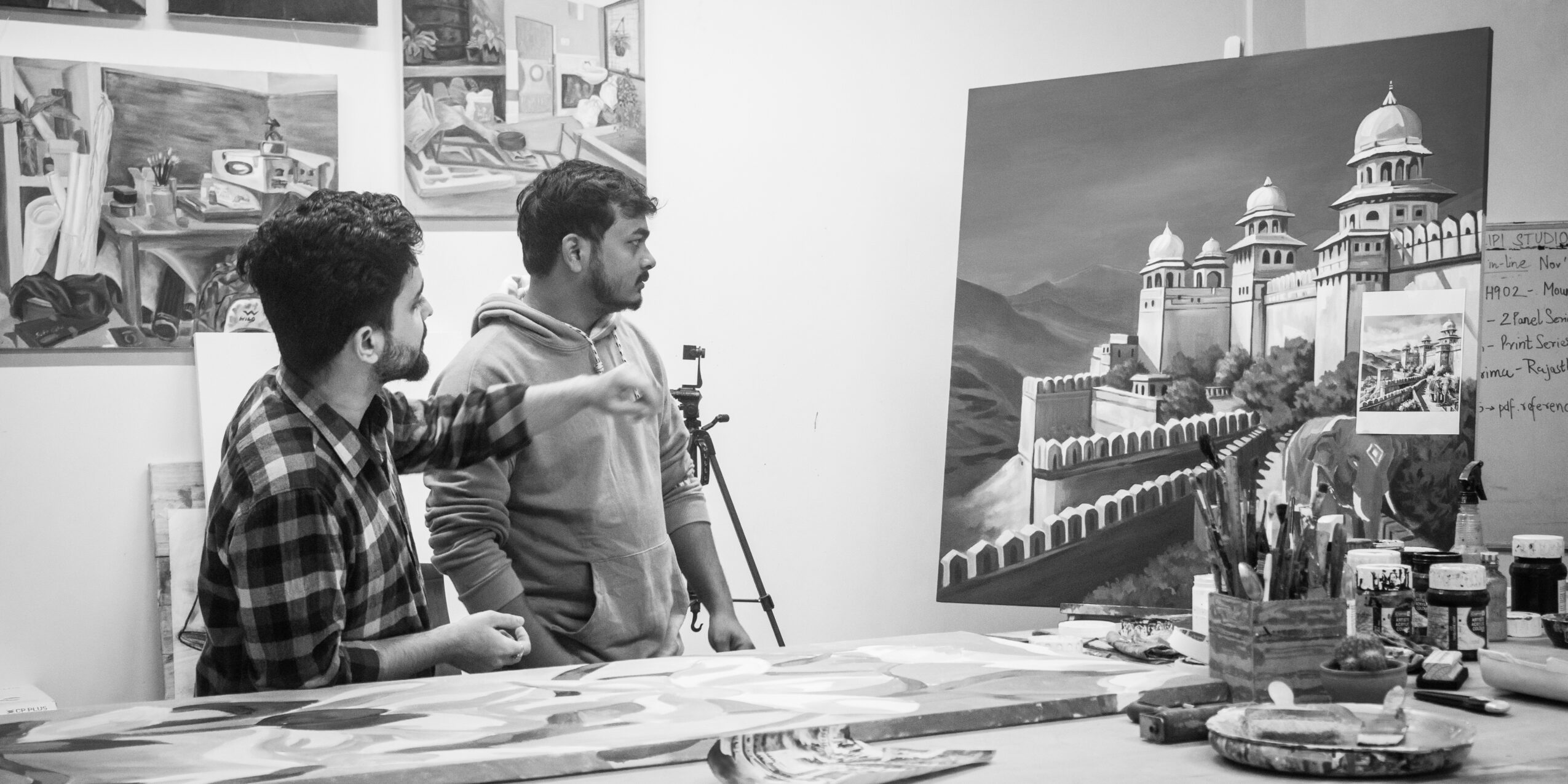
Today we’d like to introduce you to Puru Mehra.
Puru, we appreciate you taking the time to share your story with us today. Where does your story begin?
Artlipi Studios was born out of a period of uncertainty in my life as an artist.
After graduating in Fine Arts, I spent the next few years trying to figure out what I really wanted to do. Like many artists, I found myself in a phase where I was creating, experimenting and taking up occasional work, but struggling to find a clear direction or build something sustainable around my art.
Almost two years after graduating, a close friend of mine called me one day and said, “Let’s do something together.” That conversation became the starting point of Artlipi Studios.
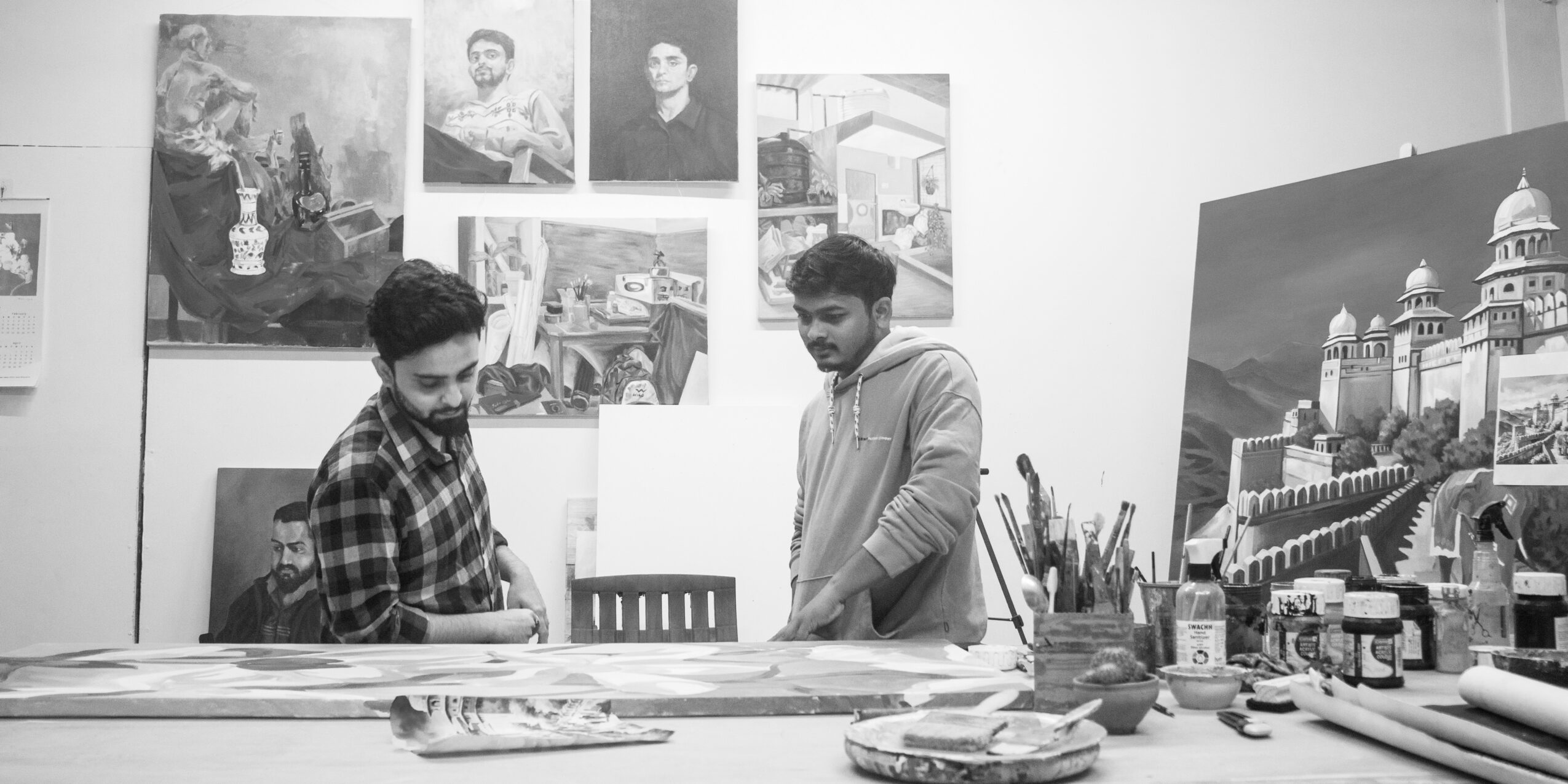
We decided to build something of our own rather than wait for opportunities to come to us. We started small, took on commercial art projects, worked with clients, experimented with different mediums and forms, and gradually began understanding the business side of being artists.
Over time, that small idea turned into a functioning art studio. We began working on commissioned paintings, murals, installations, sculptures and interior art projects, collaborating with architects, designers, businesses and individual clients.
The journey has also changed the way I look at art. I have started understanding art in a very different way now. Earlier, I primarily looked at it through the lens of an artist and a creator. Today, I also understand it through the lens of spaces, people, storytelling, craftsmanship, collaboration and business. I have realised that art can exist in many different forms and contexts while still retaining its creative value.
Today, Our studio is essentially the entrepreneurial journey of two artists trying to build something meaningful from their practice. We are still learning, experimenting and expanding, but the direction is much clearer now.
We all face challenges, but looking back would you describe it as a relatively smooth road?
It definitely has not been a smooth road. Building the studio required a lot of investment in the beginning, and there were times when we were left with almost no money, even struggling to pay the rent and manage basic expenses.
Even today, we are not completely financially stable, and there is still a lot of uncertainty that comes with running a young art business. But those challenges have also become one of the biggest reasons we keep pushing ourselves.
They have forced us to think beyond just creating art and start thinking about how to build a network, find new clients, approach architects and designers, create opportunities and bring more work into the studio. Every difficult phase has taught us to be more resourceful and look for new ways to grow.
I think that is an important part of our journey. We are still figuring things out, but the challenges keep us moving, working harder and thinking bigger.
We’ve been impressed with Artlipi Studios , but for folks who might not be as familiar, what can you share with them about what you do and what sets you apart from others?
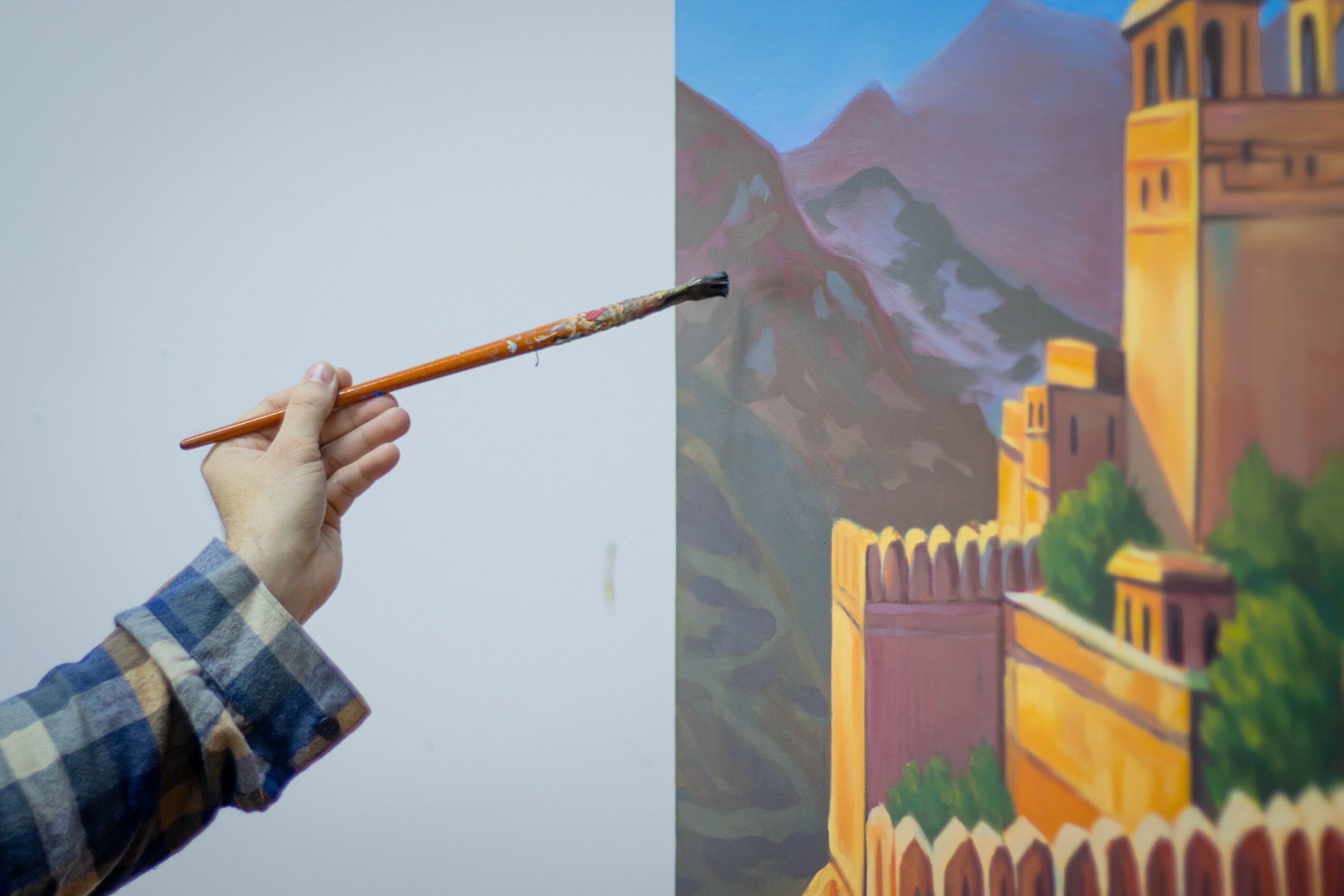
Artlipi Studios is an art studio built by two artists with the idea of looking at art beyond the conventional idea of a painting simply hanging on a wall. We work across paintings, murals, sculptures, installations and functional art, creating pieces that can become an integral part of a space.
We started our practice largely through Western and contemporary art, but over time our understanding of art and design has evolved through AI. We have become increasingly drawn towards Indian art, traditional visual languages and the way Indian craftsmanship can be interpreted in a contemporary setting. At the same time, we have developed a strong interest in functional art, where an artwork can also interact with or become a part of the space rather than exist purely as a decorative object.
A major part of our approach comes from understanding modern interiors. Instead of creating an artwork independently and then trying to fit it into a space, we look at the architecture, materials, lighting, colours and overall character of the interior before developing the artwork. This allows us to create pieces that feel connected to the space rather than simply placed inside it.
We are particularly interested in what we call Indian minimalism. For us, Indian minimalism is different from the Western understanding of minimalism. It does not necessarily mean removing everything until a space becomes completely bare. Indian visual culture has always had colour, texture, symbolism, craft and detail. Our approach is about finding balance between those elements and modern simplicity.
What sets Artlipi Studios apart is this intersection of art, Indian aesthetics and contemporary interior design. We want our work to feel rooted in Indian culture without becoming overly traditional, and contemporary without losing its identity.
Ultimately, we want people to see Us not simply as a studio that sells paintings, but as a creative practice that rethinks how art can exist within modern Indian spaces.
If we knew you growing up, how would we have described you?
Growing up, I was a fairly shy and introverted person. Academically, I was usually among the top students and I was also interested in a lot of different things, so I was considered somewhat of an all rounder. But art was always the one area where I felt the most confident.
I had a reputation for being good at art throughout my school years. My teachers and friends always encouraged me, and most people around me already assumed that I would eventually do something in the arts. My family was also very supportive and never discouraged me from pursuing it.
For a long time, everything seemed quite straightforward. I eventually went on to study Fine Arts, believing that this was naturally the path I was meant to follow. But after graduating, I began to see the reality of being an artist in India. The most obvious and convenient career option seemed to be teaching art. While I respect teaching as a profession, I did not want to spend all the effort I had put into developing myself as an artist only to end up following a conventional career path that did not feel right for me.
That period after graduation was when I started questioning what I actually wanted to build with my art. I knew I wanted to remain an artist, but I also knew that I wanted to create something beyond simply finding a job.
Contact Info:
Popular
-

Portraits of the Valley
-

LA’s Most Inspiring Stories
-

Rick Norris Learned That Building a Successful Business Means Building a Life You Actually Want to Live
-

How Olivia Rush Turned Survival Into a Mission to Help Others Keep Going
-

How Bibi Goldstein Is Helping Entrepreneurs Reclaim Their Time by Embracing the Power of Delegation
-

Victoria Hasson is Redefining Voice Coaching Through Community and Collaboration


