




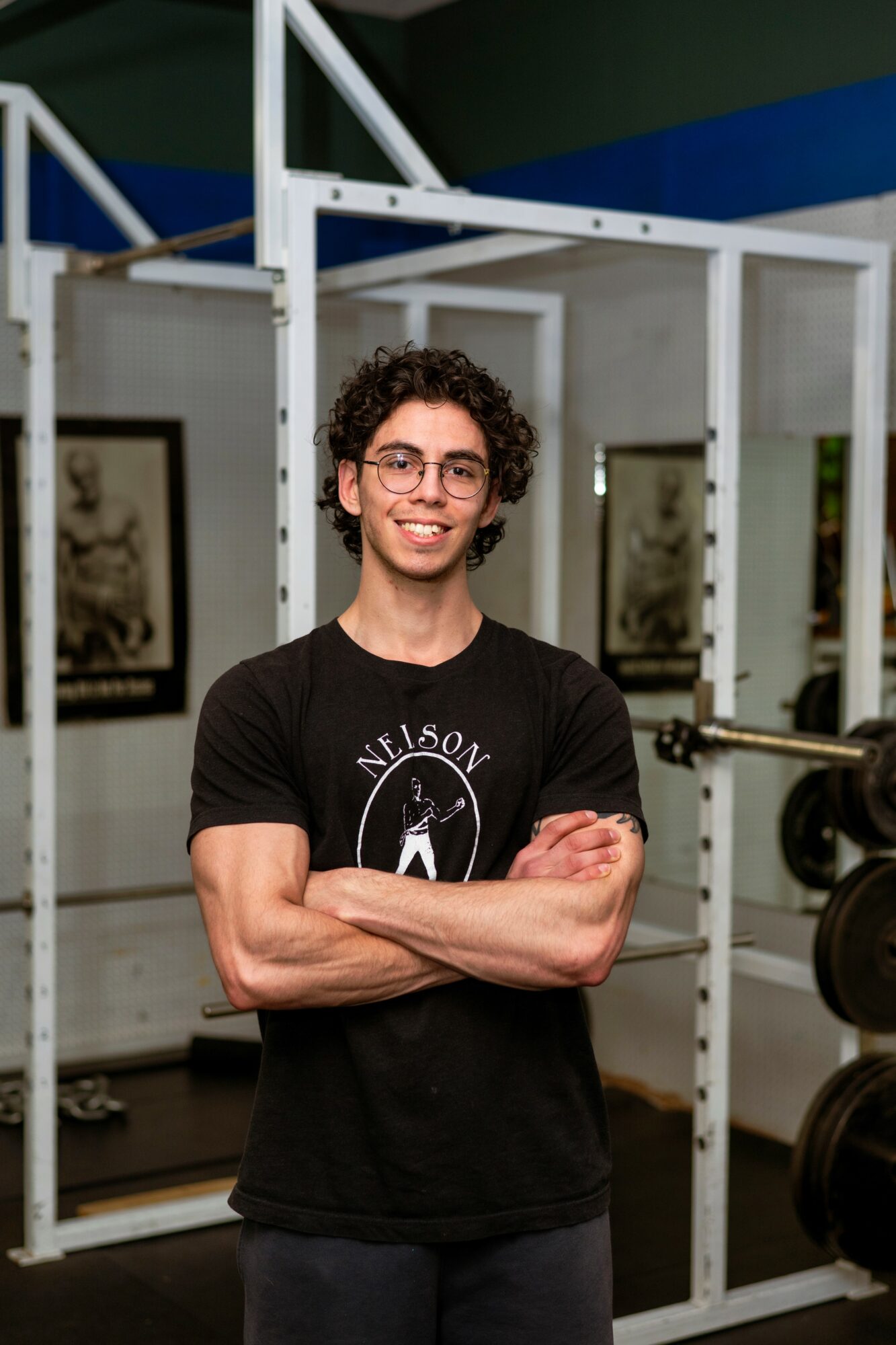
Today we’d like to introduce you to Matheus Loureiro.
Hi Matheus, so excited to have you on the platform. So before we get into questions about your work-life, maybe you can bring our readers up to speed on your story and how you got to where you are today?
The Journey of a Martial Artist
I did not begin my athletic journey because I wanted to become a professional athlete.
When I was 16 years old, I made a decision that would quietly shape the rest of my life. I decided that I wanted to spend my twenties building a body that would allow me to live a long, healthy, and capable life.
I didn’t know exactly what that would look like yet. I just knew that I wanted to be strong, mobile, athletic, and capable of doing things with my body that most people never learn how to do.
That idea became the foundation of my athletic journey.
I started with parkour, which taught me how to move. I learned to jump, land, climb, change direction, and control my body in unpredictable situations. More importantly, I learned that athleticism wasn’t just about being strong. It was about being able to use your body when the situation changed.
Then I found powerlifting.
Powerlifting taught me something completely different: how to become strong. I learned how to train consistently, respect technique, and be patient with progress. At my best, while weighing approximately 147 pounds, I reached a 395-pound squat, a 220-pound bench press, and a 515-pound deadlift.
But strength alone wasn’t enough for me.
I wanted to learn how to move that strength.
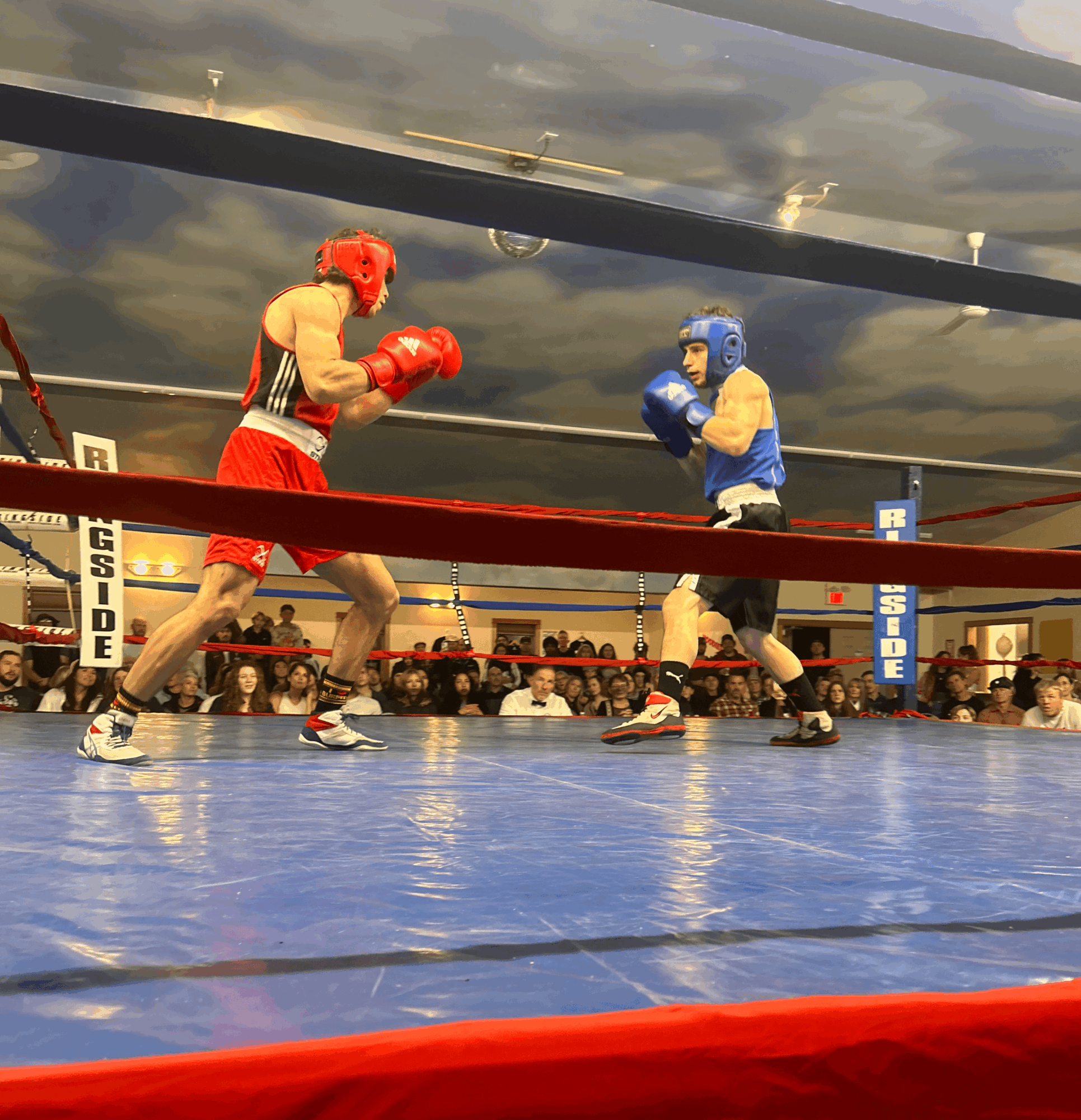
That led me to boxing.
Boxing brought together strength, speed, timing, coordination, conditioning, and the ability to stay calm while someone was actively trying to hit you. It taught me that athletic ability means very little if you cannot control yourself under pressure.
Then came yoga.
Yoga helped me connect the pieces. Mobility, breathing, balance, body awareness, recovery, and control became part of the same picture. I began to understand that building a healthy body wasn’t about becoming good at one physical discipline. It was about creating a body that could move, perform, recover, and continue doing these things for decades.
But there was still something missing.
I had developed strength.
I had developed movement.
I had developed striking ability.
I had developed mobility and body awareness.
I wanted to understand what happened when two people actually had to control one another.
That is what eventually brought me to Brazilian Jiu-Jitsu.
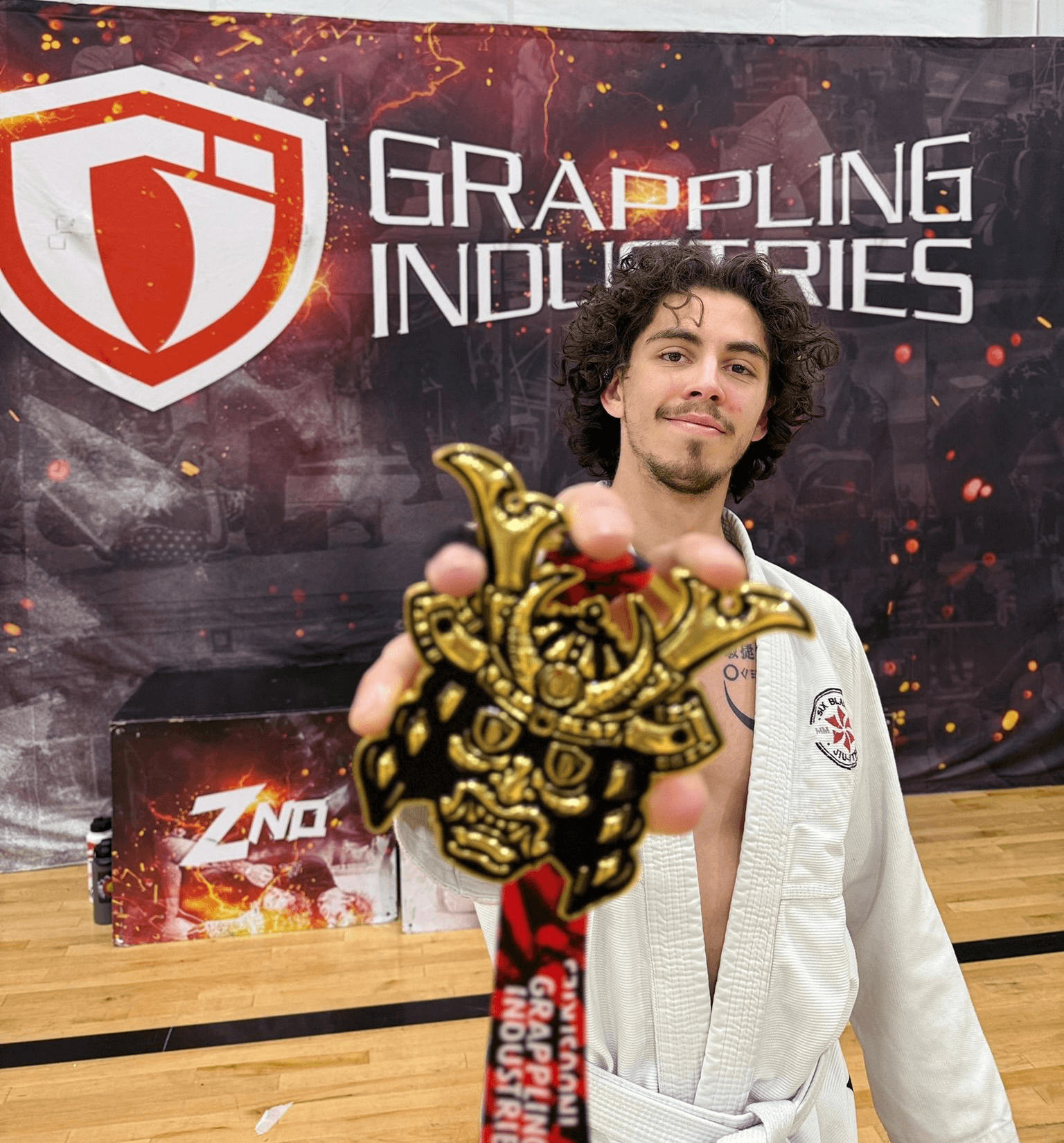
I started training BJJ in 2023, and only three months later I entered my first tournament. I wasn’t an experienced competitor. I simply wanted to test myself.
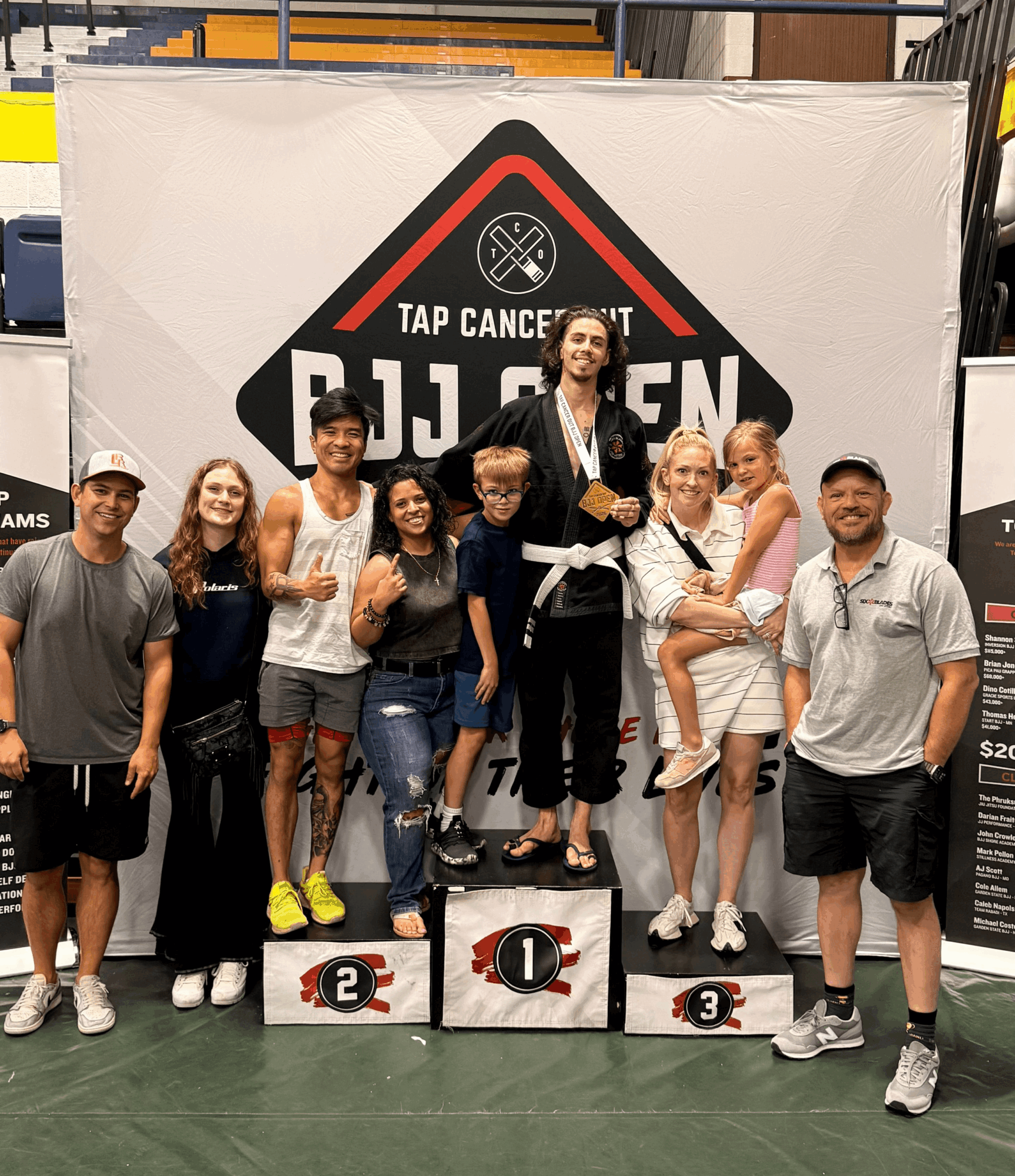
I competed in the Absolute division and finished second place.
That experience changed my relationship with competition.
I began to realize that competition wasn’t necessarily about proving that I was better than someone else. It was a way of discovering where I actually stood, finding the weaknesses in my game, and learning how to perform when the outcome was no longer under my control.
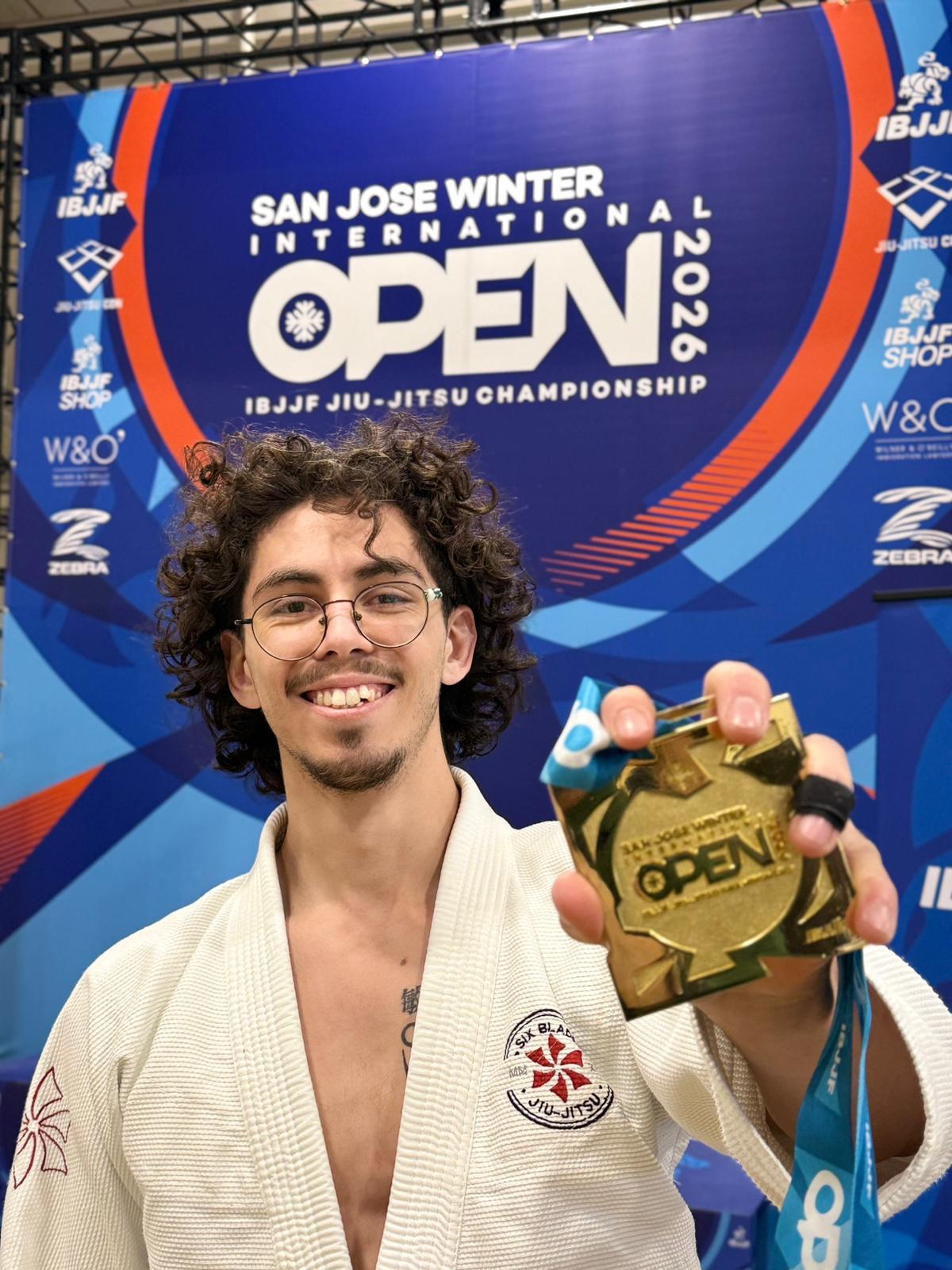
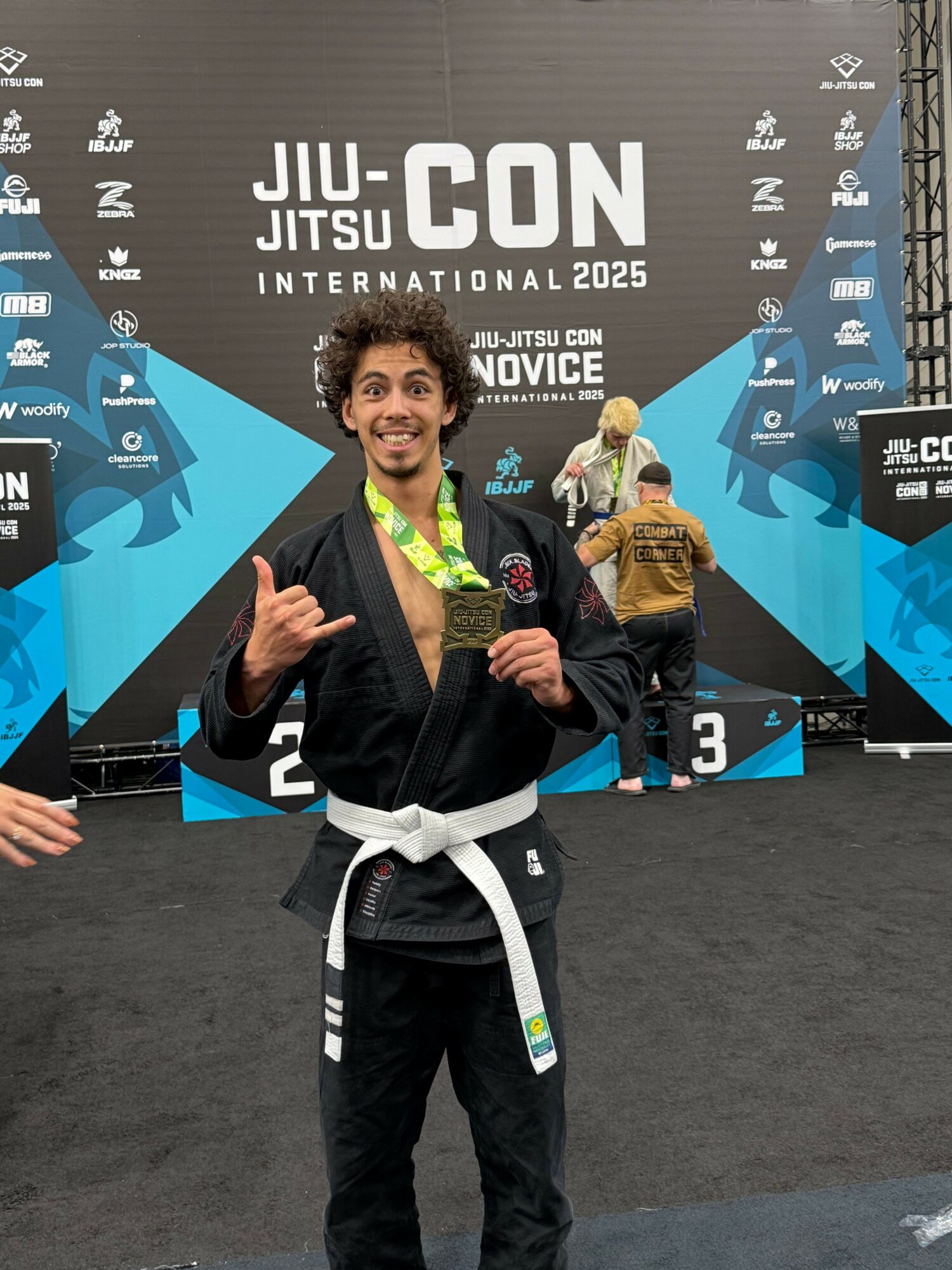
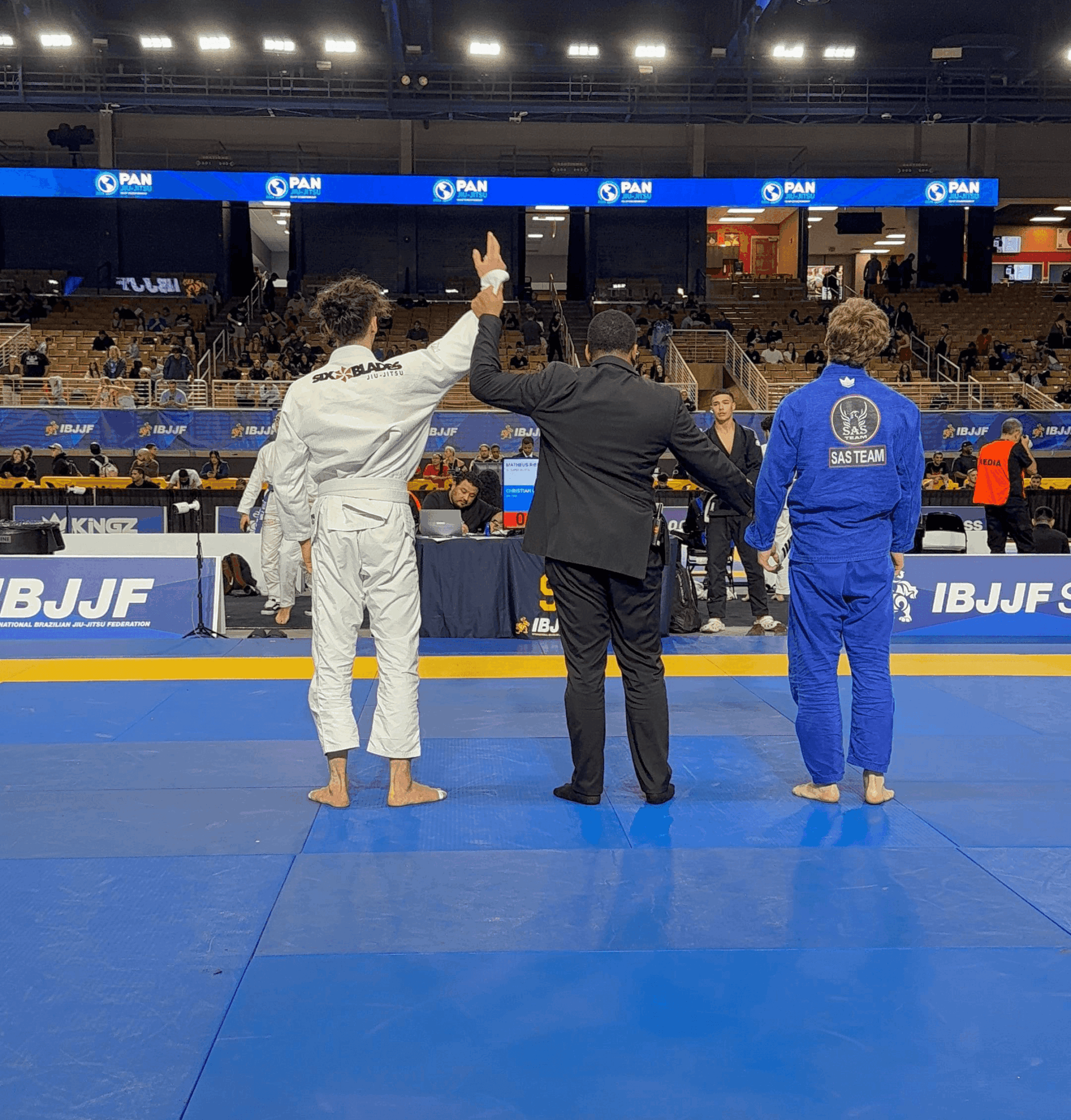
My journey continued through competitions in Canada and the United States. I have competed in both Gi and No-Gi, earned double-gold results at two different tournaments, and placed 5th at the IBJJF Pan American Championship.
Along the way, I met Sensei Rodrigo Antunes.
After meeting Sensei Rodrigo and seeing how the Six Blades style worked, I was all in.
What attracted me to the style was that it wasn’t about making Jiu-Jitsu unnecessarily complicated. It was about taking the basics and doing them extremely well.
That philosophy made sense to me.
Physical attributes change with age. Speed slows down. Strength eventually declines. Recovery becomes different. But good technique, timing, positioning, pressure, and understanding can continue to develop for a lifetime.
After learning from Sensei Rodrigo, Sensei Xande, and Sensei Saulo, I began to develop a clear idea of the kind of Jiu-Jitsu player I want to become.
I want to compete at the highest level while relying on the fundamentals.
Flow. Pressure. Finish.
Simple ideas, executed with a very high level of understanding.
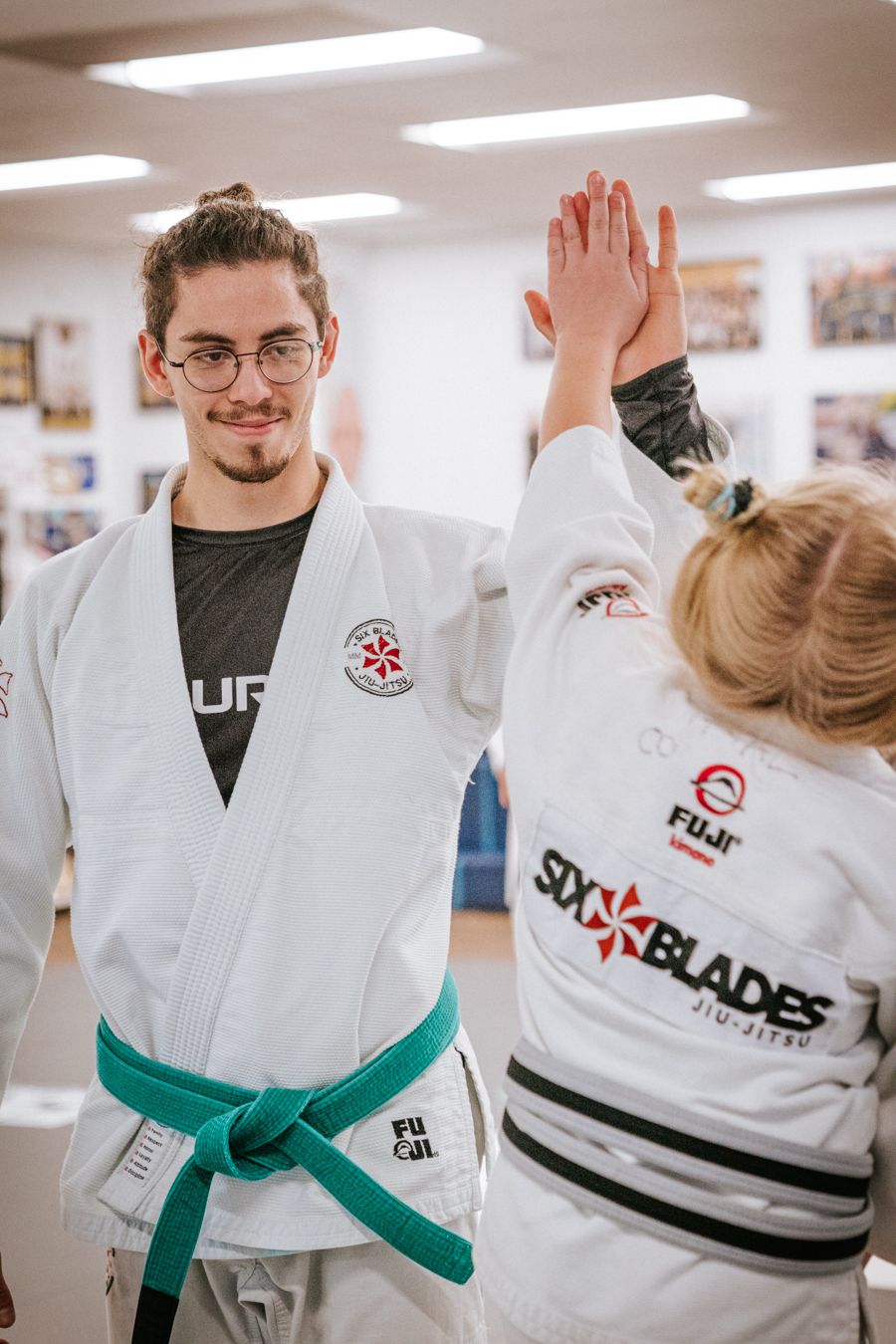
Today, I am a three-stripe Green Belt under Professor Rodrigo Antunes, and I still see myself as someone who is learning.
There is always another technique to understand, another weakness to work on, another person who can teach you something, and another version of yourself waiting to be developed.
That is probably what I appreciate most about martial arts.
There is something about the old warrior traditions that resonates with me — not because I consider myself a samurai or a warrior, but because I admire the principles behind that idea: discipline, humility, patience, preparation, and the willingness to keep walking the path even when nobody is watching.
My Brazilian roots are an important part of who I am. My years in Canada shaped me in different ways. Now my journey has brought me to the United States, where I want to continue developing both as an athlete and as a martial arts instructor.
My goal is not simply to collect medals.
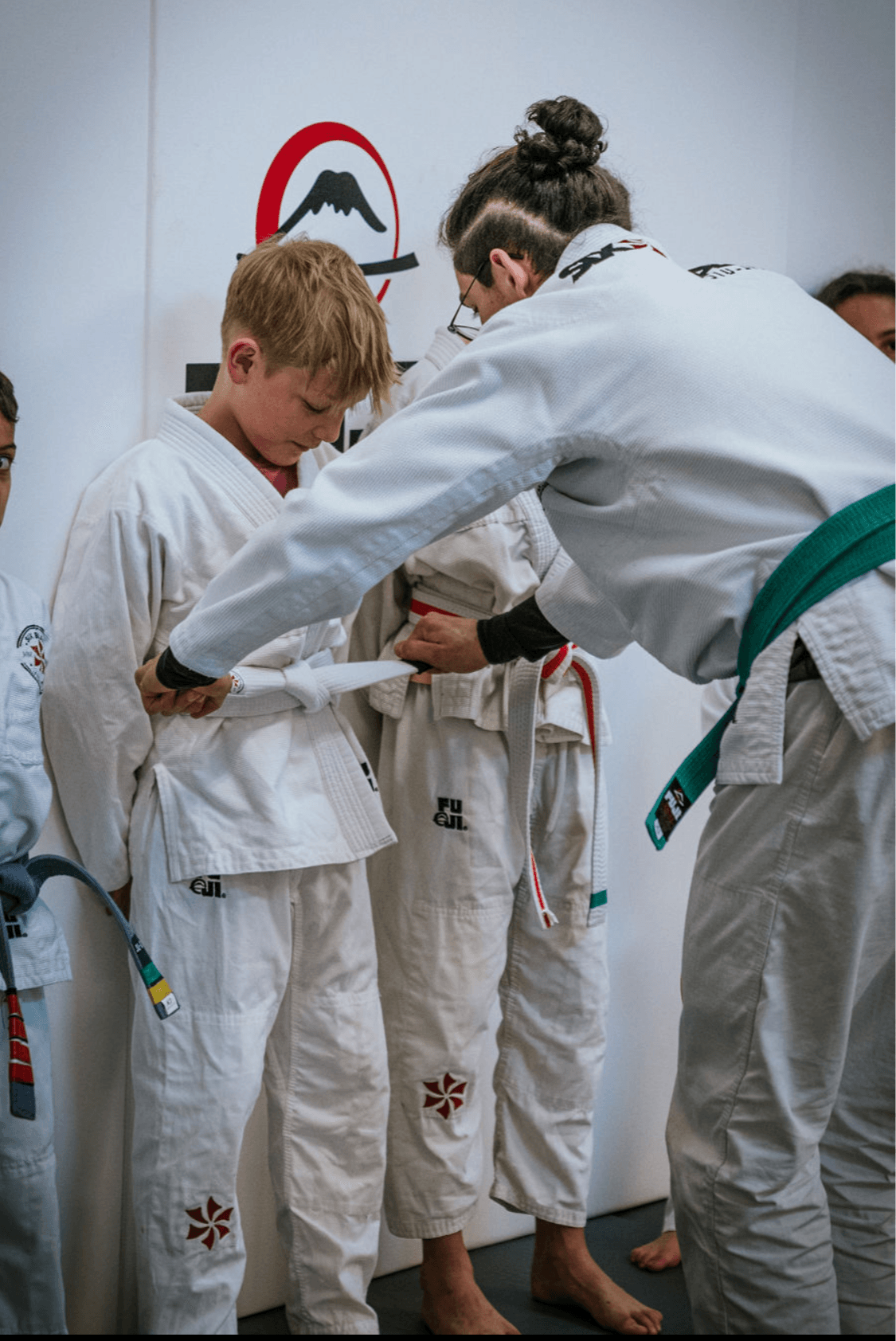
I want to learn how to teach Brazilian Jiu-Jitsu well, help other people experience what martial arts has given me, and continue testing myself against the best competitors I can find.
Ultimately, I want to win one of the four major IBJJF championships.
I know how much work I still have ahead of me.
And that is something I am excited about.
I can’t wait to keep sharpening my skills, learning from the people around me, competing at the highest level I can reach, and helping other people along the way.
The journey started when I was 16 with a simple idea: build a body that would allow me to live a good and healthy life.
Years later, that same idea has taken me from parkour, to powerlifting, to boxing, to yoga, and eventually to Brazilian Jiu-Jitsu.
I am still building.
And I think that is what makes the journey worth telling.
Would you say it’s been a smooth road, and if not what are some of the biggest challenges you’ve faced along the way?
Obstacles and Challenges
My athletic journey has definitely not been a smooth road. Over the years, I have broken several toes, sprained multiple fingers, injured both AC joints in my shoulders, injured my knee, dislocated two ribs, and dealt with an ankle injury.
Injuries are an unavoidable part of training and competition, but I have always tried to approach them intelligently. Because I work as a personal trainer and have a strong understanding of physical preparation and rehabilitation, I learned early that simply pushing through an injury is not always the best way forward. I have consistently modified my training, nutrition, recovery, and rest when necessary so that I could properly heal while continuing to develop as an athlete.
More importantly, every injury has taught me something that I eventually brought back to my Jiu-Jitsu.
When I injured my ribs, I learned the importance of keeping my elbows connected to my body and not allowing opponents to create positions where they could put unnecessary pressure on my ribs.
When I injured my shoulders, I learned that I could not always rely on strength to defend myself. I began working more on becoming bladed to my opponent, using proper body structure and positioning rather than trying to muscle my way through every situation.
When my ankles and toes were injured, I had to become more comfortable fighting from my back. Instead of seeing being on my back as a disadvantage, I learned to develop a stronger guard and become comfortable playing Jiu-Jitsu from positions where I could not rely on my feet.
When I injured my knee, I learned to slow down. I became more patient about entering positions and more conscious of getting proper alignment and position before trying to explode or force a technique.
When my hands and fingers were hurting, I learned that I could not depend on grip strength alone. I had to improve my technique, grips, frames, positioning, and ability to control my opponent without constantly relying on my hands.
In that way, my injuries became some of my best teachers.
They forced me to become less dependent on physical attributes and more dependent on technique, positioning, timing, and understanding. That lesson has become especially important to the type of Jiu-Jitsu I want to develop.
I want my Jiu-Jitsu to work even when I am tired, injured, older, or no longer as physically capable as I am today.
The goal is not to avoid every obstacle.
The goal is to learn from each one, adapt, and come back better.
Thanks for sharing that. So, maybe next you can tell us a bit more about your work?
My Work and What Sets Me Apart
My work sits at the intersection of strength and conditioning, movement, martial arts, and long-term physical development.
I am a personal trainer and Brazilian Jiu-Jitsu athlete, but I don’t see those as two separate parts of my life. My approach to training comes from years of personally practicing different disciplines and learning what each one can teach the body.
I started with parkour, where I learned movement, coordination, balance, and the ability to change direction quickly. Powerlifting taught me how to develop strength and discipline. Boxing taught me how to combine strength with speed, timing, conditioning, and movement under pressure. Yoga taught me mobility, breathing, body awareness, and control. Brazilian Jiu-Jitsu eventually brought all of those lessons together through the challenge of controlling another person.
Because I have experienced these disciplines myself, I try to teach from experience rather than simply from theory. I understand what it feels like to build strength, learn new movement patterns, compete, get injured, recover, and start again.
As a personal trainer, I specialize in helping people develop strength, movement quality, athleticism, and physical confidence. I am particularly interested in helping people build bodies that are not only strong, but useful — bodies that can move well, perform under pressure, and continue functioning for many years.
One of the things I am most proud of is that my own athletic development has become a way for me to help other people. The things I have learned through training, competition, and injury have given me tools that I can pass on to my clients and students.
My BJJ journey has also influenced the way I coach. I believe that good training should ultimately make people more capable and less dependent on brute force. That means developing technique, structure, awareness, and the ability to adapt.
What sets me apart is probably my willingness to keep learning.
I don’t believe there is one perfect training method. I have spent years exploring different systems and disciplines, taking what works, questioning what doesn’t, and trying to understand how everything fits together.
That philosophy is also becoming the foundation of the kind of Jiu-Jitsu player and instructor I want to become.
Flow. Pressure. Finish.
Simple principles, practiced deeply.
I am proud of the athlete I have become, but I am even more proud of the fact that I am still learning. I know there is a tremendous amount that I don’t know yet, and that motivates me.
My goal is to continue sharpening my skills as an athlete and coach while helping the people I work with become stronger, healthier, more confident, and more capable than they were when they started.
Is there anything else you’d like to share with our readers?
If there is one thing I would want people to understand about my journey, it is that I am still very much in the process of building it.
I didn’t start training with the goal of becoming a professional athlete or having a story worth telling. I started because, at 16, I wanted to build a body that would allow me to live a healthy and capable life. Over time, that simple goal led me through parkour, powerlifting, boxing, yoga, and eventually Brazilian Jiu-Jitsu.
What I have found along the way is that the physical journey has really been a journey of learning how to live better.
Martial arts has taught me that being strong doesn’t mean always using strength, that getting hurt doesn’t mean you have to stop, and that sometimes the best way forward is to slow down, learn, and start again.
I am proud of the progress I’ve made, but I am even more excited about how much I still have to learn.
I want to continue competing, become a better Jiu-Jitsu player and teacher, and eventually test myself against the best in the world. At the same time, I want to help other people discover what their own bodies are capable of.
I’m not finished building yet. I’m just getting started.
Contact Info:
- Instagram: Matheusloureiro10
Popular
-

Portraits of the Valley
-

LA’s Most Inspiring Stories
-

Rick Norris Learned That Building a Successful Business Means Building a Life You Actually Want to Live
-

How Olivia Rush Turned Survival Into a Mission to Help Others Keep Going
-

How Bibi Goldstein Is Helping Entrepreneurs Reclaim Their Time by Embracing the Power of Delegation
-

Victoria Hasson is Redefining Voice Coaching Through Community and Collaboration


