


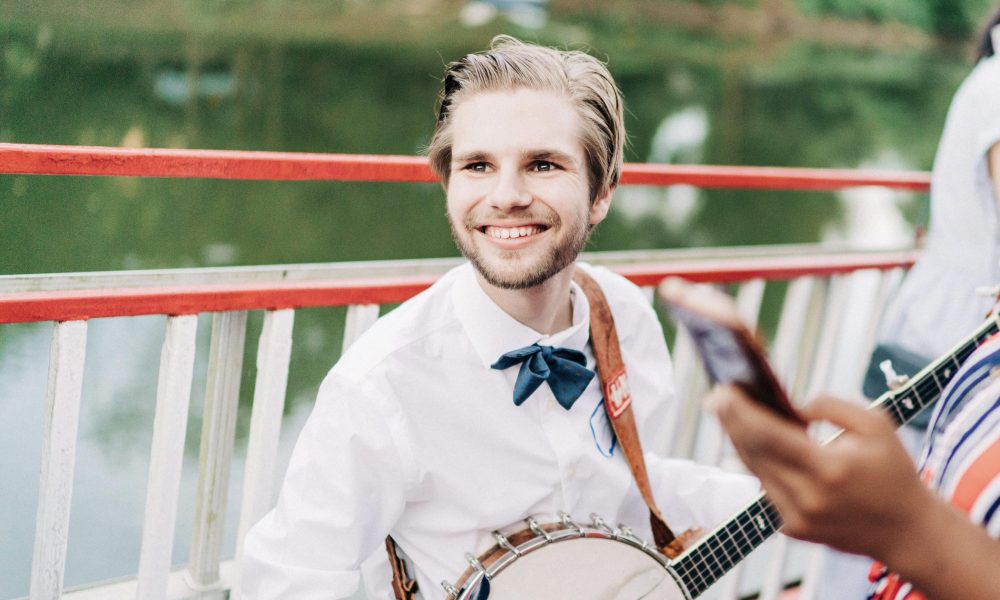
Today we’d like to introduce you to Ian Boone.
Ian, please kick things off for us by telling us about yourself and your journey so far.
I am originally from Louisville, Kentucky, and I was lucky to grow up in a really creative environment. My mom is a painter and graphic designer, and my dad was a musician. I knew I loved art, but couldn’t I couldn’t draw (seriously, I’m not trying to be humble–my drawing ability is the same now as when I was six). The big change happened when I was 11, and my parents gave me a camera for Christmas. I soon discovered that I could take single frames, and make inanimate things move! I had always loved animation, I would watch James and the Giant Peach or old Disney Silly Symphony cartoons on repeat, so I had a reference point for what I liked. At first, I animated little blobby characters on the floor, and within a year I was making small short films. My other love was and still is nature and wildlife, and so it probably surprised no one that my first big project that I started when I was 13 was a web series called Beaver Creek about a beaver named Twigs and his adventures being an ecosystem builder. It was a total collaborative family affair–my dad did all the music and most of the voices and my mom painted the sets, and we didn’t see the kitchen table for a few years because it was buried underneath clay and miniatures.
My obsessions fed each other: I don’t know if I would have gotten as good at animation if I didn’t care as much about real-life ecology; likewise I don’t know that I would have learned as much as I did about the wildlife if I wasn’t animating them. This really set the precedent that almost all of personal work would follow of being rooted in the natural world: The next film that I made at 17 was about an industrial worker who connects with life outside his factory, I made a PSA about the effects of rodent poison on birds of prey, my next short film, at 19, my first year at Cal Arts, was an ode to naturalist John Muir, and the next film, which has yet to be completed (soon I promise!), is set in the dust bowl in the 1930s, about a scarecrow who’s left behind, reflecting on what home means in a place that really is no longer is his home. My most recent project, that was made in collaboration with my wife, Devin, follows a ringtail named Ruby who goes on a quest to save her home, near Prescott, Arizona, from a developer who wants to destroy the Granite Dells, a beautiful natural area of unique rock formations and valleys, and turn it into mansions and tract homes, and a resort. We’re also working on a proof of concept for a miniseries called The Newcomers, based on her articles, about the immigration wars in their epicenter state of Arizona.
In addition to personal projects and a few short films by others, I’ve spent the last several years working on TV, mostly on kids’ shows. I’ve been an animator on Tumble Leaf on Amazon and Ask the StoryBots on Netflix. Both are beautiful shows and have been such a pleasure to be a part of. Tumble Leaf was my first real job in the animation industry, and it’s where I learned how to animate quickly and good at the same time. It was also intensely collaborative–I got to work with some of the very best designers, fabricators, costumers and animators anywhere. When working on personal projects you have to be responsible for a lot more, whereas on a show I can really focus on animating. If a puppet breaks at a studio, we can rush it over to the puppet hospital. And then, on Ask The Storybots, because it was a mixed-media show, I was constantly being inspired by people doing other forms of animation and it was always amazing to see my work come together in the final product. I was also one of the only stop motion animators, so I had more of a voice in the stop motion sequences. I’ll soon be animating on a feature film called Wendell and Wild, which is a very exciting collaboration between Key & Peele and the legendary stop motion director Henry Selick. (My seven-year-old self, who watched James and the Giant Peach constantly, would be proud.)
Can you give our readers some background on your work?
I’m a stop motion animator, which means I spend all day behind black curtains hunched over a set moving tiny things very tiny amounts, but in all seriousness, I love stop motion, I always have. It’s tactile and somewhat imperfect, in a very human way. You are seeing real objects being hit by real light, so there is often a believability to it that I just don’t think you can duplicate in a computer. It’s also very different than most other forms of animation in the sense that it’s what’s called “straight ahead.” You animate one frame after another in a linear fashion, so it’s a true start-to-finish performance, almost like a very small live stage play (except you only get six seconds per day–sometimes less). In my own work, I love making things that have a message but doesn’t feel preachy and I think animation, especially stop motion, is great for connecting with people on a more emotional level. Since there is already a suspension of belief required, it’s something that is often not as polarizing. You can get stronger and more important messages across without being as abrasive. This is one reason we thought our project about Ruby would work–some people like conservationists and some people don’t, but everyone likes Thumper and Gus Gus. There’s something about animation which is just really accessible and appealing, and that is a great place to start out if the issue you want to talk about tends to be divisive.
I have a lot of different inspirations and sometimes it’s important to have different access points to get inspired, Sometimes I need to watch Wallace and Gromit frame by frame and just soak in beautiful animation; other times the inspiration I need comes from sitting on the banks of a creek for hours and just listening to the frogs or watching a beaver haul a stick across the water. I also think it’s super important to have other outlets, so I play the banjo, and I have a deep love for American musical history, which occupies most of my mental space when I’m not thinking about animation.
In your view, what is the biggest issue artists have to deal with?
The last few times I have watched a movie in theaters I’ve noticed a really sad trend. Every single trailer that’s played (especially for animated movies) is either for a sequel or a film based on a big franchise. And while I realize there are still some new ideas being made, it seems like the exception. I think we’re living in a time where very few risks are being taken, and things are only made if there is already an audience for it and therefore money to be made from it. We need to find a way to trust again that people will like things that they haven’t seen before because I think the current assumption is that they’ll see what’s familiar. And the specific challenge for artists is to keep making work that they like, not what they think will be commercial and successful, even if it means turning your living room and all your closets into stop motion sets for six months, haha. It’ll be worth it!
What’s the best way for someone to check out your work and provide support?
People can see my work on YouTube (although some of the work is getting very old) –youtube.com/user/IBTimothys
and Vimeo – vimeo.com/ianboone
As well as in Tumble Leaf on Amazon Prime and Ask The StoryBots on Netflix.
You can also follow me on Instagram @ianbooneanimation – though to be perfectly honest, I mostly post banjo videos there, but I’m trying to post more animation stuff as well!
Contact Info:
- Email: ianbooneanimation@gmail.com
- Instagram: https://www.instagram.com/ianbooneanimation/


 Image Credit:
Bruno Rezza
Suggest a story: VoyageLA is built on recommendations from the community; it’s how we uncover hidden gems, so if you or someone you know deserves recognition please let us know here.
Popular
-

Que Johnson on Building Brands That Last: From Visibility to True Market Authority
-

Christina Wren Steps Into the Director’s Chair to Tell Stories That Feel Like Home
-

Portraits of the Valley
-

LA’s Most Inspiring Stories
-
JordanL on ‘Breathe,’ Belief, and Building a Movement Beyond the Music
-
Megan Birney Rudert on How Access to Light Is Powering a More Sustainable and Equitable Future