


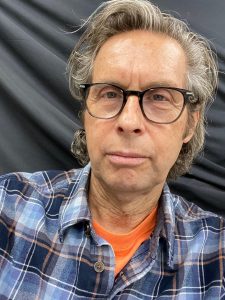
 Today we’d like to introduce you to Victor Estrada.
Victor, we appreciate you taking the time to share your story with us today. Where does your story begin?
I got to where I am today because I am an artist. Therefore, my orientation to the world is articulated through the aesthetic. This method of thinking about the world and experiences began when I was in third grade. It was not aligned with any particular cultural or political point of view but rather with my particular experience of being in this particular world we have.
At the same time, this way of thinking was not a matter of unvarnished self-expression. I understood that forms had histories. And, of course, there were histories of aesthetics and art. These things, in different ways, have played a part in how I make art. Because of this way of thinking, which was compatible with my mind, I pursued my interest in art and eventually got a master’s degree. A few years after my master’s, I was in the show “Helter Skelter” at MOCA. Since then, I have continued to pursue opportunities within the art world. At the same time, I taught in East Los Angeles for 30 years and am currently teaching Beginning Painting at UCLA.
Would you say it’s been a smooth road, and if not what are some of the biggest challenges you’ve faced along the way?
Struggle is the nature of our experience in the United States. I think that is especially true in regards to art. But, I don’t see the struggles as negatives. Rather, they enriched my life with deeper meaning. For example, when I came out of art school, we had three children already. I needed to get a job, which led me to teaching in East Los Angeles in the Division of Adult and Continuing Education. That experience led to my art becoming broader and deeper in relation to the Chicano experience in the United States.
Appreciate you sharing that. What else should we know about what you do?
My primary mediums are painting, drawing, and sculpture, though I have done installations and video. My work explores the relationship between subjectivity, identity, aesthetics, and change. The work is always shifting between these elements as personal and political circumstances change. Often, I will use various cultural myths, such as The Tree of Life and the genre of landscape to situate the work in a context. For example, currently I am working on a series of drawings with Vincent Ramos about the El Paso shooting on August 3rd, 2019 in El Paso, Texas, my parent’s hometown, which brings in to play the American landscape of the extreme right and the myth of an alt-right American origin story in conflict with an immigrant origin story, in particular Mexicans/Latinos/Latinx.
What do you like best about our city? What do you like least?
What I like best about LA is its cultural and ethnic diversity. There are over 40 languages spoken, and a major one is Spanish. This rich confluence of diversity leads to new possibilities culturally. I also like the geographic and environmental diversity of Los Angeles. The ocean, mountains, deserts, and everything else is very easy to get to and explore. What I like least about LA is its tendency toward segregated neighborhoods. This is the legacy of redlining and now gentrification. On the positive side, the San Fernando Valley, in particular, has become more culturally diverse over the years. I hope that continues.


Image Credits:
Martin Elder for some of the photos: Big Rock Candy Mountain, Purple Cloud Racing Across the Sky to Kiss Me.
Popular
-

Christina Wren Steps Into the Director’s Chair to Tell Stories That Feel Like Home
-

Portraits of the Valley
-

LA’s Most Inspiring Stories
-

JordanL on ‘Breathe,’ Belief, and Building a Movement Beyond the Music
-

Megan Birney Rudert on How Access to Light Is Powering a More Sustainable and Equitable Future
-

Linda Kneidinger on Building Lasting Change Through Small Steps and Self-Compassion