




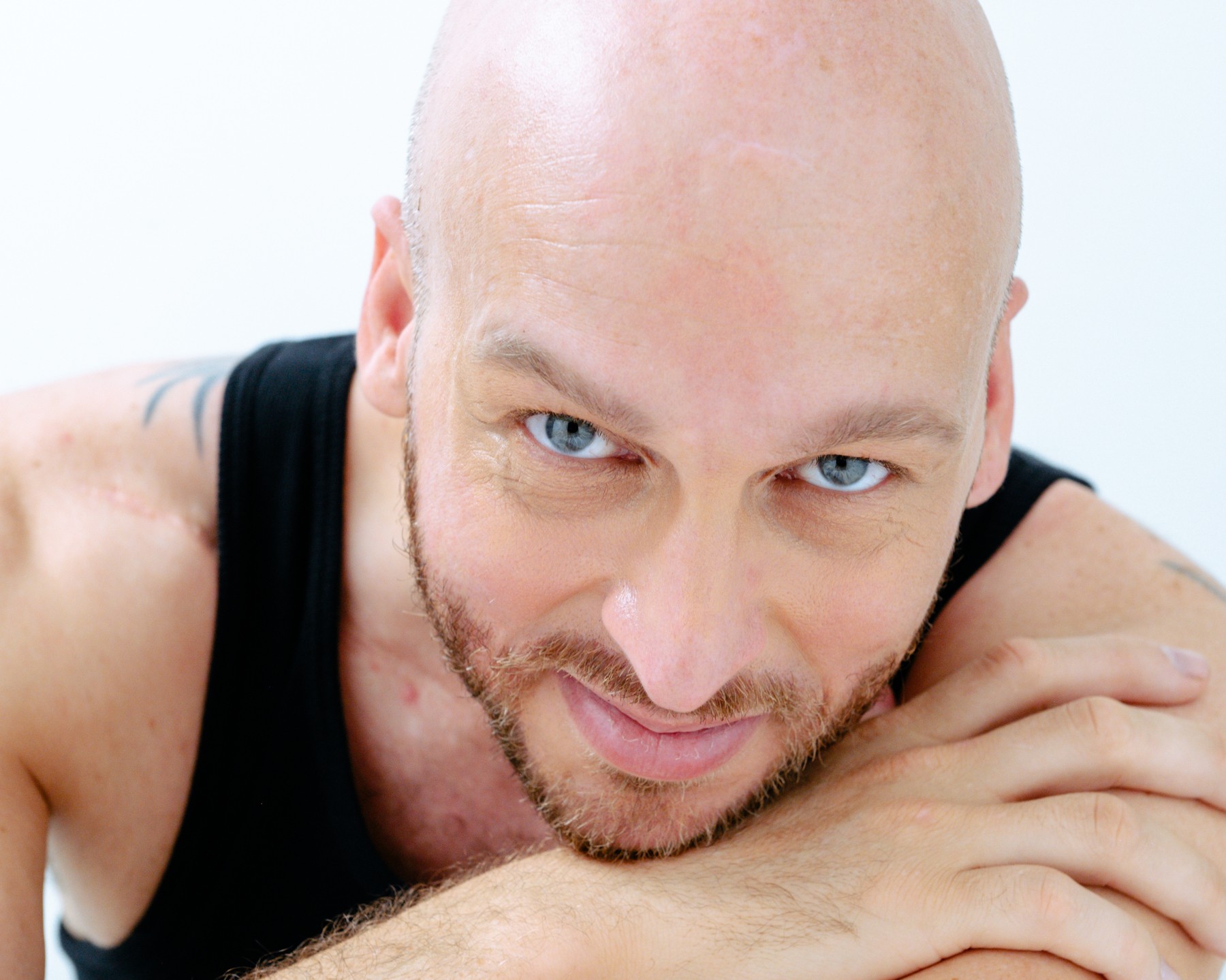
Today we’d like to introduce you to Oswald Hunter.
Hi Oswald, can you start by introducing yourself? We’d love to learn more about how you got to where you are today?
I think the best way to describe my journey is that I took quite a few detours before finally finding my way back to something that had been there all along.
I grew up in the Netherlands, and my childhood wasn’t particularly easy. There were experiences that shaped me in ways I wouldn’t fully understand until much later in life. But even back then, I had an incredibly vivid imagination. I could spend hours creating entire worlds in my mind, building things, drawing, listening to music, or simply observing the people around me. Looking back, I think storytelling became my way of making sense of a world I didn’t always understand or feel comfortable in.
Acting fascinated me from an early age, but wanting something and believing you’re capable of achieving it are two very different things. I struggled with that distinction for years. I would occasionally explore acting, only to retreat into the familiarity of what seemed like a more sensible life.
And that life took me in quite a few different directions!
I’ve worked in security, healthcare, construction, and technical professions. I’ve built and operated businesses, worked with people from all walks of life, and experienced both the satisfaction of building something successful and the heartbreak of watching things fall apart.
For a long time, I thought those were separate chapters that had little to do with my creative ambitions. Today, I see them differently. Every experience gave me a better understanding of people, their motivations, their vulnerabilities, and the sometimes extraordinary ways they respond to ordinary circumstances. As an actor and writer, that’s something I wouldn’t trade for anything.
The real turning point came when I was 35. I reached a point where I had to ask myself whether I wanted to spend the rest of my life wondering what might have happened if I’d actually given my dream a chance.
So I made a decision. I walked away from the security of the life I knew and committed myself to acting.
It wasn’t a glamorous beginning. There were no shortcuts, no guarantees, and certainly no red carpets waiting for me. There was simply a tremendous amount to learn and an equally tremendous determination to learn it.
I immersed myself in acting training, explored different techniques, worked on sets, auditioned, made mistakes, and gradually began finding my own voice as a performer. Opportunities started opening up, including international projects, modeling, industry showcases, and recognition for my work.
But something interesting happened along the way.
The more time I spent in front of the camera, the more fascinated I became with everything happening behind it. I wanted to understand not just how to portray a character, but how to construct an entire story. Why certain moments resonate with an audience. How cinematography, sound, writing, and performance can come together to make someone feel something genuine.
That curiosity eventually led me into screenwriting, directing, and producing.
My film Faces became an important part of that evolution. It allowed me to bring together everything I’d been learning while exploring subjects that genuinely matter to me: human connection, identity, vulnerability, and the ways we experience the world differently.
Writing has also remained a significant part of my life, both through books and screenplays. Regardless of the medium, I keep coming back to the same fascination: people. What shapes us, what breaks us, what helps us heal, and what makes us who we are.
Today, I’m continuing to develop my career internationally while building something much bigger than my own opportunities as an actor. My ambition is to create a creative environment where filmmaking, education, and collaboration support one another. A place where emerging talent can learn, gain practical experience, and have genuine opportunities to bring meaningful stories to life.
And perhaps the biggest change between the person I was when I started and the person I am today is how I define success.
Of course, I have ambitions. I want to make films, work with extraordinary people, and reach audiences around the world. But I no longer measure success purely by recognition, awards, or professional milestones.
For me, success is being able to wake up knowing that what I’m building has meaning. That I’m continuing to grow, that I’m contributing something worthwhile, and that perhaps somewhere along the way, my journey might encourage someone else to take a chance on themselves.
I started this journey believing I was already late.
Today, I understand that all those years weren’t wasted time. They were part of the preparation.
And the wonderful thing is, I still feel like I’m only getting started.
We all face challenges, but looking back would you describe it as a relatively smooth road?
A smooth road? Not even remotely! And I think calling it a bumpy ride would be quite the understatement.
At 35, I found myself in a position I never imagined I would be in. Before that, I’d built what most people would probably consider a successful and stable life. I had a good income, a beautiful home, cars, motorcycles, businesses, and the financial security that came with years of hard work.
Then COVID happened, and a combination of circumstances created something of a domino effect. One thing fell, then another, and before I could fully comprehend what was happening, everything I’d worked for was gone.
And when I say everything, I genuinely mean everything.
I went from having a comfortable life to being homeless, without even having the money to buy myself something to eat.
It’s a rather strange experience to go from having almost everything you thought you needed to discovering what it actually means to have nothing. There’s no romantic way of describing it. It’s frightening, humiliating at times, and incredibly lonely. Particularly when you’ve spent much of your life believing that if you work hard enough, you’ll always find a way to keep things together.
But as difficult as the financial consequences were, I think the greatest struggles happened inside my own mind.
Losing everything forces you to confront some uncomfortable questions. Who are you when everything you’ve built disappears? How much of your identity was tied to what you owned, what you achieved, or how other people perceived you? And perhaps most importantly, what do you do when the person you’ve always relied on to figure things out suddenly doesn’t have the answers anymore?
For me, rebuilding wasn’t simply about finding another source of income or creating a new career. It meant learning to believe in myself in a way I never truly had before.
For years, there had been this underlying thought that perhaps I wasn’t good enough. That success was something other people achieved, and that somehow I needed their approval, recognition, or assistance before I could achieve anything meaningful myself.
And in the entertainment industry, that mindset can become particularly destructive. You’re constantly putting yourself in situations where other people evaluate you. Auditions, casting decisions, meetings, opportunities that almost happen but never quite materialize. It’s incredibly easy to start confusing someone else’s decision with your own worth.
That was probably one of the most difficult lessons I had to learn.
In the beginning, other people’s opinions affected me tremendously. I wanted to be understood. I wanted people to see what I was trying to build and recognize the sincerity behind it. And when they didn’t, I would question myself.
Until I eventually realized something rather liberating.
Nobody else lives inside my mind.
Nobody else can fully comprehend the depth of what I feel, the complexity of my thoughts, or the reasons certain things matter so profoundly to me. And expecting someone else to understand all of that before allowing myself to move forward was essentially handing them control over a life they weren’t the ones living.
That realization changed a great deal.
I began understanding that I didn’t need everyone to believe in what I was doing. I needed to find enough peace within myself to pursue what genuinely felt right to me, regardless of whether other people understood it.
Of course, that doesn’t mean I’ve become immune to criticism or that financial insecurity suddenly stopped being a concern. I still have difficult days. I still question decisions, encounter setbacks, and occasionally find myself wondering how on earth I’m going to make certain things work.
The difference is that those moments no longer have the same power to define who I am.
I’ve also had to reconsider what resilience actually means. I used to associate strength with enduring absolutely everything, pushing harder, and refusing to give in, no matter the cost. These days, I think there’s considerably more strength in recognizing when something isn’t working, allowing yourself to be vulnerable, asking for help, or having the courage to change direction entirely.
And finding peace within yourself doesn’t mean giving up your ambitions. Quite the opposite, actually. It means pursuing them because they genuinely matter to you, rather than because you’re trying to prove something to the rest of the world.
I wouldn’t pretend that losing everything was some wonderful blessing in disguise. It wasn’t. There are experiences I wouldn’t wish on anyone, and there were consequences that took a tremendous amount of time and effort to navigate.
But I can acknowledge that those experiences fundamentally changed how I approach life, relationships, creativity, and success.
I no longer want to build a life that merely looks successful from the outside while losing myself somewhere along the way.
I want to build something meaningful, something that reflects who I actually am, and something I can find peace in, even when the road ahead is uncertain.
And perhaps that’s the greatest progress I’ve made.
Not that I’ve somehow managed to eliminate the struggles, but that I’ve stopped allowing them, or anyone else’s perception of them, to determine my value.
The road certainly hasn’t been smooth. And I doubt it ever will be.
But for the first time in my life, I feel like I’m genuinely walking my own path.
Can you tell our readers more about what you do and what you think sets you apart from others?
That’s actually a surprisingly difficult question to answer because I seem to have developed a habit of getting involved in just about every aspect of the creative process!
At heart, I’m a storyteller. Acting was my doorway into the entertainment industry, and it remains one of my greatest passions. But over time, that passion has grown into writing, directing, producing, and exploring how all these disciplines come together to create something meaningful.
I suppose you could describe me as an actor, filmmaker, and writer, although I’ve never been particularly fond of putting myself into neatly defined boxes.
What fascinates me most is human behavior. Why people make the choices they make, how our experiences shape our perceptions, and how two people can experience the exact same situation in completely different ways.
As an actor, I’m particularly drawn to characters with emotional complexity. People who aren’t necessarily easy to understand, who carry contradictions, vulnerabilities, or experiences that influence their behavior in ways they might not even recognize themselves.
I don’t believe people are simply good or bad, strong or weak, heroes or villains. We’re considerably more complicated than that. And I think some of the most compelling storytelling happens when we allow audiences to see that complexity without telling them what they’re supposed to think or feel.
That same philosophy carries into my work as a writer and director.
I’m interested in stories that invite people to look beyond their initial assumptions. Stories that explore identity, human connection, psychological experiences, and the sometimes fragile relationship between how we perceive ourselves and how the world perceives us.
One of the projects that represents this approach is my feature film Faces. It’s a deeply human story about recognition, connection, and what happens when the familiar world suddenly becomes unfamiliar. It’s also a project that has challenged me enormously, both creatively and technically, because I’ve been involved in so many aspects of bringing it to life.
And I genuinely love that process.
There’s something extraordinary about taking an idea that exists only in your imagination and gradually transforming it into something tangible. First it becomes words on a page, then conversations with collaborators, performances, images, sounds, and eventually an experience that other people can connect with.
I also write beyond film. Books have given me another creative outlet, allowing me to explore characters and worlds without the immediate practical limitations that come with filmmaking. Each medium teaches me something different, and I find that they continuously strengthen one another.
As for what I’m known for, I’d like to think it’s my commitment to the work and my willingness to explore things beyond what’s immediately comfortable or familiar. Whether I’m approaching a character, developing a screenplay, or working through a technical challenge on set, I have a tendency to keep asking questions until I understand not only how something works, but why it works.
That curiosity probably comes from my rather unconventional professional background.
Before entering the entertainment industry, I worked in security, healthcare, construction, engineering-related fields, and business. Those experiences might seem completely unrelated to filmmaking, but they’ve proven surprisingly valuable.
My technical background helps me understand equipment, solve practical problems, and approach production challenges creatively. My experiences working closely with people in very different circumstances have also given me perspectives that influence how I develop characters and stories.
I think that’s one of the things that makes my approach distinctive. I’m equally fascinated by the emotional and technical sides of filmmaking. I can spend hours exploring the psychology of a character and then become just as absorbed in figuring out how to achieve a particular camera movement or lighting setup.
And I don’t see those as separate interests. They’re different tools serving the same purpose.
But when it comes to what I’m most proud of, the answer might be a little different from what you’d expect.
Of course, I’m proud of the professional milestones. The recognition I’ve received, the opportunities to work internationally, the projects I’ve brought to life, and the fact that I’ve managed to turn something I once considered an impossible dream into an actual career.
But I’m even prouder of the fact that I continued.
That I allowed myself to begin again at an age when I thought I should already have everything figured out. That I kept learning, even when it meant being the least experienced person in the room. And that I gradually stopped measuring my potential by the expectations or opinions of others.
I’m also increasingly passionate about creating opportunities for other artists.
Through my involvement in acting education, creative collaboration, and film festivals, I’ve seen how much talent exists among people who simply haven’t had the opportunity, resources, or confidence to demonstrate what they’re capable of.
That has become an important part of my long-term vision: building a creative environment where education, filmmaking, and professional opportunities aren’t disconnected worlds, but parts of the same journey.
I want to help create a space where people can develop their abilities, gain practical experience, collaborate on meaningful projects, and eventually help others do the same.
And perhaps that brings me to what really sets me apart.
I don’t think it’s any single skill, achievement, or professional title. There are extraordinary actors, writers, directors, and producers out there, and I have tremendous respect for the different paths they’ve taken.
What I bring is my particular combination of experiences, curiosity, persistence, and the way I see the world.
I’ve learned that you don’t necessarily need to fit the conventional image of what an artist is supposed to be. Sometimes the very experiences that make your journey unusual are the ones that give your work its identity.
Ultimately, I don’t want to make films simply because I love filmmaking, although I absolutely do.
I want to create stories that make people feel something, question something, recognize something in themselves, or perhaps understand someone they might otherwise have misunderstood.
If someone walks away from something I’ve created and carries even a small part of that experience with them, then I think I’ve accomplished something worthwhile.
And if I can help other artists find their own voices along the way, that makes the journey even more meaningful.
If you had to, what characteristic of yours would you give the most credit to?
If I had to choose just one, I think it would be curiosity.
That might sound like an unusual answer, especially considering everything I’ve experienced. Perseverance, determination, and resilience would probably be the more obvious choices. And while all of those have certainly played an important role, I believe curiosity is what has kept me moving forward.
I’ve always had this almost uncontrollable desire to understand things. Not just how something works, but why it works. Why people behave the way they do, why certain stories affect us so deeply, why one approach succeeds while another doesn’t, or why something we’ve always accepted as truth might deserve to be questioned.
And the wonderful, occasionally frustrating thing about curiosity is that every answer seems to create another five questions!
It’s what led me to explore so many different professions throughout my life, and eventually what drew me deeper into acting, writing, directing, and filmmaking.
But I think curiosity goes considerably further than simply wanting to acquire knowledge.
For me, it also means being willing to question myself.
Am I approaching this the right way? Is there something I’m overlooking? Could someone else’s perspective teach me something I haven’t considered? Am I holding on to an idea because I genuinely believe in it, or simply because I’m afraid to admit I might have been wrong?
Those aren’t always comfortable questions to ask yourself. But I believe they’re necessary if you genuinely want to grow.
One of the greatest dangers, particularly in a creative profession, is reaching a point where you believe you’ve learned enough. Where experience gradually turns into certainty, and certainty leaves very little room for discovery.
I hope I never reach that point.
I can be incredibly passionate about an idea while still recognizing that someone else might have a better one. And I think that’s especially important in filmmaking, where collaboration can transform something good into something extraordinary.
Curiosity also changed how I approach failure.
Instead of immediately seeing something that didn’t work as evidence that I wasn’t capable, I gradually learned to ask what I could understand from it. What happened? What could I have done differently? What can I take from this experience into whatever comes next?
That doesn’t mean disappointment suddenly becomes enjoyable. Believe me, it doesn’t! But it does mean that even difficult experiences can leave you with something useful, provided you’re willing to examine them.
And perhaps most importantly, curiosity has helped me remain open to possibilities I couldn’t have imagined for myself years ago.
If I’d insisted on staying within the boundaries of what I already knew, I probably wouldn’t be doing any of the things I’m doing today.
Of course, curiosity alone doesn’t accomplish very much if you’re unwilling to act on what you discover. That’s where determination comes in. You have to be prepared to experiment, make mistakes, put in the hours, and occasionally discover that the brilliant idea you had at three in the morning wasn’t quite as brilliant in daylight!
But I’d rather try something, learn from it, and grow than spend my life wondering what might have happened.
I also think my definition of success has changed considerably. I no longer see it as reaching some final destination where everything is accomplished and there’s nothing left to prove.
To me, success is being able to continue learning, creating, contributing, and becoming a little more understanding of myself and the world around me.
So yes, I’d say curiosity.
Because determination might give me the strength to keep walking, but curiosity is what makes me want to discover what’s around the next corner.
And I sincerely hope I never lose that.
Contact Info:
- Website: https://www.oswaldhunter.com
- Instagram: https://www.instagram.com/iamoswaldhunter/
- Facebook: https://www.facebook.com/iamoswaldhunter
Popular
-

Portraits of the Valley
-

LA’s Most Inspiring Stories
-

Greg Hex Is Turning the Everyday Kitchen Knife Into a Modern Design Object
-

Rick Norris Learned That Building a Successful Business Means Building a Life You Actually Want to Live
-

How Olivia Rush Turned Survival Into a Mission to Help Others Keep Going
-

How Bibi Goldstein Is Helping Entrepreneurs Reclaim Their Time by Embracing the Power of Delegation


