




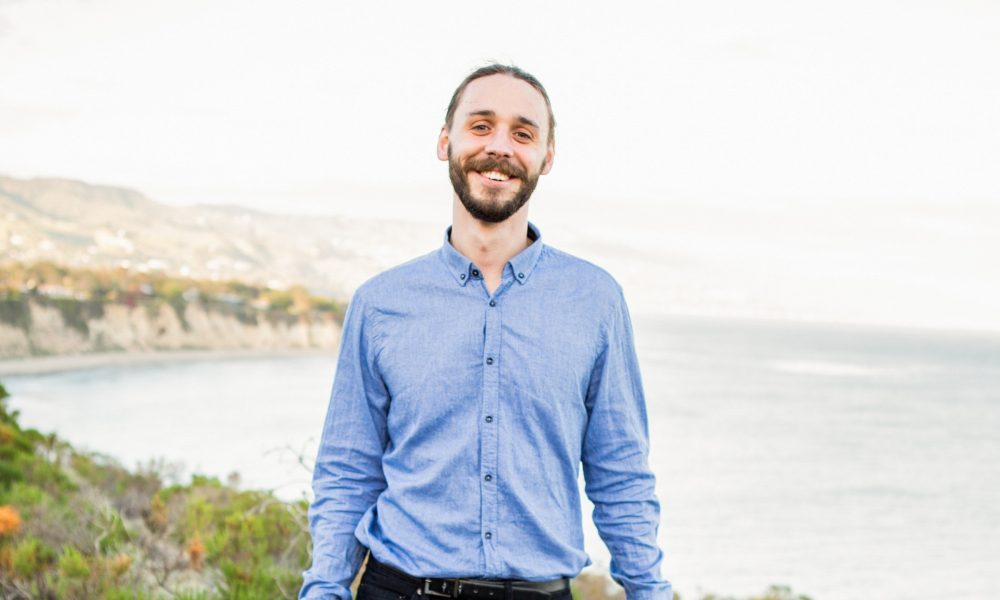
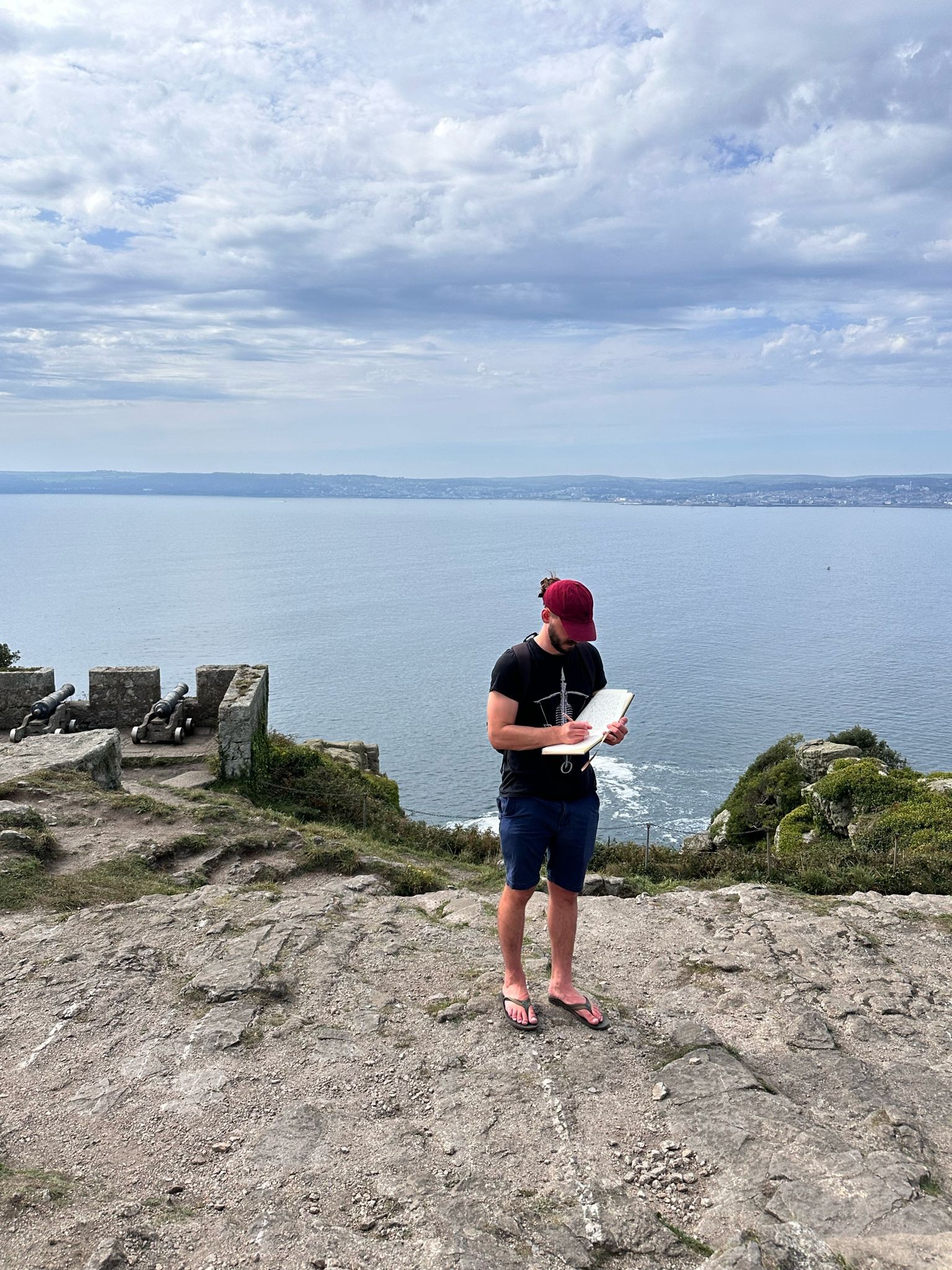
Today we’d like to introduce you to Nathan Hassall.
Alright, so thank you so much for sharing your story and insight with our readers. To kick things off, can you tell us a bit about how you got started?
I grew up in Horsham, England, on a street named after a poet. I always found this quite amusing—that the seeds of poetry were unwittingly planted in me due to geography—and more directly via the poetry book Heard it in the Playground by Allan Ahlberg, which I’d read over and over with my mother. That layered my young brain with an appreciation of rhythm and how exciting language can be.
Despite this early learning and a zest for reading from a young age — I didn’t do too well at secondary school (England’s version of high school, which we finish at 15/16). I was more interested in smoking cigarettes, drinking, staying out all night, and being a class clown. Because of my lack of interest in learning during my earlier adolescent years, I had to take an extra year when I was 16 at a sixth-form college, usually a two-year course of study, before getting my “A-levels,” which brought me to studying History at the University of Kent.
After graduating, I worked in a local village pub for one year and was promoted to manager for the subsequent year, which allowed me to save money so I could go back to university, this time to study for a Master’s in Creative Writing, with a focus in poetry, where I met my American wife, who was also studying a master’s. When the year ended, she moved back to the States, so I did what any hope-filled romantic would do and moved out there with her.
I’ve lived in Malibu for six years and attended many local poetry events. I’ve also built a freelance book editing career, further honed my craft as a poet, made art, taught in schools, and taken on other odd jobs. I never wanted to work the 9-5 for someone else, so finding a way to work for myself has been valuable.
When the time came for Malibu’s previous Poet Laureate, Ann Buxie, to finish her term in 2023, and after some community members encouraged me to apply for the position, I put myself forward for the role.
Upon hearing the news that I had been elected to serve for two years as the Poet Laureate, I was delighted. To prepare, I deepened my (obsessive) love for reading further, diving into poetry, poetry theory, psychology, philosophy, and spirituality—anything that would allow me to serve the community best from a grounded place.
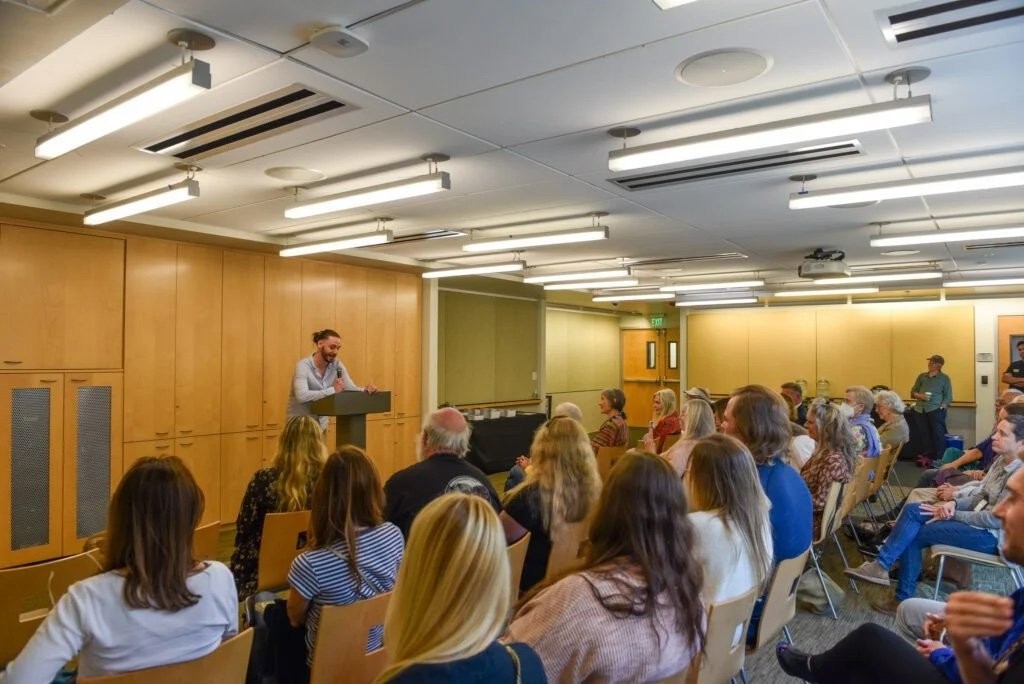
I’ve been in the position for seven months at the time of writing this, and I’ve developed many new skills: hosting workshops, writing poems for specific occasions (reading in front of over 200 Veterans for Veteran’s Day was especially anxiety-inducing and deeply rewarding), public speaking, and hosting other events. The community has given me wonderful feedback along the way, and I’m always open-eared to their insightful, encouraging, and critical thoughts and suggestions.
Alright, so let’s dig a little deeper into the story – has it been an easy path overall and if not, what were the challenges you’ve had to overcome?
Despite having various struggles—some with mental health, some with physical health (which are, of course, interlinked), I’ve been fortunate in my life so far.
I did spend a few years of my life getting chronically ill with tonsillitis — sometimes up to 10 times per year — the worst of which kept me in bed for three weeks with fatigue and fever. I eventually had my tonsils taken out, but a week after the surgery, the stitches came apart, and blood pumped into my mouth. I was rushed back to the hospital early one morning and re-operated. During the car ride, I wondered if this was what was going to kill me. Although somewhat frightened and light-headed from blood loss, I laughed at how underwhelming this would be as a way to go. Waking up from the second surgery, I had a ‘gift poem’ handed to me — the whole poem had emerged in my head, and I could ‘see’ every word like an apparition. I wish I knew where that poem disappeared, but it had something to do with lying in a hospital bed, the sun becoming a bowling ball, and hitting a strike (knocking down all ten bowling pins) in the hospital’s corridor.
It was hard to focus on anything during those years of illness, but I persisted despite having about 1-week per month, if that, of high energy.
I just want to say that life has been good to me, no matter what I’ve gone through. I am thankful for the good and the bad. Every experience is a teaching.
Can you tell our readers more about what you do and what you think sets you apart from others?
I think about, read, and write poetry (or about poetry) daily. It’s my best method for rigorous self-inquiry, to induce and capture the experience of something that feels ‘Other’ to regular, day-to-day experience — qualities that are on the peripheries of consciousness or get less consideration for being too esoteric (inner) from the dominant Western way of thinking, or buried in the shadow of our technologically-driven, rationalistic culture that devalues qualitative experience in favor of quantitative. For me, the best poetry comes from what I like to refer to as “trance states,” in the clutches of spiritual ecstasy, from experiences that emanate from forces so deep, paradoxical, and numinous, it’s absurd to try to make sense of them. A skilled poet can ground these things in the every day, in the world of objects, relationships between people, and more. I like trying to capture these things (in as much as language can do so), and distill them into verse, to hope it induces an adjacent, emotional/bodily/imaginative experience in a reader. Whether I’m successful in that aim is not up to me, but that’s my aim, nonetheless.
It’s not up to me to say what I’m known for — different people will give different accounts. I’m happy I gave up things that weren’t serving the better part of myself — alcohol, marijuana, late nights, to name a few, which have allowed me to feel, think, and be with greater clarity. It’s given me an easier passage through the gate between my stubborn egoic brain and deeper levels of experience: imagination, instinct, and perhaps to a collective, intuitive spiritual/archetypal reality that’s always there, waiting for us to tap into. I am thankful for these experiences and believe they are especially important as we live in a culture of externalization, and we have been taught to act like what’s ‘real’ is always out there, beyond us.
So much of what used to be an internal process has been outsourced: watching television is like having someone else dream into you and for you — and so we’ve got to be careful what dreams we allow to slip into our minds. Algorithms have made it, so we don’t need to think about what dreams to bring into us. Most of this is selected for us via ‘suggestion’ based on other things it ‘knows’ you like. And then there’s AI, which is rapidly increasing in sophistication, causing us to outsource our thinking and feeling to something else. Although these technologies can be used creatively to some degree, they are a further threat to our imaginations and individuality. We cannot externalize our creativity. We cannot externalize the necessary inner work to become who we need to be. Your smartphone, my smartphone, is 99.9% of the time blocking us from revelation, joy, gratitude, and the more difficult emotions we need to feel, like grief, like anger, to transmute in ways that allow us to move forward in our lives.
I’d prefer not to say what sets me apart from others, but rather what connects me to others — breath, love, getting as close to the mysterious core of what it means to be human and what our responsibilities are to ourselves, loved ones, community, world, and whatever may lie beyond these things.
I’ll leave it at this: using art as an expressive vehicle can be a truly radical act, but only if the art comes from a truly radical place and the experience while creating it, or opening the gate to it, is radical. Maybe that’s what I do: encourage people to think and feel for themselves and express themselves in line with that ethos. I think it’s good to say things that people can take on and get something useful out of, even if they vehemently disagree with it. Great writers are great thinkers, and great thinkers should state what they think without, or perhaps despite, fear. The same goes for writing great poetry: write poetry you love without worrying about whether it’s fashionable. Write knowing that although you live in a social world, you are an individual. Write to pull waters up from the deep well of yourself and know there’s always something deeper behind whatever you think you already know. To get to the heart of things, we must always be willing to even — or perhaps especially — change our deepest-held convictions.
Let’s talk about our city – what do you love? What do you not love?
Like best: food, museums, cultural events.
Like least: The number of people living outside. We, as a society, are failing them.
Contact Info:
- Website: www.nathanhassall.com
- Instagram: https://www.instagram.com/nathanhassallpoetry/
- Youtube: https://www.youtube.com/@nathanhassall4284
Popular
-

Christina Wren Steps Into the Director’s Chair to Tell Stories That Feel Like Home
-

Portraits of the Valley
-

LA’s Most Inspiring Stories
-
JordanL on ‘Breathe,’ Belief, and Building a Movement Beyond the Music
-
Megan Birney Rudert on How Access to Light Is Powering a More Sustainable and Equitable Future
-
Linda Kneidinger on Building Lasting Change Through Small Steps and Self-Compassion


