




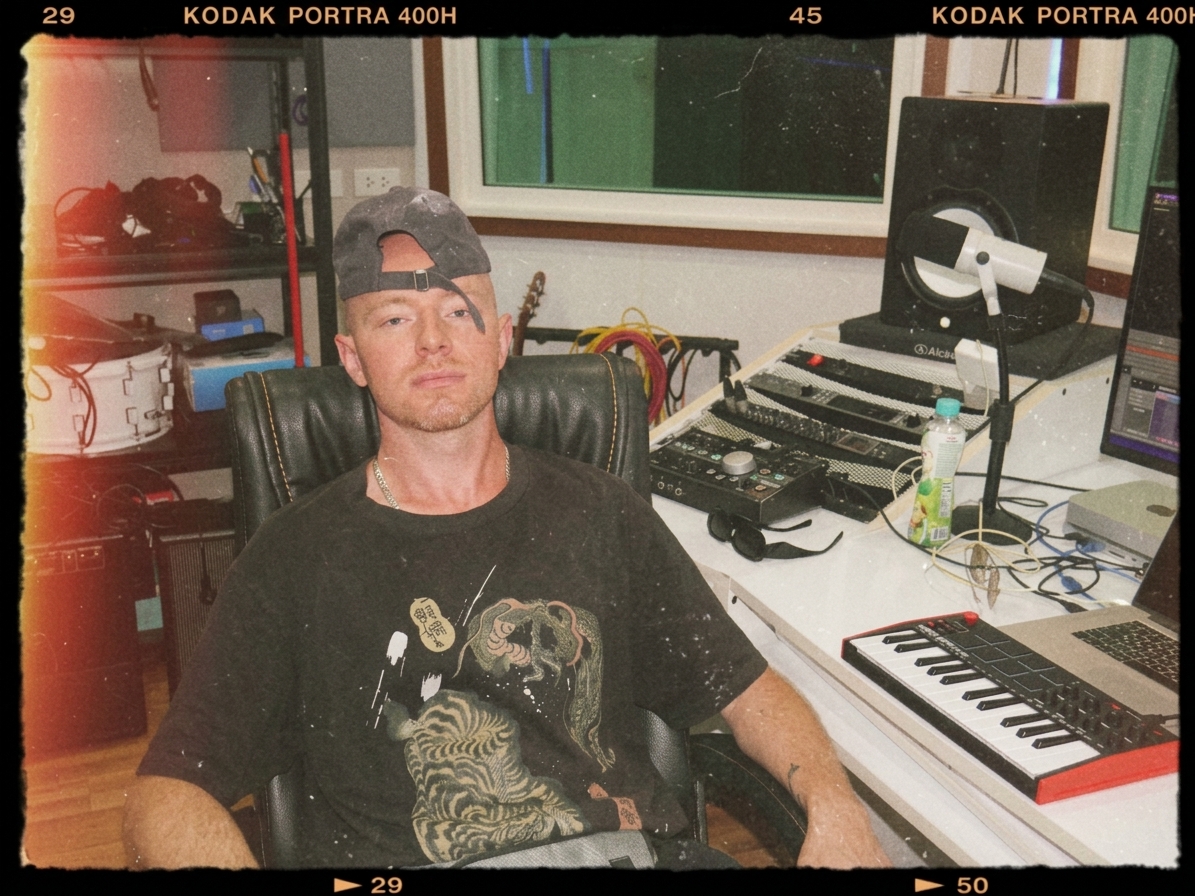
Today we’d like to introduce you to Nalavi.
Nalavi, we appreciate you taking the time to share your story with us today. Where does your story begin?
Ever since I was a kid, I have loved messing around with music gear — from our home stereo to the tape player in the car back when cassettes were still a thing. I clearly remember a moment from my childhood: turning the two bass and treble knobs on our home system, carefully adjusting them so the tapes sounded clean and didn’t distort, even at high volume. I still recall the adults’ surprised reactions when they realized someone so young could handle equipment like that and actually make their favorite tracks sound better.
It took me years to realize that I do pretty much the same thing today. Only now, I’m in a real studio, tweaking frequencies with an EQ to get the best possible sound. Back then, I didn’t really know how I’d end up in music, so I just tried everything — from producing my first beats on basic computer speakers to writing and recording songs, working with vocal processing, and collaborating with other artists in professional recording studios.
Alright, so let’s dig a little deeper into the story – has it been an easy path overall and if not, what were the challenges you’ve had to overcome?
This path has never been easy for me — and honestly, I don’t think it’s easy for anyone. Music is also the music business. You might have big ambitions to make a name for yourself, but you always have to remember that it’s like a sport. You’re in a race with millions of other musicians, and you feel that pressure especially hard early in your career because you’re essentially competing with everyone. More than that, you have to bring your own sauce to the table — just copying someone else’s sound or staying somewhere in the middle isn’t enough.
As for me, when I was first starting out and making my very first beats back in the early 2000s, the choice of software was super limited. There was no easy access to tutorials or useful information like there is today. I remember that my first music software was HipHop EJay 5, which I had to install from a CD onto my computer. Its features were really basic compared to modern tools, but it got the ball rolling, and there was no turning back.
Through trial and error, I started to understand sound. Back then, I was making my first beats for my classmates at school. They’d write lyrics over them, and it was just fun. But from that moment on, I always knew I was going to dedicate my life to music. Rap music, in particular, pulled me in. After I heard early tracks by Dr. Dre, Snoop Dogg, 2Pac, 50 Cent, and other icons of that era, pop music and every other genre basically stopped existing for me.
Thanks – so what else should our readers know about your work and what you’re currently focused on?
Right now, I’m fully focused on creating custom beats for artists across the West Coast and the Bay Area. Together with top-tier musicians, we deliver the freshest, industry-standard sound to our clients. Today, we’re working with a wide range of artists (both major and indie) across all of California and expanding far beyond it, into Detroit and other key regions. My collaborators are heavyweight musicians with Grammy nominations, platinum and gold records, and solid credibility in the community. So when people reach out to work with us, they know exactly what kind of quality they’re getting.
What does success mean to you?
Success is a dirty word. (smiles)
If you compare me to a beginner starting from scratch, I’m successful. I can do things now that I couldn’t have even imagined when I first started out. But if you compare me to the absolute giants of the genre, my success might not look like much. Everything is relative. When you’re deep in the creative process, success is a moving target, mainly because your criteria keep shifting. But you can always look back and compare how many great records we dropped this year versus last year. If there’s growth, that’s already a win.
To take that thought further — there are levels to this game. Once you reach a certain point, you start analyzing streaming numbers, reach, and overall impact. Success looks different for everyone depending on where they are in their career. For someone starting out, recording a track with an artist — I mean any artist — is a major milestone. For someone at a higher level, a song doesn’t mean much unless it becomes a hit, no matter how famous the feature is. What felt like a huge win early on isn’t enough years down the line, and that’s totally normal. If you’re standing still, you’re moving backward.
That’s why the only fair comparison is with your past self, not with other people. Everyone has different experience, ambitions, skills, and connections. If you did more and did it better this year than last year, that’s a successful year. If you made more money, that’s a successful financial year. Defining success with one broad phrase is too messy because everyone measures it based on the variables in front of them right now.
Contact Info:
- Website: https://beatstars.com/nalavi
- Instagram: https://instagram.com/038nalavi
- Youtube: https://youtube.com/@038Nalavi
- Other: https://tiktok.com/@038nalavi


Image Credits
Photo by: @yoshotty
Popular
-

Greg Hex Is Turning the Everyday Kitchen Knife Into a Modern Design Object
-

Portraits of the Valley
-

LA’s Most Inspiring Stories
-

Rick Norris Learned That Building a Successful Business Means Building a Life You Actually Want to Live
-

How Olivia Rush Turned Survival Into a Mission to Help Others Keep Going
-

How Bibi Goldstein Is Helping Entrepreneurs Reclaim Their Time by Embracing the Power of Delegation


