





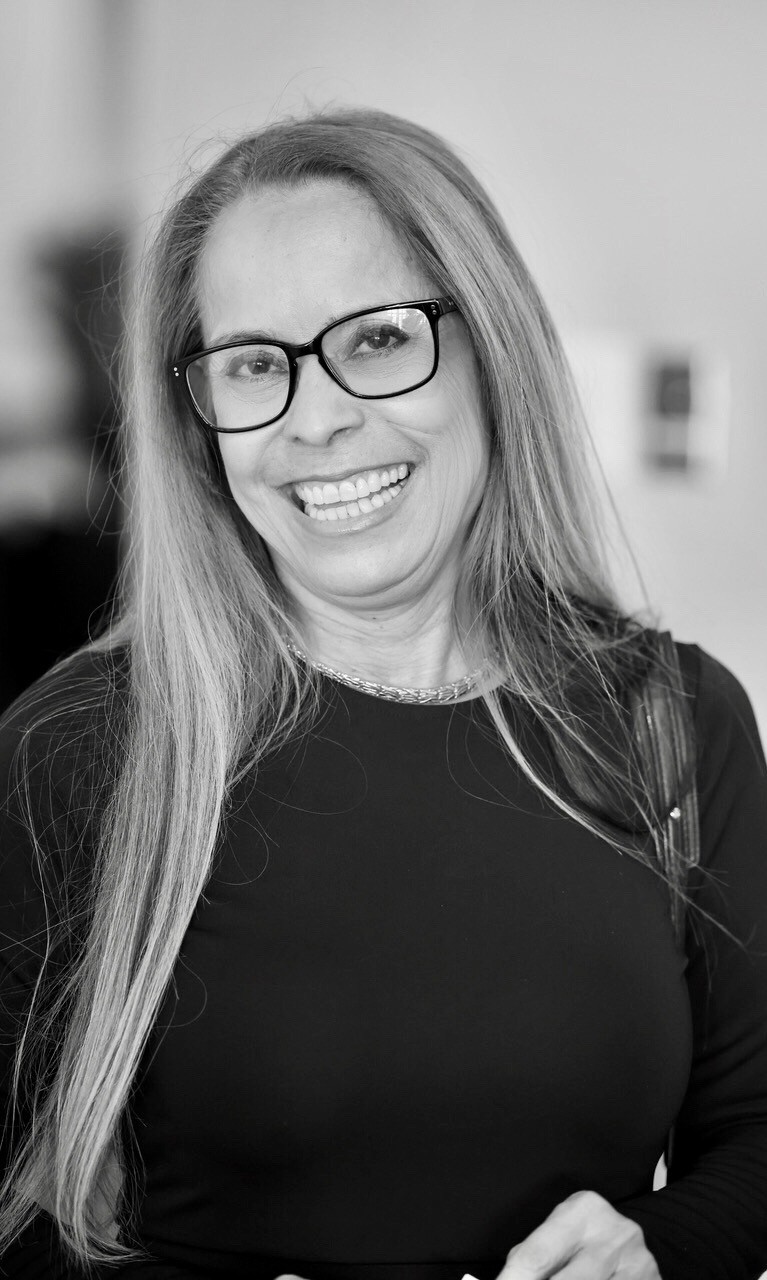
Today we’d like to introduce you to Isaura Rivera.
Hi Isaura, thanks for sharing your story with us. To start, maybe you can tell our readers some of your backstory.
My life has been a colorful adventure. The adventure is simply the byproduct of a quest towards the consolidation of that person I envisioned to be. Early in life, I learned that cultural constraints against women were a mere creation of others. Then, I decided to break away from that control and moved towards the path that my inner voice dictated. That little girl’s voice envisioned someone with desires to achieve great deeds. In the least, I aspired to obtain a university degree, and to take control of my life to be free and sovereign regardless of my gender.
But the road, of course, has not been linear. At sixteen, when I finally emigrated from Mexico and joined my mother in the United States, I was beyond happy. For I knew that my dreams and aspirations could become true. Convinced of that, I decided to learn English. But my mother refused to let me attend school, instead I worked sewing at a sweatshop, near our rented apartment in Echo Park. Without my mother’s knowledge, I attended an adult ESL school. This was possible due to the kindness of my boss, who allowed me to be away for a few hours to attend my classes and return to the factory to finish my work shift.
Four years later, I graduated with a High School diploma from the L.A. Unified School District and secured a position at the University of Southern California (USC) as an inventory clerk for a cancer information hotline. My job at USC gave me financial stability and the opportunity for mobility. With time, I became a bilingual data collector interviewing cancer patients for research. I loved my job for it gave me flexibility to work around my other personal and political commitments.
In my twenties, I became a member of a Salvadoran political women’s group. This was during the Civil War in El Salvador, which had propelled an influx of migrants to the United States, particularly Los Angeles. The Angelenos’ solidarity movement played a significant role in stopping the war in El Salvador. Many joined forces with religious, academics, and grassroots organizations, including a number of movie celebrities. When the Government of El Salvador and the opposition forces signed the 1992 Peace Accords, brokered by the United Nations, I was invited and attended the celebration in Mexico City where the signing took place.
During the 1980s, I joined forces with local Chicanas and Chicanos leaders to fight for immigrant rights. There are two significant historical events in which I participated to secure inclusive immigration policies. The 1986 Simpson-Rodino Bill opened the opportunity for some to redress their transitory migration status; at the same time, this law excluded many. Then, to call attention to our demands for a just immigration law, we went on a two-week hunger strike. During the strike, we visited U.S. and Mexican government officials, including church leaders, to voice our concerns.
The other important struggle occurred when the U.S. House of Representatives approved an immigration bill to criminalize those whose migration status was in transition. The 2006 Sensenbrenner Bill aimed too at those who knowingly hired people who were in the United States without the proper legal visas. This event became a national outcry, in which Latinas and Latinos demonstrated massively. The Bill never made it to the Senate. There are two books, Harvest of Empire by Juan Gonzalez (2011) and Reform Without Justice by Alfonso Gonzales (2014), which describe the events of the time in which my role is noted.
Academically speaking, having achieved a paramount life goal, such as my Bachelor’s and Master’s degrees, both from UCLA, brings me great pride and satisfaction. For I recall that a college counselor dismissed me when I voiced my desire to attend UCLA. Another “friend,” trying to protect me from UCLA’s unlikely acceptance of my application, pleaded with me not to bother. I listened to their opinions, but my inner voice trumped theirs, for it reminded me of my high academic qualifications. Obtaining my university degrees are analogous to my goal of consolidating the person I long ago envisioned to be.
The above descriptions are abbreviated aspects of my life. Nonetheless, they represent some of the most important highlights of my life. It is only at this point that I am able to reflect upon that little girl who dared to dream big. And I realize with awe that the adventure of that personal quest brought me true happiness. Since the main point of my story is about how I viewed myself and the struggle to consolidate that vision, I am complete. My life is peaceful and full of joy and happiness. Still, I do continue to dream of other, more daring adventures.
Alright, so let’s dig a little deeper into the story – has it been an easy path overall, and if not, what were the challenges you’ve had to overcome?
Cultural biases against women
Familial constrains, physical and mental abuse
Upbringing devoid of intellectual stimulation
Immigrant in the United States
Language barriers
Poverty
Being of woman of color, Latina
As you know, we’re big fans of you and your work. For our readers who might not be as familiar with what you do, what can you tell them about what you do?
Currently, I teach English as a Second Language to adults. Nonetheless, I am known for my leadership roles during the Civil War in El Salvador and an immigrants’ rights activist in Los Angeles.
We all have a different way of looking at and defining success. How do you define success?
My two degrees from the University of California Los Angeles (UCLA)
Contact Info:
- Other: isarivana@gmail.com
Popular
-

JordanL on ‘Breathe,’ Belief, and Building a Movement Beyond the Music
-

Megan Birney Rudert on How Access to Light Is Powering a More Sustainable and Equitable Future
-

Linda Kneidinger on Building Lasting Change Through Small Steps and Self-Compassion
-

Jolana Nika on Redefining Modern Connection Through Intentional, Real-Life Experiences
-
What did suffering teach you that success never could?
-

Who saw you clearly before you could see yourself?


