
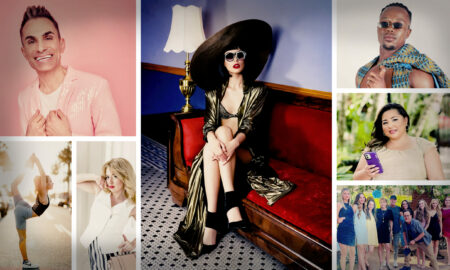




Today we’d like to introduce you to Alex Papazyan.
Hi Alex , thanks for joining us today. We’d love for you to start by introducing yourself.
I was born in Sofia, Bulgaria, but it wasn’t until I moved to the city of Plovdiv that my passion for film really began to take shape. Plovdiv has this deeply artistic atmosphere — the kind of place that quietly inspires you. That’s where I started making short films with my classmates. Looking back, the films were terrible — we were teenagers with zero technical knowledge, but we took them seriously. We even submitted them to festivals across Europe and, unsurprisingly, lost a lot of money in the process. But the important thing is: we were trying. We were making things. And that creative spark eventually helped me get accepted into a film school in the UK.
At the time, I truly believed Bulgaria didn’t have a film industry. It does — but 18-year-old me didn’t know that. So I moved to the UK in search of opportunity. Film school there was a formative experience. I had open-minded teachers who encouraged experimentation, and I met peers who inspired me. But as time went on, I started to feel that the UK industry — while full of talent — felt small and somewhat restricted. I craved something more expansive. That led me to the United States, and eventually to Los Angeles — the heart of the industry.
Moving to LA changed everything.
Back in the UK, I mostly focused on producing and directing. Teenage me had made that choice confidently, and I stuck with it. But deep down, I was always intimidated by the camera and lighting departments. It felt like another universe — technical, mysterious, out of reach. Still, something in me had always been drawn to it. In fact, in all those early projects I made as a teen, I was the one behind the camera. I just didn’t know how to define that passion back then.
Once I got to LA, I allowed myself to embrace cinematography fully. I stopped avoiding the thing I loved out of fear. That shift — from director/producer to Director of Photography — unlocked something in me that had been buried for years. Suddenly, the camera didn’t scare me. It excited me. It felt like home.
A year and a half later, I’ve been the cinematographer on a solid number of narrative and commercial projects. Of course, I always wish there were more — more consistency, more volume — but I know I’m on the right path. I followed my instincts, even when they didn’t make perfect sense at the time. And looking back, I realize that teenage Alex — the one holding the camera, running around Bulgaria with no budget and big dreams — was always on the right track.
Can you talk to us a bit about the challenges and lessons you’ve learned along the way. Looking back would you say it’s been easy or smooth in retrospect?
Definitely not a smooth road — but I’ve come to see that as part of the journey. One of the hardest things for me was embracing change as an artist. It’s not something many people talk about, and it’s not something everyone allows themselves to do. When you’re 20, you think you have it all figured out — your style, your influences, the types of films you want to make. You pick a favorite director or cinematographer and you convince yourself, that’s it.
But once I moved to the U.S. and began growing both personally and professionally, everything shifted — my taste, my creative voice, even the way I saw myself as an artist. And those changes weren’t just internal. Your style affects everything — the types of people you attract, the collaborators you connect with, even the opportunities that come your way. Looking back, I think part of my struggle in the UK was not fully being myself. I was still figuring out who I was and what I really wanted to say through my work.
The biggest lesson I’ve learned is that film school doesn’t magically define you. It gives you tools, it gives you time — but you really start becoming the artist you’re meant to be after school. That realization can be tough, especially when you’re told that school is supposed to “prepare you.” In reality, your true style, your vision, your purpose — that comes later, with experience and introspection.
I’m still not where I want to be — I’m not swamped with jobs every day — but the work I do get now feels smoother and more fulfilling. That’s because I’ve stopped resisting the hard parts. I’ve embraced the uncertainty and the discomfort. Once you do that, everything else starts to feel more aligned.
As you know, we’re big fans of you and your work. For our readers who might not be as familiar what can you tell them about what you do?
I’m a filmmaker, and right now my main focus is working as a Director of Photography. That’s where I feel most creatively alive — translating story, emotion, and tone into images that speak without words. That said, I still carry a strong passion for writing and directing, and from time to time, I return to those roots when a project truly speaks to me.
One of the proudest moments in my career so far came recently, in March, when I shot a short film titled Natasha. It was, without a doubt, the most fulfilling creative experience I’ve had to date. I collaborated with director Daria Maria Paun, who was incredibly supportive and generous with her trust. She treated me like a true creative partner, and that trust allowed me to bring my full self to the project. It was one of those rare moments where everything aligned — the story, the team, the visuals — and I walked away feeling like a real artist.
What sets me apart is that I don’t just shoot for the sake of aesthetics. I shoot to support the emotional truth of the story. I come from a background of directing and writing, so I always approach cinematography with that storytelling lens. I understand the beats, the shifts in tone, and what each frame needs to communicate beyond just looking beautiful. That blend of narrative instinct and visual sensitivity is something I take pride in.
At the end of the day, my goal is always to serve the story and elevate the vision of the director — with honesty, intention, and a deep love for the craft.
Contact Info:
- Instagram: https://www.instagram.com/alexlevonp/


Image Credits
Anton Sinitsyn, Allen Rivas, Catherine Frawley
Popular
-

JordanL on ‘Breathe,’ Belief, and Building a Movement Beyond the Music
-
Megan Birney Rudert on How Access to Light Is Powering a More Sustainable and Equitable Future
-

Linda Kneidinger on Building Lasting Change Through Small Steps and Self-Compassion
-

Jolana Nika on Redefining Modern Connection Through Intentional, Real-Life Experiences
-
What did suffering teach you that success never could?
-
Who saw you clearly before you could see yourself?


