




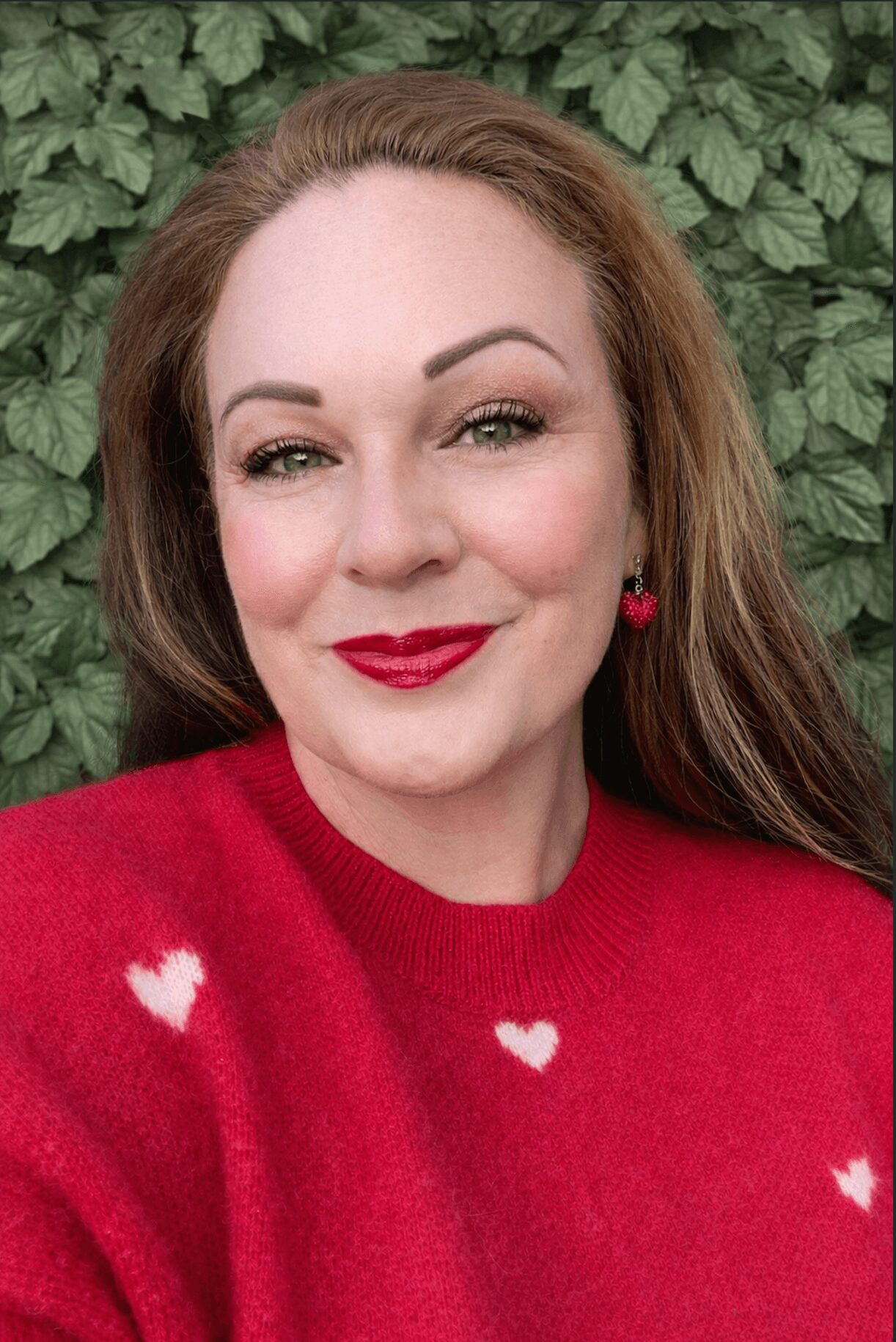
We’re looking forward to introducing you to Niesja Strongwolf. Check out our conversation below.
Niesja, so good to connect and we’re excited to share your story and insights with our audience. There’s a ton to learn from your story, but let’s start with a warm up before we get into the heart of the interview. What are you most proud of building — that nobody sees?
What am I most proud of?
That’s a great question, and I’d have to say I’m most proud of the emotional intelligence I’ve built over time, an invisible toolbox that shapes how I move through the world.
I have always been someone who cares deeply about people. Kindness, loyalty, and love have always come naturally to me. But for a long time, I didn’t know how to protect myself when the people who wanted to hurt me showed up. I didn’t yet have the tools to navigate conflict, manipulation, or emotional harm without losing myself in the process.
For much of my life, I was a people pleaser. On the outside, I was capable and dependable. On the inside, I hadn’t fully learned how to understand my own reactions, set boundaries, or process unresolved experiences. I recognized certain patterns, but I allowed them to continue for years because they felt familiar, even when they were unhealthy.
In my 40s, I began having honest conversations with myself and with the people closest to me about those patterns. We talked about what we had tolerated, what we kept repeating, and what we were no longer willing to carry forward. Eventually, we grew tired of the cycles and made a conscious decision to confront them and break them.
Around that time, my husband offered me a perspective that changed everything. He explained that emotional tools are no different than physical ones. You can keep adding to your toolbox, refining it, and upgrading it over time. And if you were going to build a house, why wouldn’t you want the best tools available? Too many people, he said, are trying to build an entire house with just a hammer.
That insight shifted my entire understanding of myself.
I realized that nothing was inherently wrong with me. I simply hadn’t been given or taught enough tools yet. Since then, I’ve been intentionally building that internal toolbox, skills for self awareness, emotional regulation, boundaries, peace, and self trust.
This work is quiet and mostly invisible. Sometimes it’s uncomfortable and requires calling yourself out, but it’s foundational. It shows up in the pause before reacting, in choosing clarity over overgiving, and in responding to challenges with steadiness instead of self criticism.
I didn’t need to become someone else. I needed better tools. The emotional intelligence I’ve built may not always be visible from the outside, but it is the structure that supports everything else in my life.
What I’m most proud of isn’t something you can see. It’s the inner structure I’ve built that now holds my life steady.
Can you briefly introduce yourself and share what makes you or your brand unique?
I’m a real estate broker based in Los Angeles, and I own my own property management company. For over two decades, I’ve worked in a field that requires constant problem solving, steadiness, and trust. I manage properties, advise owners, navigate complex tenant situations, and make sure people feel safe and supported in the places they live.
I’m not sure I think of myself as a brand in the traditional sense. I see my work as a reflection of my values, my integrity, and the way I choose to show up for people every day.
One thing my clients value most is accessibility. When my tenants or owners need me, they get me. They don’t reach a call center or get passed from person to person. That level of direct involvement creates trust and accountability, and it’s something I take seriously.
What makes my work different is how I approach it. I don’t separate business from humanity. When your work is centered around people, it’s hard not to care deeply. I’ve always believed that loving other humans is natural, but I’ve also learned that love without boundaries becomes depletion. Over time, I’ve come to understand that boundaries don’t diminish compassion; they make it sustainable.
I believe you can be professional, firm, and compliant while still being thoughtful, ethical, and emotionally intelligent. Over the years, I’ve learned that real leadership isn’t about control or volume; it’s about clarity, consistency, and knowing how to respond rather than react.
My personal story is deeply woven into my work. I spent many years operating on strength alone, pushing through challenges without fully understanding how unresolved patterns influenced the way I showed up. In my 40s, that changed. I began intentionally learning the tools to build emotional intelligence, set boundaries, and lead with steadiness rather than survival.
Today, my work is grounded in trust, resilience, and transparency. I’m proud of the reputation I’ve built for being direct, fair, and deeply committed to doing things the right way, even when it’s hard. I’m also working on sharing more of the unseen side of professional life, what it looks like to keep showing up, doing meaningful work, and growing as a person at the same time.
At this stage of my life, I’m focused on building work that reflects who I am now, grounded, self-aware, and intentional, and using my experience to help others feel less alone in their own journeys.
Great, so let’s dive into your journey a bit more. What breaks the bonds between people—and what restores them?
This is another great question, and one that speaks deeply to me and my heart.
I believe bonds rarely break because of one moment. They break when truth is replaced by gossip and assumption. When people speak around each other instead of to each other, stories begin to travel faster than understanding. Gossip becomes a quiet war, not fought with weapons, but with half-truths, projections, and narratives built without context.
Another fracture happens when people rush to name things they do not yet understand. When curiosity is replaced by certainty, and complex situations are flattened into simple labels, empathy disappears. I see this often in my work, where people confidently speak about systems, responsibilities, or intentions they have never taken the time to truly learn. The damage doesn’t come from not knowing, but from believing you know enough to judge.
I’ve also been on both sides of this dynamic. I’ve seen how easy it is to participate in gossip, and how corrosive it feels once you recognize it for what it is. I’ve also experienced the humiliation of being talked about for things I didn’t do or stories that were never true. Holding both experiences has made me deeply committed to choosing differently.
Because of that, when gossip lands at my doorstep, I stop it. I’ve learned that participating in secondhand narratives is dishonest, not just to the people being discussed, but to the truth itself. If someone has an issue, it deserves to be addressed directly, with clarity and accountability, not passed along as a story for others to carry.
Over time, assumptions and gossip harden. They create distance, confusion, and mistrust long before anyone realizes what has been lost. What makes this especially harmful is that it often feels justified in the moment, even while it quietly erodes connection and responsibility.
What restores bonds is courage. The courage to ask instead of assuming. To speak directly instead of narrating from the sidelines. To listen with the intention of understanding rather than defending a position. Repair requires humility, patience, and a willingness to hold more than one perspective at once.
I’ve also learned that love doesn’t disappear when bonds are strained. Those we love, we will always love. Love doesn’t vanish; it simply changes shape, waiting quietly for understanding and time to do their work. Restoration begins when we stop fighting unseen battles and return to honesty, curiosity, and care. Not every bond can be restored, but many can be transformed into something stronger and more honest when understanding is allowed to lead the way.
Was there ever a time you almost gave up?
This is a tough question, but an important one.
Yes. There were nights when I genuinely did not know how I was going to get through the next day. Nights where everything felt too heavy, too uncertain, and too quiet all at once. Those moments weren’t dramatic or loud; they were private, internal, and exhausting. There were moments when I questioned whether I could keep going in the life and career I was trying so hard to build.
What I’ve learned is that those moments weren’t about wanting to give up on life. They were about being unprepared for what had arrived. Many people move through life assuming there is an endless runway, that stability will always be there, and that hard days are temporary and manageable. Not in a morbid way, and not about death, but in the belief that the ground beneath you will always hold.
The truth is, the world is beautiful, but it is also volatile. Life has a way of delivering moments you never saw coming, moments that arrive quietly on an ordinary day and ask everything of you. Challenges rarely announce themselves honestly. They don’t show up looking dangerous. They often arrive disguised as obligation, loyalty, love, opportunity, or misunderstanding.
What carried me through those nights was not strength in isolation, but community. Friends, family, and chosen allies willing to stand beside me, speak truth, and hold the line when things became disorienting. Warriors not in the sense of conflict, but in presence, steadiness, and integrity.
My perspective shifted from endurance to preparation. I began to understand that resilience isn’t built in crisis; it’s built long before it. It’s built through self-awareness, honest conversations, boundaries, and relationships strong enough to hold weight. Even if the hardest day never comes, the work still matters, because it changes how you live every ordinary one.
Love, too, does not disappear when people struggle. It waits. It remembers. It endures.
I didn’t give up because I learned that resilience isn’t about avoiding the fight. It’s about knowing you’re not meant to face it alone, and trusting that with the right tools, the right people, and time, steadiness can and will return.
So a lot of these questions go deep, but if you are open to it, we’ve got a few more questions that we’d love to get your take on. What’s a belief or project you’re committed to, no matter how long it takes?
Such a fun question.
I’m deeply committed to helping people become more fully themselves.
So many of us move through life performing versions of who we think we’re supposed to be. We shape ourselves to fit expectations, avoid conflict, or earn approval, often without realizing how far we’ve drifted from our own truth. I’ve lived that way myself, and I know how exhausting and disorienting it can be.
The belief I’m committed to is that authenticity is not something you’re born with, it’s something you practice. Finding yourself requires unlearning, courage, and patience. It means telling the truth more often, listening inward instead of outward, and allowing who you really are to take up space, even when it feels uncomfortable.
As the quote often attributed to Dr. Seuss goes, “Be who you are and say what you feel, because those who mind don’t matter, and those who matter don’t mind.” That idea captures the heart of what I believe. When we stop trying to manage how we’re perceived and start honoring who we actually are, life becomes lighter, more honest, and more sustainable.
Whether through my work, my conversations, or the way I show up in relationships, my long-term project is to model and encourage that kind of honesty. Not perfection, not performance, but realness. Helping people trust themselves, drop what isn’t true for them anymore, and live in a way that feels aligned rather than performative.
I don’t believe this work ever truly ends, and that’s what makes it meaningful. Becoming yourself is a lifelong process, and I’m committed to walking that path for as long as it takes.
Okay, so before we go, let’s tackle one more area. What do you understand deeply that most people don’t?
Always Tell People You Love Them!
This may be one of the most important questions I have ever asked myself. Not about success or survival, or who was right or wrong, but about love and whether we say it out loud while we still can.
Over the past year, and especially recently, I’ve been thinking a lot about clarity. About speaking what matters while it still matters. About not leaving the most important things unsaid, in work, in relationships, and in life.
But this belief isn’t new for me.
Since I was sixteen years old, I’ve made it a point to never leave without telling the people I love that I love them. It has always felt instinctive, not performative. Long before I had language for why it mattered, I knew that it did.
I believe you should always tell people you love them. Not dramatically or ceremonially, just honestly and clearly, while you still can.
I believe this because I have seen how quickly life can change. And because I believe love itself is eternal, even when circumstances shift.
My precious niece passed away when she was three years old. I have also loved people who are no longer here, people I assumed I would have more time with. What I learned was not only how fragile life can be, but how enduring love is. It does not disappear. It simply changes form.
Those experiences didn’t create this belief. They confirmed it.
Love left unsaid does not become noble with time. It becomes heavy. It becomes a question mark. It becomes something the other person is left to wonder about when you are no longer there to answer.
Most people think love is understood. It isn’t. It is often assumed, and assumptions are fragile.
What I’ve learned, both personally and professionally, is that people carry words longer than they carry memories. In leadership, in family, and in friendship, clarity is a kindness. When life inevitably fractures, knowing where you stood with someone becomes an anchor.
Telling someone you love them doesn’t guarantee they will stay. It doesn’t fix what is broken. It doesn’t protect you from loss. But it does remove one cruelty from the world: doubt.
There are people I have loved who could not love me back the way I needed. There are people I have lost, and people I have had to let go of. What gives me peace is this: they never had to wonder if they mattered to me.
That belief shapes how I live now. I say what matters earlier. I don’t wait for perfect timing. I try to lead with presence, honesty, and care, even when it feels vulnerable.
Love spoken is not weakness. It is courage without armor.
So say it. Say it in ordinary moments. Say it before the door closes. Say it while you still can.
Because silence teaches nothing. And love, when voiced, is never wasted.


Popular
-

Portraits of the Valley
-

LA’s Most Inspiring Stories
-

Rick Norris Learned That Building a Successful Business Means Building a Life You Actually Want to Live
-

How Olivia Rush Turned Survival Into a Mission to Help Others Keep Going
-

How Bibi Goldstein Is Helping Entrepreneurs Reclaim Their Time by Embracing the Power of Delegation
-

Victoria Hasson is Redefining Voice Coaching Through Community and Collaboration


