


Today we’d like to introduce you to Santiago Velarde.
Santiago, please share your story with us. How did you get to where you are today?
I’m originally from Lima, Peru, and currently 29 years old. I started playing guitar when I was 16, and after about two months of that I already knew that I wanted to be a musician. All my life prior to that I wanted to be a designer or architect, so my parents were quite surprised, although very supportive. After two years of trying schools in Lima, I realized that I had to go abroad. I found a university in Argentina, UNVM, which was at the time the only university in Latin America offering a Music Composition degree oriented to popular music. I moved to Argentina when I was 19, and quickly started to absorb lots of new information. The orchestration and music technology classes were particularly interesting to me, and I got heavily invested in those, being that at the time I only played guitar and listened to rock.
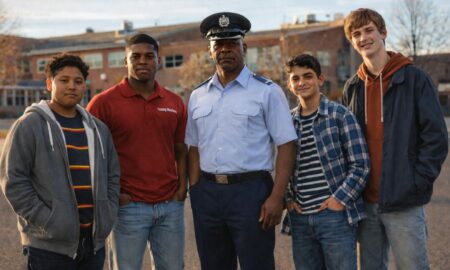
Across from my school, there was a film school and on a university hiking trip on 2011 I met some directors from the film program. They soon invited me to write music for a 24h film challenge, and that’s when it all started. I fell in love with the process immediately and what music was able to do on a film. Next year I enrolled on the film scoring elective and started scoring every short film I could from the film students, no one else was doing it so it was quite a lot! The next three years I enrolled as teaching assistant on the film scoring elective for musicians, and on the sound and music 1 module for filmmakers, as well as took three advanced film electives. This allowed me to meet tons of filmmakers and understand the filmmaking process from inside. In this electives I did everything from writing a script to being a cameraman or editing, to music and sound design, it was an amazing opportunity. Photography and film editing taught me a great deal about composition, and film semiotics was key for understanding narration and audio-visual storytelling.
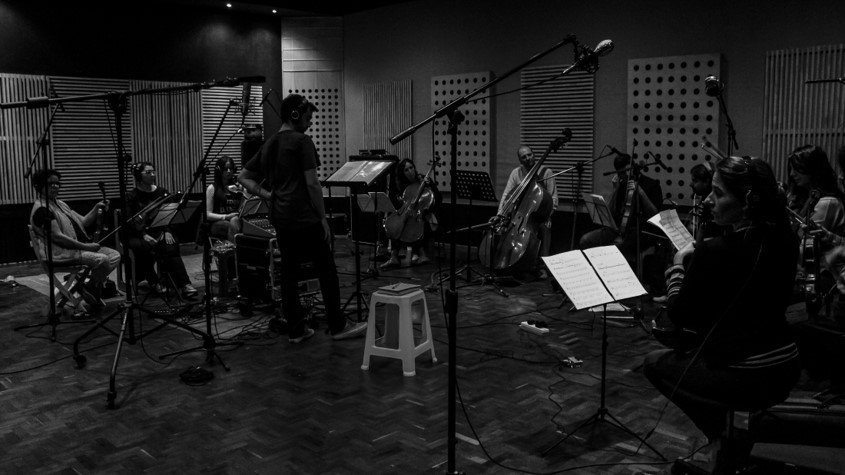
Also here I started collaborating with a group of talented filmmakers, Otro Plan Films, and still work with them to this day. Soon after I graduated from my university, and for my thesis I scored a feature film and got the music recorded by a 12 piece string ensemble, which I attempted to conduct, another very valuable lesson. By this time I had applied to a bunch of film scoring graduate programs and got into four of them, even got half scholarship on Berklee Valencia, but still couldn’t afford the program, so I chose a more affordable one in Dublin. I started paying my tuition, bought the software, made friends on the onboarding group they made and guess what, my Irish student visa was rejected. They refunded me the money, and I had to quickly think of an alternative. I was familiar with UCLA’s film scoring program, but even tho I didn’t want to come to LA yet because didn’t feel ready, there was no other option this late on the application process. So sure enough I applied and got in.
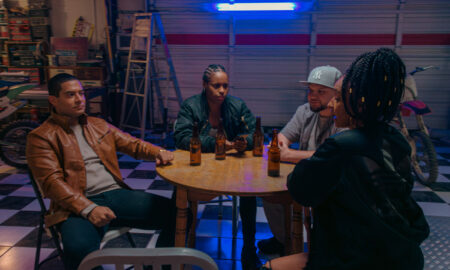
Fast forward three months to January 2018 and I was in LA starting my film scoring program. After a couple of months, I contacted Michael Mollo, who owns Velvet Green Music and often works with John Powell (Star Wars: Solo, Bourne, How to Train Your Dragon, etc.) and started interning for him. He was such a generous and nice guy to me, happy to share all his knowledge and, I’m very grateful I had that opportunity. He also helped me meet a lot of people on the film scoring community, which was great. At the same time, I had a student job at the Hammer Museum, where most of the employees were international students, just as I was, and most of them were on the film program. Lucky enough I was the only film composer there, so I got to score a bunch of their short films. One of them, Killing Adam, got me my first “Best Original Score” and “Best Sound Design” awards, and got into a lot of festivals in the US and Europe.
By October my internship period at Velvet Green Music had ended, but I still had a bunch of projects here, plus I never stopped working with my Otro Plan Films and my other Argentinian friends, so I was also doing projects for them. After the holidays, I got a job as an intern on Amper Music, they do AI software that writes music, and I started working on the instrument previews for the users of the software. At the same time, a UCLA teacher called me to ask if I could help Mark McKenzie (Jerry Goldsmith’s orchestrator) on a seminar, which I did and that was a great experience and connection. By this time I had already finished studying at UCLA and my student job had ended, so I was just working for Amper, but luckily all of a sudden I got four new short films. Also after two months, they offered me a position at Amper, which I happily took and still work there.
Around two months ago, the UCLA teacher called me again to ask if I could assist a student of him with some music tech issues, which I gladly did, and that student became a great contact and collaborator because she landed a feature film project that she brought me in. The trailer for the feature is already admitted at the Cannes festival, and some of the cast and crew have worked on pretty big projects (LaLa Land, First Man). so I am very excited about this film. It’s a horror project, and for what I talked with the director, they’re talking to have it picked up by some major distributor, which I’m not sure I can reveal until the contract is signed. So currently I’m working at Amper Music, finishing one of the four projects that came after the holidays and the feature film. Keeping me busy but I’m learning a lot and having fun with all of it!
Has it been a smooth road?
There were definitely struggles. When my student visa for Ireland was rejected I was devastated. I had been planning for that for the previous two years and invested a lot o time and money on it, and at the same time I had a personal relationship end, so it was a hard month, luckily I moved fast and didn’t let that put me down. Besides that, I’ve been living away from my family for the past ten years, and that’s time with them that I’ll never get back, so sometimes I wish I could have more time with them. Also the music industry it’s a hard one to break in. I’ve been scoring shorts and doing sound design for the past eight years, and just now I’m starting to get something more than “exposure” for my job. But I’ve been lucky to be surrounded by generous and kind people. Michael and the people from Amper are amazing, all of the directors I’ve worked are sweet and understanding, so they’ve helped me get through the roughness of the industry and having my family away.
We’d love to hear more about your work and what you are currently focused on. What else should we know?
So what I do the most and what I focus in is scoring films. The idea is to help the director tell a story, help them materialize the vision of what they want to say with their film. Hitchcock used to say that Bernard Hermann’s music was about 40% of the film. I by any means thing mine is compared to Bernard Hermann, but I do think that music gives a lot more to a film than what people actually realize. Especially on genres such as horror, suspense, sci-fi, comedy, which is what I’ve been doing the most. Also, without trying to promote it too much, I’ve been doing a lot of sound design. Turns out music is just sound, and if you have the tools to manipulate and edit music, you can do it to any other sound. I consider that I’m a very quick learner when it comes to technology, it just makes sense to me, and that has facilitated my way through a lot of things. I really enjoy the world building that the sound design allows, even on a very small and realistic short, having control over every single thing that makes a sound, and the way it sounds is very satisfactory.
As most of my friends know, I’m kind of OCD, so organization, control, balance, neatness, really make me happy, which turns out to be very useful for the data/file management that some of this projects require. At Amper music what I am mainly doing now is creating virtual instruments. Amper uses their own samples for everything, and we’re lucky enough to have Sam Estes, who has worked on some major sound libraries like CinesSamples, leading us. I get the raw recordings of the session and cut, edit, and map all the samples into the software so that it’s natural, musical, and playable. I’m learning a lot, and also I’ve had the opportunity to help prepare some of the recording sessions, as well as design synthesizer sounds for the non-acoustic instruments. My work at Amper has greatly improved my mixing, editing, recording, and sound design skills, all of which is proving to be very useful on the feature I’m currently working.
Let’s touch on your thoughts about our city – what do you like the most and least?
LA is fantastic, I had a very different idea of what it would be before coming here. It’s a very inclusive, laid back and open minded city, which is not at all what one imagines coming from Latin America. It’s crazy how fast I got to meet people that are at the “top of the food chain” on the film scoring community. UCLA helped a lot with that, I got to meet some of my heroes like John Powell and John Debney, and some of my instructors had worked on shows that I watched as a kid like Scooby Doo, Samurai Jack or the Power Puff Girls. I guess what I kind of dislike is the public transportation and the fact that everything is so far away, but at the same time it being so spread has its charm and uniqueness. I love the fact that everyone you meet is in some way connected to the film industry.
Contact Info:
- Website: www.santiagovelarde.com
- Email: [email protected]
- Instagram: https://www.instagram.com/svelard/
- Facebook: https://www.facebook.com/svelard
- Other: https://soundcloud.com/svelard7


Getting in touch: VoyageLA is built on recommendations from the community; it’s how we uncover hidden gems, so if you know someone who deserves recognition please let us know here.
Popular
-

Matthew Hill on Turning Holiday Rituals into Haunting, Habit-Forming Storytelling with Long Winter Nights
-

Linda Villines on Releasing Stored Struggle and Reclaiming Ease Through the Body
-

Candice Swanson on Honoring the Sacred Early Days of Motherhood Through Intentional Photography
-

Michael Johnson on Telling Untold Stories of Identity and Leadership Through SQUAD
-

Owning the Narrative: Drew Dusterhoff Steps Into Power with Lincoln Must Die
-

Portraits of the Valley