




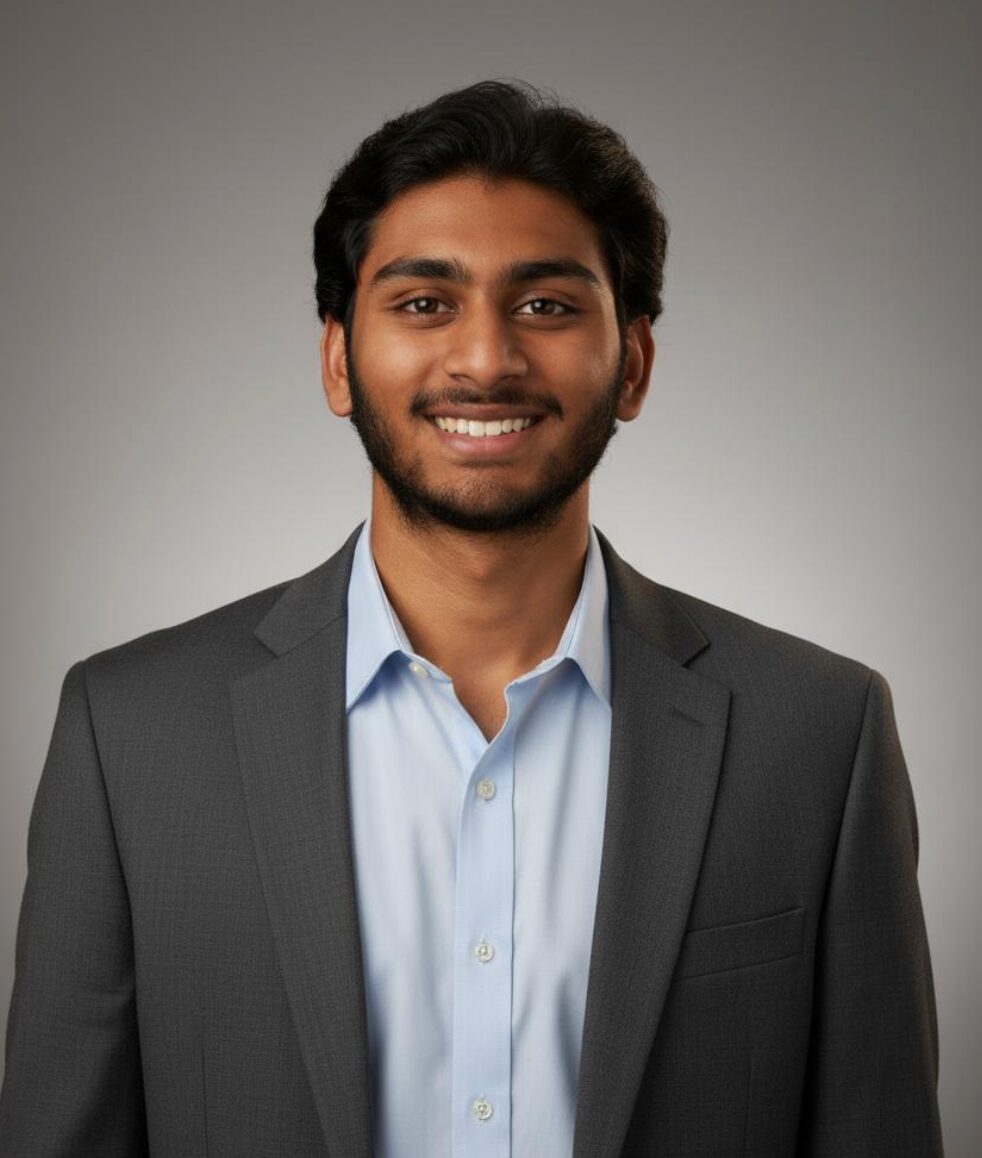
Today we’d like to introduce you to Pranav Kulkarni.
Hi Pranav, thanks for joining us today. We’d love for you to start by introducing yourself.
Our story started with a simple belief: if high school students are mentored to do real, peer‑reviewed research at a postgraduate level, they can unlock the same doors that open for top scholars. Echelon Scholars was founded by researchers from Stanford, Harvard, and UC Berkeley to make that belief practical. Since then, our students have published more than 50 peer‑reviewed papers with a 100% publication success rate in venues such as IEEE, ACM, and Elsevier.
That conviction traces back to our founder, Pranav Kulkarni. As a high schooler, he invented a corollary to the Newton-Gauss Theorem, earned Best Paper at the IEEE ICKII Conference as the youngest recipient in that conference’s history, and was later attended Stanford University. Today he conducts research at the Stanford Artificial Intelligence Laboratory, is a 15‑time published researcher, and is a member of the SoftBank Masayoshi Foundation. He created Echelon Scholars so ambitious teens could pursue authentic scholarship and enter college with real research experience under their belts, already thinking like researchers.
I’m sure it wasn’t obstacle-free, but would you say the journey has been fairly smooth so far?
It has not always been a smooth road. The biggest challenge has been holding high school research to genuine peer‑review standards rather than stopping at student‑only journals. There is a meaningful difference between “a good high school research project” and work that survives expert review and gets indexed alongside graduate research. Helping families understand that difference, then coaching students through it, takes time and rigor – that is what our research program is all about.
To meet that bar at scale, we built structural supports that mirror academia. We run highly selective cohorts, cap total annual enrollment around 20 students across two cohorts, provide unlimited one‑to‑one mentoring with published researchers, and use an in‑house panel of academic reviewers to simulate journal‑style feedback before submission. Rather than a DIY-research project, we are guiding students through high-level research opportunities with a robust support structure in place. We also pair the program’s rigor with more equal access by offering need‑based financial aid, which has totaled $125,000 to date.
Thanks – so what else should our readers know about Echelon Scholars?
Echelon Scholars is not just another research program. We offer an advanced research program that provides opportunities for high school students to gain real field-advancing research experience beyond what a summer camp or traditional research project can offer. We specialize in guiding teens to design, execute, and publish original research at postgraduate‑level, peer‑reviewed venues. Our students have published at places like the IEEE International Conference on Data Science and Advanced Analytics, the ACM International Conference on Software and Computer Applications, and Elsevier journals, and we have maintained a 100% publication success rate across cohorts.
What sets us apart from other similar high school programs is the structure and standard of the research experience we offer. We keep cohorts small and highly selective, offer unlimited one‑to‑one mentoring with researchers from top universities such as Harvard, Stanford, Duke, and MIT, and run an internal academic review panel that mirrors journal refereeing so students revise before submitting externally. Our mentors all published three or more times at the postgraduate level while they were in high school, and their students have matched that standard.
Is there anyone you’d like to thank or give credit to?
We owe a great deal to our faculty mentors and advisors. Our team includes published researchers from top universities and labs – for example, biomedical researchers and machine learning researchers from Stanford and UC Berkeley, scholars with Harvard and MIT CSAIL backgrounds, and others with experience at Brown, Cambridge, and major research organizations. Our admissions and program teams keep everything moving. Their scholarship and mentorship culture shape everything we do, and help us maintain this level of excellence in our research opportunities.
Credit also belongs to our students and their families, whose persistence turns drafts into publications, and to the wider community of conferences and journals that have reviewed and accepted their work. Recent student papers span topics like wildfire-smoke classification with vision-language models, sepsis diagnosis using heart-rate variability, and quantum-assisted fraud detection.
Contact Info:
- Website: https://www.echelonscholars.com/
- Other: [email protected]



Popular
-

Linda Villines on Releasing Stored Struggle and Reclaiming Ease Through the Body
-

Candice Swanson on Honoring the Sacred Early Days of Motherhood Through Intentional Photography
-

Michael Johnson on Telling Untold Stories of Identity and Leadership Through SQUAD
-

Owning the Narrative: Drew Dusterhoff Steps Into Power with Lincoln Must Die
-

Portraits of the Valley
-

LA’s Most Inspiring Stories


