


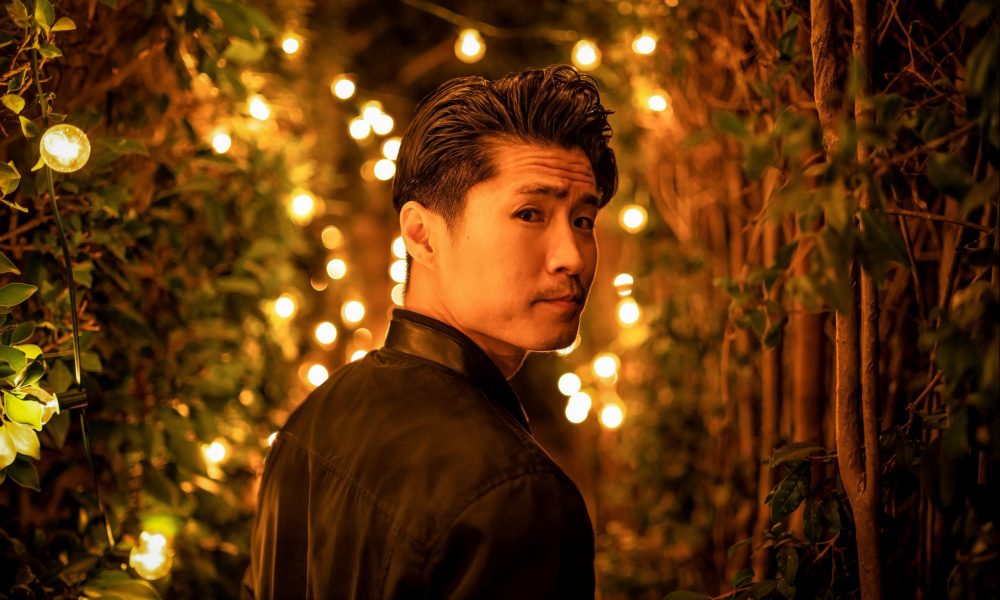
Today we’d like to introduce you to Christopher Naoki Lee.
Christopher, please share your story with us. How did you get to where you are today?
It’s safe to say I wouldn’t have gotten anywhere initially without the support of my parents. They saw this young, energetic, foolishly confident kid who wanted to be in films after watching his first Jean-Claude Van Damme movie. (Bloodsport, anyone?) They saw a curiosity in me, the desire to tell stories, to be the underdog and succeed like the heroes I watched and worshipped. They, like myself, probably had no idea at the time how hard it would be, but to my parent’s credit, instead of brushing the desire away or guiding me towards a life that wasn’t atypically Asian American, they gave me that chance to try. The irony of it all was, it was never a “try” for me. Only do.
I remember being in a large waiting room after school filled with kids for this Disney channel commercial. All the parents were trying to keep their sugar strung kids to be prepped. My mom was probably trying to make sure my bowl cut was bowling hard. I couldn’t remember if I felt nervous, but I also didn’t know the arduous and repetitive process of auditioning that could manifest nerves yet. I remember when I went in the room, casting told me to act as if I entered my favorite theme park and just react in joy.
I recall walking out of that room taking in everyones smiles and validations. When I got home a few hours later, there was already a voicemail blinking on the home phone (pre-cellphone days, y’all). My agent excitedly told me I booked the commercial. It was my very first audition. I was 11 years old.
The rest, well, isn’t history yet. I’d like to say it was smooth sailing from there, but c’mon, now. We’re artists. We thrive on living and creating in the storm. Although acting has been the forefront of my work as an artist, I delved deeply into writing, filmmaking, and producing, too. Probably because of my love for storytelling, but also perhaps to feed my need for control. Spoiler alert: it’s probably the latter. Not just control the narrative and network, but to control your path as a modern artist. I knew in today’s age you couldn’t be just one thing anymore. You had to adapt and expand, especially if you wanted to change the game from the inside. From the top down.
After getting my BFA in theatre at New York University, I returned home to Los Angeles, where I got right back into the business. I got many close calls, a few nibbles of work, but never a big bite. Certainly not the full pie. After a few years, like many, I became jaded by the process. I needed a break to recharge. So I took roughly five years off to just focus on producing and filmmaking.
That was one of the biggest game-changers for me, as I started to unwrap the world of creating stories from all the different departments. I learned on my own how to make films (thanks, internet!), what kind of team to assemble, and ask questions when you didn’t know. I began to see how much cohesion and collaboration take place within the process of producing stories. It truly takes a village.
But after years of directing digital series to producing viral videos to working in startups as a content marketer, all the while struggling with the universal existential question in your 20s, “who TF am I,” I knew I had to return to the performative side of the world. I got a new agent and booked my first audition coming back for a CBS pilot (woo!), and found momentum from the knowledge I gained during my hiatus.
Last year I was lucky enough to be a part of AMC network’s critically acclaimed series, “The Terror,” where my character pushes for justice while being incarcerated in an internment camp during World War 2. That same year, I also shot my first directorial feature film, where the movie deals with diverse childhood friends coming to grips with their society that has evolved in its lens of racism, sexism, and classism. To be a part of stories that have strong principles and themes is all I can ask for as an artist. I don’t believe we live in absolutions, but often a constant state of gray, so I wanted to explore a world amongst friends where no one is perfect in one way, but still try to find the balance of human decency. This film is also loosely based on my own childhood growing up in a suburban neighborhood outside of LA.
I often get a bit retrospective whenever I look back on how I got here. We are truly living in a historic time right now. Our kids and their kids will be reading about what we chose to do during this time. They will learn how we dealt with rhetoric and discrimination from misguided fears of a global pandemic. They will learn how we dealt with recurring social injustices and how we unified a world for a just cause of equality. It always comes down to choices. Like my parents choosing to support rather than discourage. Like me choosing to not just try, but do. I choose to be active, to educate, to listen, and to do what I know I can do best for the world: tell stories.
Great, so let’s dig a little deeper into the story – has it been an easy path overall and if not, what were the challenges you’ve had to overcome?
I don’t know of any artist who hasn’t struggled to get to where they are, even though no two journeys are ever alike. Sure, there are exceptions to the rule who get their fortunate break earlier than others, but to retain that successful position is always a struggle in my opinion. It’s no surprise we as artists feel a varying degree of “imposter syndrome.” That stems from our many rejections, other peoples’ point of views of ourselves, and the simple hardship of thriving in a business that has a very thin margin for people to, in fact, succeed.
When I began round two of acting in my late 20s, though I found some success early on, I caught myself in multiple lulls between projects, where it affected my confidence and placement in an industry that also doesn’t equally represent people who look like me. Don’t get me wrong, there have been strides in pushing for more Asian stories being told across platforms, but there are a multitude of layers when it comes to how these projects are produced and casted. At times, there is a racial sensitivity that is predominantly seen for Asian roles, where that actor must nearly fit the exact cultural description of the character, whereas our white counterparts can often play anybody. And yes, there are politics involved, and yes, there is a much deeper conversation involved that I won’t indulge your time with right now. But these were just some of the struggles that came my way.
All the while, I see my childhood friends who aren’t in the business make leaps and bounds in their respective jobs. It’s an easy thing to do in your 20s: compare yourself to your peers, and it’s a toxic feeling that only you can pull yourself out of. When you do this in the entertainment world, this can make trusting others more difficult as well, so discerning who you keep in your inner circle is paramount.
I would also see my parents giving me that subtle look in their eyes like “you’re sure you want to keep doing this” or “have you thought of trying something else?” I’m sure my future therapist will argue a lot of that came from them just being protective of the financial security of their children (can’t wait for that fun lounge chair conversation). But the greatest battle of them all was always with myself. I had many internal debates in my 20s about whether or not this was the life I wanted. I had many conversations with these same childhood friends for guidance. I credit my mentor and those who’ve succeeded far beyond me to be examples I can follow, and that however many times I fail or fall, I know what’s right around the corner: getting up and getting It done.
We’d love to hear more about your work and what you are currently focused on. What else should we know?
Right now, we’re very excited to get my feature film, “Dinner Party” out into the world. I am hoping to partner up with companies and advocacy groups that are pushing for social change and diverse representation. We’re still halfway through post-production, so that’s where I spend a lot of time. It is a story that deals with sympathy vs. empathy, which is far too prevalent in a world that can use a bit more kindness. I am proud that I can tell stories that advocate conversations among different groups of people who may not think the same but are willing to have that dialogue because that’s the power of art. It can make people stop and listen. I couldn’t say that’s different from what other artists are trying to do, but I know that my unique perceptive and approach comes from not only my experiences and being a person of color, but also a human being who wants to have a purpose to positively affect an audience, big or small.
Is there a characteristic or quality that you feel is essential to success?
There are many characteristics I’ve needed to get to where I am today, from discipline, undeterred motivation, laser-like focus, empathy, openness to collaborate, constructive communication, an absolute love for what you do, to name (more than) a few. But I also feel you have to take pride in it as well, to be able to walk that walk. Even if it comes off as false bravado at times, it’s important to have that belief you can manifest your own reality, especially in a business that throws constant no’s at you. So when you have moments you can be proud of, acknowledge them, and own them.
It’s hard to pinpoint a proudest moment, I’ve been fortunate and lucky enough just to be able to even work in this business, and however difficult it can still be, I am deeply proud of that. Filming “The Terror” last year was certainly a highlight moment. Not only for the people I met and worked with who I’m still very close with today but because of the show’s topical relevancy it still carries. As someone who is half Japanese, it deeply resonated with me to help tell a story of a dark time in our history. I like to find meaning in what I do, and there’s no better example than that.
But perhaps to bring it full circle, after watching my first Jean Claude Van Damme movie as a munchkin, I had the serendipitous opportunity to work with my childhood hero 20 years later for an Amazon show called, “Jean Claude Van Johnson.” I remember pinching myself on the first day on set, chatting with him, trying to act all professional. I promised myself I wouldn’t say anything about the origins of why I wanted to be in films.
But once we were done, and the booze was flowing at the wrap party, I pulled him aside, and quietly confessed he was the catalyst of my artistic journey. I told him he was a big reason I was there that night. I was nervous how he’d react, but he put his hands on my shoulders and softly said, “Chris, I am so happy you said that to me. Thank you so much.” And then we partied on for the rest of the night while debating who can still do the splits. Time has taught me I absolutely cannot.
Like those who have come before me, I can only hope that somewhere down the line, I’ll have the chance to pay it forward and inspire the next generation to their version of success. I imagine that’ll be right up there with my proudest moments.


 Image Credit:
Paul Gregory, Logan Walcher
Suggest a story: VoyageLA is built on recommendations from the community; it’s how we uncover hidden gems, so if you or someone you know deserves recognition please let us know here.
Popular
-

Linda Villines on Releasing Stored Struggle and Reclaiming Ease Through the Body
-

Candice Swanson on Honoring the Sacred Early Days of Motherhood Through Intentional Photography
-

Michael Johnson on Telling Untold Stories of Identity and Leadership Through SQUAD
-
Owning the Narrative: Drew Dusterhoff Steps Into Power with Lincoln Must Die
-

Portraits of the Valley
-

LA’s Most Inspiring Stories