



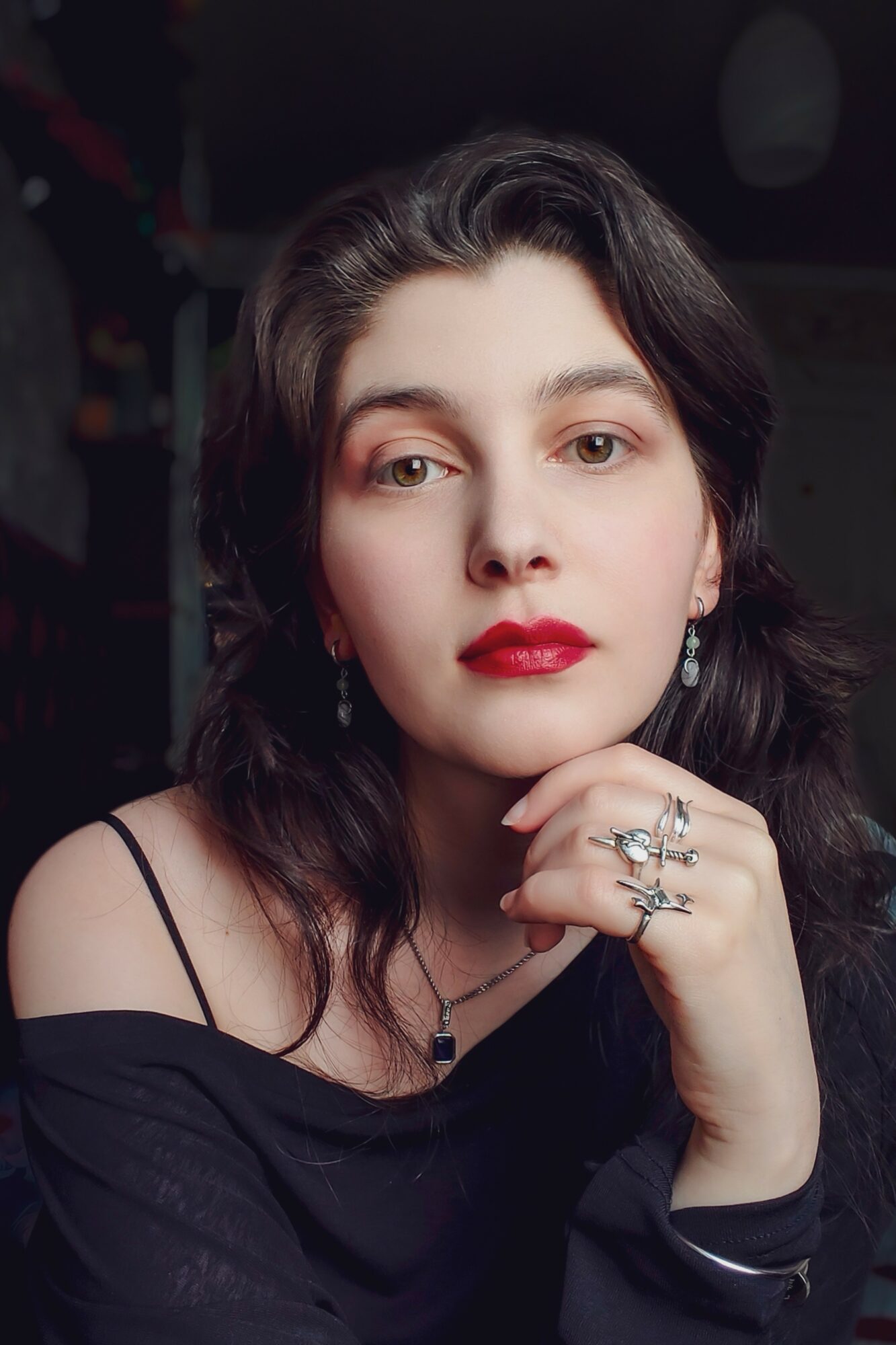
Today we’d like to introduce you to Ketevan.
Ketevan, we appreciate you taking the time to share your story with us today. Where does your story begin?
I have always been an artist. For most of my life, creating was simply a way of existing, I never seriously thought about sharing my work with the outside world.
That changed during the lockdown in 2020. Being confined at home created an unexpectedly strong desire in me to make my existence visible to reach beyond the walls around me. For the first time, I created an Instagram account and began sharing my work publicly.
What happened next surprised me. I realized that my paintings were not only a way for me to express what I could not always put into words; they were also giving other people a place to recognize themselves. People would tell me that my work made them feel that their emotions were valid, that certain feelings they had struggled to understand were worth acknowledging and exploring.
That changed the way I understood my role as an artist. I became interested in creating art that could make another person stop, recognize something within themselves in my work, and feel less alone in it.
I have never built my career around going viral, and I am still a relatively small presence across social media. I know my art has never been for everyone. But that has never stopped me from creating, sharing, or selling my work. Sometimes, being deeply seen by the right people matters much more.
Today, I continue to create independently, exploring emotions, relationships, existential questions, intimacy, and the inner worlds that people often keep private. My work is ultimately about making those invisible parts of human existence visible.
Alright, so let’s dig a little deeper into the story – has it been an easy path overall and if not, what were the challenges you’ve had to overcome?
Absolutely not. And, honestly, it still isn’t.
One of the hardest parts of becoming an independent artist has been realizing that creating the work is only one part of the life I chose. If I wanted to build a real business around my art, I had to become a student of almost everything surrounding it.
I had to confront my own limiting beliefs and patterns while simultaneously learning marketing, sales, email communication, social media, production management, shipping, business strategy, contracts, copyright, and the legal rights of an artist. I have had to figure out things that artists are rarely taught to think about when they are learning to create.
And then there is the art industry itself. It can be a beautiful world, but it also has its complications: vanity-driven opportunities, unfavorable agreements, questionable dealers, complicated consignment arrangements, and situations where artists can lose control over their work or intellectual property. Learning to recognize those risks has been part of becoming an independent artist.
I have done much of this alone. Sometimes that means answering messages, preparing works, organizing sales, solving shipping problems, standing in lines for hours, studying contracts, communicating with buyers across different countries, and then going back to the studio and somehow still finding the energy to create.
There is another challenge that is particularly interesting about being an artist: in my business, I cannot completely separate the work from the person who made it. People do not only buy an object. They want to understand the person behind it. They want to hear the story, ask questions, feel a connection, and know what they are bringing into their lives. So I cannot simply hand everything over to someone else and disappear. My presence is part of the relationship.
That can make the road much harder. But it is also what makes it meaningful.
Because despite everything, I get to experience something I have wanted since I was young: to be recognized for who I genuinely am, and to have something that came from my inner world reach someone on the other side of the world and mean something to them.
Thousands of people have already encountered my work in different ways, and every time someone tells me that a piece made them feel understood, I am reminded why I chose this life.
So, was it a smooth road?
No.
Would I choose a different one?
Not for a second.
Alright, so let’s switch gears a bit and talk business. What should we know about your work?
My work is fundamentally about the inner world of being human.
I work primarily in painting and sculpture, and I am interested in emotions, relationships, intimacy, existential questions, love, belonging, and the complicated space between how we appear to the world and what is actually happening inside us.
I am particularly drawn to feelings that are difficult to explain. The moments when you love someone but are afraid, when you feel deeply connected and completely alone at the same time, when you want to be seen but also want to hide. Those contradictions are where I find the most interesting material.
Visually, my work is strongly connected to where I come from. I grew up in Georgia, surrounded by a visual culture shaped by religious art, strong line work, symbolic figures, and a different approach to proportion and the human form. I absorbed those influences long before I consciously understood them. I think that is why my figures often carry a certain sense of distortion or unreality, not to make the human body strange, but to make the emotional reality more visible.
I am proud that my work has developed its own visual language without me trying to imitate what is currently fashionable. I don’t want to make work simply because it fits a particular market or aesthetic moment. I want someone to be able to encounter a piece without seeing my name and still eventually think, *this could only have come from her.*
That is probably what I value most about my work: recognition.
Not recognition in the sense of fame, but the moment when another person recognizes something of themselves inside a work.
I also work independently, which is an important part of my practice. I don’t believe an artist’s entire identity has to be constructed through the traditional gallery system. I am interested in building a direct relationship between the work, the person who created it, and the person who chooses to live with it.
What sets me apart is not that I have discovered emotions, artists have been exploring them for centuries. It is that I take very personal, sometimes almost invisible human experiences and try to give them a physical presence.
I want my paintings and sculptures to feel like encounters rather than explanations.
You don’t necessarily have to understand one of my works immediately. I would rather have you stand in front of it and suddenly recognize a feeling you didn’t know how to name.
Before we let you go, we’ve got to ask if you have any advice for those who are just starting out?
I wish I had understood much earlier that an artist does not have to wait for someone else to give them permission to build a career.
For a long time, I thought opportunities had to come through galleries, institutions, or other people in the art world. With experience, I learned that a gallery can be valuable, but it is not what makes an artist an artist. The artist creates the work, builds the vision, and can create opportunities independently. That realization gave me a completely different sense of freedom.
I also learned to be very careful about who I trust. Not everyone who offers an opportunity genuinely cares about the artist or the work. I wish I had understood sooner that the people who truly take the time to understand your work, sometimes even better than you expect them to, are incredibly valuable. When someone genuinely connects with what you are creating, you can feel the difference.
And I would tell a young artist: if you are going to share your work publicly, don’t be afraid to sell it.
I made that mistake myself. I began sharing my work online, but I didn’t seriously begin selling for almost three years. Looking back, I wish I had started immediately.
There is something very beautiful about an artwork leaving the artist’s studio and becoming part of someone else’s world. Instead of sitting somewhere where it might eventually be damaged, forgotten, or lost, it can be cared for, experienced, and passed through another person’s life.
I learned that lesson the hard way, after a fire in 2021 completely destroyed my father’s workshop, along with artworks I had stored there.
And for the person who buys it, They are choosing to live with something that moved them. They are giving a physical home to a feeling, a memory, an idea, or perhaps a small piece of the artist who created it.
So my biggest advice would be: create your own opportunities, protect your work and your rights, learn the business side of being an artist, and don’t wait until you feel completely ready to sell.
I waited longer than I needed to.
Pricing:
- Works on paper / smaller works — €650–€1,500
- Small–medium original paintings — €1,500–€4,000
- Medium–large original paintings — €4,000–€8,000
- Major / large-scale works — €5,000–€10,000+
- Commissions / special works / sculpture — €5,000–€15,000+
Contact Info:
- Instagram: https://www.instagram.com/anasovi__k/
- LinkedIn: https://www.linkedin.com/in/ketevan-anasovi-770b64352/
- Other: https://buymeacoffee.com/anasovi__k/catalogue-2026-availabel-artworks


Popular
-
Greg Hex Is Turning the Everyday Kitchen Knife Into a Modern Design Object
-

Portraits of the Valley
-

LA’s Most Inspiring Stories
-

Rick Norris Learned That Building a Successful Business Means Building a Life You Actually Want to Live
-
How Olivia Rush Turned Survival Into a Mission to Help Others Keep Going
-

How Bibi Goldstein Is Helping Entrepreneurs Reclaim Their Time by Embracing the Power of Delegation


