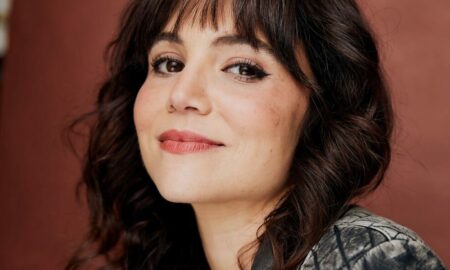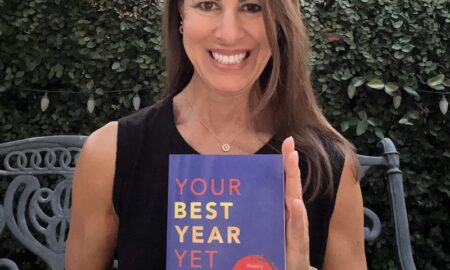



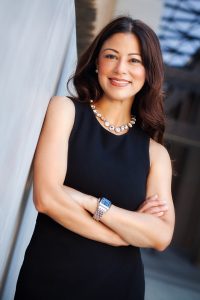
Today we’d like to introduce you to Josie Batres.
So, before we jump into specific questions about the business, why don’t you give us some details about you and your story.
My family immigrated from Nicaragua in the early 70s during the communist revolution. I remember leaving school and carrying my desk back home (as I normally would) and thought, what if my life were different than this. Moving to the U.S. was totally pursuing the unknown and at the young age of five, the feeling of the unknown became all too familiar starting at that age.
Years later, after graduating from LMU (early 90s), I was hired as an administrator at a global management consulting firm in Century City. This firm hired Ivy League graduates by the batches and converted them to management consultants that would advise companies how to perform, structure teams and lead them. As an intern, I got to see how consultants would create solutions and persuade clients to hire them for multi-year projects. I would see the pieces of the solutions that scratched the surface to how companies were going to evolve. I thought this is it, I want to enter the world of people consulting. It took years before I got in the field. Each job thereafter, I would see repetitive patterns that exasperated the environment at work and made working hard.
After graduating from LMU (with B.S. in economics), I landed a job as a financial analyst for a global engineering firm. This firm was so old school, I desperately wanted to talk organizational solutions, but as a female, Latina in a male world of engineers, I felt like a misfit. Fast forward, many other jobs, I landed my first HR role for a mortgage bank (that had spun off from Countrywide), they were one of the big banks that exploded during the real estate boom.
My role was supporting the head of HR to track, analyze and manage executive compensation for the top 30 executives. I learned how each division had a certain economic value for the bank and as such I could see how they got awarded (whether right or wrong from the human lens of ethics). This kind of work leads to a specialty in HR and I learned a great deal. I realized during my 10th year in this work that there was a central piece that was kind of invisible in each organization, this was culture. My work shifted to focusing on culture and all of the components that are impacted by it. I thought this is my purpose. Helping organizations solve business problems through the lens of people and culture. After 17 years of being on the corporate side, I decided to start my own practice. Yes, me. The woman from a communist country, who fled to the U.S. to define her a new life for herself. Here I am.
We’re always bombarded by how great it is to pursue your passion, etc – but we’ve spoken with enough people to know that it’s not always easy. Overall, would you say things have been easy for you?
The HR role has been trying to bring in new perspectives, tools and data to transform the work being done over the years. So many so-called “experts” provide a glimpse of what ails an organization. Only a few stick around for the testing, implementation and fieldwork to see what actually sticks and helps evolve an organization.
There are a lot of experts who I’m thankful for their body of work, wisdom, courage, candor and authentic messaging; Simon Sinek, Edgar Schein (MIT, Sloan School of Management), Frederic Laloux (reinventing organizations, Larry Senn (Senn & Delaney), Mike Zani (CEO, Predictive Index), Dr. Joe Dispenza, Dr. Andrew Huberman, Tom Bilyeu, Oprah, Dr. Michael Bernard Beckwith, Vishen Lakhiani, Mark Nepo, Nina Vaca, to name a few.
Challenges
I have noticed and recognized a pattern in almost every organization…..a constant vigilance, fear, protection of you what you know, and almost an accepted sense of inefficiency, and adrenaline to survive in that environment. All of this compromising creativity, collaboration, teamwork, poor decision making and ultimately affecting profits and the well-being of people. So, the point here is, if we work in organizations where the culture compromises our best selves, this couldn’t be good for us or the organization. Dysfunctional cultures drive people to band-aid things and creating a micro culture that fossilizes growth and behaves in ways that harm relationships. Another challenge is that strategy is never clear, agreed upon or aligned, yet, the idea of hiring and putting the organization through the motions of annual cycles is where we stay. We fossilize in these cycles.
Play bigger
We have an opportunity to bring purpose and culture to the center of an organization. However, this is difficult to do when leadership is not on board or doesn’t see the value of this work. Many of us get in trouble because we ask inconvenient questions around leadership, culture, diversity and overall collective wellbeing.
Now…after COVID-19, we’re breaking open. Our job is to take the pulse where the organization is and bring the strategies that will help create a holistic view of culture, wellness, purpose and potential to the heart of the organization. Many of us are having these conversations head on, these conversations are now starting. Most organizations need a starting point. The intentional CEO will bring the work forward, even if it means he will be part of the problem.
It’s time that organizations water the seed and become institutions to develop people and advance collective thinking. It’s not a finite game anymore. Can we imagine what would start to happen if we view the organizational as a social space, an ecosystem?
We’d love to hear more about your business.
Senior leaders struggle with common culture, leadership and team challenges – regardless of industry. Many businesses don’t use data and feedback to identify if they have the right teams, know what people feel and need and if the leaders that are in place have the right tools to lead.
They also don’t know how to detect and identify patterns where people are not connected to the vision, strategy or values. Clients don’t have a way to collect perspectives on how people are feeling around their organizations. We help clients understand their “current state” of alignment to their vision and purpose compared to business outcomes.
We hold space (a container of trust) to connect with leaders and teams to discuss constraints and challenges in their environment. We call this “our listening strategy.”
We look to partner with clients to build a conscious culture that is future-focused one team at a time and achieve the following;
– Connect to the purpose and values more powerfully
– Achieve personal and work goals more productively
– Experience new connections with those at work and home
We want our clients to be purpose driven, people centered and future focused. Like Simon Sinek says, this is not a finite game, meeting revenue/PE ratios are self-imposing measures that don’t translate to the full story. When can we have the board of directors and executive team agree that measuring culture is a true measurement of where the organization is not aligned optimally. When will organizations play bigger. What is step one?
By working with clients, a part of me lives their journey, grows with them and heals any inner pathology and limiting beliefs we may be attached to 4. I feel in this process, we open a portal/gate to a vision of the future that is not yet seen but stabilized by a future vision.
Specific pain points:
– Transactional leadership practices, leadership misalignment and development.
– Lack of connection to purpose, values, vision, strategy and brand.
– Impaired performance due to unclear expectations and meaningful feedback.
– Impaired collaboration and creativity due to distrust within and cross-functional teams.
– Describing culture patterns using employee feedback.
– Developing key action plans for progress and transformation.
What were you like growing up?
I came to the states in the early 70s. As a child, I lived in regions filled with leftist revolutionaries that ran an overly romanticized regime. My father was a soccer player in college and attended UCA (University of Central America), he later dropped out of law school. My mother was an elementary teacher and came from a traditional home. My dad was the outlier, my grandmother was a business owner and single mom. For that, I believe she was ostracized on many levels. I learned from a young age to take on those challenges as badges of endurance.
Today, I have a smaller network that comprises of people that coach me/mentor me through business and leadership areas. I want this circle of influencers to expand so I can serve a wider group of organizations and bring in teams to help me do the work on a global level.
The two most profound, memorable, shaping moments in life; giving birth to my daughter, Sophia, after 20 hours of labor and birthing TalentGate after 17 years of hard labor. Both are so center to my life. Sophia is musically talented, speaks three languages, wants a Cal Tech education in science. She’s now 13. I feel that my job as a parent is to honor who she is as she is and in order to do that, I have to get out of her way and give up my idea of who she should be so that I can satisfy a deep-rooted need I have.
TalentGate comes as a guide to my life and values. I feel this work is so compelling and rewarding for organizations to create meaningful starting points of evolution for their leaders, teams and all associates. Growing a community inside organizations and collectively creating results is how mature organizations will distinguish themselves completely from the marketplace. What I offer clients I offer to myself. If I can deliver a service concept that creates a framework that enables people, their purpose and potential, then I’m good for something.
Contact Info:
- Phone: 626-421-8643
- Email: [email protected]

Suggest a story: VoyageLA is built on recommendations from the community; it’s how we uncover hidden gems, so if you or someone you know deserves recognition please let us know here.
Popular
-
Cedar Boschan on Elevating Black Music Rights and Driving Urgent Conversations Around Credit, Equity, and Artist Protection
-

Portraits of the Valley
-

LA’s Most Inspiring Stories
-

Robin Olive on Building an Inclusive Performing Arts Movement and Expanding Opportunities for Every Student
-
Que Johnson on Building Brands That Last: From Visibility to True Market Authority
-

Christina Wren Steps Into the Director’s Chair to Tell Stories That Feel Like Home