


Today we’d like to introduce you to Jessica Just and Hipolito Munoz.
Jessica and Hipolito, can you briefly walk us through your story – how you started and how you got to where you are today.
Over the last 10 years, after graduating from NYU Tisch School of the Arts for Film and TV Production and working in the industry as a child, I moved to LA and met Hipolito Munoz, who was working in development and production for KLCS TV (an affiliate of PBS in Los Angeles), and for Scholastic book fairs.
I came out to LA to pursue acting and producing. Since I joined the SAG-AFTRA union by the age of 5, most of my life was juggling acting and school work, and naturally I made sense of my professional experiences during my free time with cousins. Every summer, my relatives and I would entertain ourselves with writing, filming, and editing short plays and later films when my grandfather gave me a camera. I was the director, camera, and editor by default and the films usually featured the writing and acting talents of my cousins to culminate in a public screening to my families delight right before the end of the summer. Little did I know that those experiences combine with my experience as a young professional would lead to a desire to study film and then eventually help other students understand and learn from filmmaking just like I did. As I was a small kid, on set, I was never able to get an explanation from grips about how things worked, I was always asking crew about everything, but was dismissed because of my age and stature. In high school, I was the only student that was interested in film production, and documented everything for my yearbook in a film, with the only video camera in the school from my media arts teacher. I sat for long hours in school alone, even locking up the classroom at times, to work on my video, and it paid off because that video is what I used to get into NYU-Tisch. The education and work experience from NYU-Tisch, lead to work both in front and behind the camera and in post-production for Miramax in NY.
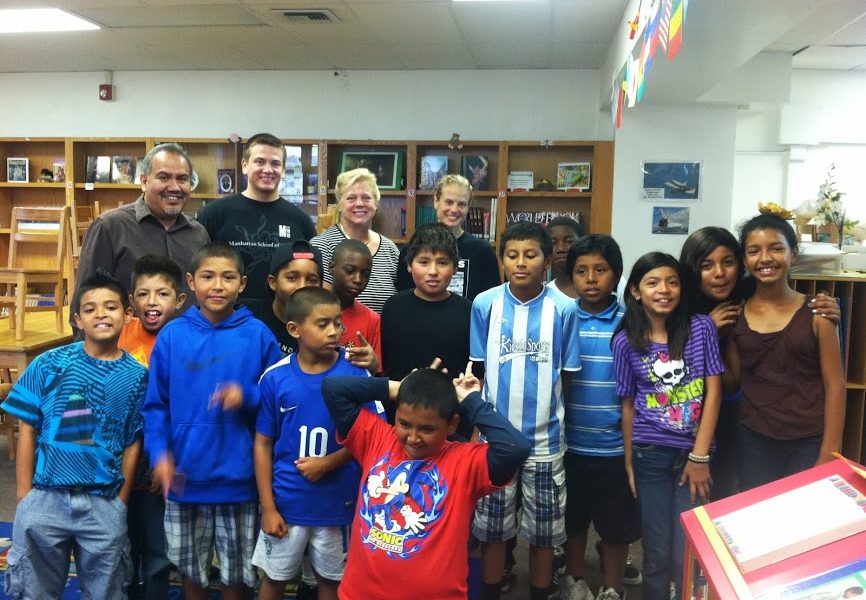
All of these elements in my life would come together with the experiences and opportunities Hipolito Munoz had in his life to create The Cinema Project. When I met Hipolito, he was struggling to edit a film shot entirely by 4th grade students. He had them write a story and I knew from my experience as a child that I could make the footage work and best reflect what the students wanted. I could not resist but to introduce myself, and help polish the film so the students could realize the full potential of the story they had brought to life. I had very little food or money when I first moved to LA, so he offered to buy me hot coco and red vines, as I worked all night on the film. In the morning, once he watched the film (my favorite part), he asked me to come to classes and help him, and I remember thinking, only if you let me help you better structure the lessons so that I never have to work as much as I just did to clean up a student project again. I’d rather the students learn how to problem solve and edit themselves. So we started visiting classrooms, and since I was new to town Hipolito, or Mr. Polo, as the students called him, would offer to drive me to auditions and in exchange we would have long discussions in the car about what worked and didn’t work in the classroom that day.
Without a working radio in the car, it gave us time to think and work out a lot of the foundation in which our timeline and business model for Creating Creators is designed today.
Also, because we were working in both the education and entertainment industry, we were constantly looking for ways to make these worlds collide more effortlessly. We did this by bringing other professionals to our classrooms, and by inviting our students to our professional places of work. So that our students and workplace would respect each other, we never diluted the experience and expectations we brought to the students, and although some may have seen this approach impossible for students to grasp, our teachers soon noticed a spark in student engagement and outcome as we came to visit more consistently. It was very important for the teachers that we stay true to our trade and not try to become teachers. Our job was to teach through experience and receive students as if they were one of our fellow coworkers. Our presence in the classroom as filmmakers allowed the students a productive break in their learning pattern. Teachers found that although initially learning through experience can be disruptive to their schedule, it is a welcomed change, that allowed them more opportunity to connect with their students, even after we left the classroom.
Since teachers were seeing a benefit, we were asked to come back. We worked to introduce the students to the most necessary equipment for production, but both Polo and I, knew we needed to the students to understand and write story. Teachers could help us immensely with this process, and since we required the students to write stories they wanted to make into films we provided a buy-in to this hard work, that many academic lessons did not allow. We took the brunt of the push back from teachers and administrators that strongly suggested we guide what the students write about, but we found that when students wrote and chose what they hardly thought twice about the ‘work’. In fact, starting from scratch, became the most rewarding step in our process. The more authentic we kept the process, the more the students came to respect the process, us, their teacher, and embraced the work that they had to do. Students did everything as authentically as we would when starting a new production. For example, Polo and I had just started a production company together, Open Perspective Media, so our students pitched ideas and also formed LLCs creating production companies that would produce the films they selected from pitching. Every lesson existed because it was a vital step in producing a film. We had experience with scripts and copyright so we taught students how to be wise and protect their ideas legally. Because of this renewed interest in learning, increased attendance, and buy-in for students commitment, schools wanted us to develop something more permanent that could be linked to an English class and last for the whole year.
During this time, school district budget cuts, along with the transition to common core standards, created a need for more economical and immersive ways to introduce the arts to students in classrooms.
We decided there could be a more structured approach to teaching the skills of film to the students, that would allow the students to lead every part of the production process, but it would need to fit within the school timeline. So using our experience producing television together, and our pasts, we concluded that we would need about 68 classroom visits with about 90 minutes of film instructional time to give the students enough time to think, produce, and clean up. We also believed that the program should be a collaborative process with the academic teacher that integrated film lessons with a class (usually English) lesson during the day, with an emphasis on story, writing, and self expression. So we assembled an advisory board or educators, went through teaching certification training, and started to learn the ins and outs of education, so that our visits better integrated with the classroom lessons. From there I developed our own teaching matrix, that now guides teachers on what standards may correlate even within our film lessons.
In addition to how we taught, we noticed a need for better professional development of freelance filmmakers that we were hiring on our sets. We saw an opportunity to better support emerging artists and our budding educational program, by directly linking the professionals to our classrooms. Now we could increase the number of classrooms participating in the cinema project, and our coworkers quickly realized that by teaching the basics of filmmaking, it helped them become stronger artists. In addition to hiring professionals for production, we could now provide a development space by bringing them into the classrooms.
The cinema project was not only educating youth, but it was now supporting the local artistic community.
In order for our time in the classroom to be contracted formally by the district, however, we needed to prove that filmmaking was not only an art, but academic in nature. To do this we developed a bi-weekly, 34 wk. lesson structure with an immersive curriculum, that allowed students, filmmakers, and teachers to work together and produce 3-5 short films from 4th-12th grade. Each lesson correlated with the new common core English standards, and teachers were given training and a preparation guide so that they could create a custom curriculum for their classroom. At the end of the program it became very important for student accountability, critique, and responsibility, and we accomplished this with a mandatory public screening. At the end of the year, students display their work (finished or not) to other schools in the program at local theaters and film festival screenings. Industry professionals and college scouts are present at these screenings and students have the opportunity to pitch and present themselves. It is very important for the student to learn how to speak for themselves, therefore the end of the year events become vital to the whole entrepreneurial process.
Hipolito and I noticed an injustice in the entertainment industry, how was one to have the freedom and the means to make art, that they would need to sell, in order to have the freedom and means to make art? I had reached a place in my own personal life, that I needed to start earning a living to continue what I was doing, but the job I would pursue, basically drained every hour out of my schedule to be flexible enough to continue pursing my art. Most artists at this point need to make a choice. Both Hipolito and I saw the need for a job with a flexible schedule for an artist. We also knew that because artist had to choose, many that pursued the profession never had the chance to connect back to students like they wanted, and those that went into education never got the chance to pursue and stay sharp in their artistic profession. By keeping our professional experience fresh, educators kept the door to schools open as long as we continued to add to their learning environment that which their teachers could not provide. So we set out to forge a way in which professionals could maintain flexibility for pursing professional gigs, and then return to a job with fresh professional knowledge, once the gig was over. All that we asked was that our filmmakers give us notice and introduce us to other filmmakers that could cover their time missed in the classroom. We would work to maintain the film production schedule with the teachers and students and then provide the opportunity for filmmakers to bring their recent production knowledge back to the classrooms. This important distinction is one that we work hard to maintain in our business model. It helped me in a time when all other jobs would have had me throw away my passion for a paycheck, and now, with the Creating Creators-Cinema Project we created an industry where the professional work could not only meet us in our passion but also pay forward knowledge to inspire future young creative minds.
Through this 10-year process, we developed a curriculum and mentality that now allows Creating Creators and other film professionals, to enter academic classrooms twice a week for 34wks, and work with teachers to pass their job experience and knowledge to young creatives. It is a collaborative process, in which all of us tackle a task together. Most who participate have eye opening experiences about themselves and others.
We formally named our company ‘Creating Creators’ because when asked to quickly describe what we do, Hipolito would always respond, ‘we aim to create creators!’ Taking on the responsibility of mentoring young minds is something that both him and I feel needs to have a particular grace, wisdom, patience, and respect. I model my work after my Creator, and know for myself how important mentors and creative inspiration are to see, discern, and understand. We want students to have positive examples available to them so that they would feel safe to question and explore everything that they are learning.
Everyone “learning to learn together” (our slogan) with the common goal of producing 3-5 student written, filmed, and driven productions by the end of the academic year.
In addition to the full year curriculum, that has now evolved into beginner (4th, 6th, 9th grade) intermediate (7th-8th, 10th grade) and advanced (11th and 12th grade) courses, Creating Creators and the Creating Creators Institute, provides professional development for certified teachers who want to use media in the classroom. We provide access and equity (AE) with student internships, professional guest visits to the classroom, local studio and film festival field trips. We also partner with local professional film festivals to create lesson-based experiences for students in which students can go to a film screening, attend special workshops and panels, screen their projects, walk the red carpet, and take part in video production alongside working professionals at the festival.
We hope to connect film production courses to as many academic classrooms across the country as possible, so that more students have a chance to develop their voice and initiative through film.
Has it been a smooth road?
Introducing our new teaching methodology and establishing that our curriculum could be implemented during shared instructional time during the day was one of our biggest obstacles. It took extensive time developing lessons that teachers could recognize as a way to teach the standards that they were required to get through in an already tight school schedule. We had to understand that we are sharing the classroom and teaching time with certified teachers, therefore the solution is to have the teacher ultimately be in control of the class, which also takes a lot of patience, understanding, and adaptability on behalf of our filmmakers.
Also, basic classroom management techniques and teacher fatigue produced a particular obstacle in that many teachers did not want to give up the way in which they scheduled their lessons, fearing loss of control of their students, but after the first year of the program, many teachers learned that the skills their students learned from film production (particularly creativity, collaboration, and problem solving) from our program, allowed their students to excel further in their other lessons. Teachers also noticed more opportunity to observe their students and identify talents and learning inadequacies more easily. They eventually started to embrace the active observer but hands-off approach because, with two additional adults in the classroom, more time could be allotted for student exploration, failure, and self-discovery. The process allows for the students to manage themselves allowing for more learning to take place.
District funding is directly connected to their student outcomes. So another challenge for sustainability was to collect data in this new educational experience.
Since most of the program is project based, it was difficult to develop an objective rubric for student progress. Attendance, test scores, and overall participation were easier to collect, but can be hard to distinguish from other possible influences that the student was exposed to during the year besides our program. Since it takes much longer to see a result and measure the outcomes we developed a specific rubric and data analysis for the innovative program that combines both quantitative and qualitative data about the students over time. The outcome however is not our main focus. Creating Creators wants professionals, educators, and students to recognize how critical it is that the student see the benefit of the work that they are doing and how it is applied to everything else in their life. To achieve this, we strive to make the experience of filmmaking as rigorous and authentic to professional production as possible in a school setting starting at the fourth-grade level. We meet the students at their level of expectation and nurture them to realize their potential. The Cinema Project, as the curriculum is called, helps students see the relevance of their academic work in crafting a better future for themselves by their own merit. It also helps teachers and professionals look at their students with a new eye and identify talents that may have otherwise been over-looked in traditional academics.
Our method for teaching has been referred to as ‘lightning in a bottle’. There are many industry professionals that have launched similar programs, some based on our curriculum. Intellectual property, proper implementing of our program, respect of the shared teaching space and culture of integrity that we set out to instill in the districts that implement our program are vital to the way our project works. Our curriculum is owned by our company. We hope to first instill a proper mentality and social awareness of the incredibly delicate spaces we teach, before our curriculum is implemented. For that reason, we focus on social emotional and technical skill development for our professionals and an innovative and empathetic cultural awareness in our districts. We want our students to value their educational, social, and technical as well as understand the human resources they have in front of them. We want students to have an opportunity to integrate all these skills together so that they can make cross subject, connections in learning and know how to communicate them to their peers and mentors. When not executed with the whole school culture in mind, the program takes on more of a onetime experience effecting a small amount of students, and our goal is to implement a program that effects as many students as possible, leaving a lasting impression on the mentality of school and community. Although initial success is placed on the quality of the students’ final films, which are met with industry level expectations, ultimately if our graduates can hold their own, communicate, and learn from others, we have achieved our goal.
Schools continually challenge their budget for the arts. We are not an after-school program, we are integrated into daily lessons, so we are funded by the school districts we serve and donations. We pay attention to the individual needs of each district so that their investment has continued relevance for their specific student, teacher, and community development. We have also executed the program in alternative schools where the students are particularly challenged, this type of apprenticeship environment keeps the students interested, engaged, and challenged. Since they are expected to take the lead in every aspect of process, they have more buy-in, and motivation to attend and finish classes.
Filmmaking is expensive. We are constantly looking for ways to bring equipment into the classroom, without placing too much burden on the schools. This is why we have adapted a unique business model allowing maximum student exposure to the filmmaking process. While this does place more overhead costs on our company, we seek sponsorship and grants to sustain as we expand. Eventually we would like to develop scholarship offerings for our students that graduate from the pathway. Media awareness, connecting to own professional network, and research allows us to innovate our use and growth of our economical resources.
So let’s switch gears a bit and go into the Creating Creators story. Tell us more about the business.
Creating Creators helps students find their voice and connect to teachers and film industry professionals, as they discover their identity and develop both academic and technical skills. Through the authentic process of writing, directing, acting, editing, and marketing of their own films, students experience true integration of ELA/ELD standards (MSA) making standards come alive and experiential learning. We encourage an environment where students can explore entrepreneurial skills, college and career readiness, and become autonomous self directed learners.
The Creating Creators mentality sets us apart from others. We believe in a mentoring/teaching to the whole student; giving them skills necessary for developing professionalism and intellectual capital. In order for future innovators to be effective they must be given the opportunity to explore and develop life skills; curiosity, creativity, initiative, multi-disciplinary thinking, and empathy. Many programs, focus on learning the technical side of filmmaking, but we strive to give the students skills that they can take beyond production and the classroom.
Our triangular teaching model, allows for our filmmakers, teachers, and students to work together and to understand the vital role each plays in the process of learning; mentor, teacher, and student (future professional). The program requires two types of training; one for certified teachers in which they learn how to integrate the program into their academic schedule and one for filmmakers in which they learn how to gracefully integrate their knowledge to both the student and teacher, while maintaining mindfulness and respect for the teacher and students.
Creating Creators is uniquely flexible. We work with the schedules of the filmmaker ‘creatives’ we hire and find replacements when they are called to set last minute. We want our creatives primary focus to be their professional career. In-turn, we hope that allowing or filmmakers opportunity to pursue jobs in film will enrich our program, by providing our students with the newest experiences and knowledge from set. We have also developed our own rubric and production schedule, so that teachers can customize our curriculum to their needs.
Unlike other programs, our curriculum is meant to be connected to classroom curriculum to enhance what a teacher is already doing in the classroom. We are not a standalone class, which allows for us to work directly with teachers and target their specific needs and adapt to their requests and time restraints.
We also provide, direct access to professionals, film festivals, internships and universities, we encourage all of our partners to develop our students’ entrepreneurial spirit by adopting our hands-off approach, allowing students to fail so that they can learn.
Our pathway 4th-12th grade progresses in difficulty and builds on the information from the years prior, allowing students to take film for almost 10 years before they graduate high school. We provide different courses and lessons depending on the age and experience of the students, but we encourage schools to allow access for all to our beginner level courses and summer programs.
We want school districts to begin developing their own professional connections so that the professional and educational environments will have a more seamless integration. Our business model is designed to reach as many students as possible within the district, and over time, allow for growth, maintenance, and capacity within the district. We also help districts develop their academy and magnet programs, grow their media influence, and seek out career and collegiate placement for their students.
With the Creating Creators mentality, attention to the needs of the community, district, teacher, student, professional development of the filmmakers, and pathway offerings, Creating Creators delivers an innovative hands-off approach to learning and development of future talent.
I am most proud of the fact, that I can provide an opportunity for students, teachers, administrators, and film industry professionals, to look at education differently. That learning doesn’t have to be stagnate and finite sitting at a desk, and that students can be taught how to use their creativity to learn how to learn, challenge ideas gracefully, and adapt in an ever-changing work environment.
So, what’s next? Any big plans?
In the next 5-10 years, I hope that more industries follow our lead and integrate professionals into full year academic curriculum. We have found that students excel at the work in front of them, when they best understand how to connect what they are learning to the purpose for their learning.
It is my personal goal for Creating Creators to provide this out of the box experiential learning to more and more students across the country. As many teachers, professionals, and students have experienced and expressed to us it helped them connect to their talents in ways they may have missed, and it would be a shame that other students didn’t get a chance to experience filmmaking at least once.
We are building a network of alumni that have gone on to work at google, in motion picture studios, Forbes, and achieve advanced degrees in education. Several have even expressed helping contribute back to the project or working for us as mentors, because they felt the project was vested in them, and in turn they are now vested in the project. This is what we hope, that students would think beyond themselves and see the purpose in their learning. We want to help students and teachers gain more time for creativity through the process of filmmaking and the arts. We would like our future college freshman to challenge colleges to raise the bar in their course offerings. Someday we hope that our alumni inspire a more innovative, empathetic, curious, collaborative, multi-disciplinary and creative workforce.
Contact Info:
- Address: Creating Creators
122 w 62nd st
Los Angeles, CA
90003 - Website: www.thecinemaproject.com
- Phone: 2136050324
- Email: [email protected]
- Instagram: www.instagram.com/creatingcreators
- Facebook: www.facebook.com/creatingcreatorsllc
- Twitter: twitter.com/Cr8tingCr8tors


Getting in touch: VoyageLA is built on recommendations from the community; it’s how we uncover hidden gems, so if you know someone who deserves recognition please let us know here.
Popular
-
Cedar Boschan on Elevating Black Music Rights and Driving Urgent Conversations Around Credit, Equity, and Artist Protection
-

Portraits of the Valley
-

LA’s Most Inspiring Stories
-

Robin Olive on Building an Inclusive Performing Arts Movement and Expanding Opportunities for Every Student
-

Que Johnson on Building Brands That Last: From Visibility to True Market Authority
-

Christina Wren Steps Into the Director’s Chair to Tell Stories That Feel Like Home