


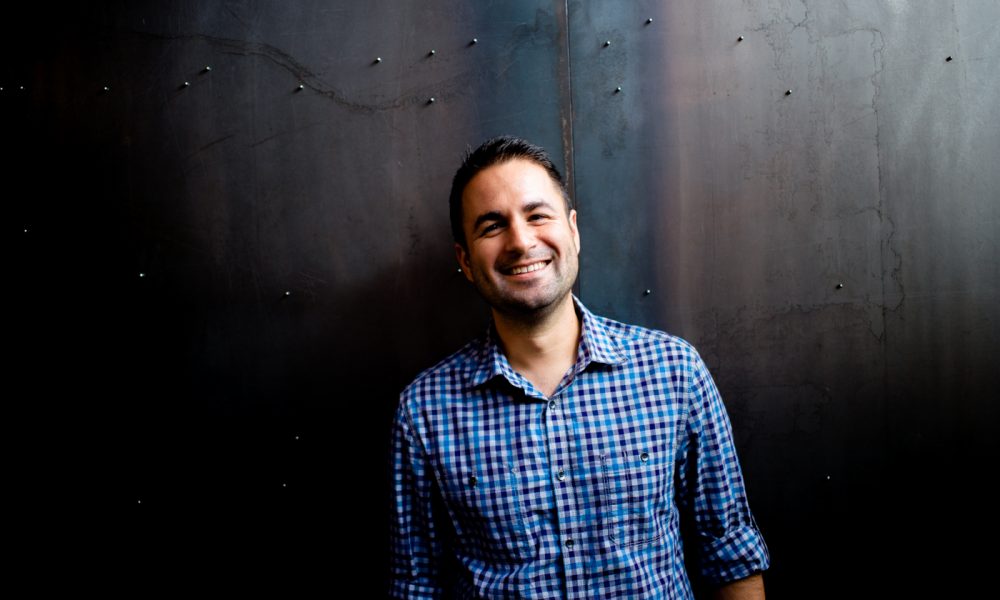
Today we’d like to introduce you to Gurmukh Bhasin.
Can you briefly walk us through your story – how you started and how you got to where you are today.
My adventures in the design world accidentally started when I was a teenager. When I was in high school, I really enjoyed math, science and art classes and when it came time to decide what to study in college I really had no idea what I wanted to do. Growing up in LA I was a skateboarder, and I would skate all over the city with my friends. We would grind ledges, do tricks down stairs and search out spots to skate at different buildings around the city. Because of skateboarding I started to notice buildings in a different way and really started to see them in terms of design and started to ask myself why certain things were made the way they were. I didn’t really know what I was doing, but I ended up picking Architecture as my major and went to Arizona State University from 2000-2004 to study it. ASU really gave me a solid understanding of design thinking, and I had a very enjoyable time starting my design career there.
After I graduated from ASU, I quickly moved back to LA and took a year to work, travel and apply to Graduate School. I had heard about a school in downtown LA called Southern California Institute of Architecture (SCI-arc) and everyone I talked to basically made it out to be the place where all the cool kids went to really learn how to break all the design rules and truly think outside the box. Once again, I really had no clue as to what I was getting myself into, but once I got into SCI-arc (2005-2007), I was excited to go there and start learning. I like to tell people that SCI-arc is like educational LSD for designers. We were learning to use digital tools for design to allow ourselves to come up with ideas that our brain wouldn’t naturally think of on their own. We would look into science, nature, technology, mathematical equations, programming and more to help us create original architectural designs.
We would tackle projects on the scale of not just designing a building, but everything from a small product to entire cities. My thesis project was a 13 Billion sq.ft. building that took over the city of LA. It started by weaving a built structure over and under LA’s freeway infrastructure to provide space housing, work, retail, entertainment, education and parks on top. From the freeway space, the building would spread its way into the city slowly taking over vacant spaces and eating up development areas as it grew. SCI-arc really opened my mind to the endless possibilities of what design is, and laid the foundation for my thought process, ways of exploring design and the way I enjoy creating my ideas still to this day. Once I finished my Master Degree, it was now time to work in the real world. I ended up getting a job at an architectural firm in Hollywood and had the pleasure to work on large projects all over the world.
As far as commercial architecture goes, the projects were pretty exciting and on the more fun side of architectural design work. But, I felt like something major was missing from my life, and the design work I was doing didn’t really feel like design at all. The excitement and exploration we learned to do at SCI-arc just wasn’t happening in the real world of architecture, and I wasn’t really enjoying the work in a way that I thought I would. I worked at that firm for 1.5 years and was eventually laid off in 2009 when the economy collapsed, and nearly 90% of architects around the world found themselves unemployed. Being laid off ended up being a blessing in disguise for me, and during my two years of unemployment, I stumbled upon an art show at a visual effects school in Hollywood called Gnomon. The show was on concept art for entertainment, and I remember leaving the show thinking that was what I really wanted to do for a living.
Unfortunately, I had way too much student loan debt to go to Gnomon full time, but I decided to start working on my own concept design portfolio and see what I could teach myself on my own with the help of the internet and the design knowledge I already had. I took a few concept design classes here and there when I could, I would watch online tutorials, I would go to networking events and art shows just so I could be around people in this new industry that I wanted to be a part of, and I would spend as much of my free time as I could developing my own concept designs and building my portfolio. It took me about four years, but eventually with a lot of luck, and a lot of help from a friend who recommended me for an awesome project, I got my break and made my career switch into the entertainment industry as a concept designer on the highly anticipated video game Star Citizen. I worked in-house at Could Imperium Games on Star Citizen for 2.5 years a grew tremendously during my time on the project.
Working side by side with some of the best video game artists around I was able really to speed up my workflow, pick up new techniques and develop a process in which I really enjoyed creating my own designs. I had an amazing time designing spaceships for Star Citizen, and the project really helped me start to make a name for myself in the entertainment industry. Eventually, I decided it was my time to move on from the project and go out on my own as a freelance designer. Once again, I really wasn’t sure about what I was doing, and I didn’t really have a plan. Creating my freelance design business GurmukhBhasin.com over the past couple of years has been an amazing adventure so far and is so much fun with the wide variety of projects and amazing clients I get to work with. These days I work on design projects across many industries. Lately, I have been doing a lot of work in industrial design where I get to create concepts for car, truck, SUV and motorcycle tires, military drones, driver-less trucks, medical products and more.
I have been working in entertainment mostly on VR projects, designing environments, spaceships, rovers, racing ships, and gunner turrets. I have done work in architecture helping to visualize early concepts for infrastructure ideas for the next world cup. I have been teaching at Gnomon in Hollywood and will start teaching a 3D Concept Design class at Brainstorm in Burbank in January 2019. And I have co-founded a new hardware and software VR company with three other guys called Altered Mechanics where we are developing some pretty awesome experiences for the VR space. So far my 18-year design adventure has really taken me in directions I would have never imagined when I was younger. When I look back on the journey so far, it is fun to see how most of it really wasn’t planned and a lot of luck and just going for things have played a huge role to where I am today.
I think what really sets me apart from other Concept Designers out there is my past in Architecture and creating designs for the real world, mixed with my imagination, aesthetic choices, thought process and the tools I choose to use to create my original designs. I always aim for my fictional designs to be grounded in reality and want my audience to be able to relate to my designs through the feeling as if they could be real.
Overall, has it been relatively smooth? If not, what were some of the struggles along the way?
It has not been a smooth road at all. I have been laid off, spent two years unemployed, switched my career, started my own design business without any clients and co-founded a VR startup all just by chance and with passion for design and the love to create. Many times I was told that I was doing it wrong or that I would fail. I never really had a solid plan or any idea if it would work out.
I just knew that my current situation wasn’t working for me and that I had to follow my intuition or I wouldn’t be satisfied. Many times I wondered if I was making the wrong decision or being foolish. But in the end, it has all worked out even better than I could have imagined. When I started undergrad, I didn’t even know that there was such a thing as a career in concept design. Never in my wildest dreams did I think that I would design things like spaceships, robots, drones, tires, VR experiences and more.
The thing that gets me the most excited is that at any moment I could be asked to design something that I didn’t even think needed to be designed. The long winding road, all the mistakes, and struggles, the life experiences and lessons learned are all what make me the designer I am today, and I am definitely stronger because of it. If I could do it all over again, I wouldn’t change a thing.
We’d love to hear more about what you do.
Gurmukh Bhasin Design (www.gurmukhbhasin.com) specializes in the early design phase of a project and helps to design and visualize the conceptual ideas of the client needs. I work with my clients to get ideas out of their head and on to “paper.” Together with the client, I do a lot of design iteration and exploration to help create the final concept before passing on the design to the next team. I do all my design work in 3D and render out different options in a photo-realistic way so my clients can clearly see and understand which direction to take things in.
For entertainment projects, I am mostly known for designing spaceships, robots, trucks, weapons, props, and environments for video games, tv and film. I also do a lot of design work in industrial design and other fields too. I have done concept designs for drones and driverless trucks for engineering firms and military uses. I have designed a car, truck and motorcycle tires for a large tire company. I have designed medical products, luggage, award stages, and more.
What sets Gurmukh Bhasin Design apart from others are the design aesthetics and unique ideas I bring to creation, along with the process I work in and final output I pass along to the next phase of the project. I do all my design work in 3D so it is very easy for my clients to understand what they are looking at and this helps them to make better choices when moving through the design process.
A sketch can be very loose and vague and often hard to understand, but with my 3D design process, the design options look like photos of the product, and it is very easy to see what the design is. The final output is usually a few beautiful images of the final concept along with the 3D concept model to pass on to the next team. The beauty images sell the project and are used for marketing and the 3D files help the next team (engineers, game modelers, builders, etc.) stay close to the original concept design while creating a final product that works.
Do you feel like our city is a good place for businesses like yours? If someone was just starting out, would you recommend them starting out here? If not, what can our city do to improve?
Los Angeles is an excellent place for designers and creators. This city is built off of the arts and is filled with many different design opportunities. We have Hollywood and the entertainment industry as well as fashion, advertising, tech, and more.
The majority of my clients come from recommendations from other creative people that I happen to meet at an art show or a coffee shop down the street. You never know who you’re going to meet and what project might come your way. However, if you are just starting out and trying to build your own design firm, LA might not be the best place to do it. Rent is expensive, and most of the design work is done digitally and sent over the internet so it can be done from anywhere.
I love being in LA because this is where I am from, and I love to live here, but my clients can be all over the world, and all the work I do is digital, so it isn’t really necessary for me to be here. If you have a good online portfolio and can create a strong online presence, you can potentially be anywhere in the world and do this same type of work. The one thing LA can do to improve would be to fix the insanely high cost of living.
Contact Info:
- Website: www.gurmukhbhasin.com
- Phone: 310.729.4673
- Email: [email protected]


Getting in touch: VoyageLA is built on recommendations from the community; it’s how we uncover hidden gems, so if you know someone who deserves recognition please let us know here.
Popular
-

Linda Villines on Releasing Stored Struggle and Reclaiming Ease Through the Body
-

Candice Swanson on Honoring the Sacred Early Days of Motherhood Through Intentional Photography
-

Michael Johnson on Telling Untold Stories of Identity and Leadership Through SQUAD
-

Owning the Narrative: Drew Dusterhoff Steps Into Power with Lincoln Must Die
-

Portraits of the Valley
-

LA’s Most Inspiring Stories