



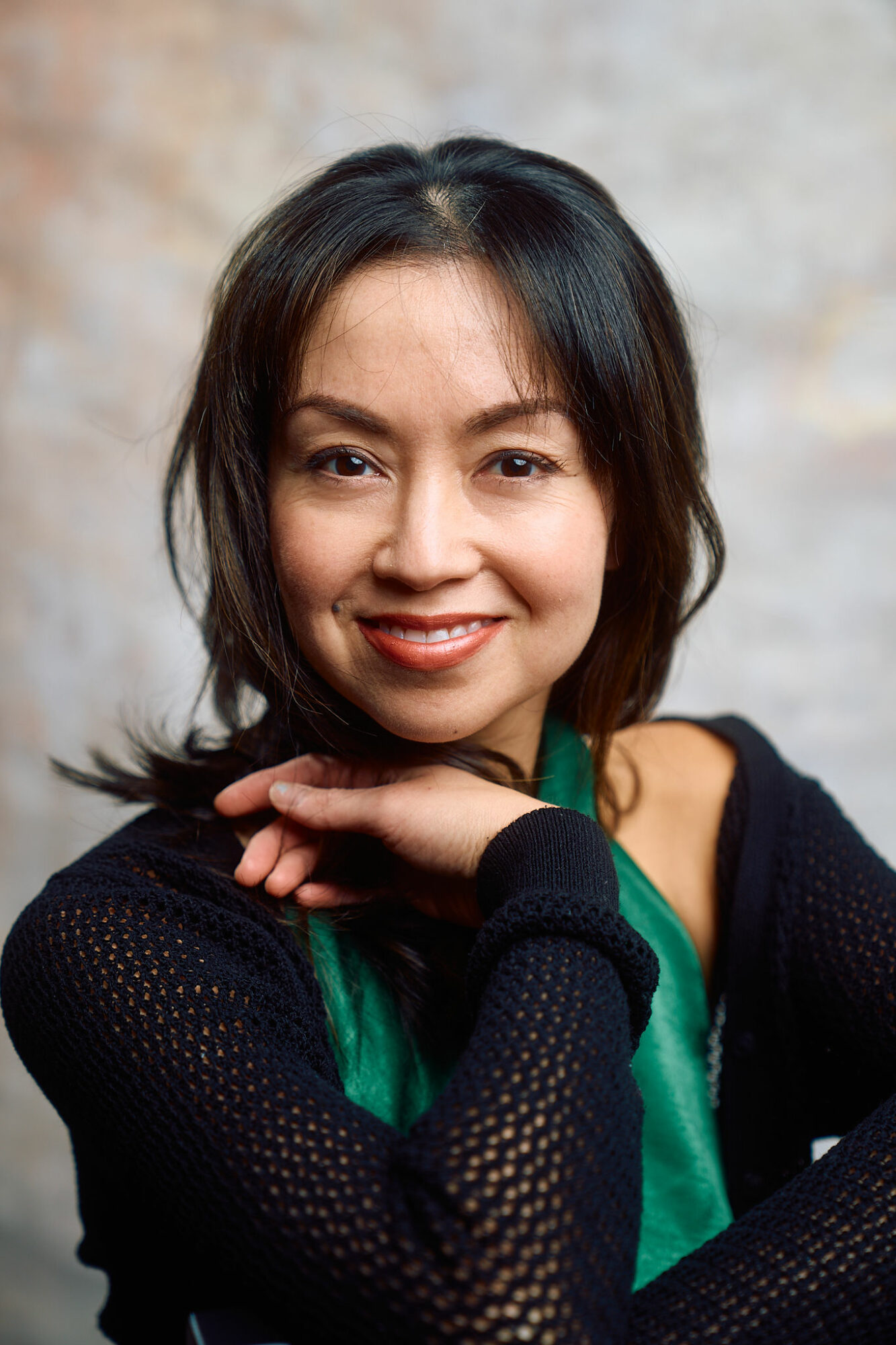
Today we’d like to introduce you to Catherine.
Hi Catherine, so excited to have you on the platform. So before we get into questions about your work-life, maybe you can bring our readers up to speed on your story and how you got to where you are today?
I’ve always loved stories. Growing up with anxiety, writing became one of the ways I processed what I was feeling. I remember writing stories, poetry, and spoken word as a kid to make sense of emotions that sometimes felt overwhelming. Writing helped me work through what I was feeling while expanding my sense of what was possible. I found a lot of hope and comfort in my imagination.
I think that’s also part of why I fell in love with acting. Stepping into someone else’s story gave me a different way to explore emotions and, in some ways, take control of a narrative during times when I felt overwhelmed by my own.
As I got older, I gravitated toward things that pushed me outside my comfort zone. I built a career in the corporate world of sales while also working in acting, hosting, and improv. Whether I was walking into a room and talking to strangers, performing on stage, or interviewing someone, I was constantly putting myself in situations that terrified me but were ultimately incredibly fulfilling.
Along the way, I realized that storytelling was still doing for me what it had done when I was a kid. It was therapeutic — a way to process challenges, work through difficult emotions, and make sense of my experiences. But it had also become a powerful way to connect with other people.
That became especially important during some of the hardest experiences of my life. I lost my mom to brain cancer in my twenties, which gave me an early understanding of just how fragile life can be and made me incredibly diligent about my own health.
Years later, I was diagnosed with an unruptured brain aneurysm. For five years, I monitored it and tried not to let it consume my life. But when doctors began seeing growth and changes, I became terrified of what came next. I didn’t know anyone who had been through something like this, so I went looking for other people’s stories and found The Bee Foundation,a nonprofit dedicated to brain aneurysm prevention through research, education, and advocacy.
I read stories of lives lost and survivors navigating the lasting effects of brain aneurysms. Their stories gave me a sense of urgency and helped me understand that I needed to face my fears about treatment and take action. In 2022, I underwent successful treatment at UCLA, and six months later, my aneurysm was healed.
After my treatment, I realized that I now had my own story to share — one that might offer hope to someone facing the same fears I had.
Today, much of that storytelling has found a deeper purpose through my advocacy with The Bee Foundation. As an ambassador, I share my own experience and interview survivors, families, neurosurgeons, and researchers. I also continue to work in entertainment and other creative spaces, but I no longer see these different parts of my life as separate. They’re all ways of doing what I’ve always loved — connecting with people through stories.
A story can make someone feel less alone. It can create urgency. It can give someone hope. And sometimes, it can change what they choose to do next. That’s what really fires me up about storytelling — knowing that a story might actually make a difference in someone’s life.
Can you talk to us a bit about the challenges and lessons you’ve learned along the way. Looking back would you say it’s been easy or smooth in retrospect?
It definitely hasn’t been a smooth road. I think one of the biggest challenges throughout my life has been learning to accept vulnerability, which is interesting because vulnerability is such an essential part of good storytelling.
I grew up with a lot of anxiety at a time when mental health wasn’t really acknowledged in my family. My struggles were often dismissed, and there was embarrassment around the idea of needing help. I knew I was struggling, but I also felt like I had to fight to have those struggles taken seriously. At the same time, I grew up in a culture where image was important, so I desperately wanted to seem like I had everything together — when most of the time, I felt like a mess. That gap between how I thought I was supposed to be and how I actually felt created even more anxiety.
A big part of my growth has been learning that vulnerability isn’t weakness. Sometimes strength is simply accepting where you are instead of fighting so hard against it. I’m still learning what that kind of radical acceptance looks like.
The funny thing is that I somehow chose a life that continually asks me to be vulnerable. Acting requires you to access parts of yourself you might rather protect. Improv requires you to let go of control. Interviewing someone requires you to be present and curious instead of worrying about how you’re being perceived. And sharing your own story means putting something personal into the world without having any control over how people will respond to it.
Losing my mom to brain cancer in my twenties brought a different kind of grief into my life. I had spent so much of my childhood trying to figure out what to do with overwhelming emotions, and suddenly I was facing a loss that there was no way to fix or think my way out of. Years later, facing my own brain aneurysm brought up fear, grief, and eventually survivor’s guilt in ways I didn’t expect.
After my aneurysm was successfully treated, I was incredibly grateful, but through my advocacy with The Bee Foundation, I was also becoming part of a community of families who had lost someone and survivors whose lives had been changed in profound ways. I had to learn that gratitude for my own outcome and grief for what others had experienced could exist at the same time.
Writing became an important part of working through that. I eventually wrote about grief and survivor’s guilt in a piece for Brain & Life called “A Matter of Grief.” Sharing something that personal publicly was scary. There’s a big difference between telling a polished version of your story and sharing the parts that are still complicated and unresolved.
I think that struggle has also changed me creatively. Whether I’m acting, writing, interviewing someone, or telling my own story, I’m much more interested now in finding the places that are real, raw, uncomposed, and often unpretty. I’m still someone who can overthink, worry about how I’m being perceived, and want to get everything “right.” But I’ve learned that the moments when I’m willing to let go of some of that control are usually the moments when something meaningful happens.
Thanks for sharing that. So, maybe next you can tell us a bit more about your work?
My work has never followed one perfectly straight path, but storytelling has always been the thread connecting it. Over the years, I’ve worked in business development alongside acting, hosting, writing, and photography. Some of the work I’m most proud of is my volunteer advocacy with The Bee Foundation.
Through my role as an ambassador with The Bee Foundation, I’ve had the opportunity to share my own survivor story, interview other survivors and families, and speak with neurosurgeons and researchers about the work being done to better understand, treat, and ultimately prevent brain aneurysms.
What I’m most proud of is being able to take some of the more difficult experiences in my own life and turn them into something that might help someone else. With The Bee Foundation, that means sharing my own survivor story, but it also means using the skills I developed in completely different areas of my life to help tell other people’s stories. Acting and improv taught me to listen and be present. Business development taught me to speak confidently with people from different professional backgrounds. Hosting taught me to ask questions that help people feel comfortable enough to open up. And my own experience as a patient helps me understand what it feels like to be on the other side of those conversations.
I’m especially drawn to stories that might otherwise go untold. Sometimes that means sitting across from a neurosurgeon and turning an incredibly complicated topic into a conversation that feels accessible. Sometimes it means giving a survivor or family member space to talk about an experience that changed their life. And sometimes it has nothing to do with brain aneurysms at all. That same curiosity about people carries through my work in business development, acting, writing, photography, and the other creative work I do.
I think what sets me apart is the combination of those experiences. I don’t approach storytelling from just one direction. I’ve been the performer, the interviewer, the writer, the person behind the camera, and the person whose very personal story is being told. I’ve also been the patient sitting across from a doctor trying to understand something frightening and complicated. All of those experiences affect the way I listen to people and the kinds of stories I’m drawn to.
For a long time, I thought all of these different interests meant I needed to choose a lane. Now I see that they actually inform one another. I’m especially passionate about stories and perspectives that haven’t always been represented or given enough space — whether they involve culture, mental health, health advocacy, or simply an experience we don’t hear about very often. Those are the stories I can’t wait to share- because sometimes being seen in someone else’s story can change the way you see your own.
What makes you happy?
What makes me happiest is being fully present in my own life. When I was younger, my anxiety was often so overwhelming that being present was incredibly difficult. So much of my energy was spent worrying about what had already happened or what might happen next. Learning how to better care for my mental health has given me the ability to experience my life in a way I couldn’t always do before, and I don’t take that for granted.
Some of my happiest moments now are actually the smallest ones, especially with my family. I love watching my daughters grow and change and getting to really know who they are becoming. One of my daughters has autism and ADHD, and one of the most fulfilling parts of motherhood for me has been learning to meet both of my daughters where they are—to acknowledge their feelings, help them understand themselves, and empower them to grow into confident people who know it’s okay not to be okay.
Being present for them means a lot to me. Sometimes that looks like being involved in their classrooms or showing up for all the activities and extra things that come with raising kids. Sometimes it’s just listening when they need to be heard. I think I’ve learned that some of the moments that seem the most ordinary while you’re living them are actually the ones that matter most.
That feeling extends beyond my family. I get a lot of joy from those moments when something I’ve experienced or learned might actually be helpful to someone else. Sometimes that’s sharing my own brain aneurysm story with someone who is scared. Sometimes it’s talking with another parent about raising a neurodivergent child. And sometimes it’s helping tell a story or represent an experience that might not otherwise be heard.
I think underneath all of those things is connection. I’m happiest when I can be fully present with someone — when I can truly see them and feel seen in return — and then find a way to take that connection and turn it into something that might have a lasting impact.
I spent a lot of my younger life struggling to be present. Now, being present enough to really experience people, love them, learn from them, and share something that might help someone else is probably what gives me the greatest joy.
Contact Info:
- Website: https://linktr.ee/CatNavarroLee
- Instagram: @catherinenavarrolee @juniperandrosepictures @faithandflo
- LinkedIn: https://www.linkedin.com/in/cat-n-lee0117


Image Credits
Headshot: @Rayraymundophoto Step and repeat/Nurse the Dead premiere: @sthanlee Liberty and Justice (daughters) photo: @juniperandrosepictures
Popular
-
Greg Hex Is Turning the Everyday Kitchen Knife Into a Modern Design Object
-

Portraits of the Valley
-

LA’s Most Inspiring Stories
-

Rick Norris Learned That Building a Successful Business Means Building a Life You Actually Want to Live
-
How Olivia Rush Turned Survival Into a Mission to Help Others Keep Going
-

How Bibi Goldstein Is Helping Entrepreneurs Reclaim Their Time by Embracing the Power of Delegation


