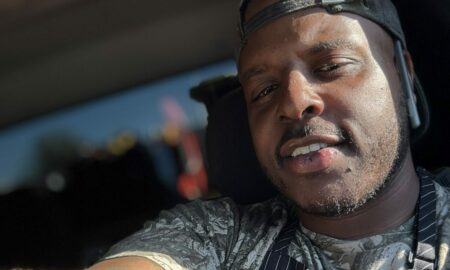



 Today we’d like to introduce you to Brette Waters.
Brette, let’s start with your story. We’d love to hear how you got started and how the journey has been so far.
I guess to some degree, I was destined to feed people, in retrospect I can see that now. My grandpa ran a corner produce stand in Brooklyn so it’s in my blood. One of my first jobs was working at farmer’s markets, physical labor, selling fruit. Then I worked for years in the restaurant industry as a server and bartender and, after graduating from culinary school, in the kitchen.
In my mid-twenties, I started working in sales for a food-service distributor called Vesta Foodservice and had the opportunity to work closely with some of the best chefs and restaurants in Southern CA. It was at this company that I had access to what I see now as my true calling.
After working in the restaurant and hospitality industry for almost three decades, Vesta identified an unfilled niche in the food donation arena; recovering unserved prepared food from restaurant kitchens. Up to this point, Vesta had a successful donation program with the Midnight Mission in DTLA Skid Row neighborhood, whereby surplus inventory that could not be sold was donated to this organization every week. Prepared food recovery was largely unexplored at that point, but we knew that we had the resources, infrastructure and logistical knowledge to fill this gap. Thus, Chefs to End Hunger (501 c3 non-profit) was founded by Vesta Foodservice in 2012, with the mission to recover surplus food from businesses and distribute that food to last mile organizations that serve the food insecure in their communities.
When I started to oversee this organization, it became clear to me that our country has an abundance of food yet a hunger problem at the same time. Billions of dollars are spent every year to produce food, not to mention resources, labor, energy, and by some estimates, a quarter of that food winds up in landfills. Food rotting in landfills is a huge contributor to methane gas emissions too. So, why not find a solution that solves both food waste AND food insecurity? So that is what we do. The Midnight Mission is still one of my best partners, and I have since expanded my network to over 15 agency partners in CA, NV and AZ.
We’re always bombarded by how great it is to pursue your passion, etc – but we’ve spoken with enough people to know that it’s not always easy. Overall, would you say things have been easy for you?
Success is rarely found via a completely smooth road, right? I mean, running a non-profit is a daily adventure. Every day we are moving perishable food from one location to another. We have to think about cold-chain logistics, transportation, food safety, the needs of our agency partners, the needs of our communities, data and tracking, you name it. It is a constant moving target. Maybe it’s 40 boxes of leftovers from the Governers Ball after the Academy Awards, maybe its 15 pallets of frozen bread from a local bakery, maybe it’s a full semi-load of lettuce direct from a farm. I have to find a home for all of that food. Some of my partners can take everything I send their way, others have limited resources as far as cold storage or kitchen infrastructure or labor. And my partners and I always want to be conscious of the end consumer – what populations are being served? What are their dietary and nutrition needs? What are their health challenges?
At the end of the day, it is always a question of – how efficiently and effectively can we divert as much food as possible and best serve the community? Fortunately, I work with some of the most AMAZING organizations that work tirelessly to feed those in need – really, the boots on the ground. The pandemic economy that we are currently experiencing has added a whole new element of challenge. So many foodservice businesses have scaled way back if they haven’t shut down completely. As less food is flowing through the supply chain, everyone and everything along that supply chain is affected. I can’t recover as much surplus from my normal sources like restaurants, hotels/resorts, corporate dining facilities, entertainment studios, caterers. I have to always look for new sources of surplus food. At the same time, food insecurity is on the rise as unemployment is at record high levels. And there’s always the question of funding. I was new to the non-profit world when I took over Chefs to End Hunger. Grant writing, revenue generating those things were new to me so thats a learning curve I continue to work through.
We’d love to hear more about your organization.
Technically Chefs to End Hunger is a 501 c3 non profit food recovery organization. What does that mean exactly? We manage all the logistics of recovering surplus food, storing that food and then distributing that food to “last mile organizations” that feed their communities in need. So we are basically the middle man between those that produce food and food banks/shelters/other nonprofits that offer services to the community.
Our organization is unique in the sheer variety of food that we handle – prepared food from restaurants, hotels/resorts, tech companies, entertainment studios, catering companies, as well as inventory that can’t be sold from wholesalers, manufacturers, and farms. We also have the most amazing partnership with our founder, Vesta Foodservice, that provides us with full logistical support and access to transportation. Tackling the growing problems of food waste and food insecurity needs a collaborative approach and a close partnership such as ours allows us to leverage our resources and strengths to be successful and really move the needle.
In 2019 Chefs to End Hunger recovered and diverted over 4 million pounds of food, providing over 3 million meals (based on the USDA conversion rate of 1.2# of food being equal to 1 meal). Although we were on track to recover over 5 million pounds of food in 2020, the COVID 19 crisis has definitely changed the game. However, we mobilized really quickly when the shut-down started and rescued 1.5 million pounds of food in the first six weeks of shelter in place orders. Then we pivoted to work on some other food-security initiatives with our founder, which have been very successful. Business is slowly picking back up, and I don’t know exactly how we will net out at the end of this year, but we have learned so much and I am more fired up than ever to continue to grow our organization and partnerships and ultimately, feed more people.
What were you like growing up?
I was the oldest of three and the only girl. My family was tight-knit, very loving, and education was always a priority. Most of my time growing up, all the way until going to college, was spent in a dance studio. I credit my commitment to dancing and my parent’s consistent high expectations (and a healthy dose of luck) with keeping me on the right path. Where I grew up, it was really easy to get into trouble and lose your way and thats what happened to a lot of my friends and peers.
I have always been outgoing, love to be around people, and love to make people feel good. I have also always liked to push boundaries and break rules. I like the philosophy of “better to ask forgiveness rather than permission” and I share that insight with my three daughters frequently 🙂
I grew up in Northern CA and when I was young, my parents took my brothers and I to San Francisco all the time. We would navigate the entire city on foot, rarely hopping in a cab, only sometimes taking public transportation. My dad would often give money to the homeless men and women we walked past on the sidewalk. I always – ALWAYS – wanted to give them food; leftovers from a meal, candy from my pocket. These memories are still vivid in my mind and continue to inspire me to grow and learn and expand so that ultimately I can be of greater service to others. Now as a mother, it is so important to instill that philosophy in my daughters – I tell them all the time that they need to find a cause they are passionate about and find ways to contribute to their communities over their lifetime. I hope I am leading by example – when you have, you give.
Contact Info:
- Website: https://www.chefsendhunger.org
- Phone: 562-741-2200
- Email: [email protected]
- Instagram: @chefstoendhunger, @brettewaters


Image Credit:
Brette Waters and Othon Nolasco, Founder of No Us Without You
Mel Castro
http://www.m-castro.com
Suggest a story: VoyageLA is built on recommendations from the community; it’s how we uncover hidden gems, so if you or someone you know deserves recognition please let us know here.
Popular
-

Linda Villines on Releasing Stored Struggle and Reclaiming Ease Through the Body
-

Candice Swanson on Honoring the Sacred Early Days of Motherhood Through Intentional Photography
-

Michael Johnson on Telling Untold Stories of Identity and Leadership Through SQUAD
-

Owning the Narrative: Drew Dusterhoff Steps Into Power with Lincoln Must Die
-

Portraits of the Valley
-

LA’s Most Inspiring Stories