



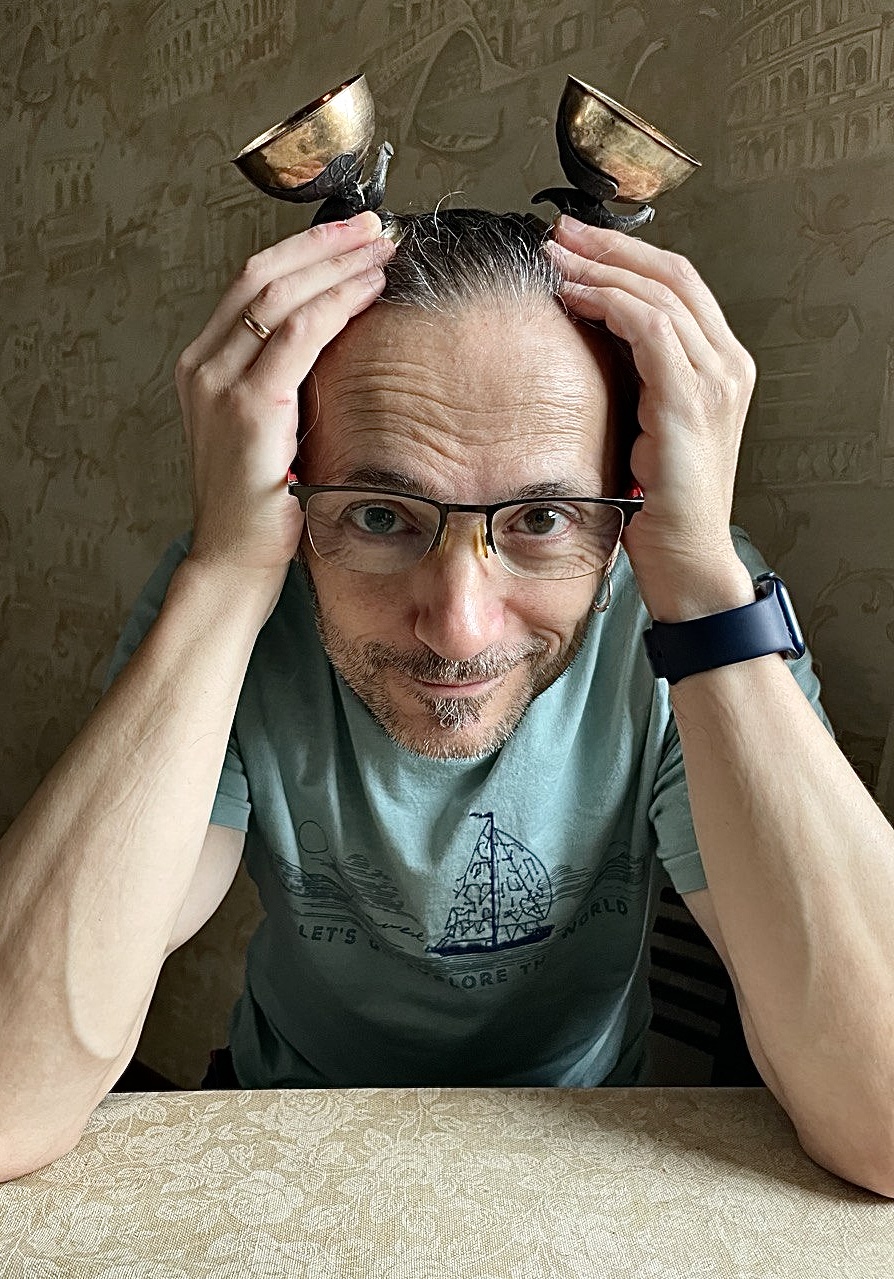
Today we’d like to introduce you to Al Soulman.
Hi Al, so excited to have you on the platform. So before we get into questions about your work-life, maybe you can bring our readers up to speed on your story and how you got to where you are today?
My background is in live sound engineering, where I spent years working with musicians and focusing on how tone translates in real performance environments. At the same time, I’ve always been a guitar player myself, which kept my interest not just in sound as a technical result, but in the tools that shape it.
Over time, I became increasingly interested in vintage guitar effects. I started acquiring older pedals, often in poor or non-working condition, simply because fully functional examples were either too expensive or difficult to find. Repairing them wasn’t initially a goal — it was a necessity.
That process gradually turned into something more serious. Working on these units led to a deeper understanding of their design, their limitations, and the reasons they sound the way they do. Instead of replacing parts indiscriminately, I began focusing on preserving what could be preserved and restoring only what had actually failed. That approach naturally evolved into a consistent restoration philosophy centered on authenticity.
As more pieces were restored, the collection grew alongside my experience. What started as practical repair work became a structured effort to preserve and maintain vintage gear in a fully functional state. Today, Soulman Vintage reflects that progression — a collection where every piece is not only historically significant, but also operational and true to its original character.
The next step is expanding this work into a dedicated workshop, making this approach available to other musicians and collectors who want their equipment restored with the same level of care and respect.
Alright, so let’s dig a little deeper into the story – has it been an easy path overall and if not, what were the challenges you’ve had to overcome?
Not really. It’s been a gradual process with a lot of trial and error.
One of the main challenges early on was simply access — finding vintage gear that was both affordable and worth restoring. Most of what I could get were heavily worn or non-working units, often with unknown history or previous repair attempts that made things more complicated.
Another difficulty was the learning curve. Vintage pedals are not standardized in the way modern gear is. Different components, inconsistent documentation, and aging materials all mean that each unit can present a unique set of problems. There’s no universal solution — every repair requires careful analysis and, often, patience.
Sourcing parts has also become increasingly difficult. Many original components are no longer produced, and truly correct replacements — especially for certain transistors, capacitors, or mechanical parts — are getting harder to find every year. In some cases, they are effectively unavailable, which forces careful decisions between authenticity and functionality.
There’s also a constant balance between restoration and preservation. It’s easy to make something work by replacing parts, but much harder to keep the original character intact while doing so. Developing that discipline — knowing when not to replace something — took time.
More recently, relocation added another layer of complexity. Moving countries meant putting the entire collection and workspace into storage, which temporarily limited hands-on work and slowed progress.
Overall, it hasn’t been a straight path, but each of these challenges shaped both the collection and the approach behind it.
Thanks for sharing that. So, maybe next you can tell us a bit more about your work?
I work with vintage guitar effects — primarily collecting, restoring, and preserving them in fully functional condition. My focus is not just on making a unit work, but on maintaining its original identity, both visually and technically.
I specialize in restoration that prioritizes authenticity. That means original components are preserved whenever possible, even when they fail — for example, by rebuilding parts internally while keeping their original external appearance. I avoid unnecessary replacement of original elements, because each component is part of the device’s history and contributes to its character.
What sets my work apart is this balance between functionality and historical accuracy. Many restorations focus on reliability and modern performance, often at the cost of originality. My approach is the opposite: I treat each unit as a historical object that must remain true to itself, while still being playable.
I also work extensively with devices that are in poor or non-working condition, which requires a deeper level of analysis and problem-solving. Combined with the fact that many original components are no longer available, restoration becomes less about straightforward repair and more about making precise, informed decisions on a case-by-case basis.
What I’m most proud of is building a collection where every piece is not only authentic in appearance, but also fully operational — not static displays, but instruments that can still produce the same sound they did decades ago. Recently, representing Soulman Vintage, I presented part of this work at the NAMM Show in Anaheim alongside the Museum of Making Music in the Pedal Lounge, which was an important milestone and an opportunity to bring this approach to a wider audience.
Do you have any advice for those just starting out?
Start simple and expect to make mistakes. Early on, it’s more important to understand how things work than to achieve perfect results.
Don’t rush to replace parts. It’s tempting to “upgrade” everything, but in vintage gear that often destroys what makes it unique. Learn to diagnose first, and only replace what has actually failed.
Be selective with what you buy. Not every vintage unit is worth restoring. Some are too far gone, and others have already lost their originality. Choosing the right starting point saves a lot of time and frustration.
Accept that original components are a finite resource. Many parts are already difficult to find, and some are effectively gone. If you come across correct components, keep them — you may not get another chance.
Document your work. Take photos, keep notes, track what was done. Over time, this becomes as valuable as the hands-on experience itself.
And finally, be patient. This is not a fast process. Developing the ability to restore something properly — without compromising its character — takes time, and there are no shortcuts.
Contact Info:
- Website: https://soulman-vintage.com
- Instagram: https://instagram.com/soulman.vintage
- Facebook: https://www.facebook.com/soulman.vintage
- LinkedIn: https://www.linkedin.com/company/soulman-vintage/
- Youtube: https://youtube.com/@soulmanvintage


Image Credits
Al Soulman
Popular
-

Portraits of the Valley
-

LA’s Most Inspiring Stories
-

How Amy Beavington Is Creating a More Grounded, Inclusive Approach to Spirituality Through Community and Self-Discovery
-

How MEL Symphonic Is Expanding His Creative Sound Through Collaboration, Emotion, and a Bold New Musical Direction
-

Dricka Crawford Is Expanding Two Girls & a Drink by Bringing Globally Inspired Cocktail Experiences to Weddings, Corporate Events, and Celebrations of All Ages
-

Saba Moor-Doucette Is Redefining Longevity by Building a Career Fueled by Creativity, Fitness, and Fearless Reinvention


