




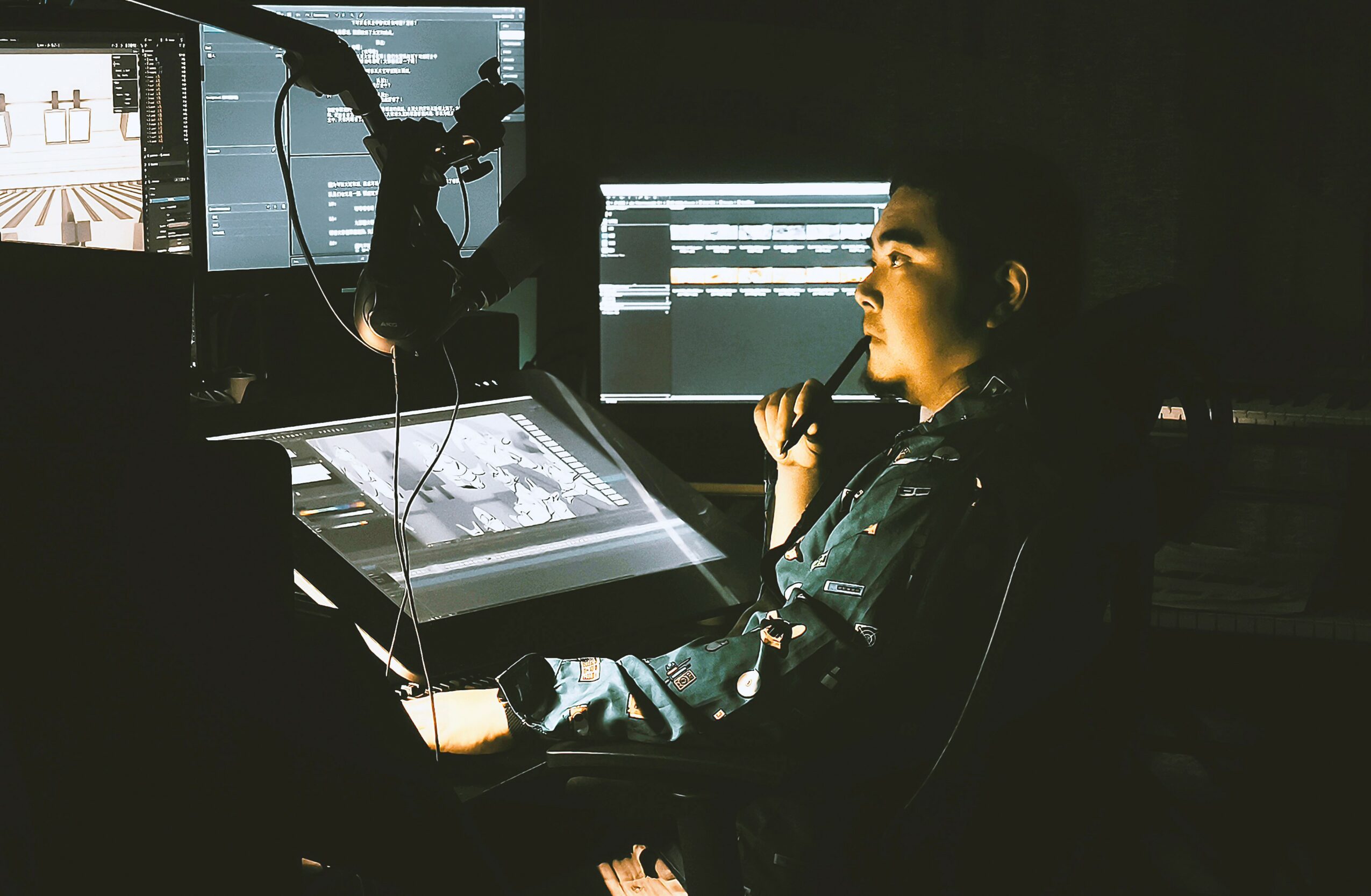
Today we’d like to introduce you to Yingzhong Hu.
Alright, so thank you so much for sharing your story and insight with our readers. To kick things off, can you tell us a bit about how you got started?
I spent a short period of time in LA when I was in elementary school. That was when I first watched Cartoon Network and started mimicking the cartoon characters I saw. My mom used to say, “If you keep making those silly faces every day, how are you going to get a job in the future?” But shows like Ed, Edd n Eddy, The Powerpuff Girls, and Dexter’s Laboratory had a big influence on me, like a seed planted in the soil.
Many years later I went to Sheridan College in Canada to further my studies, and it was during that time I realized I wanted to pursue a career in storyboarding. Although I had gained some experience through work, to be honest, I still wasn’t entirely sure how to properly draw storyboards or what key things to focus on. So during the pandemic in 2020, I enrolled in a storyboarding class taught by Stephanie Stine. That was when I started to build all kinds of connections with people and friends in LA. In 2021, I was fortunate enough to join Netflix Animation Studio and work on The Twits, which was also my first time contributing to a Hollywood animated feature.
I’m currently working as a storyboard artist for Sony Pictures Animation, a dream job on a dream project. And yes, making funny faces is still part of my daily work! Hope my mom doesn’t get angry now:P
I’m sure it wasn’t obstacle-free, but would you say the journey has been fairly smooth so far?
Right now, the animation job market isn’t as optimistic as it used to be. Sometimes, just having a job is already very lucky. But often, these jobs don’t align with one’s personal artist goals. How to maintain the balance between work and personal artistic goals has always been a major challenge. It’s all about balance!
I had took a very extreme approach before. In pursuit of so-called stability, I hardly gave myself any rest. In the end not only did I become emotionally numb, physically unhealthy, most importantly I ended up in a deep burn out and in lost of finding my personal voice. Later on, I started trying to find balance, setting aside at least one hour daily for personal creation and learning, especially to explore my personal artistic voice.
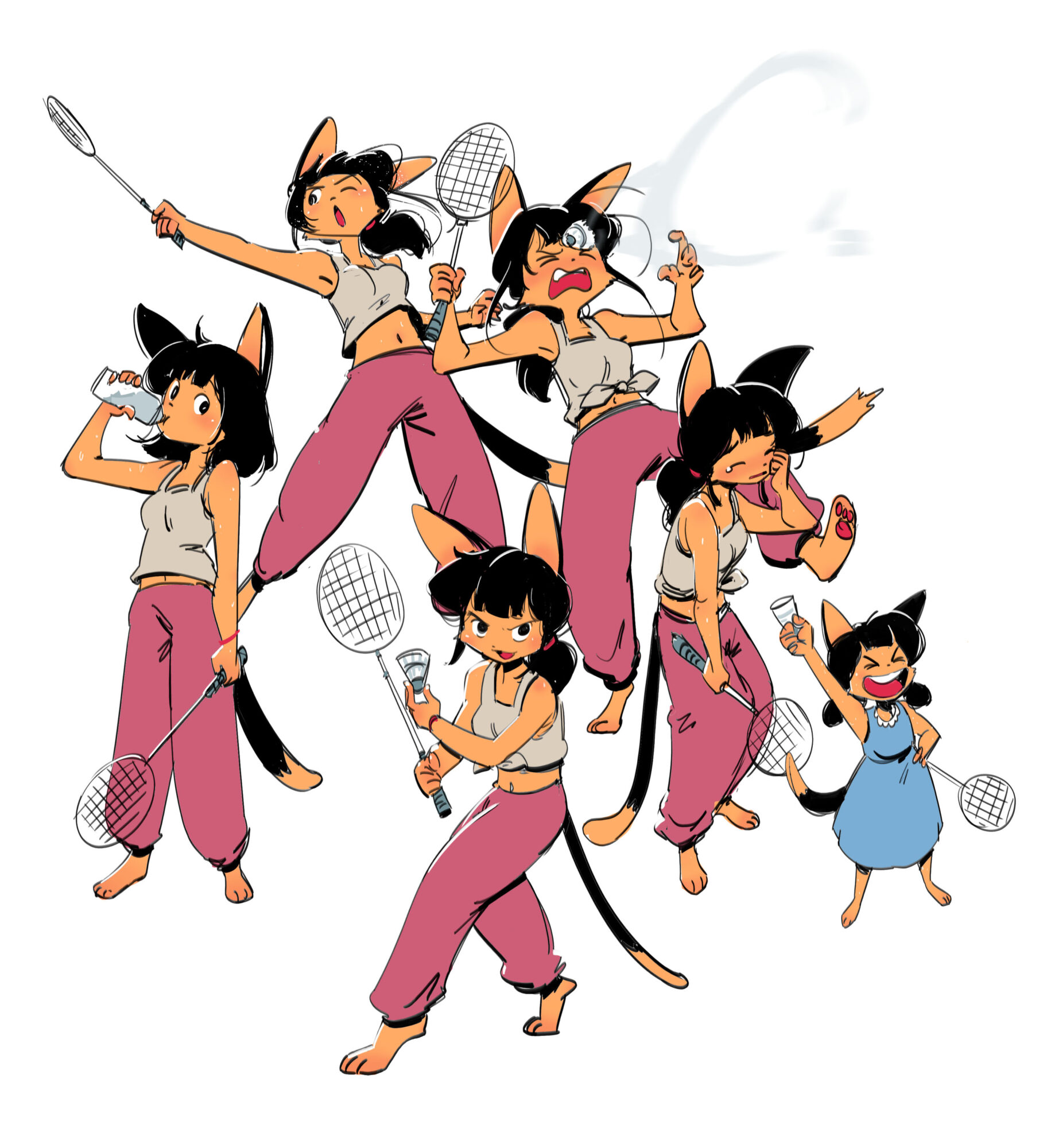
I love anthropomorphic characters! So in the beginning I simply just go for it and design those anthropomorphic characters, but over time I began trying to make short animations, or create characters based on real people and life experiences, constantly exploring the connection between characters and everyday life. Of course I had even more time for this, which gave me more opportunities to explore my voice and get closer to my artistic goals when unemployed. Yet I consider myself very lucky — that personal voice helped me get into Sony Pictures Animation and work on one of my favorite projects to this day.
To this day, I’m still thinking about whether there’s a better way to maintain this balance! It’s an ongoing challenge.
As you know, we’re big fans of you and your work. For our readers who might not be as familiar what can you tell them about what you do?
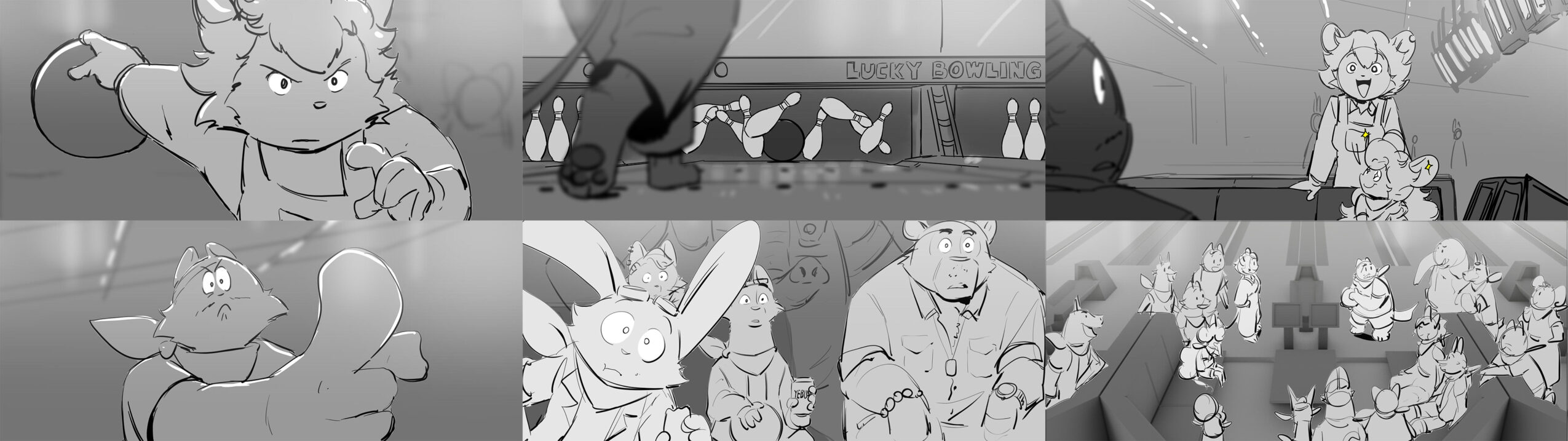
Just like my journey to here said, I’m currently working full-time as a storyboard artist for animated films, and I spend most of my time thinking about how to make the storyboard visuals more engaging.
I have a strong sensitivity to graphics, space, and locations — for example, I still remember the route from Alhambra to Disneyland from over 20 years ago. This may sound unrelated to storyboarding, but my keen sense of space allows me to stay constantly aware of how the camera is currently being positioned and when and where it should move. And before becoming a storyboard artist, I worked as a background artist for animation where my foundation in 3D software gained from. All of this gives me a significant advantage in spatial planning within storyboarding.
If storyboarding were like solving a problem, then after coming up with the first solution, I would go on to develop a second or even third option, and search for the best answer among them. Sometimes I rack my brain over how two shots should transition, to the point of losing sleep. But once that better solution was found, the excitement is no less than finding a diamond orb in Minecraft, and that’s how this attitude sets me apart from good to better.
How do you think about luck?
I’m very impulsive when it comes to feelings and intuition. Sometimes I get caught up imagining a positive outcome and end up ignoring clues that are right in front of me. Over time, I’ve learned to adjust — whenever I sense something wasn’t right on an instinctual level, I’ll force myself detaching from that imagined positive outcome. If I don’t, things usually turns ugly and end up not being worth it. Learning to let go is important —just like buying stock! Getting in is easy, getting out is not lol.
Contact Info:
- Website: https://yingzhonghustoryportfolio.blogspot.com/
- Instagram: https://www.instagram.com/aquablue1992/
- LinkedIn: https://www.linkedin.com/in/yingzhong-hu-93629a156/
- Twitter: https://x.com/aquablue1992
- Other: https://linktr.ee/aquablue1992




Popular
-

Que Johnson on Building Brands That Last: From Visibility to True Market Authority
-

Christina Wren Steps Into the Director’s Chair to Tell Stories That Feel Like Home
-

Portraits of the Valley
-

LA’s Most Inspiring Stories
-
JordanL on ‘Breathe,’ Belief, and Building a Movement Beyond the Music
-
Megan Birney Rudert on How Access to Light Is Powering a More Sustainable and Equitable Future


