



Today we’d like to introduce you to NiK Kacy.
Hi NiK, it’s an honor to have you on the platform. Thanks for taking the time to share your story with us – to start maybe you can share some of your backstory with our readers?
My story has taken a few different forms since we last spoke, but creativity has remained how I make sense of the world—especially now—and how I try to change what doesn’t work. As a queer, Trans, nonbinary Asian immigrant, I know what it feels like to move through spaces that weren’t designed with you in mind. That experience has shaped both the questions I explore in life and the work I choose to take on.
My history with event production goes back to high school. Even before it became a career, bringing people together was already part of my life. That took on a deeper meaning in the late ’90s, when I first came out into the lesbian community, before my transition. Since 1997, I’ve been deeply involved in the LGBTQ+ communities of Los Angeles and West Hollywood, building relationships, producing events, and connecting people. Being part of those communities helped me discover myself and recognize how much a gathering, a friendship, or an introduction can change someone’s life.
My professional foundation is in fine arts, advertising, and production. Over the past 30-plus years, I’ve worked across traditional media, digital experiences, and live events, including roles at RPA and Google. Production taught me how to connect ideas with action: bring the right people together, understand what each person needs to succeed, and work through the hundreds of decisions that turn a vision into something real. Alongside that career, community building has remained a constant. My passion for animal rescue and fostering is another part of that same instinct to care, make room, and help others find safety and belonging.
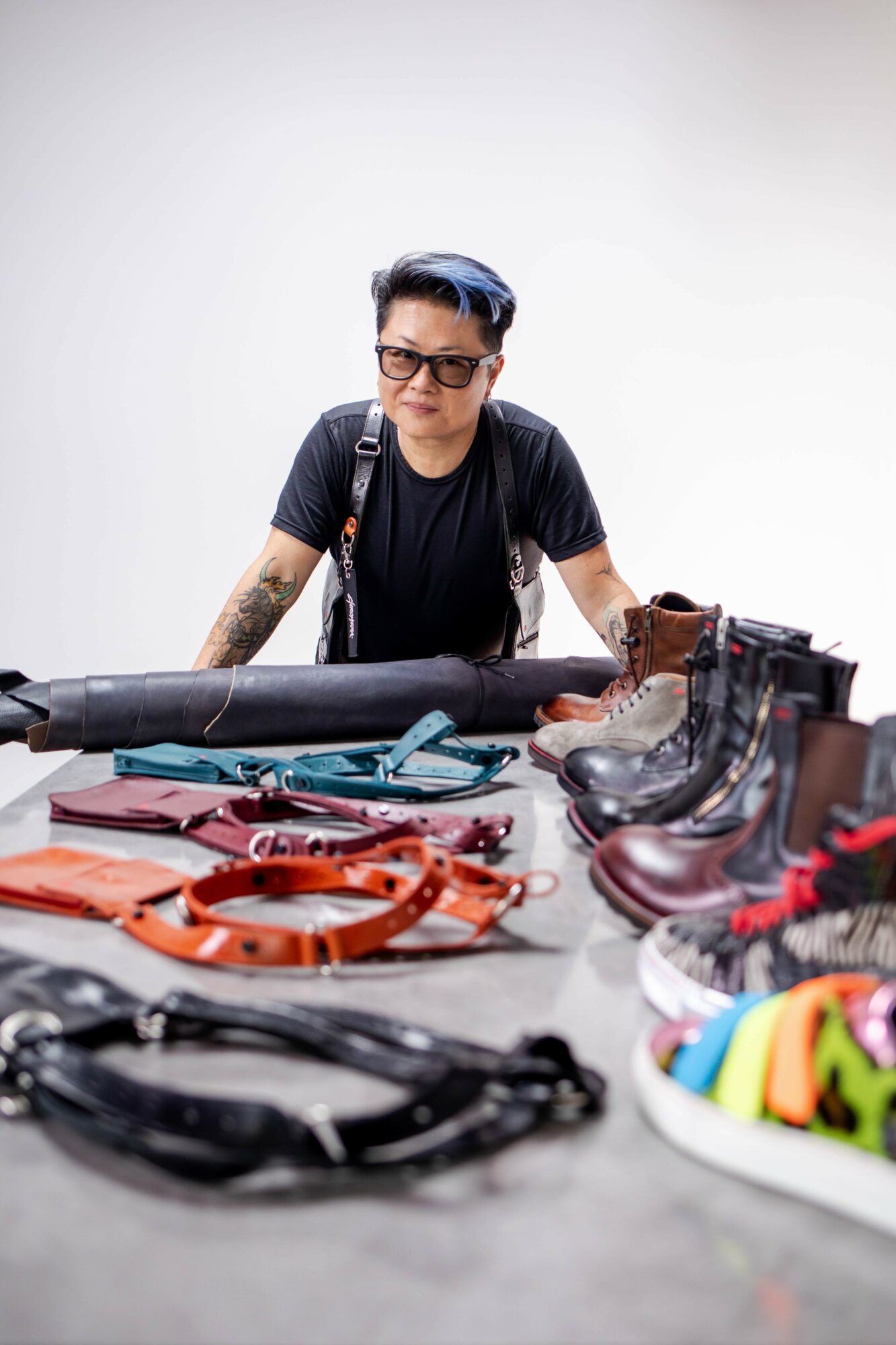
After leaving Google in 2013, I brought that experience into entrepreneurship and eventually founded NiK Kacy Footwear, the first gender-equal footwear and accessories brand. The starting point was deeply personal—I wanted shoes that fit both my feet and how I expressed myself. Creating gender-equal footwear became a way to address a problem I had lived with for years, and it connected me with so many others who had felt similarly excluded.
Those relationships expanded my understanding of what I could contribute. In 2018, I founded Equality Fashion Week, Los Angeles’s first LGBTQ+-focused fashion week, to create opportunities for designers, models, and artists whose talent deserved greater visibility. It brought together my experience in production, my work in fashion, and decades of relationships within the community. I wanted people to have a place to share their work, build connections, and see themselves celebrated.
Today, my work brings those experiences together through creative direction, executive production, styling, design, and community advocacy. Through NiK Kacy Presents and my other projects, I help shape experiences from the initial idea through everything it takes to bring people into the room. Connecting people remains one of the most meaningful parts of what I do—especially when those connections lead to friendship, collaboration, or opportunities that might not otherwise have happened.
What’s evolved most is my understanding of sustainability—especially the human side of it. I’m learning to be more intentional about collaboration, shared responsibility, and where I put my energy. I still have that instinct to see something missing and want to build it. Now, I’m also asking what will allow the work, and the people behind it, to thrive over time.
We all face challenges, but looking back would you describe it as a relatively smooth road?
It has not, and the challenges have changed over time. In earlier interviews, I talked about manufacturing difficulties, funding a small business, and being told that people like me weren’t a market worth designing for. Those struggles are still part of my story, but today, they’re compounded by a political and economic climate that has affected both my livelihood and my well-being.
The current administration’s rollbacks of Transgender, gender-diverse, and intersex rights and cuts to DEI funding have had a significant impact on me and my community. These issues are deeply personal when your identity, your work, and the people you serve are directly affected. It’s difficult to plan for the future while also worrying about our rights, safety, and access to opportunities.
At the same time, tariffs, wars, and economic uncertainty have severely affected my business and made it harder to find alternative income to sustain myself. Having decades of experience and a willingness to adapt doesn’t make you immune to those pressures. I’ve had to think about how to keep my work going while also meeting my own basic needs. I think it’s important to be honest about that, because visibility and recognition don’t necessarily translate into financial stability.
Another ongoing challenge is how much of myself I put into the work. When your business is connected to your identity and community, it can be difficult to separate what you can realistically take on from everything you know is needed. You see the gaps. You know the people affected. And because you know how to produce something or solve a problem, it’s easy to become the person who takes it on. I’ve invested a great deal of my own time, money, and energy into creating opportunities for others, and I’m learning to be more honest about what that costs.
I’m also learning to make my own contributions visible after nearly three decades of community involvement. So much of that work has involved highlighting others that I haven’t always given my own work the same attention. At times, I’ve felt overlooked, and that hurts when you’ve dedicated so much of your life to something. Recognition matters to me because it can lead to paid opportunities, partnerships, and support that make continuing the work possible. I’m learning that I can celebrate others and also ask for my own contributions to be acknowledged. I want to give myself the same advocacy I’ve offered so many other people.
One of the hardest lessons has been that enthusiasm for a mission doesn’t always translate into the resources or shared responsibility needed to carry it out. Meaningful inclusion takes intentionality, funding, planning, follow-through, and people willing to share the workload. When resources become more limited, the need can grow while the capacity to respond shrinks.
These experiences are changing how I approach sustainability. I’m becoming more mindful about collaborators, expectations, boundaries, where I put my energy, and whom I share it with. Sometimes that means asking for support, changing the scope of a project, or stepping back—even when I care deeply about the outcome.
I still believe in what I’m building. But I don’t want to romanticize how hard it has been or suggest that passion alone can overcome every obstacle. I want to keep contributing while also having the stability and room to live, create, and enjoy the community I’ve spent so much of my life helping bring together.
Appreciate you sharing that. What else should we know about what you do?
I’m a creative director, executive producer, fashion designer, stylist, and entrepreneur. I work across live events, digital experiences, traditional media, and fashion. My specialty is seeing the potential in an idea, connecting it with the right people, and figuring out how to make it happen—from the creative concept to the practical details that hold it together.
Through NiK Kacy Presents, I bring that approach to events, creative direction, and collaborations for brands, organizations, and communities. I enjoy work that calls for imagination, innovation, and resourcefulness. I can envision the experience as a whole while also thinking through the budget, team, timing, and decisions needed to deliver it. Having worked across corporate, agency, civic, entrepreneurial, and community settings gives me a broad range of experience to draw from.
Many people know me through NiK Kacy Footwear and Equality Fashion Week, but some of the things I’m proudest of are details they may not know about. For my footwear, I developed my own gender-equal lasts—the forms shoes are built around—so that inclusion began with the construction of the shoe itself. I also offer split sizing, because someone’s left and right feet may need different sizes. Having spent years struggling to find shoes that worked for me, I wanted to question the assumptions that left so many people without options.
That curiosity also shaped my work in technology. While at Google, I developed an invention for matching advertising to the surrounding media content, and Google filed a patent application naming me as the sole inventor. The legal team helping me told me I was the first non-engineer they had seen go through that process there. That experience showed me how my creative and production background could contribute to innovation beyond the roles people might associate with me.
Across my design and styling work, I want to give people more freedom to express themselves and feel confident in what they wear. That intention carries into the experiences I produce. I want people to encounter possibilities for themselves that they may not have had the space or encouragement to imagine before.
Equality Fashion Week is one of the things I’m most proud of because I was able to connect creative expression with economic opportunity. Alongside the runway, I created grants for designers and vendor villages where people could sell their products, reach new customers, and build visibility for their businesses. I wanted the platform to support people’s livelihoods and create opportunities for growth beyond the event itself.
I also brought together people who were already doing meaningful work throughout our community. There was so much talent, knowledge, and commitment around me, and I wanted to combine those strengths to create experiences that elevated different parts of the community. Designers, models, artists, performers, entrepreneurs, advocates, and community organizations each helped expand what EFW could offer and whom it could reach.
What sets me apart is how I connect creative problem-solving with an understanding of people and the practical experience to deliver. Whether I’m rethinking how a shoe fits, shaping an event, or finding a way for someone’s business to reach a new audience, I’m considering both the possibility and what it will take to make it useful.
I’m especially proud when someone can use what I’ve created as a stepping stone for their own goals. A designer making a sale, a small business reaching a new audience, or a collaboration continuing after an event—that’s the kind of impact I want my work to have. I want what I build to give others room to build, too.
Can you talk to us a bit about the role of luck?
As an entrepreneur, I’ve learned that I can put everything I have into an idea and still not control how or when it takes shape. There are moments when I feel incredibly lucky and others when I wonder why nothing seems to go my way. Either way, life keeps moving, and I get to decide how I respond.
One of my core beliefs is that there is no such thing as failure, only learnings. That doesn’t mean disappointment doesn’t hurt or that every setback is secretly a blessing. It means an outcome I didn’t want can still teach me something—about my approach, my timing, the people I work with, or what I actually want. A project can end without everything I learned from it ending, too. I carry that knowledge into whatever comes next.
Being an entrepreneur asks me to keep evolving, learning, growing, and adapting. Sometimes that means finding another way to bring an idea to life. Sometimes it means letting go of the version I was attached to so I can recognize a possibility I hadn’t considered. I’m learning to stay open to how things unfold while remaining grounded in my values.
Some of my good luck has come through relationships that developed in unexpected ways. A jewelry designer who lent pieces to a designer at my show can become a collaborator years later. An ordinary conversation can introduce a whole new direction. I can’t predict those connections, but I can approach people with curiosity and give relationships room to grow. I especially value working with people whose intentions and values align with mine, while bringing perspectives that help me see differently.
Ultimately, I don’t need to settle whether something happened because of luck, timing, or circumstances beyond my control to decide what to do next. What matters is that I continue creating work I’m passionate about, learning from the experience, and being honest about whether my choices reflect what I believe.
I want to stay open enough to be surprised by life. There are still people I haven’t met, ideas I haven’t imagined, and parts of myself I’m getting to know. After everything I’ve done and experienced, that possibility still excites me.
Pricing:
- Styling Consult – $100/hr and/or depends on scope of work
- Genderequal holster bags – $225-330
- Genderequal footwear – $175-400
- Vegan leather option designs – $28-225
Contact Info:
- Website: https://www.nikkacy.com
- Instagram: https://www.instagram.com/nikkacyfootwear
- Facebook: https://www.facebook.com/nikkacyfootwear
- LinkedIn: https://www.linkedin.com/in/nikkacy/
- Youtube: https://www.youtube.com/nikkacyfootwear
- Other: https://www.equalityfashionweek.com


Image Credits
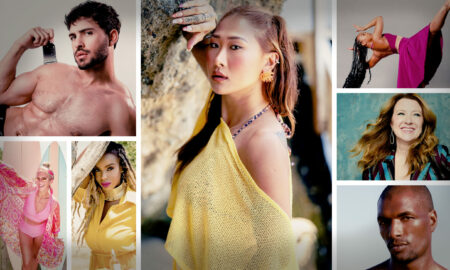
Photography by Crystal Lily Creative Models – Aris Coover, NiK Kacy, and Ross Alan.
Popular
-
Greg Hex Is Turning the Everyday Kitchen Knife Into a Modern Design Object
-

Portraits of the Valley
-

LA’s Most Inspiring Stories
-

Rick Norris Learned That Building a Successful Business Means Building a Life You Actually Want to Live
-
How Olivia Rush Turned Survival Into a Mission to Help Others Keep Going
-
How Bibi Goldstein Is Helping Entrepreneurs Reclaim Their Time by Embracing the Power of Delegation


