




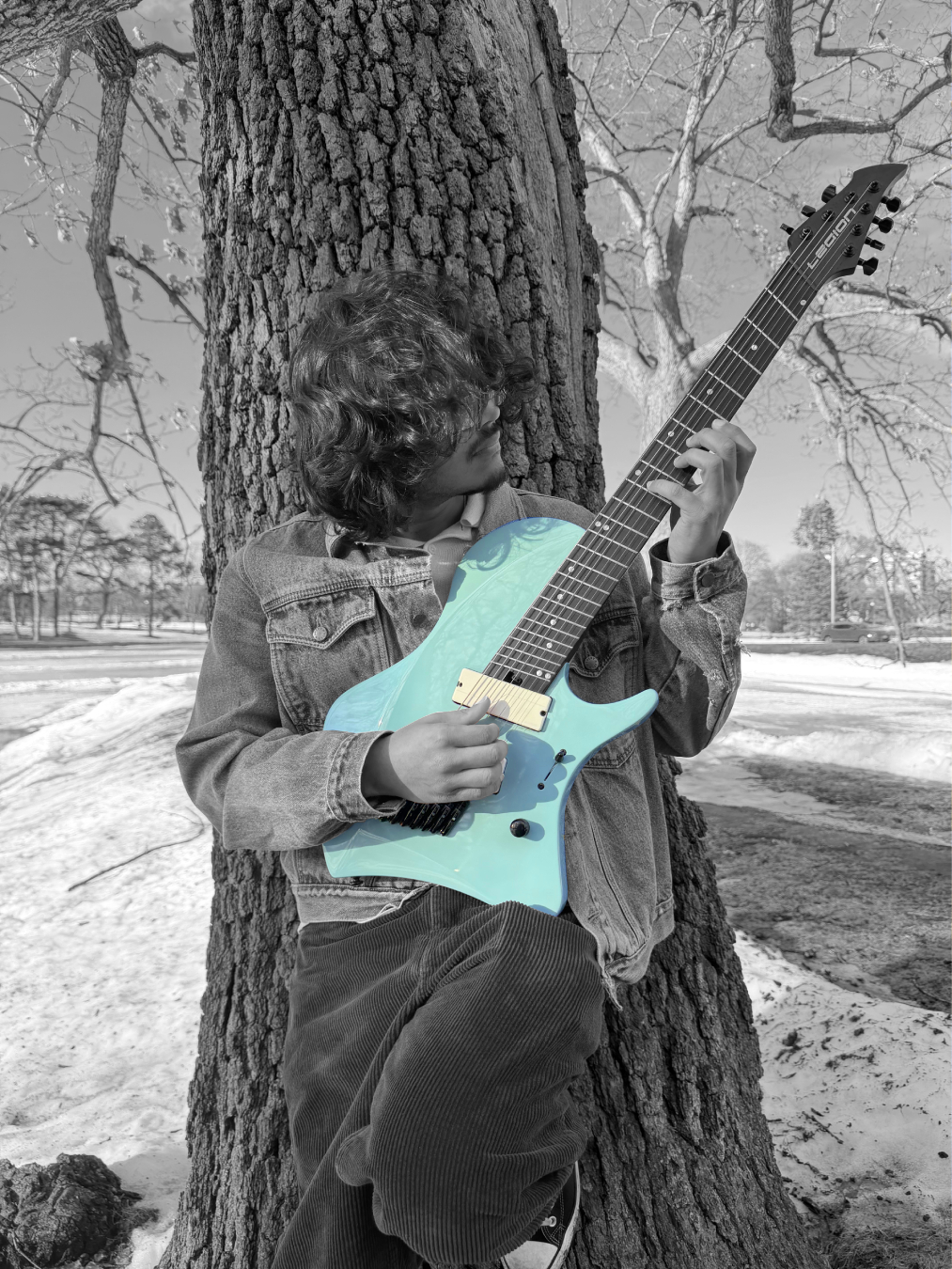
Today we’d like to introduce you to Aash Durg.
Hi Aash, thanks for sharing your story with us. To start, maybe you can tell our readers some of your backstory.
It is hard for me to pinpoint where exactly my artistic journey began, though I recall being enamored and engulfed with sounds that deeply rooted themselves in my subconscious from a young age. Growing up between Austin, Texas, and Bengaluru, India, I had a decent exposure to both Western and Indian music. I journeyed through many different instruments in my early teens–including tabla, hindustani vocals, violin, and piano–until eventually honing in on the guitar.
Most of my musical life on this instrument has been self taught, through obsessive transcriptions, books, videos, and really any resource I could find. I would say a majority of my youth was spent listening to progressive metal, and as I got older, jazz fusion. To me, the rhythms of those musics were fascinating and to this day, that rhythmic concept remains as a firm pillar in artistic vision.
During my undergraduate studies at the Frost School of Music, I began being exposed to jazz, which led me to eventually change my major to jazz performance. It was during these 4 years that I began to fully integrate myself holistically into my music and also clarify who I really was. I became deeply interested in the music of John Coltrane, Tigran Hamasyan, and Indian classical music.
Near the end of my bachelor’s degree, I recorded my debut album “Rebirth” which explored the music of Hindu hymns and devotional songs I had heard my parents sing to me all my life. These hymns were rearranged inspired by John Coltrane’s quartet into a three part suite–To see, To move, To live. I later recorded a final fourth piece for solo guitar in honor of my late grandfather who passed on the day we rehearsed for the album for the first time entitled To Leave.
Currently, I am working on a book that describes a system to accurately use ragas and other Indian classical concepts over western harmony as an improviser. While writing this book, I also began my graduate studies at the Berklee College of Music’s Global Jazz Institute in Boston, where I now reside. At this stage of my career, my main aim is to bridge the gap between the cultures I grew up in and spread the knowledge of the music of my motherland to global audiences.
Would you say it’s been a smooth road, and if not what are some of the biggest challenges you’ve faced along the way?
Much like any artist, my career has had its ups, downs, and periods of stagnation. Going back to my undergraduate years, switching into the jazz program with little to no experience was harrowing. Even now I occasionally feel as though I am trailing behind my peers who grew up listening to this music. Growing up between two cultures was also a challenge, both socially and musically. The concept of harmony and chord changes was a mystery to me for quite some time coming from a culture rooted in monophony and static harmony. Rhythmically as well, learning how to swing with a good feel was quite challenging as well.
After college, I moved around quite a bit as well which meant that cementing myself in one city’s scene has been tricky. However, each city I have lived in has taught me invaluable lessons and allowed me to develop a fairly broad network of musical collaborators, mentors, and friends.
I don’t think the difficulties will ever really cease to exist on this journey, but to me that’s the beauty of it. One challenge after another all with their own unique solutions which offer varying rewards when overcome. Currently, though, I feel that I am in a period of metamorphosis and am eagerly, but patiently working through the weeds to come out with an artistic identity, and vision that is concrete and true to myself and culture.
Thanks for sharing that. So, maybe next you can tell us a bit more about your work?
I am primarily a 7-string jazz guitarist specializing in post-bop and modal jazz. I am currently endorsed by two fantastic guitar builders–Abasi Concepts and Paul McEvoy–whose support has allowed me to reach new audiences and heights with my artistic vision. Through Paul’s guitars, I’ve been able to explore 7 string classical and run in circles that lie in the acoustic genres. Being an Abasi Concepts artist has reopened a door into progressive metal and fusion leading to me joining a progressive jazz metal band called the Reinvention Collective led by Sam Cruz.
I would say, most of my artistic identity currently is shaped by Carnatic ragas, rhythms, and their applications over jazz and western harmony. While my first project Rebirth was a first step into this territory that I reflect on with pride, I believe that my current and upcoming projects will reflect a greater depth into Carnatic concepts that I briefly drew from before, and a novel sound that encapsulates my artistic background holistically.
Are there any books, apps, podcasts or blogs that help you do your best?
I recently got back into reading and find great joy in reading novels. In the words of one of my mentors – “Music is but one drop in the ocean of life”. I love being inspired by non-musical media in my compositional process. For example, I recently read Babel (R.F. Kuang) and Word by Word (Kory Stampler) which sparked an interest in etymology, sentence structure, meter, and poetry. This has led to me checking out more literature written in Kannada, my native language. This interest led me to the poems of Da Ra Bendre whose works have inspired me to write my own poems and musical compositions around them.
I often also find myself coming back to the writings of Thich Nhat Hanh. For me, his approach to mindful practice is greatly helpful as a musician. I find that by being truly mindful, I’ve been able to uncover flaws in my technique, work through carpal tunnel injuries, and express myself musically with much greater clarity.
Contact Info:
- Website: https://payhip.com/AashDurgMusic
- Instagram: https://www.instagram.com/aashdurg.music/
- Youtube: https://www.youtube.com/@aashdurgmusic7180/featured
- Other: https://open.spotify.com/album/7Mg3wW6iby4XzMV8rTAIIA
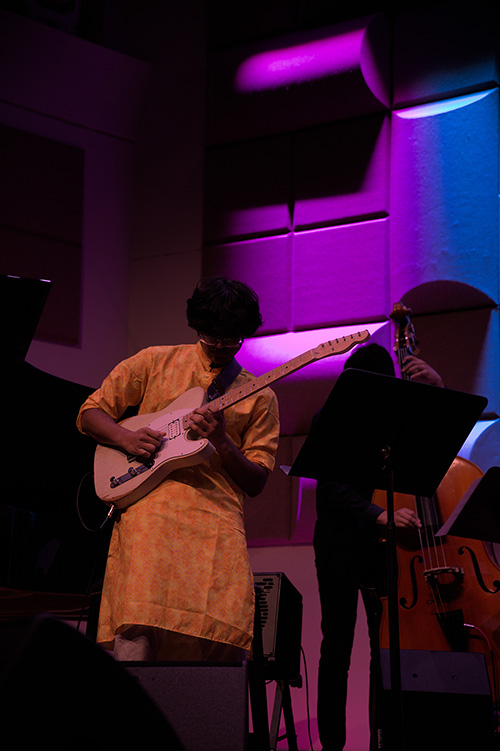
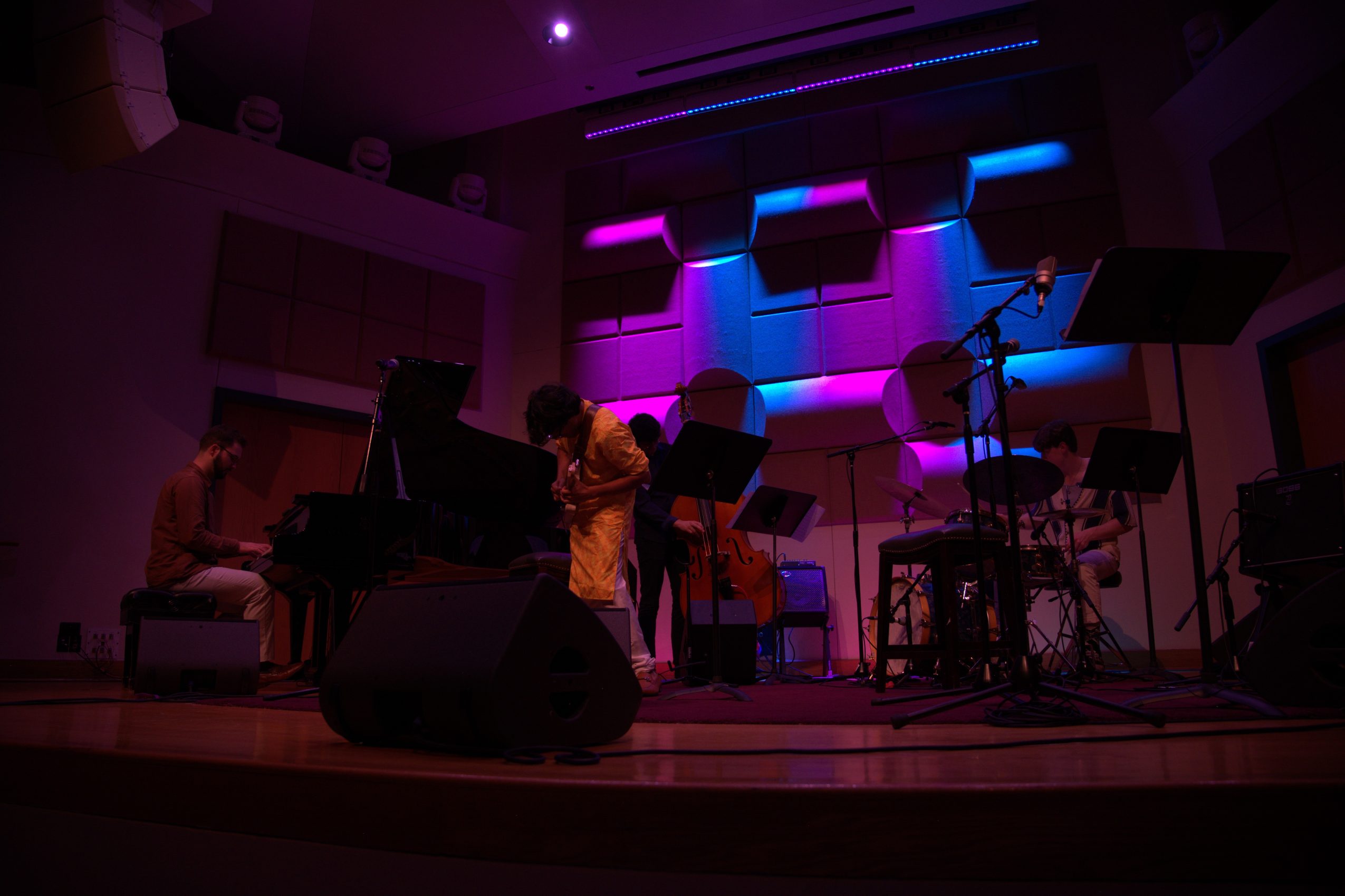
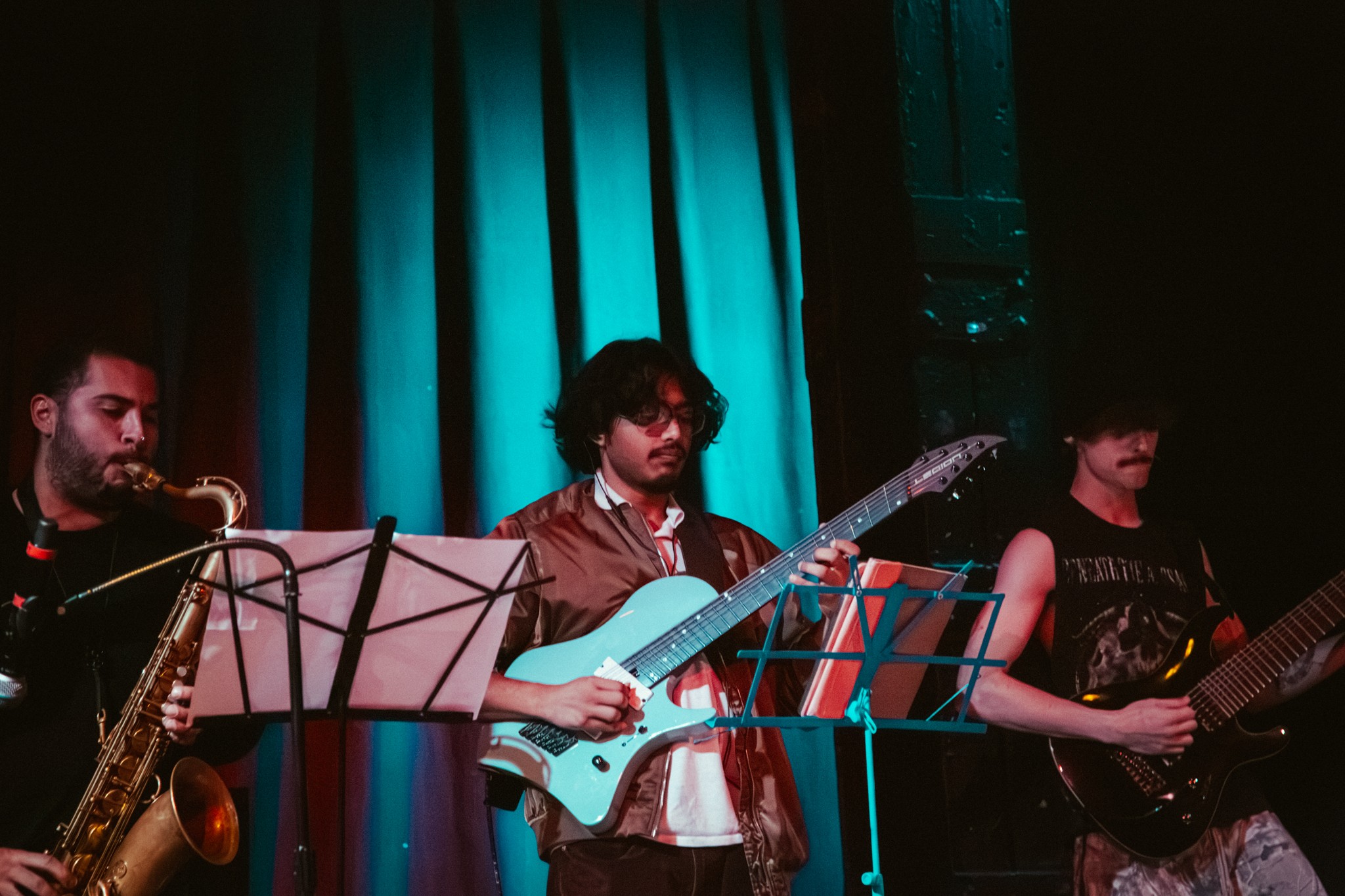
Image Credits
Thomas Baker, Ari Mei-Dan,
Azariah Reese
Popular
-

Portraits of the Valley
-

LA’s Most Inspiring Stories
-

Greg Hex Is Turning the Everyday Kitchen Knife Into a Modern Design Object
-

Rick Norris Learned That Building a Successful Business Means Building a Life You Actually Want to Live
-

How Olivia Rush Turned Survival Into a Mission to Help Others Keep Going
-

How Bibi Goldstein Is Helping Entrepreneurs Reclaim Their Time by Embracing the Power of Delegation


