




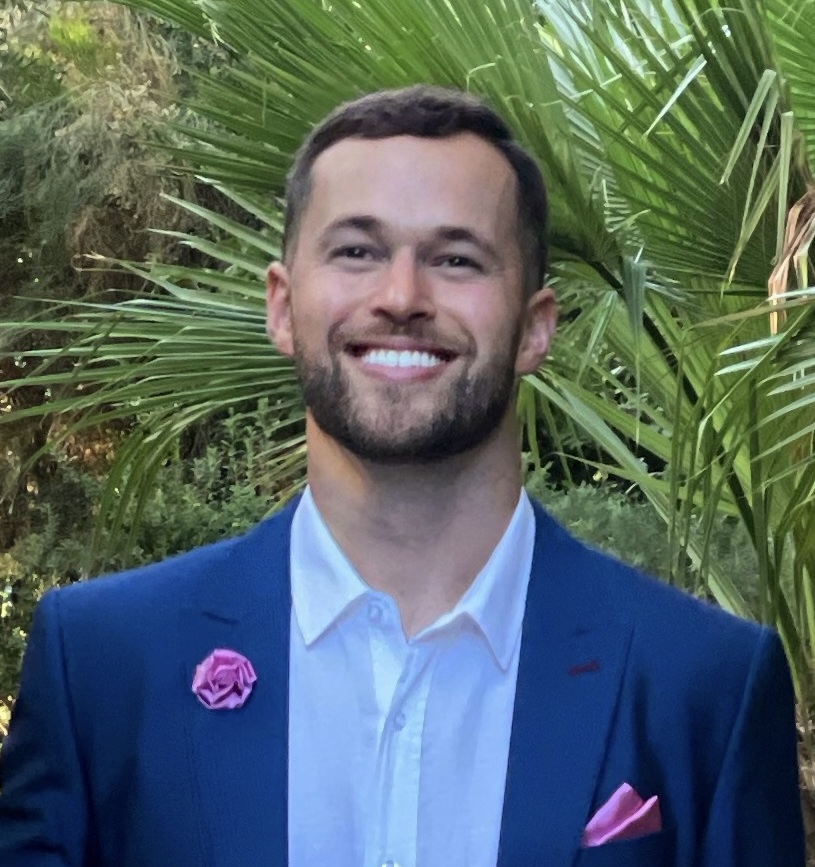
Today we’d like to introduce you to Sam Young
Hi Sam, it’s an honor to have you on the platform. Thanks for taking the time to share your story with us – to start maybe you can share some of your backstory with our readers?
Growing up, I struggled in school. I had strengths in some areas, but none of them seemed to matter in the classroom. I often felt like I wasn’t smart—just “school stupid.” I had this strange profile where I was in AP and honors classes in some subjects but in the lowest-level classes in others. My seat was frequently moved to the desk closest to the teacher, and I spent more time than I’d like to admit being sent to the principal’s office.
This wasn’t just my experience. It’s the result of a deficit-based system that focuses on what kids can’t do rather than what they can. As Dr. Joseph Renzulli, one of my favorite educational psychologists, once said: “No one cares about Picasso’s ability to do complex math or Einstein’s ability to paint.” Yet in school, we’re all expected to be good at everything rather than great at a few things. And this is especially true for neurodivergent kids like me.
I’ve always believed we’re guided in the direction we’re meant to go, and I’ve always been drawn to working with the population I identify with: twice-exceptional students. These are kids with exceptional strengths and exceptional struggles—brilliant in one area but profoundly challenged in another. Think of a student who’s gifted in creative writing but struggles to read aloud or one who’s a math prodigy but has ADHD. Their profiles are complex, with high highs and low lows.
When the pandemic hit, the school I was working at transitioned online, and parents began reaching out to me from all over. “Hey, you work with my nephew—can you help my kid?” Or “My cousin’s child could really use this kind of support.” It was overwhelming at first, but it also sparked an aha moment: What if we could give kids like this an hour a day of strength-based learning?
We know this approach is transformative. The research shows that when neurodivergent kids are surrounded by like-minded peers, their growth is exponential. So I started small—just me teaching a few kids online. But as more families reached out, they were looking for content outside my areas of expertise. That’s when I began bringing on other expert mentors who shared my vision.
As the program grew, I built Young Scholars Academy on three core pillars:
1. Content: Bright kids crave depth and complexity. They need unique, high-level content that challenges and excites them.
2. Caring Mentors: Students thrive when they’re supported by mentors who see their strengths, celebrate their quirks, and help them feel confident and valued.
3. Community: Neurodivergent kids often feel like they’re the only person like them in their zip code. When they find a community of like-minded peers, everything changes. They make friends, gain confidence, and thrive.
From those early days of me teaching solo, Young Scholars Academy has grown into a global program with 19 teachers, 3 administrators, and nearly 400 families. We’re now in over 40 states and 13 countries.
Our vision is simple: to help bright, quirky kids live strength-based lives through unique courses, a supportive community, and enriching camps. And every day, we’re honored to see that vision come to life.
Can you talk to us a bit about the challenges and lessons you’ve learned along the way. Looking back would you say it’s been easy or smooth in retrospect?
Has it been a smooth road? If not, what were some of the struggles along the way?
The road has been anything but smooth. But I’ve found that entrepreneurship is one of the most exciting things I’ve ever done—it channels my strengths and appeals to my ADHD like nothing else. I’ve always been passionate about education, and entrepreneurship has become a close second love.
That being said, I went from being a classroom teacher for 15 years to running a business in the midst of the pandemic, and suddenly, I wasn’t just teaching anymore. I became a marketer, a tech specialist, a salesperson, and a legal expert. I had to learn how to lead a team and manage personnel, all at once. It was overwhelming. Interestingly, I went from never having finished a book in my life to consuming a book almost every two weeks—because suddenly everything felt urgent, and I needed to figure it out fast.
During the height of the pandemic, we faced the challenge of keeping up with demand. Families were coming to us in waves, and it felt like we couldn’t grow fast enough to meet everyone’s needs. Then, as the pandemic eased, there was a wave of online learning fatigue, and we had to pivot again.
For me, the hardest challenges have also been the most rewarding. Building something from scratch and knowing it’s authentic has been life-changing.
There’s no better education than the one you earn through experience, and nothing brings me more joy than hearing from families about the difference Young Scholars Academy has made for their children.
Even though it’s consuming, it’s one of the most fulfilling things I’ve ever done, and it’s one of my greatest prides. I hope it will one day be one of my great legacies.
Thanks – so what else should our readers know about Young Scholars Academy?
Please tell us about your business or organization. What should we know?
Young Scholars Academy is a virtual enrichment program offering strength-based, à la carte courses where bright, quirky kids can come together to learn, explore, and thrive. Many of our students are prevented from accessing the content they crave due to their age, neurodiversity, or a lack of resources in their area. We know that early intervention and access to high-level, engaging learning opportunities can make a world of difference for these kids.
But perhaps even more important than the content is the community. We understand that when a student struggles socially, it’s not them—it’s their environment. As an example, consider Simone Biles. She has ADHD and is a world-class gymnast. While she may have struggled in certain classrooms, she thrived in the gym because she found her people. Simone didn’t change—her environment did. At Young Scholars Academy, we’re all about creating an environment where our students can flourish.
What do you do?
Our students come together to dive deeply into unique, high-level topics that are often inaccessible to them elsewhere. Whether it’s AI coding, Unity video game design, conceptual physics, anatomy, or AP courses like psychology and U.S. history, we offer content that sparks curiosity and challenges these bright minds. For homeschool families or those in areas where such opportunities aren’t available, our program is a game-changer.
We also provide fun, social courses like chess, Rubik’s cubing, Minecraft engineering, and Dungeons & Dragons. Our students perform plays, engage in mock trials and debates, and collaborate on creative projects that matter to them and their community. With over 70 classes running 150 hours a week, families can choose a single class or immerse themselves in up to 40 hours per week.
What sets you apart?
One of our most unique features is our social clubs, which are free for families enrolling in a set number of classes. These clubs serve as a “homeroom,” just like in a brick-and-mortar school, where students can connect with like-minded peers and make friends outside of academics. For many of our students, these clubs are transformative. We’ve received countless emails from parents telling us that their child made their very first friend in one of these social clubs.
We also believe in building a virtual village. Families enrolled with us have access to expert talks from some of the most renowned professionals in the world. For example, Dr. Temple Grandin—one of Time Magazine’s top 100 most influential people—will soon be speaking to our families. These intimate sessions help parents navigate the overwhelming amount of advice out there and stay on the path to supporting their children effectively.
Our mentors, many of whom are neurodivergent or twice-exceptional themselves, deeply understand our students’ unique profiles. Many are also parents of twice-exceptional kids, so this work is incredibly personal. These are the kinds of mentors who text me at midnight on a Saturday because they’re thinking about a student.
What are you most proud of?
What sets us apart isn’t just what we teach, but the lives we transform. We serve over 400 families across 40 states and 13 countries, and we hear from parents every day about the wins their kids are experiencing. Parents cry tears of joy because their child finally feels seen, understood, and successful.
Take a student like Liam, for example, who lives in Switzerland. He attends our classes at midnight because his mom says it’s the only time in his week when he gets to geek out over the content he loves and hang out with peers who truly get him. Stories like Liam’s remind us why this work matters so much.
What do you want our readers to know?
If you have a bright kiddo who’s struggling—a child with big strengths but who seems to be falling apart in traditional systems—they need a place. It doesn’t have to be Young Scholars Academy, but they need a space where their talents are recognized and their strengths are celebrated.
Look at someone like Bill Gates. His success didn’t come out of nowhere—it happened because he had opportunities to make like-minded friends, explore his interests, and go deep in areas that intrigued him, whether in a computer lab or with mentors who believed in him. We provide those same opportunities for hundreds of kids all over the world.
At Young Scholars Academy, we’re not just teaching classes. We’re helping kids belong, build confidence, and thrive. It’s truly life-changing!
How do you think about happiness?
What makes you happy and why?
Happiness, for me, is complex, but the short answer lies in serving others, working hard toward meaningful outcomes, problem-solving, family, belonging, and community. And, of course, my wife—who not only inspires me but was the catalyst for starting Young Scholars Academy.
My idea of happiness aligns closely with the Greek concept of eudaimonia. It’s a kind of fulfillment that comes from hard work and purposeful effort, where happiness isn’t about fleeting pleasure but about striving toward something meaningful. Creating and nurturing a community like Young Scholars Academy—a space that lives, breathes, and genuinely serves others—has been one of the greatest sources of this deep, meaningful happiness in my life.
Helping students see their own strengths and talents and helping parents view their children through a strength-based lens is incredibly rewarding. There’s nothing quite like hearing from parents who tell me their child made their first friend, ran down the stairs excited about learning something new, or surprised them by remembering an upcoming class or play when scheduling has always been a challenge. These moments are priceless and make my heart swell with gratitude and joy.
I won’t lie—this journey hasn’t always been perfectly balanced. Since starting Young Scholars Academy, I’ve struggled to find time for socializing and leisure like I used to. I’ve always been hard on myself for that. Part of this stems from having ADHD and dyslexia, which means many things take me longer, and I’m not always as efficient as I’d like to be.
But I’ve recently realized something important: I genuinely love to work. I love solving problems that help people, expending mental energy brainstorming, creating, and collaborating. And while I’m still learning to embrace this fully, I’ve come to see that this isn’t just something I do—it’s something that brings me profound happiness.
At the core of it all is the opportunity to build, to serve, and to create something meaningful. And when I look back at everything Young Scholars Academy has become, I know this work has brought me a sense of eudaimonia—a good spirit, rooted in purpose—that I’m deeply grateful for.
Pricing:
- Pricing Information: • À la Carte Enrollment: Families can enroll in classes on an à la carte basis, from as little as 1 hour per week to up to 50 hours per week. • Free Class with Multiple Enrollments: Families who enroll in more than two classes receive an additional class free of charge. • Flexible Payment Plans: Families can use payment plans, with as little as 10% down for up to 40-week-long classes. • Class Pricing: • The majority of classes cost $41 per week, which is our average class price. • Specialized, higher-tier courses are priced up to $85 per week. • Over $4,000 in Bonuses: When families enroll, they receive over $4,000 in bonuses, including: • Small, intimate expert sessions with top professionals like Dr. Temple Grandin. • Free classes and expert-curated resources. • Access to parent support clubs and a private Facebook group for sharing resources and building community. • A free social club for students enrolled in multiple classes, offering a space to make friends and thrive socially.
Contact Info:
- Website: https://youngscholarsacademy.org/
- Instagram: https://www.instagram.com/young_scholars_academy/
- Facebook: https://www.facebook.com/YSAENRICHMENT
- LinkedIn: https://www.linkedin.com/in/samuel-young-ysa
Popular
-

Christina Wren Steps Into the Director’s Chair to Tell Stories That Feel Like Home
-

Portraits of the Valley
-

LA’s Most Inspiring Stories
-

JordanL on ‘Breathe,’ Belief, and Building a Movement Beyond the Music
-
Megan Birney Rudert on How Access to Light Is Powering a More Sustainable and Equitable Future
-

Linda Kneidinger on Building Lasting Change Through Small Steps and Self-Compassion


