




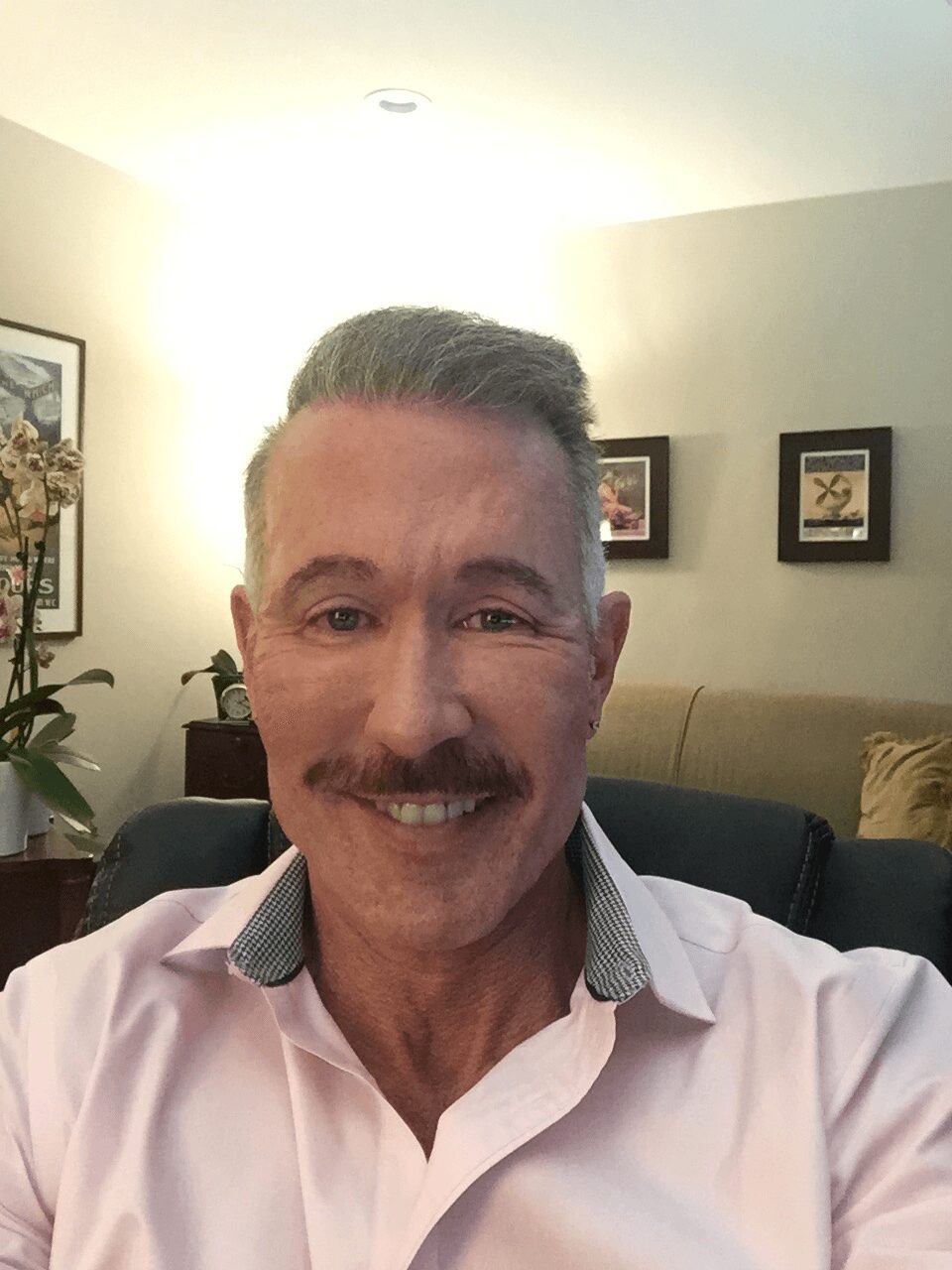
Today we’d like to introduce you to Ken Howard, Lcsw, Cst
Hi Ken, it’s an honor to have you on the platform. Thanks for taking the time to share your story with us – to start maybe you can share some of your backstory with our readers?
When you ask about “My Story,” I see it as combination of the personal and the professional. I have a loving husband and nice home and family, but it is true that the majority of my time, for a very long time now (32 years in 2024), has been my professional life as a gay men’s specialist psychotherapist, life/career/executive/relationship coach, and sex therapist. I worked as a younger man before my career as a therapist (in part in the corporate IT world and in part in the studios of “Hollywoood” and summer jobs in DC government), but the majority of my working life has been in these mental health professional roles. I have a story that is “the purpose-driven life”, as it relates first to becoming involved in the fight against HIV/AIDS, and the fight for the life, dignity, mental health, and well-being of the LGBT community in general and gay men in particular. Work in, and support, and advocate for the community that I am a part of; I live and work in the same milieu. Not everyone has a professional life fueled by passion, but I do, and I’m grateful to be one of those people, like many of my clients who have had a passion for what they do beyond it being “just a job.” My identity has been somewhat “reactive,” wanting to be a part of things that answer a broader challenge, or offer an opportunity specific to the time(s) and place(s) we live in. My story is a story of a full, and occasionally broken, heart, that also finds ways to mend — my own, and others.
I’m sure it wasn’t obstacle-free, but would you say the journey has been fairly smooth so far?
My “road” of my story has not been especially smooth. Sure, it’s been smoothed “for me” by certain demographic privilege that I don’t want to take for granted: being born into a White, middle-class, “able-bodied” (a problematic term), and then educated class. It would be wrong not to recognize the importance of privilege. But at the same time as I know I have “enjoyed” White Privilege and Male Privilege, and some Class Privilege (middle, but no higher), I have also had a life that knows well the challenges of homophobia, HIV/AIDS phobia (as an HIV-positive person, diagnosed in late 1990), periodic but serious health challenges, and many pressures regarding what I call “social competition” in a busy, urban, competitive, aggressive, high-stakes environment where I live (Los Angeles). Some of my struggles include being forced to deal with an anti-LGBT discrimination that I believe I had a right to be free from, yet it was there anyway. I had enough to deal with coping with, and surviving, with HIV, without the anti-HIV discrimination by others layered on top of the various and many health challenges. I am a survivor from being raised by an abusive father; I experienced school bullying, and, interestingly, very significant workplace bullying, something that I champion awareness about because I don’t think it gets enough attention, especially from female perpetrators against male workers, and since my experience, I’ve learned of so many similar experiences in the (male) clients I serve. I’ve had to combat income inadequacy, especially for medical issues; health challenges, some of which were rare; long periods of relative social isolation and loneliness; and coping with the challenges of living in a very competitive environment professionally and civically. What makes struggles overall hard is that often they have a component of being unexpected, and certainly undeserved, not just for me, but for so many. So many struggles in life, for many, are made worse first by just being unnecessary, and the product of selfishness, discrimination, bigotry, entitlement, narcissism, toxic competition, insecurity, misplaced aggression, and greed.
Alright, so let’s switch gears a bit and talk business. What should we know?
My business has two names as it has evolved, GayTherapyLA.com and GayCoachingLA.com. I identify as a supportive resource professional, and this takes the forms of psychotherapy (aka psychiatric social work), sex therapy, life/career/executive/relationship coaching, and advocacy/activism. I developed my career and business (a private practice) first around local psychotherapy (later expanding via Telehealth to all of state of California, where I’m licensed), and later around coaching services, which involves some important legal and ethical differences although they are somewhat related professional endeavors, in that both are “talking based” and both purport to support others to solve problems and achieve goals. Because I came of age, especially after college (UCLA, 1987) at the height of the AIDS crisis, which affected many (although mostly gay men in the United States), I was moved to become involved in the medical and social fight that the AIDS crisis brought. I felt compelled to “do what I could” to help my gay brethren facing literally a fight for their lives — including my own as an HIV-positive person. And after we were all lucky enough to see more effective treatments for HIV, and a somewhat subsiding death toll (which is, certainly, still not eliminated), I continued my areas of interest and focus and passion for the LGBT community in general, but more specific to the needs of gay men, which involve both men’s psychology dynamics as well as specific sexual minority dynamics. I became “known for” being a specialist in working with gay men, almost to the exclusion of other demographics (although I have a lot of professional experience working with women/children/youth with HIV/AIDS, unhoused persons, and those living with severe/persistent psychiatric disability). This fairly specific specialization is what “sets me apart” because I can provide professional services that only someone who has done a “deep dive” into a specific population’s needs can. I support gay men (as individuals, couples, and polycules) all day, every day, not just a “component” of what I do. I am the most proud of my tenure and longevity, after three decades of dedicating to this specific endeavor, and enjoying the magnitude of the clients I have tried hard to support, one by one, for many years. What I want readers to know, first, is that I am here. I am available. I have walked the walk and done the work that one would need to do in order to speak with experience about a specific population’s needs, challenges, and certainly rewards in life. Gay men, in psychology, social work, medicine, business, and government still remain an under-served, vulnerable minority population, not more so than others, but certainly along side others. Through my professional array of available services of psychotherapy, sex therapy, coaching, online courses, writing, and advocacy, I hope to be a resource in the community who helps people fight back against the hardships they encounter, and to find the self-empowerment to solve problems, achieve goals, and effect social justice. GayTherapyLA.com and GayCoachingLA.com, as my practices, won’t be around forever, as, like most people, I hope to retire from professional life in that way and enjoy a retirement lifestyle, at some point. But right now, I am here. And for those who can’t afford to hire private, specialized professional services, I maintain a library of hundreds of free blog articles (GayTherapyLA.com/blog) and free podcast episodes, which number over 150 and are heard in over 100 countries around the world (“The Gay Therapy LA Podcast with Ken Howard, LCSW, CST). I’m hoping that I inspire someone (many others, actually) to cultivate the level of long-term specialized experience and commitment to “the cause” that I have enjoyed, and continue to. I can think of no better way to spend a lifetime, than to be of service to the population I am a part of, and that I care about, who have faced far too many hardships in this world. I’d love to have a world where anti-LGBT discrimination, or psychiatric disability, or medical disability, or substance challenges, or traumatic experiences, or abusive environments, are all a thing of the past. But, until then, I’m not going to shy away, or be quiet, or hide in some closet. I will raise my energies, raise my voice, share my skills, and commit to the life, dignity, mental health, and well-being of my gay male brethren. They deserve nothing less.
What has been the most important lesson you’ve learned along your journey?
Unfortunately, I think I’ve learned a lesson that when we fight hardships, and even conquer them, it’s not a done deal. Shit happens. Every developmental age of life carries its own rewards, and its own associated challenges, as developmental psychology minds like Erik Erikson have taught us. In order to have a quality of life, we have to ask, “What time is it?” Because the rewards we get and the challenges we face are different at 20, or 30, or 40, or 50, or 60, or 70, or 80 (and I have supported gay male clients at all of these decades and phases of life). It’s not about achieving a life that is permanently free of hardship; it’s about developing the adaptive coping skills to meet challenges so that no matter what challenge it is, we can assess it, identify and evaluate our options, and implement self-empowered actions to change what needs to change for the better — even if it’s just our attitude, our thinking, or our outlook — or, change something about our environment, especially when it comes to injustice. I’ve learned that life is not about the destination, really — although occasionally we get to just “take the win” and savor a goal reached, or an achievement made. It’s about the overall journey. We pass this way but once; it’s up to us to make that journey meaningful in our life context, and in our value system, and in our family or social environment and milieu. You have to take your kicks in life where you can get them. Shakespeare said, “The web of our life is of a mingled yarn, good and ill together: our virtues would be proud,if our faults whipped them not; and our crimes would despair, if they were not cherished by our virtues.” (“All’s Well That Ends Well”). And if we get down, meh, everything in Life, including Life, is temporary, and, as Bette Midler (attributedly) said, “Fuck ’em if they can’t take a joke.”
Pricing:
- Individual Psychotherapy – 50 minutes – $305
- Sex Therapy for Relationships – 50 minutes – $320
- Coaching for Individuals – 50 minutes – $305
- Coaching for Relationships – minutes – $320
- Brief Consultations – 15 minutes – Free
Contact Info:
- Website: https://gaytherapyla.com/
- Instagram: https://www.instagram.com/gaytherapyla/
- Facebook: https://www.facebook.com/gaytherapyla
- Youtube: https://www.youtube.com/@KenHowardLCSWGayTherapyLA
- Other: https://ken-s-site-cf15.thinkific.com/courses/improving-sexual-confidence-for-gay-men
Popular
-

Portraits of the Valley
-

LA’s Most Inspiring Stories
-

JordanL on ‘Breathe,’ Belief, and Building a Movement Beyond the Music
-

Megan Birney Rudert on How Access to Light Is Powering a More Sustainable and Equitable Future
-

Linda Kneidinger on Building Lasting Change Through Small Steps and Self-Compassion
-

Jolana Nika on Redefining Modern Connection Through Intentional, Real-Life Experiences


