




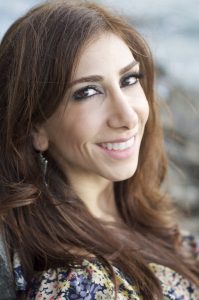
Today we’d like to introduce you to Parisa Gallinger.
Hi Parisa, it’s an honor to have you on the platform. Thanks for taking the time to share your story with us – to start maybe you can share some of your backstory with our readers?
My family immigrated to the United States when I was a little girl. They escape the multi-systemic injustices in hopes of opportunities for success and freedom for my brother and me. I identify as an Iranian American and speak Farsi conversationally.
My experiences as an immigrant child growing up in the US has helped me gain insight and understanding of the gift of life because my immigrant story is tied to so much loss, despair, pain, anguish, and grief. I can’t say that I was one of those people who knew what they wanted to do from a very young age. I don’t even remember thinking much about my career choices until I was almost through high school. What I remember most throughout my childhood is that I felt deeply for people’s pain, and I wanted to make sense of their struggles or difficulties and the meaning behind them. Early on, I knew being of help gave me great satisfaction. I have always valued curiosity, advocacy, empathy, and passion for justice. I also had a strong sense of not knowing where I fit in.
Alright, so let’s dig a little deeper into the story – has it been an easy path overall and if not, what were the challenges you’ve had to overcome?
Figuring out what I wanted and faced with the prospect of what I wanted to do had been daunting. I had to sit with many reflections, i.e., who am I if not my parent’s daughter? What do I want if not what they expect of me? And how could I step out of the path they had paved for me? As I pondered, I delved deep into the shadows of uncertainty. Growing up, my brother and I didn’t dare dishonor them by questioning the predictable career option chosen by them for us, such as medicine, law, engineering, or architecture, which I know many other Iranian Americans can relate to as proud children of immigrants. My brother and I tried to strike out a few times, but we had this covert guilt that served as a constant reminder of our immigrant parents leaving behind everything for us to start a new life which was a written script of expectations of what that life should be for their children. They had given up so much for us to have a different life than they had. What was instilled in us as children of immigrant parents is that in the United States, work is not meant to be fun but hard, back-breaking productivity, and sometimes even degrading because that is what you had to do to survive. This is all not to say that I don’t feel humbled by all my parents sacrificed for us.
As my life took many turns and detours, I realized that I had the opportunity to write or rewrite my own story, decide what narrative aligns the most with the values I hold close to my heart and that I can reinvent myself. So I started to think of my parents and me as a reflection of one another and all the stories of my mythology as an immigrant coming here. Studying psychology was against everything they ever imagined as a career for me because of the stigma that usually follows it. Mental illness is or at least used to be a taboo subject in Persian/Iranian or Eastern culture. Their overall census was that Western psychology does not work on Eastern ideologies. If someone was contending with mental health issues, the suggestions were that they should go for a run or get over it. One must take their mental illness issues to their grave; otherwise, it would destroy the reputation or the perfect image they had worked so hard to maintain. As for pursuing a career in Psychology, I did not have my parents’ support at first. They wanted me to reconsider and that I would not be able to make a career out of my education.
Six years later, and almost done getting my doctoral degree in marriage and family therapy, my family has finally grown to understand my intentions and passion and my work in mental health and the psychology field. A few years after earning my Master’s degree and getting my marriage and family therapist license in California, I was offered a position as an adjunct professor at the Graduate School of Education and Psychology at Pepperdine University. I excitedly accepted and began lecturing within a month of being invited. It has not been a smooth road, but I am very grateful to my supervisors, my mentor, and my sister tribes, who have supported me along the way and given me courage when everything seemed bleak.
Great, so let’s talk business. Can you tell our readers more about what you do and what you think sets you apart from others?
I enjoy working collaboratively with families, couples, and individuals with identity/trauma-related and relational issues. In my work as a therapist and an educator, I believe I have a dual responsibility to develop and actively undertake a process of self-reflection regarding my race and other dimensions of my socio-political identity. I hold myself accountable as a deliberate practice to reflect on my identity because it can inform the lenses I witness the people and the world around which also serves as a commitment to my students, participants, and community groups I reach in my teaching and facilitating to explore how my identity development affects their experiences in my classes and sessions. I have experienced as a student, therapist, and educator that If we choose to be seen, we also empower others to be seen. Our stories can carve mountains, move, and amplify voices. Taking chances and being vulnerable can give us the power to cultivate change, shift perspectives, and crack open worlds within others; we can’t always know where our stories can lead, with whom they can connect us, or whom we help heal by allowing our true selves to be seen.
Can you tell us more about what you were like growing up?
Music, art, and poetry have served as an escape and my refuge growing up. Being a part of another culture felt like another obstacle to get through in my effort to fit in and presented a lot of inner conflicts in terms of my identity. I cherish my family, culture, and heritage endlessly, but I was also terrified of being different and essentially not having a sense of belonging.
⠀
I believe poetry, music, in particular, sad or nostalgic songs are not just a supplement but are sometimes a necessary ingredient for great storytelling, magic, and healing, and also the vehicle that helps me connect to the deepest parts of myself, which also connects me to others. In my experiences, poetry, art, and music’s stories and sadness have their teachings, and without experiencing the void, we wouldn’t know the expansive richness of joy.
Pricing:
- 150-250
- Sliding scale 75
Contact Info:
- Website: https://moonbloomtherapy.com/


Popular
-

JordanL on ‘Breathe,’ Belief, and Building a Movement Beyond the Music
-
Megan Birney Rudert on How Access to Light Is Powering a More Sustainable and Equitable Future
-

Linda Kneidinger on Building Lasting Change Through Small Steps and Self-Compassion
-

Jolana Nika on Redefining Modern Connection Through Intentional, Real-Life Experiences
-
What did suffering teach you that success never could?
-

Who saw you clearly before you could see yourself?


