





Dr. Supatra Tovar shared their story and experiences with us recently and you can find our conversation below.
Hi Supatra, thank you so much for joining us today. We’re thrilled to learn more about your journey, values and what you are currently working on. Let’s start with an ice breaker: What is something outside of work that is bringing you joy lately?
Lately, something outside of my day-to-day work that has been bringing me a lot of joy is reflecting on a moment that felt deeply aligned with why I do what I do.
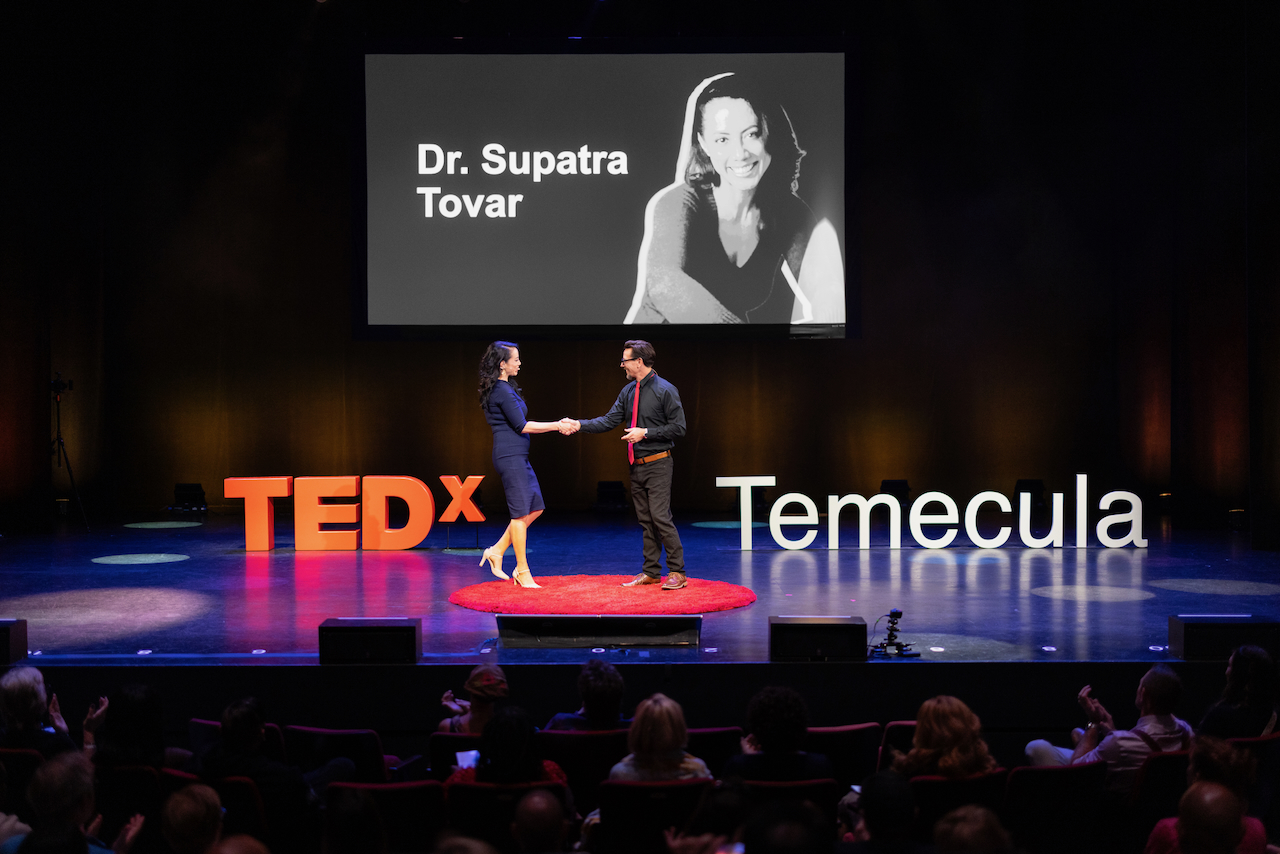
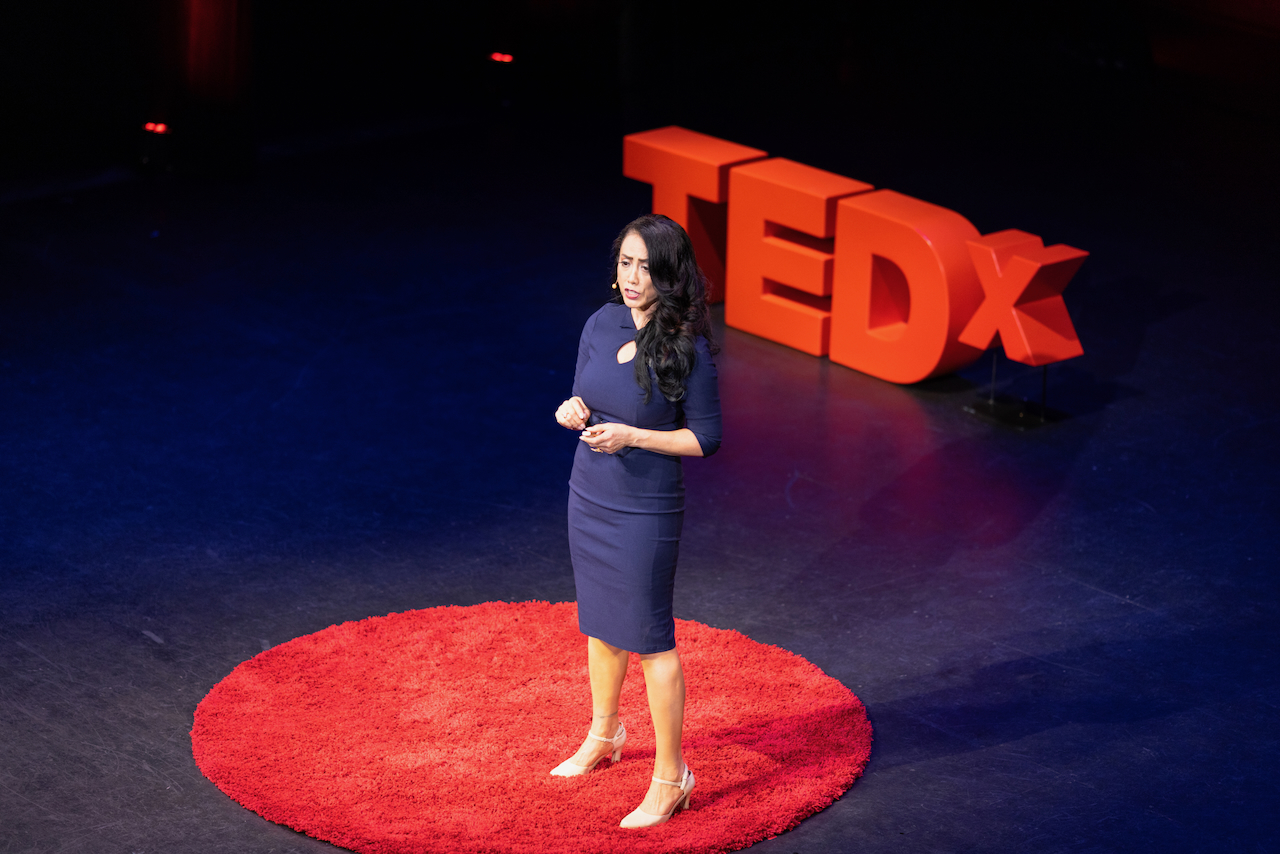
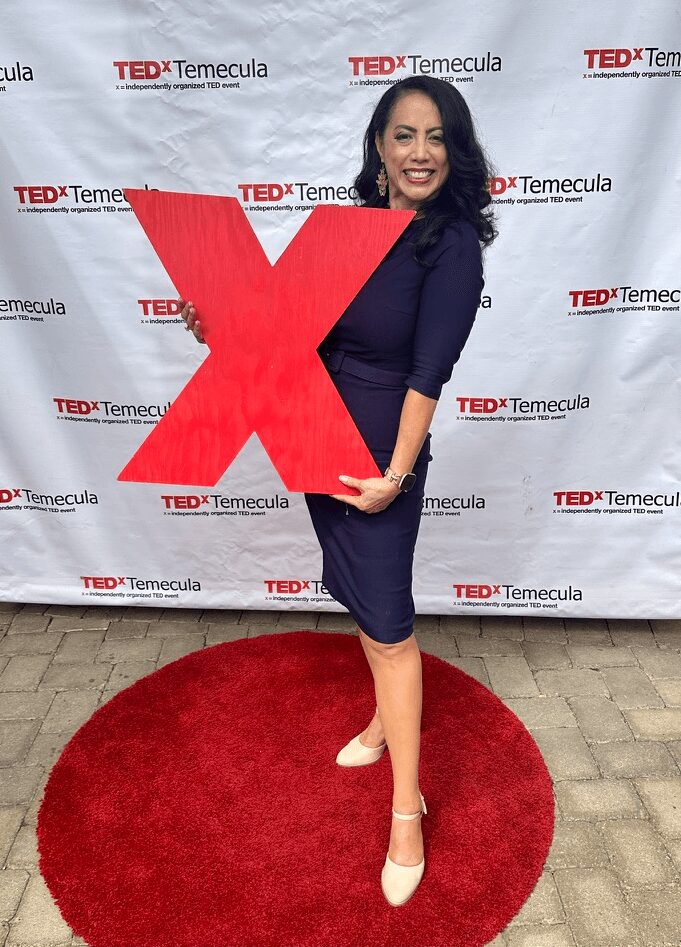
On September 27, 2025, I stood on the TEDx Temecula stage and shared an idea that has grown in me for some time: healing our relationship with food in the GLP-1 era.
What made that experience so meaningful wasn’t just the opportunity to speak, it was what I was able to say. So much of the conversation around GLP-1 medications focuses on the medical benefits or positions them in extremes. What’s often missing in the conversation is how quickly they can be co-opted by diet culture, and how that can quietly contribute to disordered eating patterns.
Being able to name that, especially on a TED stage, felt both grounding and relieving. It felt like opening up a more honest, nuanced conversation. In many ways, it felt like being one of the first voices in that space willing to say: there is more here we need to pay attention to.
The day itself was surprisingly calm. There was excitement, of course, but more than that, there was a sense of clarity and presence. I remember thinking, this is exactly where I’m supposed to be. There was something powerful about being in a room full of people who were genuinely there to listen and reflect.
What stayed with me most were the conversations afterward. People shared their own experiences, their struggles, their questions. Some expressed relief at hearing a perspective that held both the science and the humanity. Others spoke about finally feeling seen in the complexity of their relationship with food and their bodies.
Since then, what has continued to bring me joy is carrying that sense of alignment forward. It reminded me that when we speak honestly, especially about nuanced and sometimes uncomfortable topics, it creates space for connection, understanding, and change.
That kind of connection is deeply nourishing, and it’s something I’ve been holding onto.
Can you briefly introduce yourself and share what makes you or your brand unique?
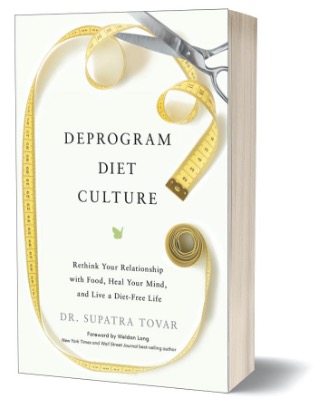
I am a psychologist, registered dietitian, and fitness expert working in private practice. I am also the founder of ANEW, which stands for Advanced Nutrition and Emotional Wellness, and the author of the bestselling book *Deprogram Diet Culture: Rethink Your Relationship with Food, Heal Your Mind, and Live a Diet-Free Life*. The book is a winner of the National Indie Excellence Book Award and a Bronze Medal recipient of the Nonfiction Book Awards. My work focuses on helping individuals recover from trauma, eating disorders, anxiety, depression, and grief through an evidence based, body centered approach that integrates psychology, nutrition, and movement.
I recently delivered a TEDx talk titled *Healing Our Relationship with Food in the GLP-1 Era*, which focused on the emerging rise of eating disorder behaviors associated with GLP-1 use and the importance of finding our way back to body trust. In the talk, I explored how appetite suppression, external control, and weight focused narratives can disrupt internal cues, and how we can reconnect with hunger, fullness, and self trust while navigating medical interventions with care and integrity.
My work has been featured in outlets including CNN, the Los Angeles Times, the New York Times, The Times of London, HuffPost, and many others. I also host the ANEW Insight podcast and speak nationally on health equity, mindfulness, and sustainable mental wellness.
With over two decades of experience, I am dedicated to empowering individuals and communities with practical tools for emotional and physical recovery, especially during times of crisis. I currently serve as the Disaster Response Co-Chair for the Los Angeles County Psychological Association and as Chair of the Women of City Club Los Angeles.
Great, so let’s dive into your journey a bit more. What was your earliest memory of feeling powerful?
My earliest memory of feeling powerful comes from a time before I knew I was supposed to question my body.
One time on a trip home to visit my parents in Boulder, Colorado, I found myself flipping through old photo albums. What stood out immediately was how dirty I was in every picture! I was covered in mud, wrestling with friends, chasing caterpillars, carving pumpkins, flying down what felt like a terrifyingly steep driveway on roller skates with my pigtails swinging behind me. I looked wild, free, and completely unbothered.
But what struck me more than the dirt was how deeply connected I was to my body. I trusted it without effort. I ate when I was hungry. I stopped when I was full. I loved the foods I loved and refused the ones I hated with zero guilt or explanation. I did not negotiate with my appetite or override my signals. I simply listened. And that trust made me feel powerful in the most natural way.
At that age, I did not even know you could have a problem with eating. Disconnection was not part of my world yet. My body felt like a safe place to live.
That changed later. In high school, I witnessed someone very close to me struggle with an eating disorder. Watching her swing between bingeing and starvation was heartbreaking and terrifying. It was the first time I truly understood how painful it is to lose trust in your own body. That experience stayed with me and quietly shaped the path I would eventually take.
Like so many people, I lost my own body trust when dieting entered the picture. External rules replaced internal signals. Control replaced intuition. What once felt effortless became something to manage and monitor.
What feels powerful now is that I found my way back. Through education, through my clinical work, through years of listening to bodies instead of fighting them, I rebuilt that trust. Not the naive trust of childhood, but a deeper, earned trust grounded in understanding, compassion, and respect.
That is the power I carry today. Knowing that our bodies are not the problem. Knowing that trust can be lost and rebuilt. And knowing that helping others reconnect to that same inner wisdom is not just my work, but my purpose.
If you could say one kind thing to your younger self, what would it be?
If I could say one kind thing to my younger self, it would be this: you already know what you need. Please keep listening.
I would tell her to trust her body the way she once did, before rules and numbers and outside voices convinced her that hunger was something to manage instead of honor. I would tell her that her body is not something to fix or control, and that chasing approval through restriction will only pull her further away from herself.
I would ask her to reject Diet Culture early, before it disguises itself as health, discipline, or success. I would tell her that no plan, program, or promise will ever know her body better than she does.
Most of all, I would encourage her to enjoy the pleasure of eating mindfully. To taste her food without guilt. To let satisfaction matter. To understand that nourishment is not just about nutrients, but about joy, connection, and presence.
I would tell her that healing does not come from being harder on herself, but from being kinder. And that the relationship she builds with her body will shape her entire life far more than any number ever could.
Next, maybe we can discuss some of your foundational philosophies and views? What’s a belief or project you’re committed to, no matter how long it takes?
I am deeply committed to helping people free themselves from the toxic effects of Diet Culture, no matter how long it takes.
Diet Culture has convinced generations of people that their bodies cannot be trusted, that health must come from external rules, and that worth is something to be earned through control. I have seen firsthand how damaging this is, not just to physical health, but to mental well being, relationships, and a person’s sense of self.
The work I am committed to is helping people become their own best experts again. That means learning how to regulate the nervous system instead of overriding it. It means tuning back into hunger, fullness, energy, and emotional cues rather than outsourcing those signals to plans, apps, or numbers. It means rebuilding intuition where disconnection once lived.
True health and wellness are not achieved through restriction or perfection. They come from safety in the body, self trust, and the ability to respond to internal cues with curiosity and care. This process is not fast, and it is not linear. But it is sustainable, and it is liberating.
I am committed to this work for the long haul because when people reconnect with their bodies and learn to listen instead of fight, everything changes. Health becomes personal, compassionate, and durable. That is the kind of healing worth dedicating a lifetime to.
Okay, we’ve made it essentially to the end. One last question before you go. When do you feel most at peace?
I feel most at peace when I am grounded and regulated, when I am tuned into my body instead of rushing past it. Peace, for me, is not the absence of stress or difficulty. It is awareness. It is noticing when unhelpful or critical thoughts show up and gently restructuring them into thoughts that are more supportive, realistic, and kind.
I feel deeply at peace when I am with my dogs, when I am outside and fully present with nature. Being around plants, trees, and animals brings me back into my body in a way nothing else does. It reminds me to slow down, to breathe, and to remember that I am part of something much larger than my to do list or my worries.
I also feel peace when I move my body for how it feels, not how it looks. When I exercise because it energizes me, grounds me, or helps me release tension, rather than trying to fit an unrealistic or external ideal. That shift alone creates a profound sense of calm and self respect.
Peace shows up when I am eating delicious food that my body truly enjoys, when nourishment feels satisfying rather than calculated. It is there when I am laughing freely with friends, or when I let myself cry at a movie without judgment. Those moments of emotional honesty are incredibly regulating.
Ultimately, I feel most at peace when I am living in the present. Not trying to fix myself, improve myself, or get somewhere else. Just being here, connected to my body, my environment, and the people I love.
Contact Info:
- Website: drsupatratovar.com, anew-insight.com
- Instagram: Dr T IG https://www.instagram.com/drsupatratovar, ANEW IG https://www.instagram.com/my.anew.insight
- Linkedin: https://www.linkedin.com/in/drsupatratovar/
- Twitter: N/A – not my thing
- Facebook: Dr T FB https://www.facebook.com/drsupatratovar, ANEW FB https://www.facebook.com/my.anew.insight
- Youtube: https://www.youtube.com/@my.anew.insight
- Other: Dr T Threads https://www.threads.net/@drsupatratovar
ANEW Threads https://www.threads.net/@my.anew.insight
Dr. TikTock https://www.tiktok.com/@drsupatratovar
ANEW TokTock https://www.tiktok.com/@my.anew.insight
Popular
-

Portraits of the Valley
-

LA’s Most Inspiring Stories
-

Rick Norris Learned That Building a Successful Business Means Building a Life You Actually Want to Live
-
How Olivia Rush Turned Survival Into a Mission to Help Others Keep Going
-

How Bibi Goldstein Is Helping Entrepreneurs Reclaim Their Time by Embracing the Power of Delegation
-

Victoria Hasson is Redefining Voice Coaching Through Community and Collaboration


