




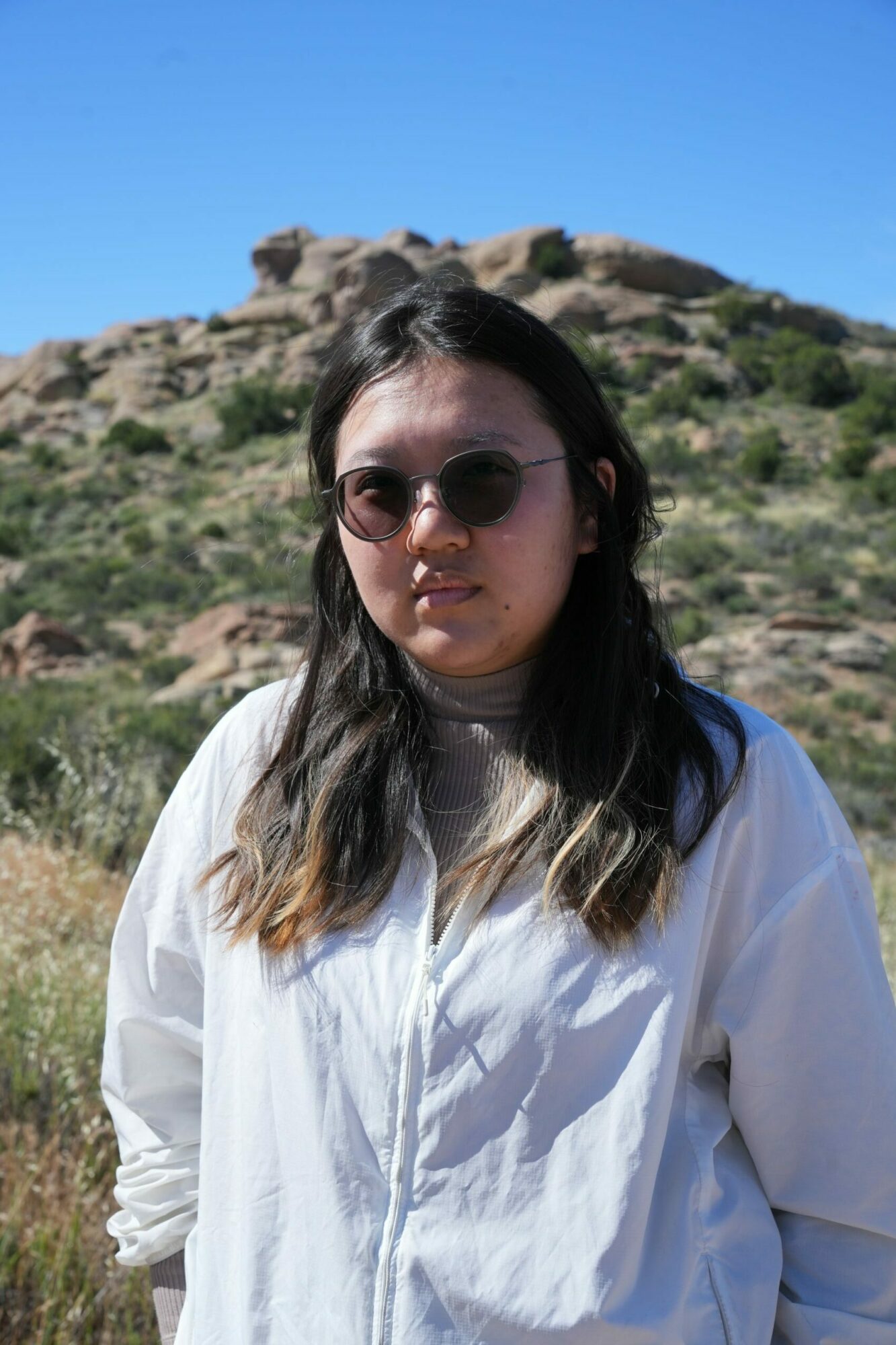
Today we’d like to introduce you to Sih Yu Yang.
Hi Sih Yu, thanks for sharing your story with us. To start, maybe you can tell our readers some of your backstory.
I was born in Taiwan, and I originally studied medical applied chemistry and healthcare management. At that time, I thought my future would probably be in a more traditional field, and I was also considering studying abroad for something related to digital marketing or data science. However, I always remembered that there was another path I was interested in. I had once been told that I might be well suited to becoming a director, and that idea stayed in the back of my mind.
When my mom told me that she was willing to give me the opportunity to study abroad, I immediately started thinking about doing something completely different. Even though I had already been preparing to study data science, I asked her if it would be possible for me to explore another field instead. She told me that it was absolutely possible and encouraged me to try.
She then helped me find some courses where I could experience what filmmaking and video production were actually like. I went to a training center connected to one of the major television stations in Taiwan. There, I learned some basic camera skills, such as how to operate a camera, how to frame a shot, and some basic lighting techniques. The program also gave me an opportunity to create material for my portfolio so that I could apply to film school.
At that point, I honestly did not know much about filmmaking. I basically knew how to turn on a camera, take photos that looked good to me, and set up a light. That was about it. Still, after having that experience, I decided very quickly that I wanted to study cinematography abroad.
Would you say it’s been a smooth road, and if not what are some of the biggest challenges you’ve faced along the way?
I moved to Los Angeles in August 2024 to study cinematography. I really enjoyed it, but the beginning was extremely challenging because I was starting with very little technical knowledge. I also faced a major language barrier. There were so many professional terms and technical vocabulary that I had never heard before, so at the same time that I was learning cinematography, I also had to improve my English and learn how to communicate effectively with people on set.
For about the first year, I often felt like I did not fully understand what I was doing. I did not always understand why a camera was placed in a certain position, why we chose a particular lighting setup, or how all of those decisions worked together to tell a story visually.
Things began to change when I started working on more sets and helping other people with their projects outside of class. By combining what I was learning in school with actual hands-on experience on set, I gradually started to understand what cinematography really meant. I learned by doing, making mistakes, observing other people, and constantly trying to improve.
Now, I feel much more confident and much clearer about what I am doing. I have gained real experience in cinematography, and I understand much more about how camera, lighting, composition, and communication all work together. I am still learning, but compared with where I started, I have grown tremendously.
Thanks for sharing that. So, maybe next you can tell us a bit more about your work?
As a cinematographer, I care deeply about production design. Color, texture, and materials all shape how an image feels, so I work closely with the production designer and director on everything from props and wallpaper to set dressing. Every choice contributes to the world we are creating.
A few days ago, I was scouting locations with a director who was looking for a mansion that would reflect a character’s wealth. Some houses had an old-money feel, while others were much more modern. A few looked beautiful but had limited space or very few windows, which would make lighting and camera placement challenging. We had to consider both what the location communicated about the character and how it would work for each department.
That balance between creative vision and practical problem-solving is a big part of what I enjoy about cinematography. My job is to help turn the director’s vision into images while finding solutions that work for the whole team. From choosing a location to refining the smallest detail in a frame, I love the process, and I never get tired of finding ways to bring a story to life.
We’d love to hear about any fond memories you have from when you were growing up?
One of my favorite childhood memories is from when I was around eight or nine years old. On weekends, I had to go to bed at 9:30 p.m., but my favorite TV show aired from 8:00 p.m. to 10:00 p.m. That meant I always had to miss the last thirty minutes. I really wanted to watch the whole episode, so normally I would wait for the rerun. The problem was that the rerun happened at a time when I had math class, so I still could not watch it.
Because of that, I came up with my own little solution. Before I left for class, I would plug my camera into the power, set it up in front of the TV, and record the thirty minutes that I was going to miss. My parents knew I was doing it, and I remember feeling so happy knowing that when I came home, the part I had missed would be waiting for me.
What made the memory even more special was the camera itself. It was an older-style camera with a small built-in projector on the side. Instead of watching the recording on the tiny camera screen, I could project it onto the wall or even the ceiling. I would come home, turn on the projector, and finally watch the last thirty minutes of my favorite show.
For a long time, I completely forgot that I used to do this. But when I remembered it again, I realized how much I loved that little routine. It was such a simple thing, but at that age, finding my own way to record something I really wanted to watch made me incredibly happy. Looking back, I think that is one of my favorite childhood memories, and it is also funny to realize that even back then, cameras were already a small part of my life.
Contact Info:
- Website: https://sihyuyang.com/
- Instagram: https://www.instagram.com/sih_yu_yang


Popular
-

Greg Hex Is Turning the Everyday Kitchen Knife Into a Modern Design Object
-

Portraits of the Valley
-

LA’s Most Inspiring Stories
-

Rick Norris Learned That Building a Successful Business Means Building a Life You Actually Want to Live
-
How Olivia Rush Turned Survival Into a Mission to Help Others Keep Going
-

How Bibi Goldstein Is Helping Entrepreneurs Reclaim Their Time by Embracing the Power of Delegation


