



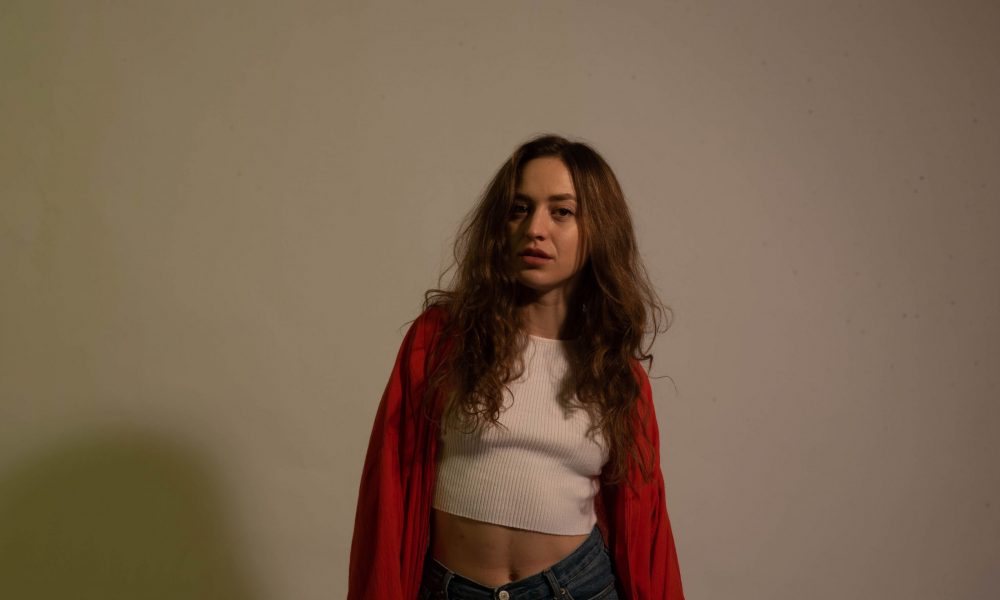
Today we’d like to introduce you to Livya Howard-Yashar.
Can you briefly walk us through your story? Tell us how you got started and how you got to where you are today.
It feels like I’ve been living my life as an artist for eternity and like I’m just getting started all at the same time. Being born and raised in LA, I’ve cultivated a complex identity that I am consistently trying to make sense of. In my early childhood, I was always moving, shaking, and expressing myself physically and sonically (my brother was the same) in a way our grandmother liked to call “Saint Vitus Dance”. She’d say, “What’s the matter kid, you got Saint Vitus Dance?!”
Acting was technically the first to arrive in my young adult life, coming from two parents who were heavily involved in film and theater. My mother loves sharing the story of when I was nine or ten years old, stepping out onto the Power House Theater stage for the first time. Apparently, I walked out onto the empty stage with tears in my eyes and said, “I’m home”. Acting was in my blood and felt really pivotal in helping me overcome shyness and insecurity as a kid. I think being from LA and from a heavily theatrical family made me a bit jaded about having a career as an actor, so I moved onto dance.
Something about physically inhabiting my body and learning about all of the things it is capable of producing was a thrill I couldn’t let go of, especially in the face of very challenging middle school and high school experiences where I felt very socially isolated and struggled with depression. Dance had always been a part of my life since early childhood, but it was really in my teen years that I experienced dance communities that truly shaped my dance and choreographic practice. From Krump, West African, Jazz, Tap, Salsa to Ballet and Lyrical, dance served as my main source of empowerment during some of the most difficult times in my life. Music also did this for me but in a different way. Being the little Jewish girl singing and beatboxing in my school’s Christmas choir performance is just one example of some of the experiences I had that shaped the complex sense of self and identity-forming I mentioned earlier.
Studying dance at the collegiate level gave me an entirely different perspective on what dance and choreography could be, challenging me in ways both positive and negative. Learning to think critically about dance through an academic lens helped me further internalize the importance and power of art-making, but in some ways also removed a lot of the raw joy that I experienced in my earlier years as a dancer. The idea that dance could and should be separated from music was one of those things I couldn’t quite accept on an emotional level. As a student of Anthropology, specifically Ethnomusicology, I knew I was not the only person to feel this inherent marriage between music and dance, and it was during my college years that I dove more deeply into my studies as a vocalist and percussionist.
I have always felt constant pressure to need to choose between a career in dance and music, a commercial versus an academic career and struggled all through my twenties over what box I was told I needed to fit into. I think pursuing the liberal arts in that way can provide so much freedom and endless possibility, and at the same time can often feel like it’s failed to prepare you to live in our fast-paced capitalist society. As I’ve developed my professional career as a dancer/choreographer and as a musician, I found myself producing most of my work outside of the United States, feeling there is often more of an openness and inviting environment for artistic exploration and that it is simply more valued in places such as Europe, South America, Scandinavia, etc. Rather than leaving for good and completely giving up on my hometown of Los Angeles, I’m finding that it often just takes time to meet the right people and collaborators whose visions align with yours and that as in any large city, that is constantly in flux. LA has been like the old lover I keep running back to. The one that is all too familiar, maybe a little bit toxic and messy, but at the same time completely full of life.
I keep reminding myself that there are people here who truly do believe in the potential of LA to be a serious and truly diverse cultural and artistic hub, and while I may need to leave from time to time, I find myself still willing to forgive and willing to give it a chance time and time again. I am currently working on more large-scale multidisciplinary and immersive productions and find myself particularly focused on choreographing and directing what feels more like experiences than performances. I think I have moved passed the idea of simply being the director of a dance company, and I feel that my heart is leaning more in the direction of facilitating collective healing experiences, particularly along the lines of racial and environmental justice and activist work. I am searching for ways in which art can have an even more direct and tangible impact in this way, and though I have put a lot into my career so far, I am still very much just figuring it out.
I’m sure it wasn’t obstacle-free, but would you say the journey has been fairly smooth so far?
Not in the least. If there’s anything that I am the most sure of at this point in my life, it’s that the only constant is change. Learning to navigate big life transitions has always been very difficult for me, and often my reaction to big changes can feel like my inner child throwing a temper tantrum. I’m what you might call a hyper-empath, so it takes my mind and body a long time to adjust to changes, especially in my external environment. You could say that most of my life as an artist has been centered around a scarcity mentality which I know is very common for most of us who are freelancing and haven’t felt a sense of being tied down to anything specific, often for long periods of time. While I consider myself privileged to have an extremely supportive family here in LA who loves me and has always been there for me during difficult times, a few particular struggles stand out over the years.
Back around 2013/2014, it seemed LA had been making big strides towards building up and expanding the professional dance community beyond just the commercial dance scene. While I was excited to move back home to LA after living in NYC, somewhere I thought would take a more active role in rebuilding and helping grow the dance community, I struggled to find a place for myself in the LA dance company scene. At the time, I was still stuck in what I thought was the expected pathway of graduating from college and promptly joining a dance company where I would spend the rest of my foreseeable future; however, within the narrowness of that particular path, I struggled to find a place for myself. My close family and friends had always encouraged me to make my own work, always telling me, “You’re more of a leader than a follower” but I wasn’t able to truly take that in until much later in my life. I have never been just a dancer and quickly became very tired of not feeling like I lived up to the image of a hard-core dancer with perfect ballet technique who’s been ferociously training every day of their life. Though I ended up dancing for several individual choreographers and smaller LA and NYC-based dance companies, I quickly began to develop some health issues that needed extra care and tending to, making this ideal of being a full-time dancer in a well-known company feel even more out of reach.
It was only after some years of feeling rejection, not feeling seen or understood that I decided to seriously pursue a career as a choreographer. Though I am still dancing and always open to being a dancer in other’s creative processes, watching one of my creative visions come to life on other bodies in front of my eyes and seeing the dancers really “get what I’m going for”, is a feeling unlike anything else.
I know I already mentioned feeling this pressure to choose between a career in dance, music, acting/film and so on, and this has been a big part of my struggle. I grew up deeply immersing myself in the performing arts to the extent that I never found one I liked less than others or “wasn’t as good at”. My younger self, I think always knew that my life and career would always incorporate multiple art forms, but my adult self has always struggled to navigate it in a way that makes sense in a capitalist society. This pressure to “choose a path” and feeling of needing to fit myself inside a box in order to make sense to other people has in many ways, stifled my ability to continue moving forward creatively, and I think only in recent years have I come to accept my multiple identities as a renaissance woman. One of these ways is through creative direction, choreographing, and performance coaching. Rather than seeing my multiple skill sets as a burden, I see myself as having a lot to bring to the table and a lot of perspectives to help others navigate their own careers in performance and storytelling.
Appreciate you sharing that. What else should we know about what you do?
Quickly after I started dancing professionally, I began setting the foundation for a career in world percussion as well. My first job out of college was working at the 92nd Steet Y in New York, where I worked as an office admin and manager part-time. Being able to work there also allowed me the opportunity to deeply immerse myself in their dance education programs, not only as a dance teacher but as a musician as well. My boss found out that I drummed and naturally, I started musically accompanying their adult and young adult dance classes. In this way, I was able to blend both of my worlds in music and dance, and as someone who danced in many classes with live musical accompaniment, this came naturally to me.
Since I had more of a foundation laid for a career in dance and felt I had some catching up to do as a musician, I struggled for a while to find other ways of making both careers happen at once, let alone paying my rent in New York, until I discovered the international body music community.
Discovering body music was the most primal and wholistic way of accessing all of my artistic outlets through singing, dance and percussion. I had a previous background in tap and step dance when I was younger, so I was aware of percussive dance styles but wasn’t aware of body music as a practice. My second summer out of college, I decided to join an old professor of mine for this program called Tapmotif. It included tap dancing, body percussion, singing, swimming on the beach, partying and jamming for a magical ten days with an international crew of dancers and musicians from all parts of the world. It was the first time in my life that I truly felt the euphoria of bringing a group of international artists together on a gorgeous Greek island to connect and create together. Since then, I have had the privilege of traveling and teaching internationally and have built strong creative relationships with other artists across the globe within the body music community.
I also consider myself a bit of a polyglot when it comes to languages and for a while thought I wanted to pursue a career as an interpreter. Hebrew is my second language; I studied French for six years and began learning Mandarin when I was fifteen years old. Language has always been a form of music for me, which is one of the reasons I’m most passionate about it. I like to look at my relationship to dance and music in a similar light, first and foremost as a form of communication. While I gave up on the dream of working internationally as an interpreter, I still very much utilize my linguistic background within my dance and music practice as a gateway to storytelling and as a way of understanding the essence of the specific cultural contexts in which I work. It is always a learning process, and I approach my work in this way in order to establish a sense of empathy and humility within cross-cultural dialogue.
In addition to dancing, choreographing, music making, and teaching, I’ve spent the last couple of years finessing my work as a performance coach. Given my earlier years spent in the theater as an actor and my evolving careers in music and dance, I realized that I had built up over twenty years of experience across the performing arts field and that I might have some insight to share with others. This impulse began while watching one of my friend’s bands play a set at the Viper Room some years ago. Truthfully they didn’t have much stage presence, they were kind of stepping on each other’s toes, and the singer could barely hold the attention of the room. After writing up about one page of notes for them in my head, I felt that I was onto something. Soon after, I began working for another friend’s organization, helping students prepare academic materials and portfolios for college applications. She brought me on to work with performing arts students as a coach, particularly acting students preparing monologues, self-tapes, and singing auditions. I am proud to say that I was to help several students get into their top choice acting schools at Julliard, Carnegie Melon, and NYU and I’m continuing to work with actors on various aspects of their performance. Additionally, I have been growing my clientele of musicians and singer-songwriters, working on improving their performance, sense of embodiment, and ability to connect with all kinds of audiences. Not only do I work with my clients on their technical performing skills, but on their ability to interpret and dig into both the personal and cultural relevance to the work being performed.
Have you learned any interesting or important lessons due to the Covid-19 Crisis?
The pandemic made me feel like I lost a part of myself. Maybe not lost per say, but it’s the most distant from myself I have ever felt. Given most of what I do artistically is based on connectivity to others, the past three years have felt very much like slowly sinking to the bottom of the ocean. I felt the most depressed I’ve ever been, even amongst others in collective feelings of isolation and struggle. Many friends and family were able to work remotely, while my work did not translate well in a virtual space. Even with masks, I struggled to find my own way of doing things safely, feeling a lot of pressure to keep moving forward and trapped in comparison of myself to others and how they were dealing with the pandemic. Being limited to online platforms as a way of connecting to others (something I already felt contributed to the current downfall of human communication) made me hyper-aware of the anxiety I feel about where I am in my life versus others and how prone I am to feel like I am stuck while the rest of the world moves on without me. I believe and I hope that the pandemic forced people to recognize the importance and necessity of slowing down and even just pausing for a while. I often feeling like I have moved at a slower pace in various aspects of my life and it’s taken me a while to feel ok about that. In a sense, I was grateful that the pandemic caused others to be on the same wavelength, what I feel is often my wavelength, to stop and truly feel what it’s like to be a part of a larger unit.
Unfortunately, I quickly learned that while others were able to give in to the ebb and flow of the pandemic and the uncertainty of it all, some were in denial and persistent about maintaining the status quo, and what I think hasn’t been working in our current culture. Capitalism has bred a collective addiction and dependency on hustle culture, the grind, being the “best” etc, and the pandemic felt like a brutal awakening to the realization that I no longer want to live my life in that way. Throughout these painful waves of solitude and lack of transparent conversations around the pandemic and its effect on mental health, I’ve realized that at the current moment, I only feel like I can truly connect with others who have felt a great sense of loss within the last three years. While I respect that everyone has had the right to process the last three years in their own way, I’ve become very impatient and turned off by people and experiences that feel purely self-serving and not acknowledging the pain most of us have experienced over the last three years.
Some of the most important lessons I’ve learned from the pandemic is that there is no “one size fits all” to healing from trauma and that there is no timeline for reconnecting to the self. It’s also made me look at my relationship to dance differently, refocusing on dancing more for myself than for others and thinking about what that looks like. It’s made me remember how much of a gift my body is and that dancing is what I do to feel good, not look good. The pandemic has also reinforced the value and importance of art for me and that I need to be ruthless when confronted with people who try to convince me otherwise or undervalue the work that I do. I feel more empowered now by a deeper understanding that my value is not based on what I do, how much I create, or when I create it, but how I do it and with whom I choose to share it.
Contact Info:
- Website: livyahy.com
- Instagram: https://www.instagram.com/livyamarie/?hl=en


 Image Credits
Cheryl Mann Judd Weiss Jennifer Stetor Eggers George Simian
Popular
-

Que Johnson on Building Brands That Last: From Visibility to True Market Authority
-

Christina Wren Steps Into the Director’s Chair to Tell Stories That Feel Like Home
-

Portraits of the Valley
-

LA’s Most Inspiring Stories
-
JordanL on ‘Breathe,’ Belief, and Building a Movement Beyond the Music
-
Megan Birney Rudert on How Access to Light Is Powering a More Sustainable and Equitable Future


