




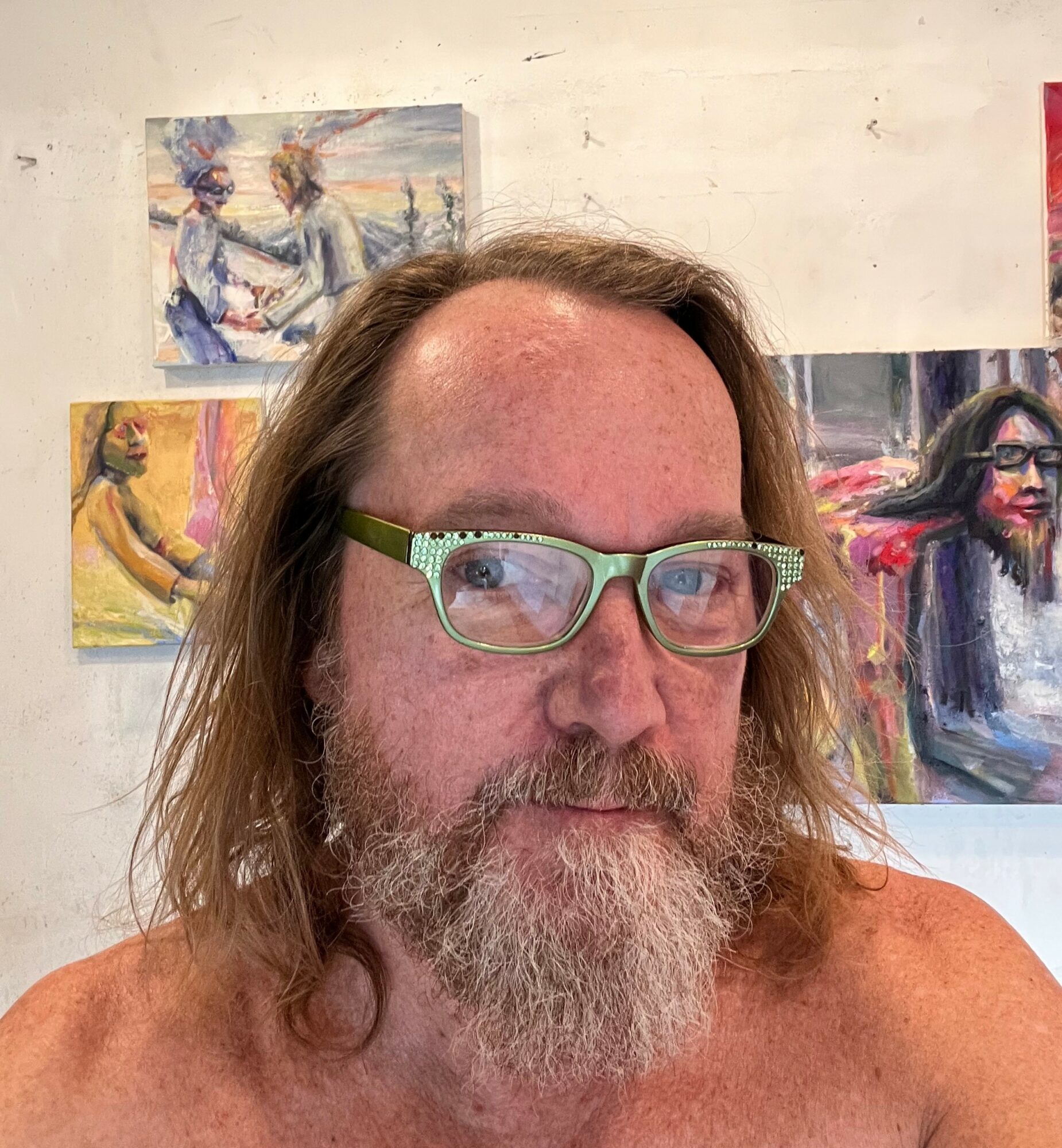
Today we’d like to introduce you to Thomas Whittaker Kidd.
Alright, so thank you so much for sharing your story and insight with our readers. To kick things off, can you tell us a bit about how you got started?
I started in the sand.
During most of my childhood, I lived at the bottom of a street across from forty acres of undeveloped land that continued down the hill to the train tracks on the edge of Mount Hope Bay. When it rained, the water would carry sand to my corner of the street near the state line where Fall River, Massachusetts meets North Tiverton, Rhode Island. I liked playing for hours in this sand. I noticed this was something unusual where I would find myself playing there while kids 4 years younger than me would join me in making things in the sand. Kids my age didn’t do this in my neighborhood. I was about 8 then. This playful mindset has continued.
My mother must have seen this in me. Four years later after we briefly moved to Providence and back to the house on the corner with the sand, she enrolled me in a children’s workshop at the Rhode Island School of Design Museum in Providence. I walked into this grand place and saw that the thing I did in the sand or mud on the corner was treated with reverence and seriousness. The scale of it, the beauty of it — it showed me that the survival culture of my neighborhood where dreamers are often made fun of or attacked is not the mindset I was meant to be surrounded by.
My mother was successful in showing me a place where my art can be appreciated but also successful in teaching me the fear of poverty that she learned growing up in the Sunset Hill housing projects in Fall River. She and her brothers would pick up coal near the train tracks to save money on heating. My philosophical Sunset Hill experience came at the age of 8, when I saw a young couple, seconds after they had gotten hit by a car after getting off the city bus. One was under the tire of a car, the other thrown onto the sidewalk. I’ll spare you the gory details. Life seemed to be a bunch of random events without meaning. This was just before my parents divorce. My brother, my mother and I would hide from my father by living with my Me-mere, grandmother, in the Sunset Hill housing projects. My father was pretty pissed off and a bit drunk when he got his Dear John letter. After he kicked the door in and confronted my mother, he had to be dragged out of Me-mere’s place by the Police.
I suppose these experiences, along with being around the mental illness on both sides of my family, didn’t help me feel like I had a solid foundation from which to take risks, so when I finished high school where I received the academic award for art, I let the fear of poverty guide me, and enrolled at the University of Rhode Island to study civil and environmental engineering. Following this course for two and a half years, feeling my health eroded, both body and mind, I fully realized I was living inside a logic of static equations that cordoned off my dream state.
After one course in architecture at RISD, I eventually had nothing left to argue with myself about. I transferred to Massachusetts College of Art in Boston, studied painting, and received the 2-D Department Honorarium at graduation. Then I went on to earn my MFA in painting from San Jose State University in 1994.
I settled in Los Angeles, and the city became my creative ecosystem — its light, its people, its complexity, the Pacific Ocean, which has become an essential collaborator with my studio practice. I swim past the breakers at Dockweiler Beach alone. Those swims dissolve the mental static that has accumulated, dissolving fear and returning me to something essential and dynamic.
Playing is my profession now; however, I also certainly like to nudge people into accurate political discourse, a productive playing. I gravitate toward caring for others which seems a bit exaggerated in me during these difficult American times. These concerns fuel my creative output while staying connected to the essentials that the ocean teaches me.
I’m sure it wasn’t obstacle-free, but would you say the journey has been fairly smooth so far?
My struggles use to be how I defined myself, in kind of an angry way. I’d wear them like a badge of honor like a punk rocker willfully doing battle. I now find strength and positive energy from my struggles and find a richness in the human lessons pulled from interactions with people living on the edge of society, living in survival mode.
As a child lessons came from talking to adults who were career drinkers. This was when my father would pick me up and sometimes my brother, for visitation day on the weekends after my parents got divorced. We most often would wind up in a local working-class bar in or near Fall River, Massachusetts. Some of these places had no windows and would be called “clubs” so their hours could be later than regular bars. The people in here would be generous in telling their stories of learning moments, like parables. These bar patrons were my extended family. These lessons continued when I started at age 14, working as a construction laborer. Most of my coworkers also had challenges, sensitivity triggered damage, prison time. Maybe these experiences have heightened my interest in unhoused people because their stories often reveal a sincere yearning for real unfiltered experiences with hard lessons being learned. My brother in-law Louis was homeless in Boston almost all his life. Maybe these associations made me dislike the prospect of winning the lottery. I yearn for real unfiltered experiences. A bunch of money might have gotten in the way. Having a bit comes in handy though.
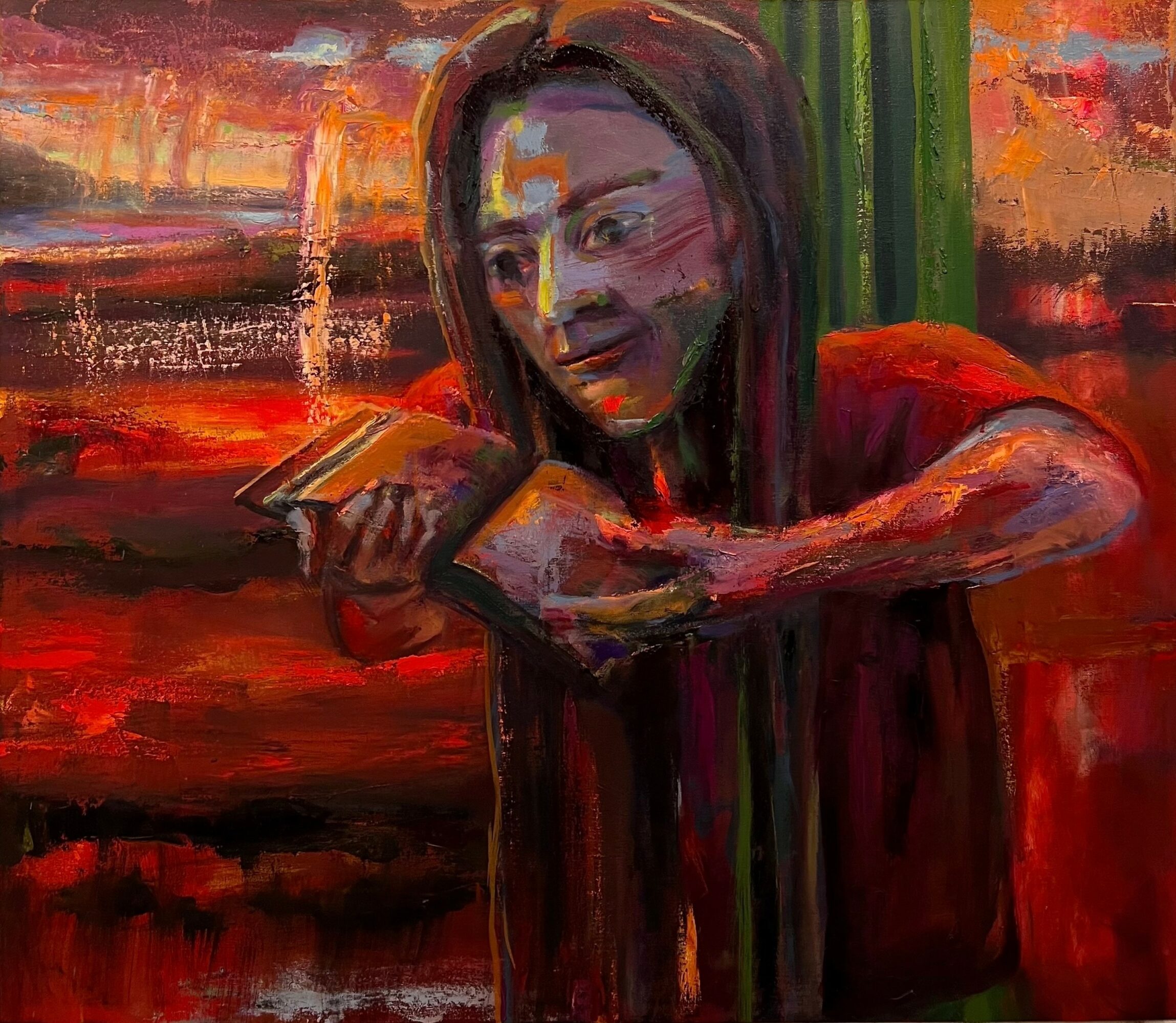
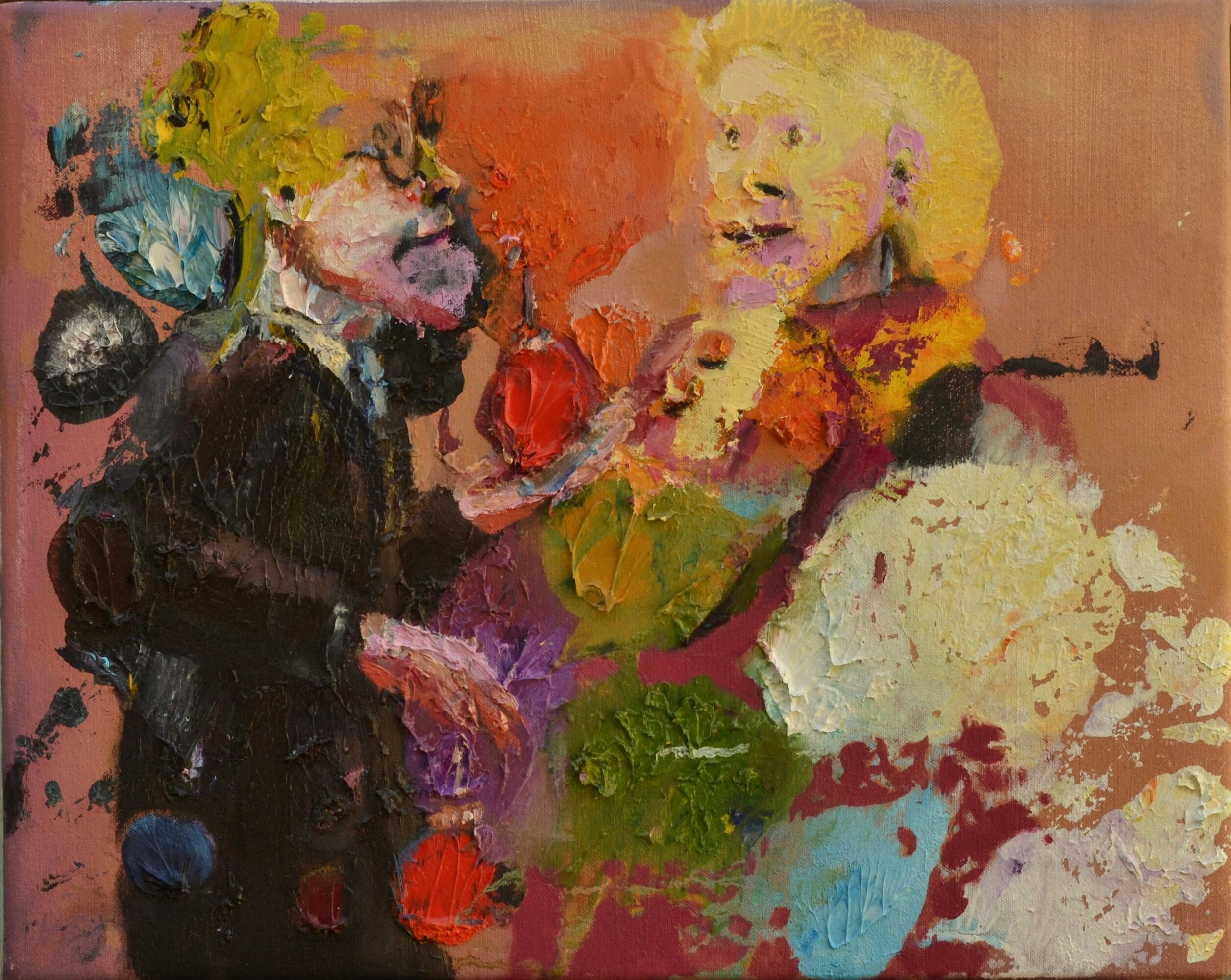
Now I see battles as a way to clarity of purpose. Knowing what I don’t want focuses me toward a new direction that builds a better place to live in and invite others into. The way I paint is not easy because I start with an emptied mind, in a trance. I had self-hypnosis meditation classes when I was 13 which probably set me up for this way of working. I have nothing in mind, so I don’t have anything I don’t want. Yes, I like riddles, they help in dissecting my unconscious. What comes out from my automatic mark making is a dance across the canvas where I now have so much to look at that my mind latches onto groups of these marks and engages like a gestalt, a complete idea in the marks across the canvas, much like the beginning of a dream. The only problem with a dream is they present themselves automatically, so my job is to have the best thoughts to produce dreams that project myself and people around me, forward. Maybe that’s why most of my paintings have a lot of motion in them.
Can you tell our readers more about what you do and what you think sets you apart from others?
One of my few rituals is to do something in my studio every day.
Sometimes it’s just having a beer and writing with nothing asking to be written about leading to what is really going on and important to me; a bunch of absurd banal thoughts that lead to concerns about how the world is spinning, destroying but then building, putting my feet down so I don’t get dizzy. I am an absurdist which certainly seems to be at home with this process.
I got my first professional sized studio in West Oakland in 1991. It was across the street from a housing project, so it felt oddly a bit like home. This is when my present way of working was born, working on a camouflage of color where mental images can introduce themselves to me. This was just before I started my MFA program at San Jose State, so grad school was building from there.
In 1997 shortly after receiving my MFA from San Jose State University, I had my first private gallery solo show at Fred Spratt Gallery, one of only two major art galleries in San Jose, CA at that time. They represented mostly established artists from L.A., Robert Graham, Joe Goode, Ed Moses, along with Altoon Sultan and Peter Voulkos among others. I felt fortunate to be the kid starting out in a gallery with historical art figures on the gallery roster. That is where I began exhibiting characters engaged with their desire in an unstable landscape of American culture that still drives my work today. This exhibit was titled — Released In The Dark. A collector asked me if I was an existentialist. I said, maybe, I don’t think so. I later thought, I’m a bit more positive and a problem solver so I’m more of an absurdist, incorporating morality into nonsensical human behavioral events.
Those graduate years at San Jose State were times of growing in a place that felt like a home philosophically. After seeing the Helter Skelter show at the Museum Of Contemporary Art, curated by Paul Schimmel, L.A. seemed like the home I should choose where absurdists had a community. I called up UCLA for an MFA application for my partner Jacquie, and she got in so the move to L.A. worked well for both of us.
The first major milestone of my Los Angeles career was my solo show Building and Dumping at ACME Gallery in 2004. ACME was one of the most respected galleries in Los Angeles. Having work there was a feeling of arrival in a certain sense. David Pagel reviewed the show, and it was the lead review in the Los Angeles Times giving the work even more visibility. I sold a bunch of paintings. It was the moment when I figured that the conversation I was having with my subconscious in my paintings was genuinely landing with people who didn’t know me personally — strangers who stood in front of the work and felt something good, funny and occasionally unsettling. The rare upsetting times were surprising but sometimes my sense of humor comes from dark experiences that I don’t remember as being dark since so many in my family have mental illness making the dark moments more pronounced and noticeable. Maybe art and self-hypnosis meditation has saved me and enhanced my sense of humor.
In 2007 I had two solo shows — High Tide at Carl Berg Gallery in Los Angeles, again, David Pagel reviewed this show for the LA Times and Love and Casualty at Kruglak Gallery at Mira Costa College in Oceanside.
Alongside my studio practice I developed an additional avenue as a curator to connect to the greater L.A. art world. I like meeting and bringing together artists that I admire. This enriched my sense of connection with the large L.A. art community while enabling me to share a vision of what I think adds to our cultural development and brings artists together that haven’t been shown together.
In 2008 I curated The Unruly and the Humorous at Angles Gallery in Los Angeles. One of the highlights of curating this show was including work by Lynn Foulks whose work I had admired since the early 90s when I was in Oakland along with many excellent L.A. artists. Some other shows I curated were Created Worlds and Altered Histories at JK Gallery, and Dirty Minds: Life On Earth at BG Gallery in Santa Monica in 2014. I occasionally curate but it takes much more time than I had first thought it would, so I do this less to have more creative production time in my studio.
I have also lectured on my work at Galerie ARTAe in Leipzig, Germany, at UCLA, California Polytechnic State University, and San Jose State University among others. When speaking publicly about my work, I gain a greater understanding of how my work connects with people. Viewers sometimes point out things in a painting that I had forgotten that I put in there, things that have a significant purpose but are not a main visual element. Often odd things that make me laugh.
Being in a new country or in New York City to create or exhibit in is a great way to reestablish a fresh momentum to create. I often find a surprising amount of support from collectors in cities outside of Los Angeles, especially New York, but also Antwerp and Oslo. In 2015, I completed an artist residency at Kaus Australis in Rotterdam, in the Netherlands. That residency created warm connections leading to friendships and international exhibitions. Being embedded in a European creative community, working alongside artists from different cultural contexts, opened my practice to relationships that have continued to bear fruit. From that residency grew connections and a mindset that eventually led to exhibition opportunities across Europe and Asia— at Galleri Golsa in Oslo, at galleries in Stockholm, Montreal, and Agnes B. Galerie Boutique in Tokyo, at the Swab Barcelona Contemporary Art Fair. I caught up to some of my drawings that were in a traveling show and visited a musician/ artist friend, Patrick Morris, at the same time that had moved to Oslo, Norway so this was a rich more positive experience than the usual American experience of superpower psychosis. Relaxing seems easier in countries I have visited.
2023 was a particularly significant year professionally. In addition to the BG Gallery show I Could Float For Days in 2023, a show of paintings and drawings that I feel represents some of my most energetic work to date, I had two exhibitions in Germany — Raw Beach & Apologists, a two-person show with Kata Unger at Galerie ARTAe in Leipzig, and Die Schattenseite der Sonne, a two-person show with Cornelia Renz at German Tatami in Berlin. Showing in two German cities in the same year, with work that deals so directly with American cultural instability and the universal human pursuit of joy and peace — that felt meaningful in a way beyond the professional. Seeing the textile mills in Leipzig induced a feeling of a shared worker ethos that Fall River, MA has, but Leipzig adds heaps of centuries old culture that adds a richness. It was a confirmation that the concerns driving my work are not parochial. They travel.
Getting back to the US feels exciting and difficult in a way that pushes me into my next stage of development. Los Angeles sometimes feels a bit smaller than I would like after being in New York where I feel more like I am in my old east coast home culture but the backyard in LA opens me up to anything that I direct, a more blank canvas than a New York series of dramas. Mexico City, where I exhibited last year, also has that large energy that I am drawn to.
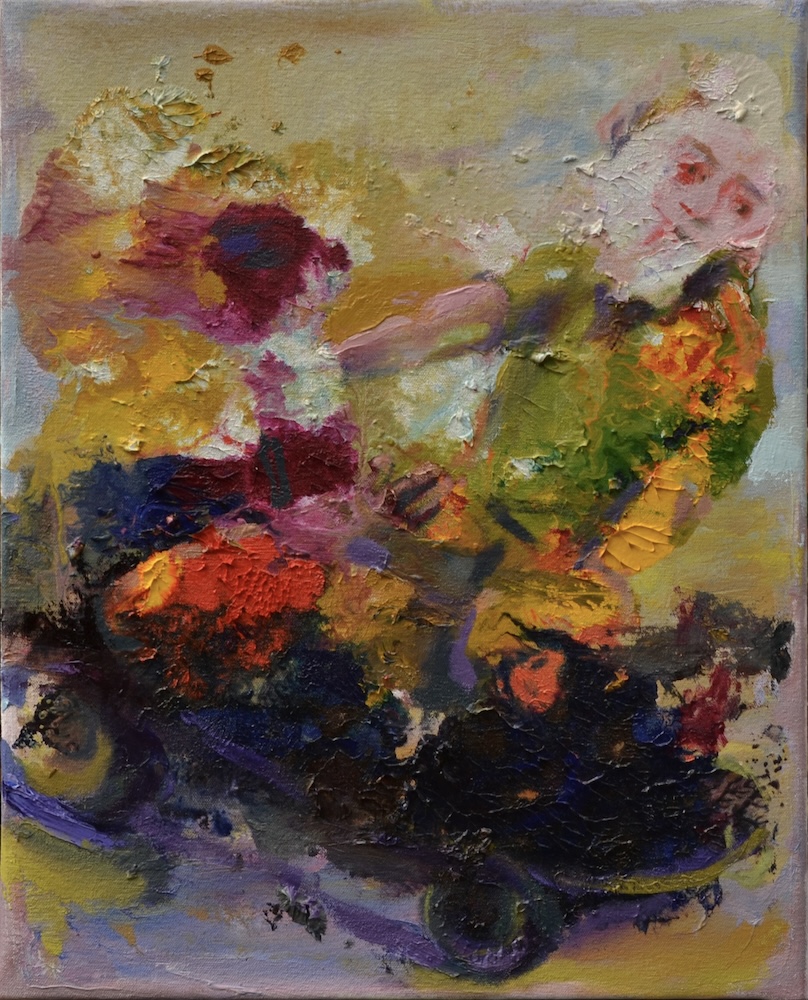
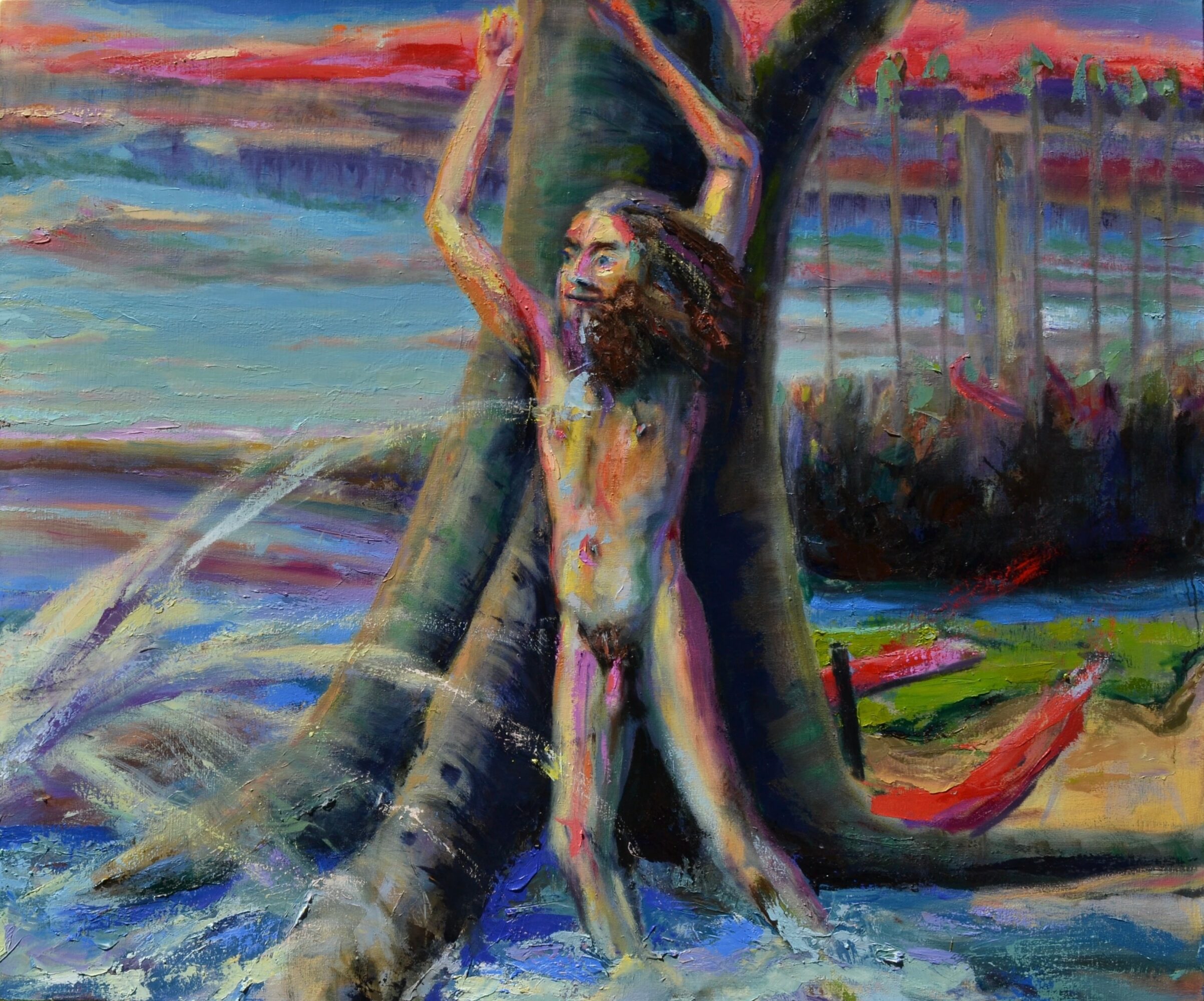
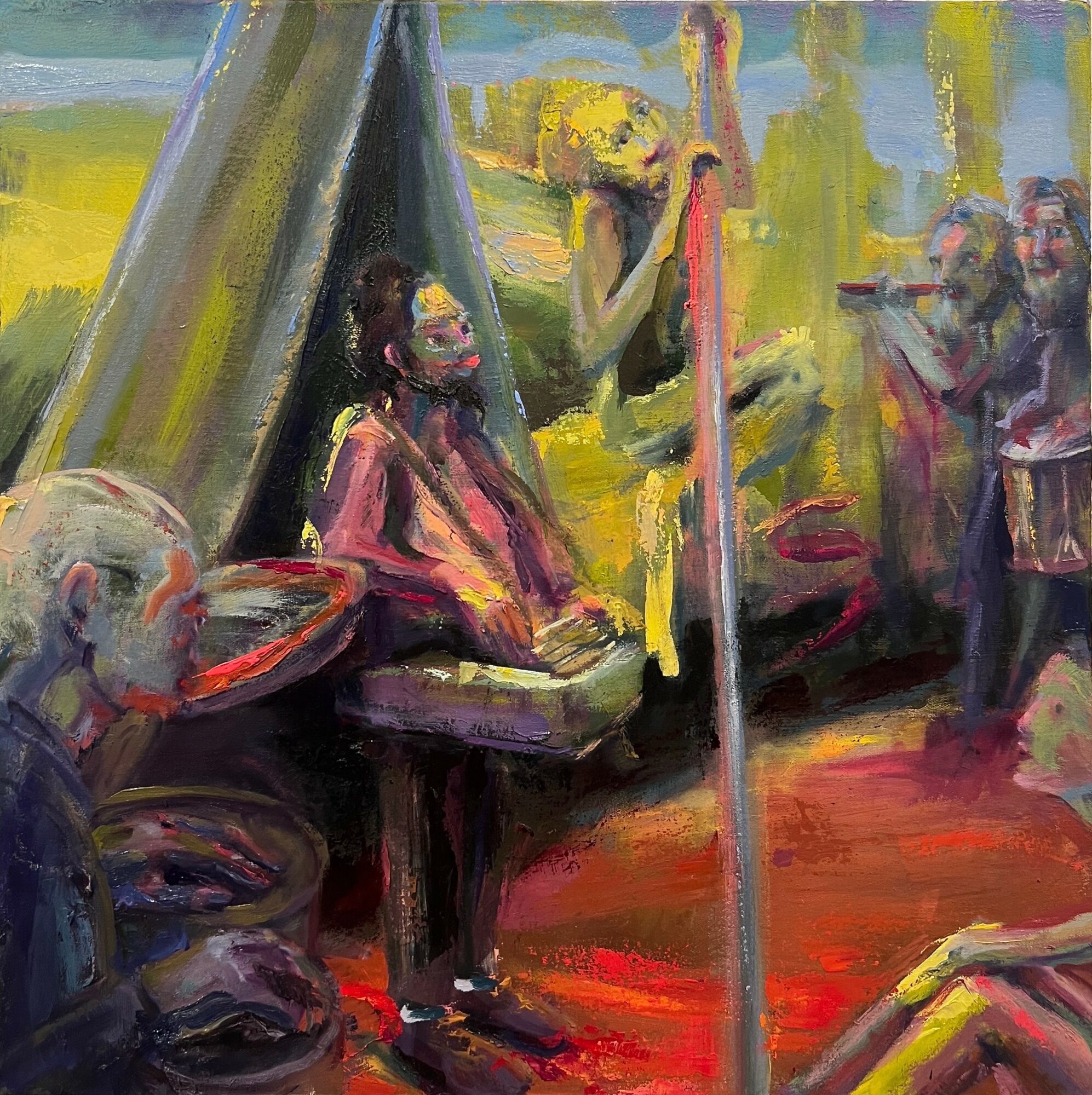
My work spans painting, drawing, sculpture, performance and installation. The paintings are large, built with heavy paint and bold color, beginning in automatic mark-making and developing through research and intuition, into images that point toward better outcomes after the battles, the crises and the parties. The sculptures and installations come together differently — they are more explicitly social objects, often engaging the audience during live performance, designed to create containers for human connection and conversation. The drawings are where I get out ideas more quickly and they feed everything else.
I work out of my studio in Los Angeles. I swim at Dockweiler Beach. I walk at midnight. And I paint. After thirty years of professional practice, that rhythm — the ocean, the sky, the studio, the work — is the most direct description I can give of what my professional life actually looks like day to day. Everything else — the exhibitions, the reviews, the international shows, the curatorial projects — grow out of that quiet daily commitment to showing up and making my work and meeting new people.
What makes you happy?
Seems a lot of things make me happy;
walking under the trees while looking at the moon then opening my studio door seeing a new painting I started, writing about nothing in particular leading to thoughts that have been brewing and mingling with recent experiences, meeting new artists, art appreciators as well as unhoused people with unique stories and sensitive hearts, swimming in the ocean by myself; these are some of the things that make me happy.
Why swimming alone? When I get out past where the waves break, surrounded by something that is overwhelmingly larger than myself, the self that worries and calculates details of the typical functions of life dissolves. What remains is something ageless, quieter and more trustworthy. I come back from those swims always transformed and energized. Out there by myself what naturally occurs is a feeling of being a little part of a seemingly infinite space, part of our system of particles, gases, solutions, plasma and other stuff. That stuff and experiential moments can interact in my studio to create paintings that create a place where more humane interactions and cultural growth can happen. This is the mental place I open up to when starting a painting.
Contact Info:
- Website: https://thomaswhittakerkidd.com/index.html
- Instagram: https://www.instagram.com/thomaswhittakerkidd/
- Facebook: https://www.facebook.com/thomas.w.kidd
- Youtube: https://www.youtube.com/channel/UCnKId1ggKJzxZfBcMaGFGNg/featured
- Other: https://santamonica.bgartdealings.com/artist/thomas-whittaker-kidd
Popular
-

Portraits of the Valley
-

LA’s Most Inspiring Stories
-

JordanL on ‘Breathe,’ Belief, and Building a Movement Beyond the Music
-

Megan Birney Rudert on How Access to Light Is Powering a More Sustainable and Equitable Future
-
Linda Kneidinger on Building Lasting Change Through Small Steps and Self-Compassion
-

Jolana Nika on Redefining Modern Connection Through Intentional, Real-Life Experiences


