




Today we’d like to introduce you to Sadaf Asjodi.
Hi Sadaf, we’d love for you to start by introducing yourself.
Like many families, mine wanted their kids to have some kind of skill music, swimming, horseback riding. Somehow, I got stuck with painting.I started with Persian miniature painting because it was my dad’s passion. He loved the incredible detail and precision of miniatures, so he took me to classes. The funny thing is, I never really liked miniature painting itself. At first, I think I mostly did it because I wanted his attention. But I fell in love with something else: color.
I loved staring at colors on paper, mixing them, and watching them change. I didn’t care much about the final result. I loved those few seconds when two colors met and something unexpected happened.
When my father passed away, I stopped painting.
Years later, a friend invited me to the private painting studio she attended. It was a very free environment students, a teacher, big canvases, paint everywhere, and enough space to make a mess without worrying about cleaning everything up immediately. People were often recreating other artists’ work to learn different techniques.
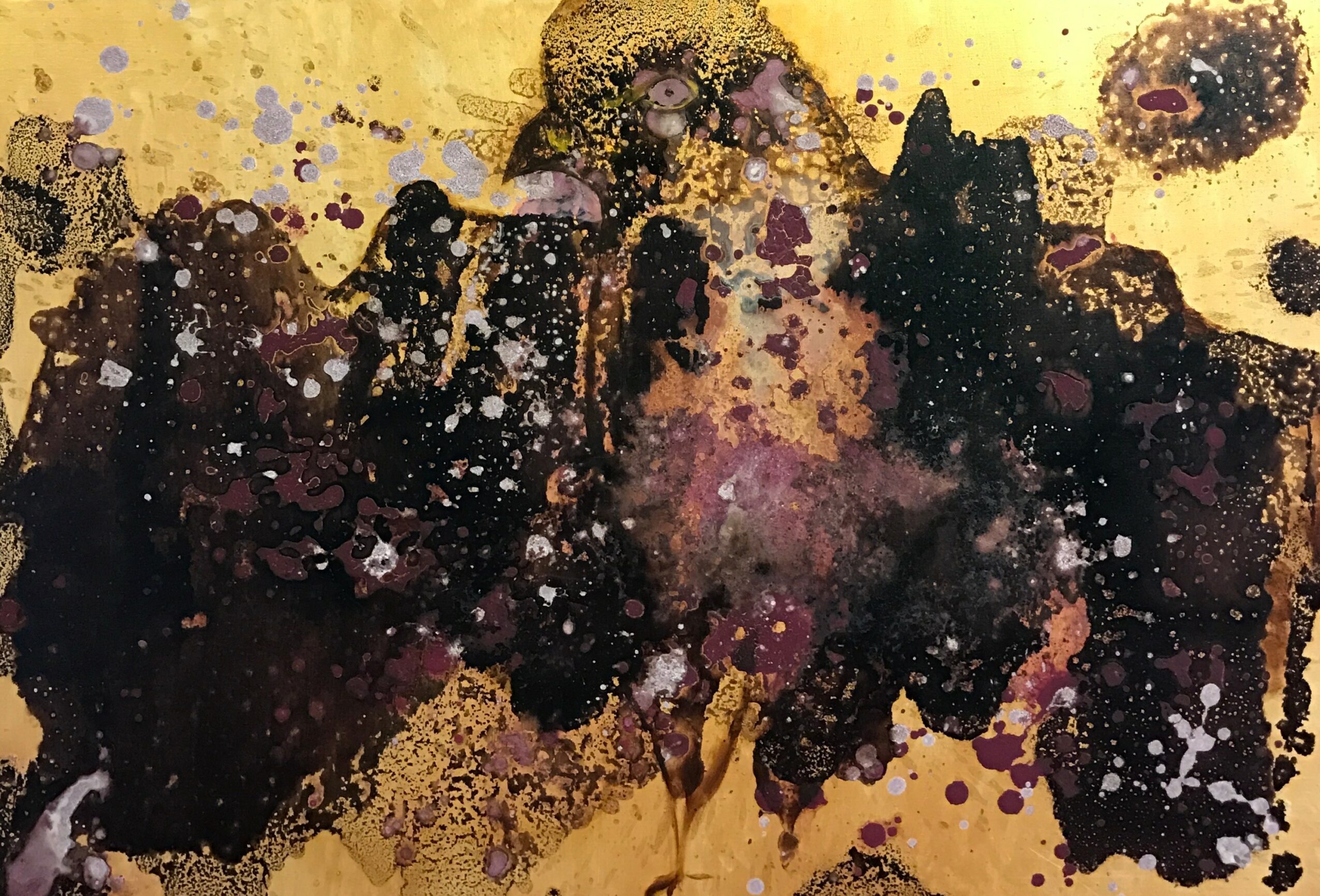
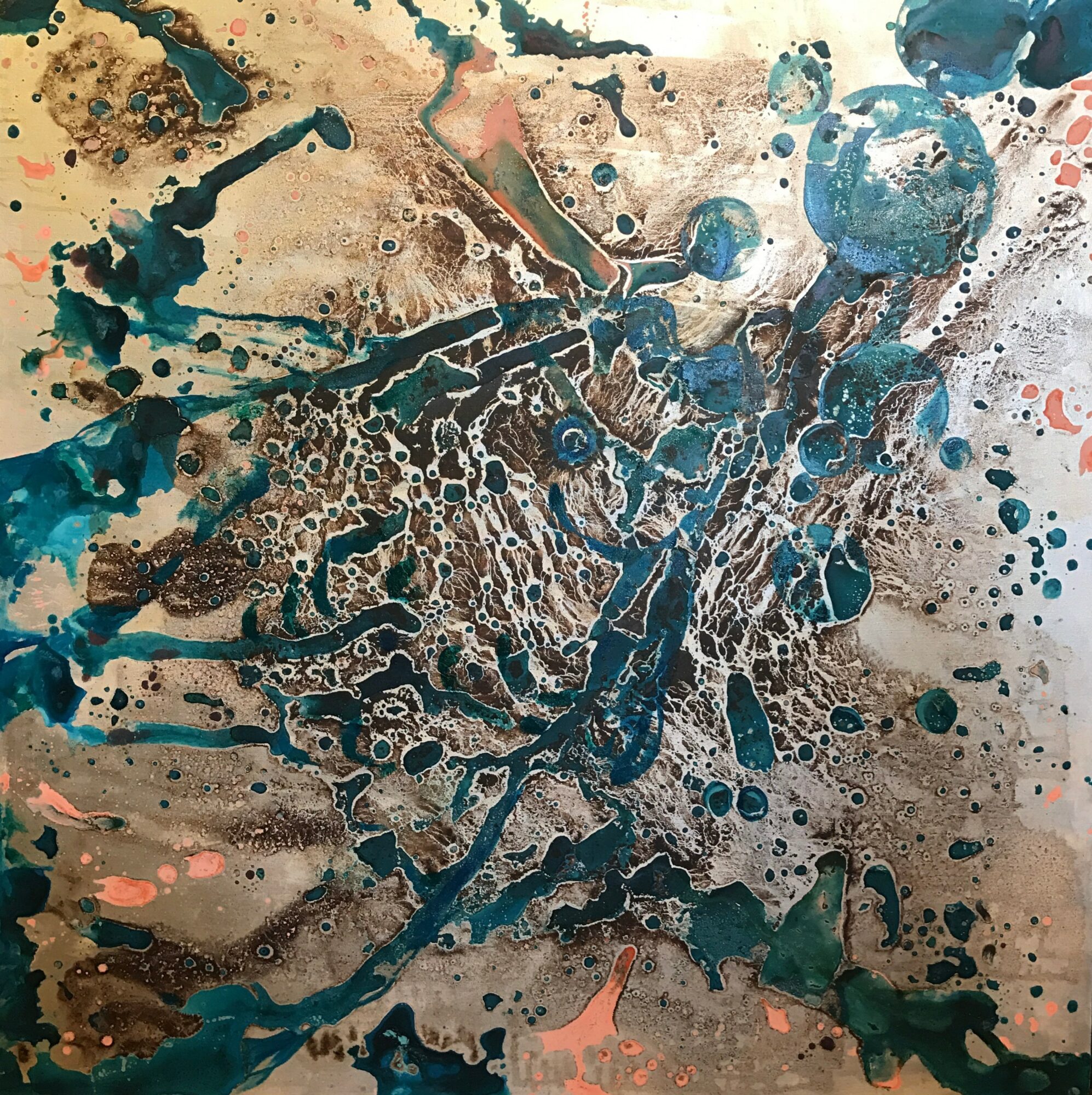
One day, I watched someone mix paint with water and splash it across a canvas to create a background.
And boom the party started again for me.
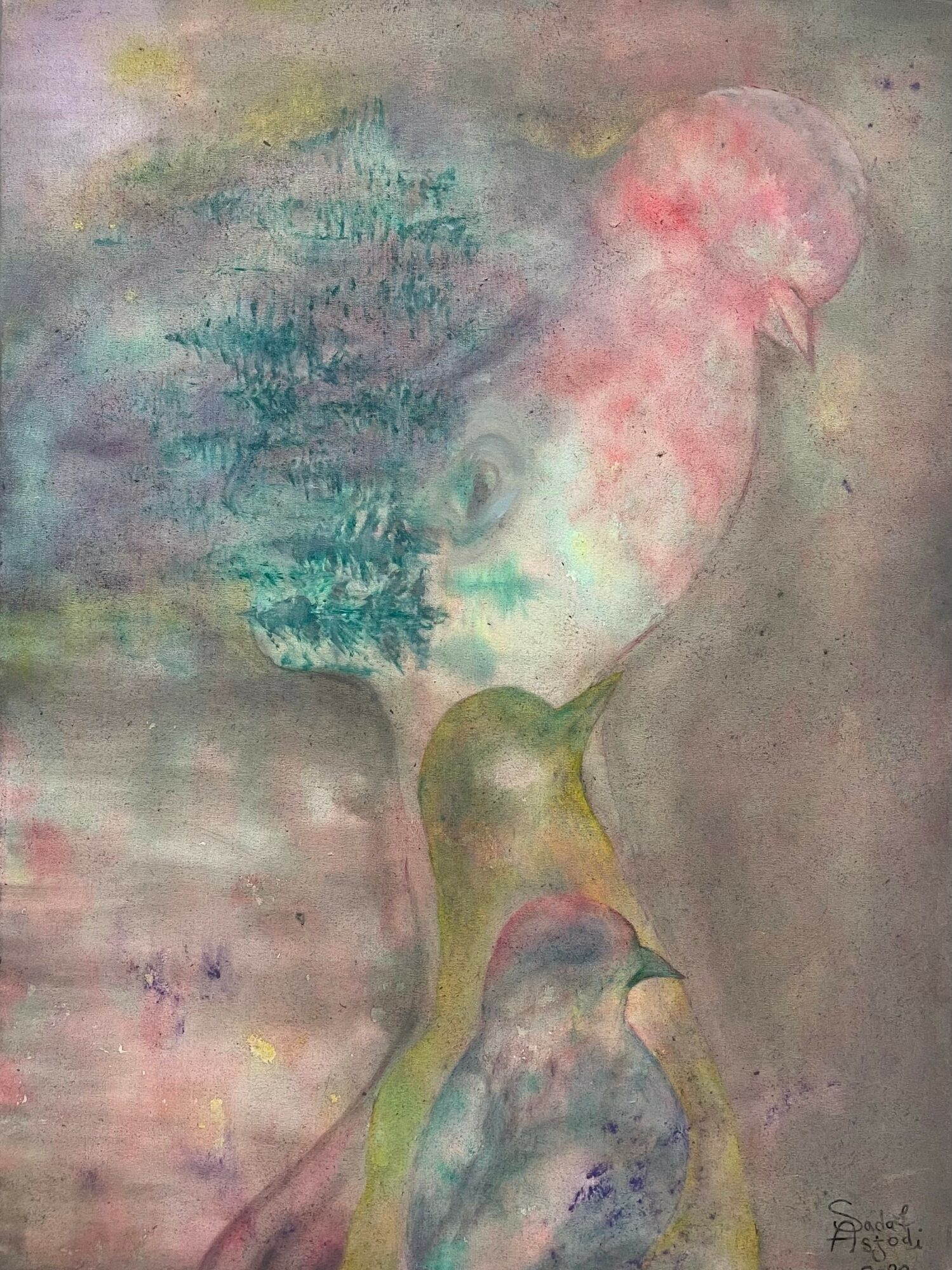
I began going to the studio as much as I could. I asked my teacher, Farnaz, to help me learn abstract painting not so I could copy abstract artists, but so I could figure out how to take the images and feelings inside my head and give them a life outside of me.
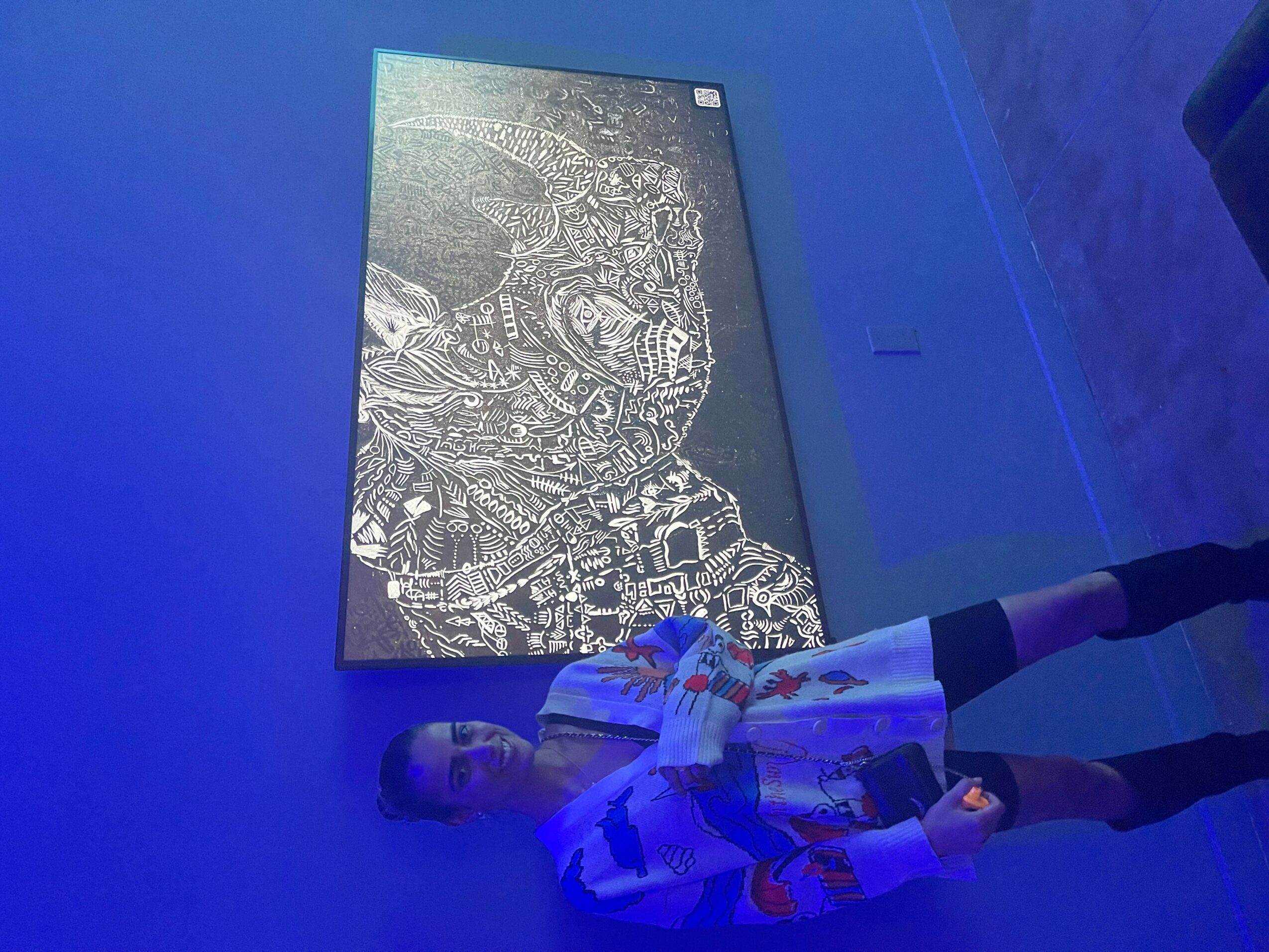
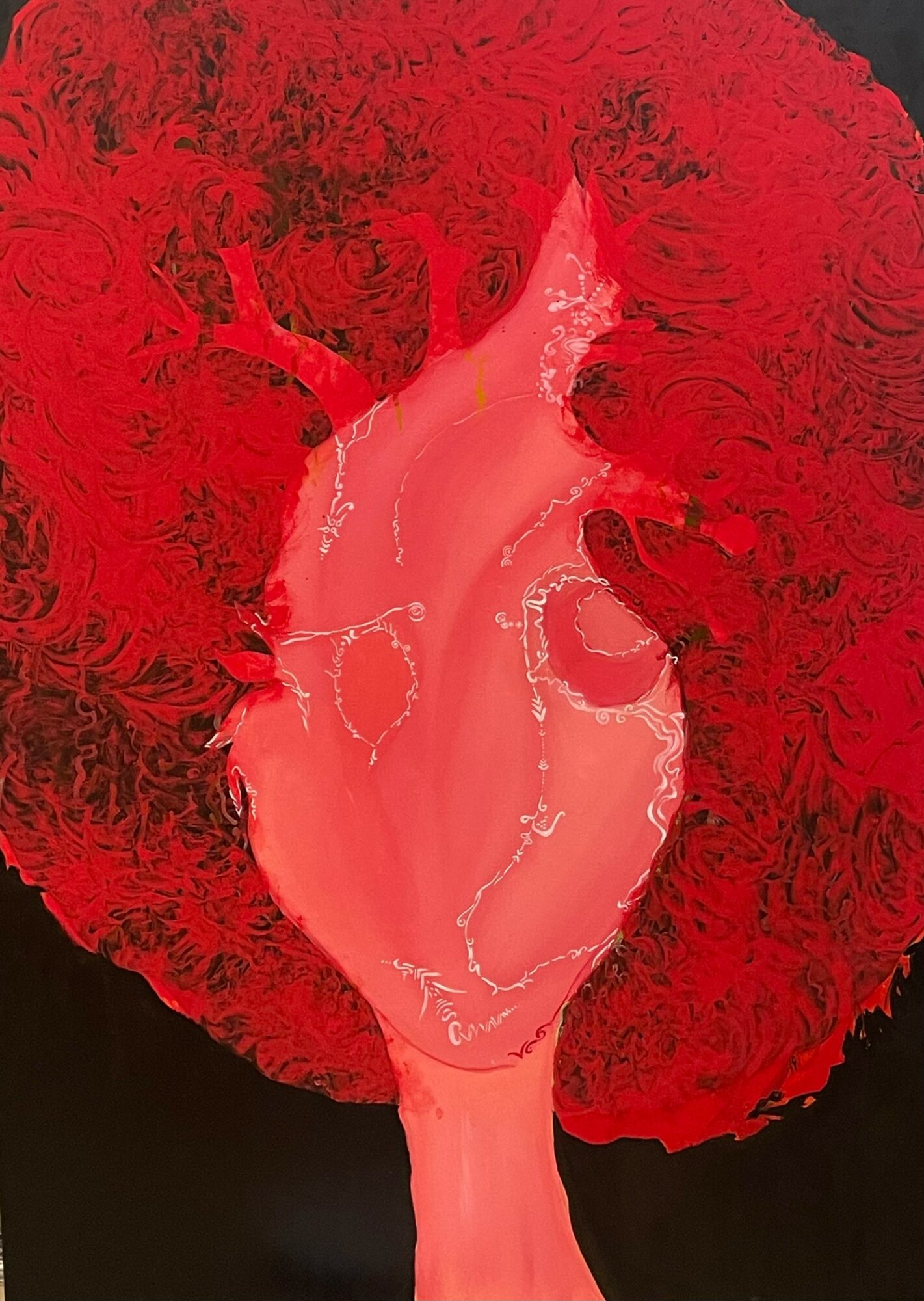
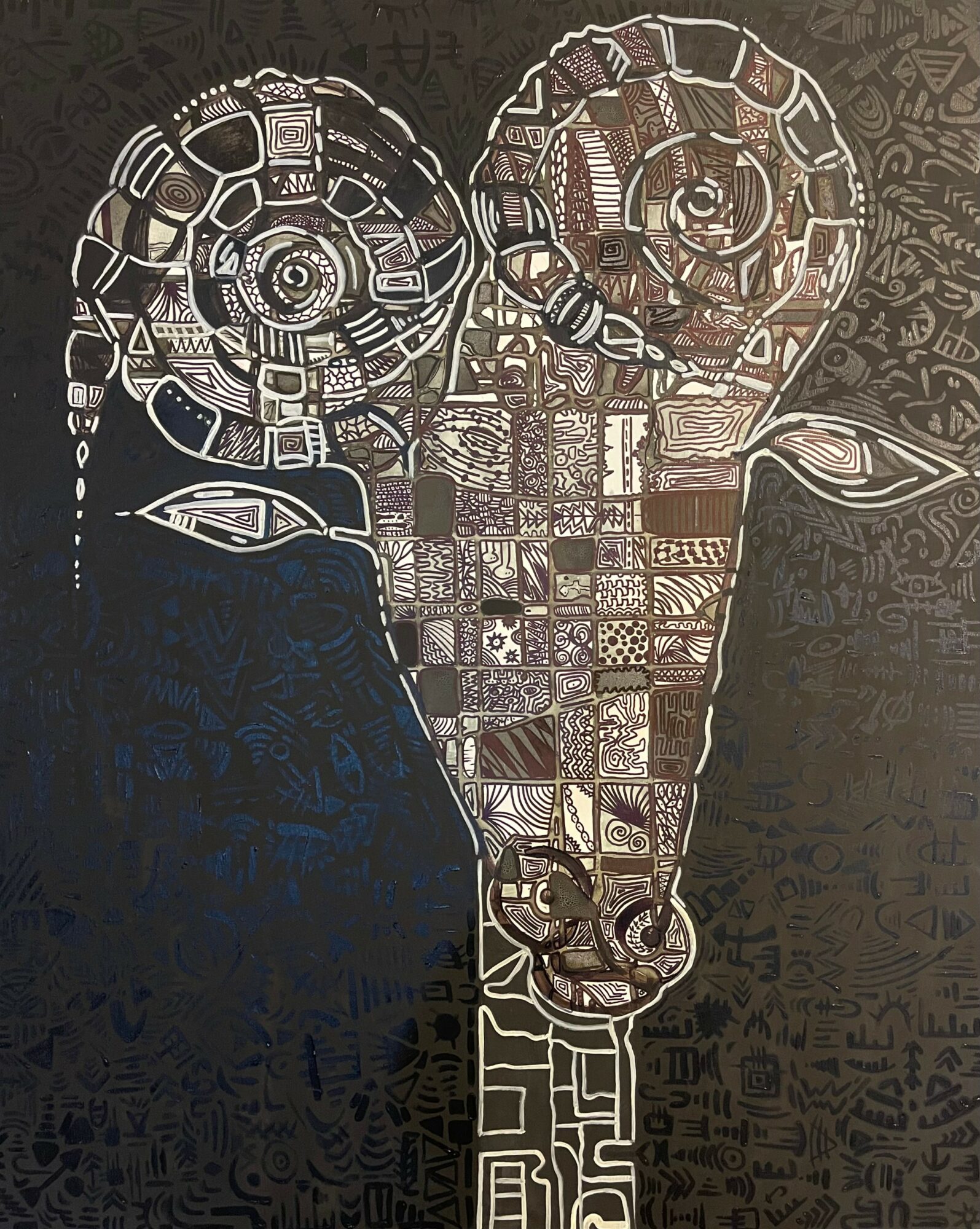
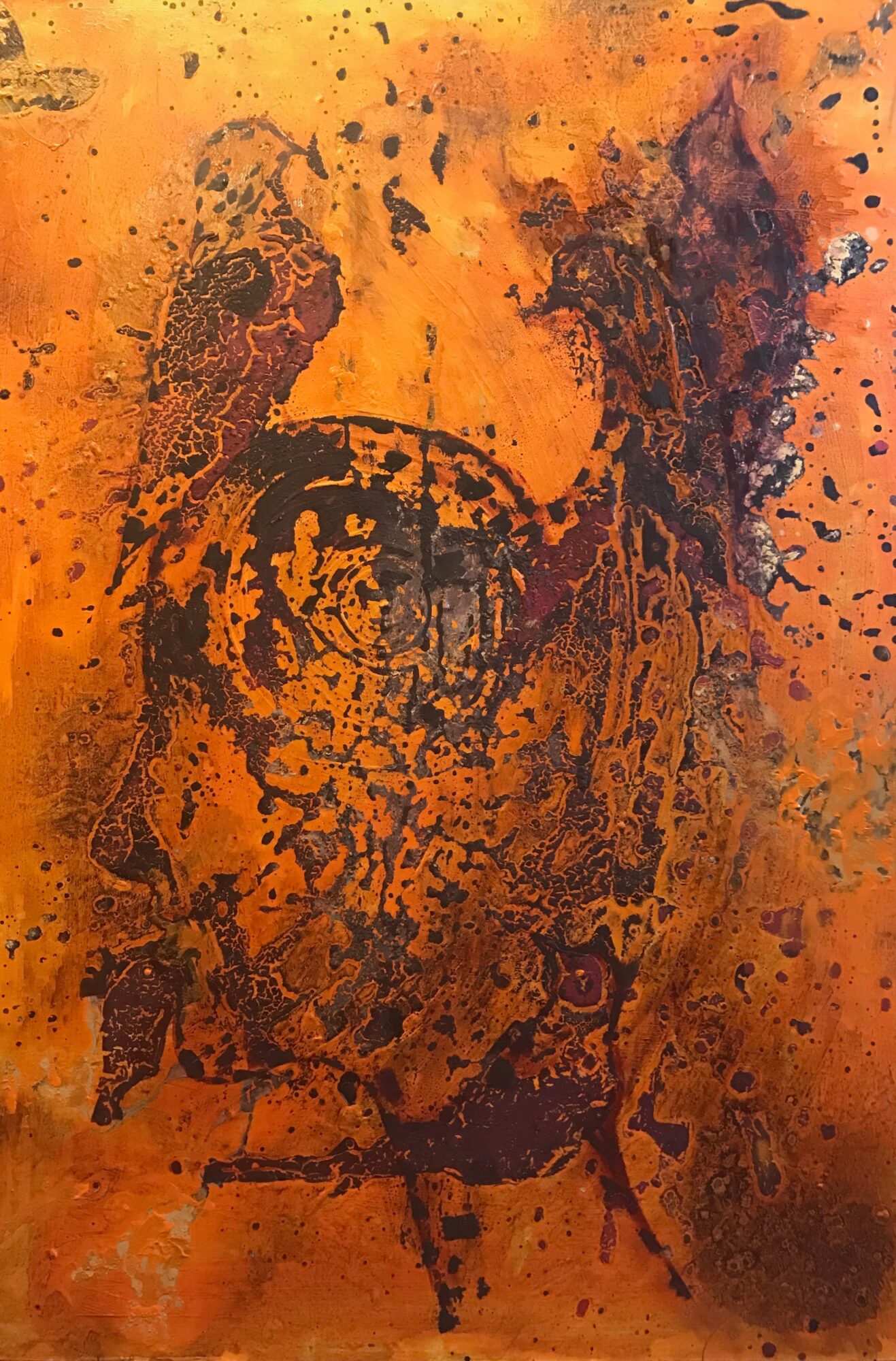
Eventually, I started creating my own work. I throw excitement, frustration, curiosity, and whatever else I’m experiencing onto the canvas.
I also have a slightly destructive relationship with my paintings. I can finish something, look at it, and then paint right over it. Some of my canvases have several layers of what I jokingly think of as “dead lives” underneath them.
I birth them. Sometimes I kill them. And it is what it is. It’s me.
My inspiration is usually whatever I’m genuinely feeling at that moment. If I finish a painting and it can no longer hold that feeling for me, I’m done with it. It doesn’t feel like mine anymore.
At the same time, I have a very logical side. That logical mind is constantly trying to organize all of this emotion and spontaneity. The tension between the two creates a beautiful paradox, and I think that’s where my style lives.
That style keeps changing because the way I see the world keeps changing.
Painting has always stayed with me. It’s both meditation and a mirror. Sometimes I want to look at myself, and sometimes I don’t. But the mirror is always there.
Can you talk to us a bit about the challenges and lessons you’ve learned along the way. Looking back would you say it’s been easy or smooth in retrospect?
Like many families, mine wanted their kids to have some kind of skill music, swimming, horseback riding. Somehow, I got stuck with painting.I started with Persian miniature painting because it was my dad’s passion. He loved the incredible detail and precision of miniatures, so he took me to classes. The funny thing is, I never really liked miniature painting itself. At first, I think I mostly did it because I wanted his attention. But I fell in love with something else: color.
I loved staring at colors on paper, mixing them, and watching them change. I didn’t care much about the final result. I loved those few seconds when two colors met and something unexpected happened.
When my father passed away, I stopped painting.
Years later, a friend invited me to the private painting studio she attended. It was a very free environment students, a teacher, big canvases, paint everywhere, and enough space to make a mess without worrying about cleaning everything up immediately. People were often recreating other artists’ work to learn different techniques.
One day, I watched someone mix paint with water and splash it across a canvas to create a background.
And boom the party started again for me.
I began going to the studio as much as I could. I asked my teacher, Farnaz, to help me learn abstract painting not so I could copy abstract artists, but so I could figure out how to take the images and feelings inside my head and give them a life outside of me.
Eventually, I started creating my own work. I throw excitement, frustration, curiosity, and whatever else I’m experiencing onto the canvas.
I also have a slightly destructive relationship with my paintings. I can finish something, look at it, and then paint right over it. Some of my canvases have several layers of what I jokingly think of as “dead lives” underneath them.
I birth them. Sometimes I kill them. And it is what it is. It’s me.
My inspiration is usually whatever I’m genuinely feeling at that moment. If I finish a painting and it can no longer hold that feeling for me, I’m done with it. It doesn’t feel like mine anymore.
At the same time, I have a very logical side. That logical mind is constantly trying to organize all of this emotion and spontaneity. The tension between the two creates a beautiful paradox, and I think that’s where my style lives.
That style keeps changing because the way I see the world keeps changing.
Painting has always stayed with me. It’s both meditation and a mirror. Sometimes I want to look at myself, and sometimes I don’t. But the mirror is always there.
Alright, so let’s switch gears a bit and talk business. What should we know about your work?
Professionally, I’m an information security analyst. On the surface, cybersecurity and abstract painting might seem like two completely different worlds, but I don’t experience them that way.
My professional drive has always been to make systems more resilient and trustworthy. What motivates me is knowing that my work can directly contribute to safety, trust, and resilience.
My work also requires a very logical part of me. understanding risk, looking for weaknesses, creating structure, and thinking about what could go wrong and how we can make something stronger.
Then I paint, and I allow almost the opposite part of myself to take over. I can make a mess. I can follow a feeling without knowing where it’s going. I can create something and destroy it five minutes later.
I think I’m most proud that I’ve made room in my life for both sides.
I’m not interested in fitting perfectly into one identity, technical or creative, logical or emotional. I’m interested in the conversation between them.
And if there’s one quality that follows me through both my professional and creative life, it’s persistence. I can proudly say that I don’t give up easily. I might change direction, destroy something, rebuild it, or start over but I keep going.
Are there any books, apps, podcasts or blogs that help you do your best?
One book that has stayed with me is The Creative Act: A Way of Being by Rick Rubin.
I found it at a time when my own creative road felt a little foggy, and the book felt like a light in that fog.
What stayed with me most was the idea that creativity isn’t limited to producing a piece of art. It’s a way of noticing, experiencing, and interacting with the world.
That resonated deeply with me because it’s very close to what I’ve gradually learned for myself: I don’t have to separate “being an artist” from the rest of my life. Creativity can exist in how I work, how I solve problems, how I experience people, how I change, and how I see the world.
The canvas is simply one of the places where all of those experiences eventually find their way out.
Contact Info:
- Website: https://www.sadafasjodi.com
- Instagram: @sadafasjodi
Popular
-

Portraits of the Valley
-

LA’s Most Inspiring Stories
-

Rick Norris Learned That Building a Successful Business Means Building a Life You Actually Want to Live
-

How Olivia Rush Turned Survival Into a Mission to Help Others Keep Going
-

How Bibi Goldstein Is Helping Entrepreneurs Reclaim Their Time by Embracing the Power of Delegation
-

Victoria Hasson is Redefining Voice Coaching Through Community and Collaboration


