




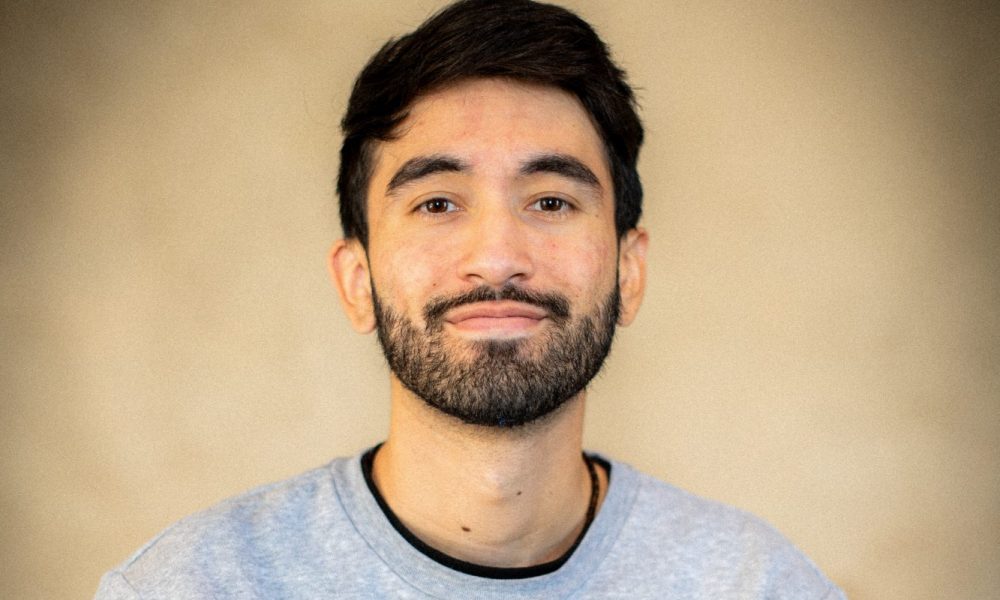
Today we’d like to introduce you to Mario Ernesto Carranza.
Hi Mario Ernesto, we’d love for you to start by introducing yourself.
I was born and raised in Canoga Park, California. My parents immigrated from El Salvador at an early age in search of better work and a better life. They would always emphasize the necessity of education and pursuing a professional career to survive in this world. Never once did I think Cinematography would be the career that I would ultimately pursue.
It was my freshman year at Chatsworth Charter High School when I was placed into a class called Broadcast Journalism. My teacher, David Massey, would show us movies every week, ranging from classics to critically acclaimed stories. Until suddenly one day, there was no movie. He stood in front of the class and said, “Now it is your turn to make a movie”. These words have led me to experience a life that a young Latino kid never imagined was possible. For the next four years, I worked behind the camera for several short films, school news reports and competed in film festivals. Our class was filled with state-of-the-art gear, ranging from Professional Cinema cameras, ARRI Lighting kits, top quality sound equipment, and much more. At the time, I didn’t realize it, but this class was training me for the industry that awaited me, and my teacher constantly pushed me to learn the craft as he believed there was a future for me in the business.
I went on to attend the California State University Northridge Film Program. It was in this department where I met my favorite person, and fellow filmmaker, Selene Esperanza Alvarez. We were tasked to work on a lighting project together when she pitched me a story called La Que Se fue. She mentioned that there was no budget, no lights, and one camera. My lovely little Sony A7 III. We completed the film in two days, shooting during the night and only using available light from neighboring buildings. This short film garnered over 160 thousand views on YouTube, and Selene knew she had to hire me again. She was the first person to ever offer me this kind of opportunity, and I am forever grateful for her. Towards the end of my senior year, we entered the segment where four thesis films would be selected for production before graduation. Bellamy Perez, the Writer and Director for Manong, was one of the four finalists. As they were choosing to see who the main cinematographer would be, Selene recommended me as a possible candidate. After a few days of waiting, Bellamy called me and offered me the position as Director of Photography. It was a moment that I will never forget, as it was a dream come true. We worked together for several months, meeting at her apartment and literally dancing how we would shoot our scenes with the camera. After four days of production, we completed principal photography, and it was my first official film as a DP.
In the summer of 2022, I embarked on another film with Selene after graduation. Our main goal was working on a story that held significance for the Latino community. We would often talk about the kind of history we learned in our Chicano classes and wondered why none of these stories have ever been told. We had been working on a film that she wrote called Ravine during our senior year. A historical Latino event where families were forcibly evicted from their homes in La Loma, Palo Verde, and Bishop. We set up an entire crew of Latino filmmakers and self-funded our film with family and friends. We went on to compete internationally and being selected as a finalist for the LA Shorts International Film Festival. Looking back at all that I’ve accomplished, I realize that none of it would have been possible without the help and guidance of everyone that I met. My parents, friends, coworkers, professors they are all the reasons why I have been able to make it so far. This passion of mine has been a journey for the last eight years, and it’s only getting started.
We all face challenges, but looking back would you describe it as a relatively smooth road?
I was always facing obstacles in pursuing this career. From a young age, I knew that my goal was to be able to work and make a living. However, in our culture it is not common to pursue a career in the Arts, and instead you are told to become a Doctor, a Lawyer, Engineer, but I didn’t like that idea. As you get older, people start asking you what is it that you want to do for the rest of your life. I would often say, “I want to be a cinematographer”. The responses I got was not what I expected. It was this double-edged sword that sticked with me for years. Even when being in the film department, I sometimes felt that I didn’t belong. There was a time where I had no confidence in pursuing cinematography and began to look at other options. On top of all of this, you start learning the history of Hollywood, and the depictions that Latinos have in this industry is far from good. Those who are in the big leagues are not commonly Latino, and it was hard to see myself in the shoes of a filmmaker. There was one thing that changed my outlook in this industry, and that was the friends that I made along the way. Many of them are also Latino and had similar to identical experiences when it comes to pursuing this kind of career. It made me feel that I wasn’t alone, and instead, it fueled us collectively to fight against this stigma in our culture. It is still incredibly hard, knowing that our chances are rare, but the quality and desire for storytelling speaks for itself.
I’ve made it a personal goal to not just focus on making a movie but being a voice for my community. The stories that I’ve worked on revolve around hidden Latino history that is so important for others to hear about. They are stories that educate the public on the kind of hardships that we have endured and a chance for Latino artists to be part of these movies. I still remember the first time I watched the remake of West Side Story by Steven Spielberg. To see my culture flourish on the big screen, hearing my language, and being represented by Latino actors, made me feel that all this effort of never giving up was worth it. I actually felt warm, and I knew that these kinds of movies is what will make an impact to future generations when they go to the movies. I want to be part of that change, to pave a new road for Latino filmmakers so that we can all have a chance to shine in this industry.
As you know, we’re big fans of you and your work. For our readers who might not be as familiar what can you tell them about what you do?
My job as Director of Photography is to bring a script to reality. A lot of this can be pulled directly from the script, with visual keywords or emotion from the actor’s dialogue. From there, it is a puzzle game of how each piece will fit together to create the final image. For example, a scary movie will have extremely dark tones, or a slow-moving camera. This creates a visual tension when watching the movie, as you can’t really see what’s in the dark, and you are forced to wait until the camera reveals it. A happy movie will have bright tones, wonderful colors, creating a sense of joy or happiness. The lens may have a filter that softens the image and makes things look ethereal. A lot of these ideas are built with camera department and G&E. I’ll talk with my G&E team of the emotion we are trying to convey with light and select optimal equipment. With Camera Department, we will discuss lenses, filters, camera shots or moves, blocking with actors to perceive how we will shoot our scenes. Every decision is based on the story, and the final look that the director wants to achieve for the story.
It is also very important to share my ideas with every department, as they are equally involved in the shot that is used on screen. For example, on Ravine there is a scene of a mother cutting lemons, she is wearing a 1950’s outfit and behind her is a kitchen with plates. A window from the left is shining natural light. How many departments are involved in that one shot? Well, the dress was found by Wardrobe, and the props in the background are from Art Production. A 4×4 set up by G&E is bouncing light through the window. The camera lens was put on by my 1st AC and set focus, 2nd AC is slating in front of camera with the scene and shot number for Editors. My Camera Operator makes sure the frame is set, Sound is waiting for a plane to pass by, while Boom Operator is holding a mic just outside of the frame line. All while Makeup and Wardrobe Department is doing touchups on the actor before action. Did I mention this is only one shot? That is the kind of meticulous planning that a DP will go through, and it’s an experience that I absolutely love! There is so much more to be told about the film language, or the philosophy that I apply to my style of filmmaking. It’s a lot, but I hope this gives a glimpse to the world I get to experience working on a film.
What are your plans for the future?
As of now, I am always looking forward to learning more about cinematography. The industry is always changing, and new tech is constantly emerging. I look forward to working with my director as she is constantly writing new scripts that will one day change the world. I have been blessed to have a network of friends that are all emerging filmmakers and eager to take this industry to the next level. I want to always strive to be my best and never be satisfied with what I already know. This career is going to be a long one, but I’m confident that we will all be successful and achieve our biggest dreams in the industry.
Contact Info:
- Website: https://www.marioecarranza.com/
- Instagram: https://instagram.com/shotbymarzz?igshid=NzZlODBkYWE4Ng%3D%3D&utm_source=qr
- Linkedin: http://linkedin.com/in/mario-carranza-98810318a
- Other: https://m.imdb.com/name/nm12717735/?ref_=m_ttfcd_cr1


 Image Credits
Carlos Ramírez, Celeste Bird, Selene Alvarez, Belén Ferra
Popular
-
JordanL on ‘Breathe,’ Belief, and Building a Movement Beyond the Music
-

Megan Birney Rudert on How Access to Light Is Powering a More Sustainable and Equitable Future
-

Linda Kneidinger on Building Lasting Change Through Small Steps and Self-Compassion
-

Jolana Nika on Redefining Modern Connection Through Intentional, Real-Life Experiences
-
What did suffering teach you that success never could?
-
Who saw you clearly before you could see yourself?


