




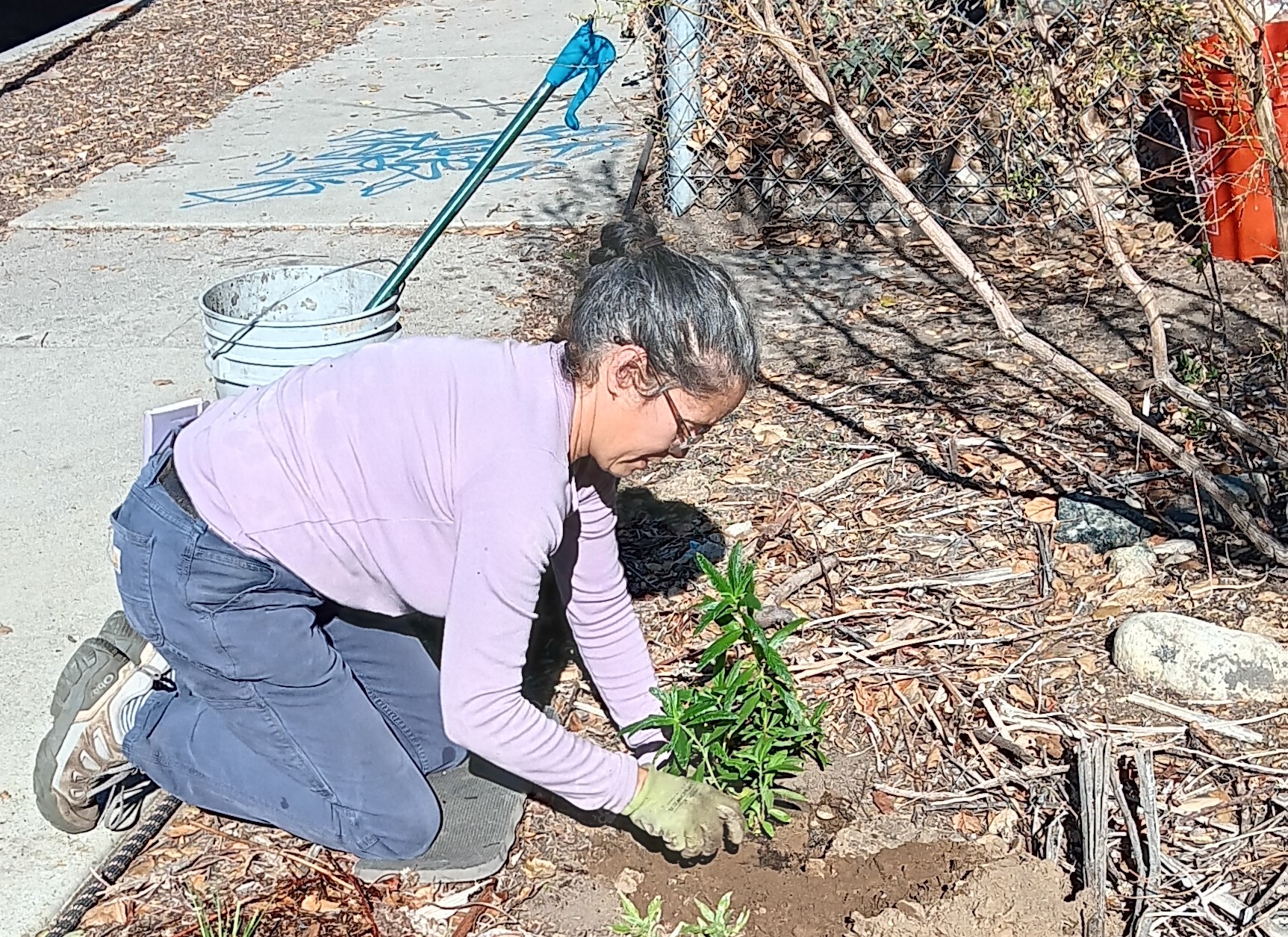
Today we’d like to introduce you to Marie Massa.
Marie, we appreciate you taking the time to share your story with us today. Where does your story begin?
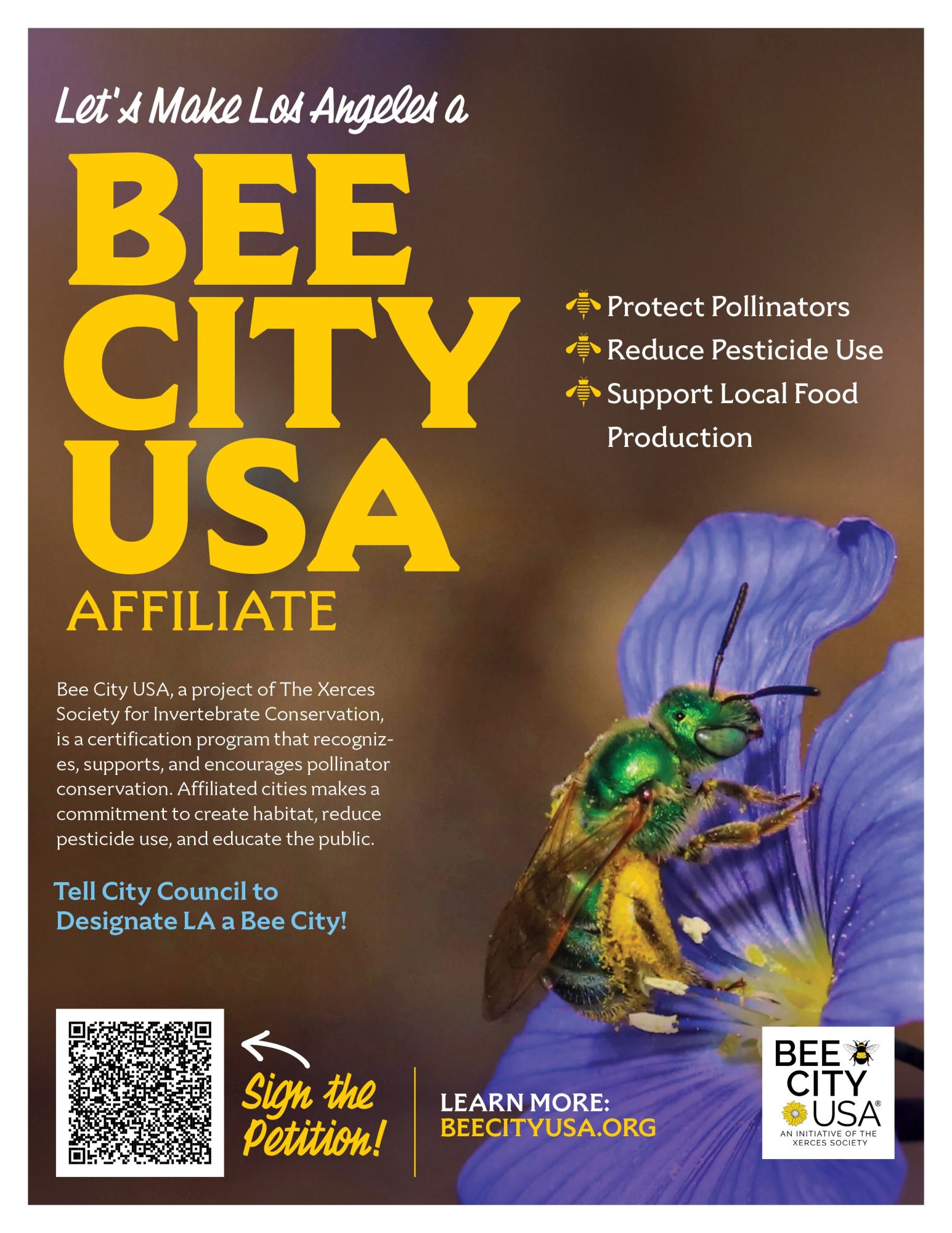
Right now I’m working with my son on a petition to make Los Angeles a Bee City USA affiliate, a program run by the Xerces Society for Invertebrate Conservation that commits cities to protecting pollinators. But the idea started on a single strip of land in Lincoln Heights.
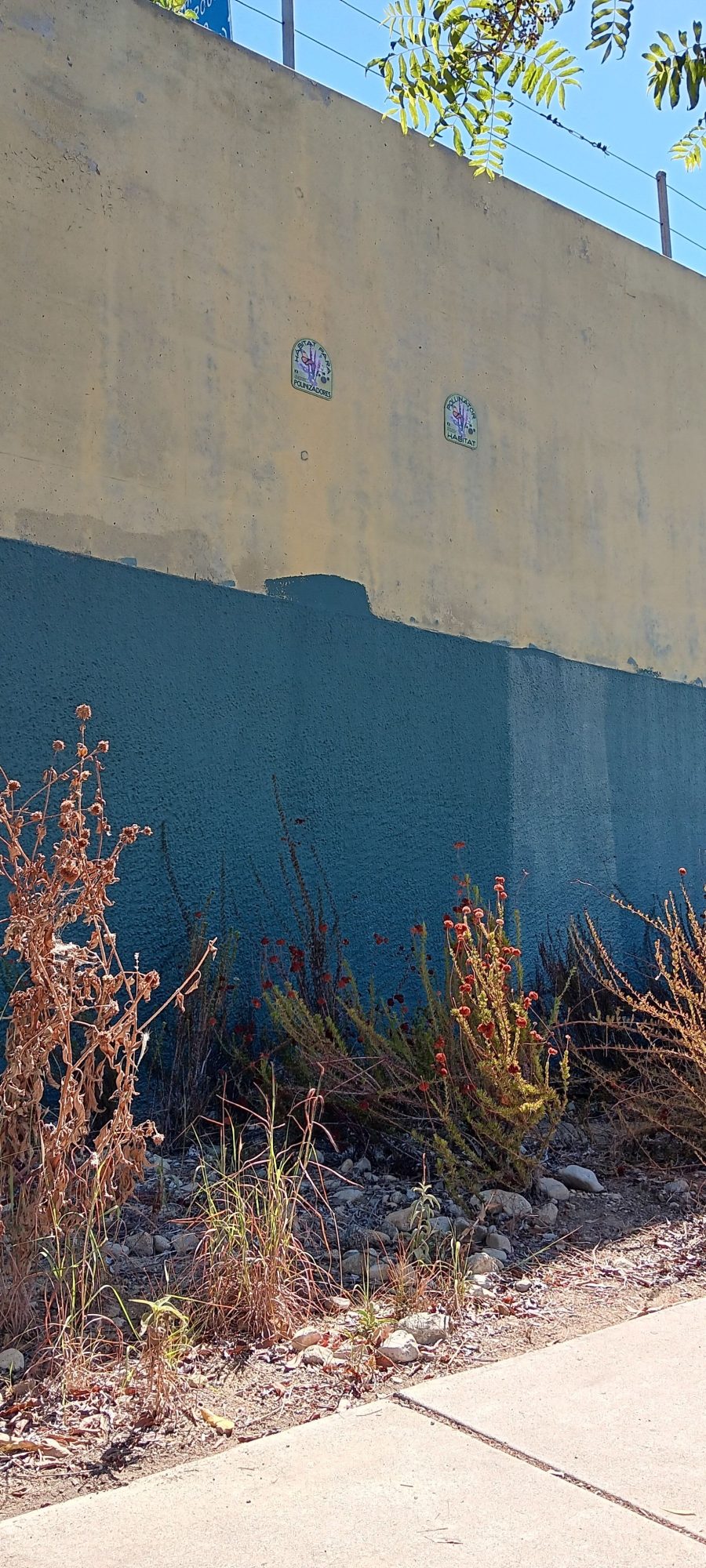
As I walked my son to school in 2022, I discovered a vacant lot next to the 5 Freeway on-ramp in Lincoln Heights. This vacant strip of land was full of weeds and trash, but the parkway that was parallel to this strip had planter boxes with California native plants growing in them. These planter boxes inspired an idea to clean up the vacant lot and start a native plant garden—what would eventually become the Lincoln Heights Native Plant Corridor.
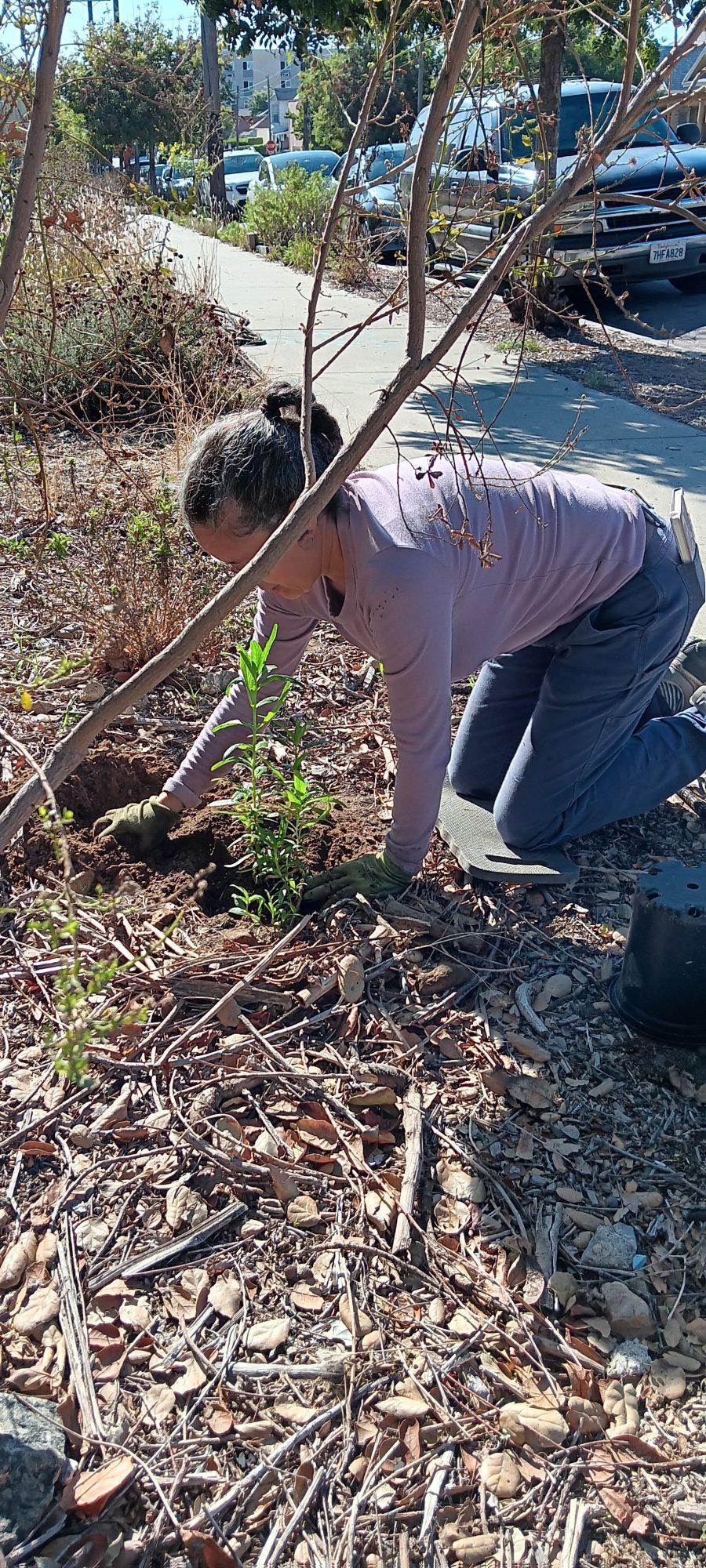
With the assistance of Council District 1’s Field Deputy, volunteers, community organizations, Smidt Tech High School and my family, I held several community work days to sheetmulch the entire parkway in order to minimize weeds and help heal the soil. Concurrently, I developed a landscape design for the vacant strip, which included 438 plants and 31 species of local California native plants. Thanks to several nurseries, including Growing Works, Plant Material, Artemisia Nursery, Hardy Californians, Descanso Gardens, TreePeople, and Audubon Center at Debs Park, I was able to get almost all of the plants donated. With the help of several volunteers, planting began in 2023 and ended in 2025.
During the summer and spring seasons I maintained the Corridor, using water from Smidt Tech’s outdoor lunch area. In February and March 2026 an unhoused individual started to vandalize the Corridor by ripping out plants, destroying anything with flowers and creating a huge mess of the area. Many tears were shed as I watched this habitat that took years to put together, plant, weed, and care for undergo destruction in a matter of days. Neighbors started to alert me to his presence on the Instagram account we created for the Corridor (@Ave20nativeplants). I alerted the police to the vandalism and they increased patrols in the area. Finally in March he was caught in the act and the police arrested him because he had outstanding warrants. Unfortunately the police were not able to keep him detained and residents have continued to see him in the area. Thankfully the destruction seems to have stopped for the time being.
As the rainy season is starting to approach I have started to source replacement plants for the Corridor. Audubon Center at Debs Park has donated a huge number of plants already. I also got a substantial donation from the new native plant nursery in Reseda called Shift Our Ways (sowcollective.org). As I start planting what I already have donated, I will start approaching other nurseries to get the remaining replacement plants.
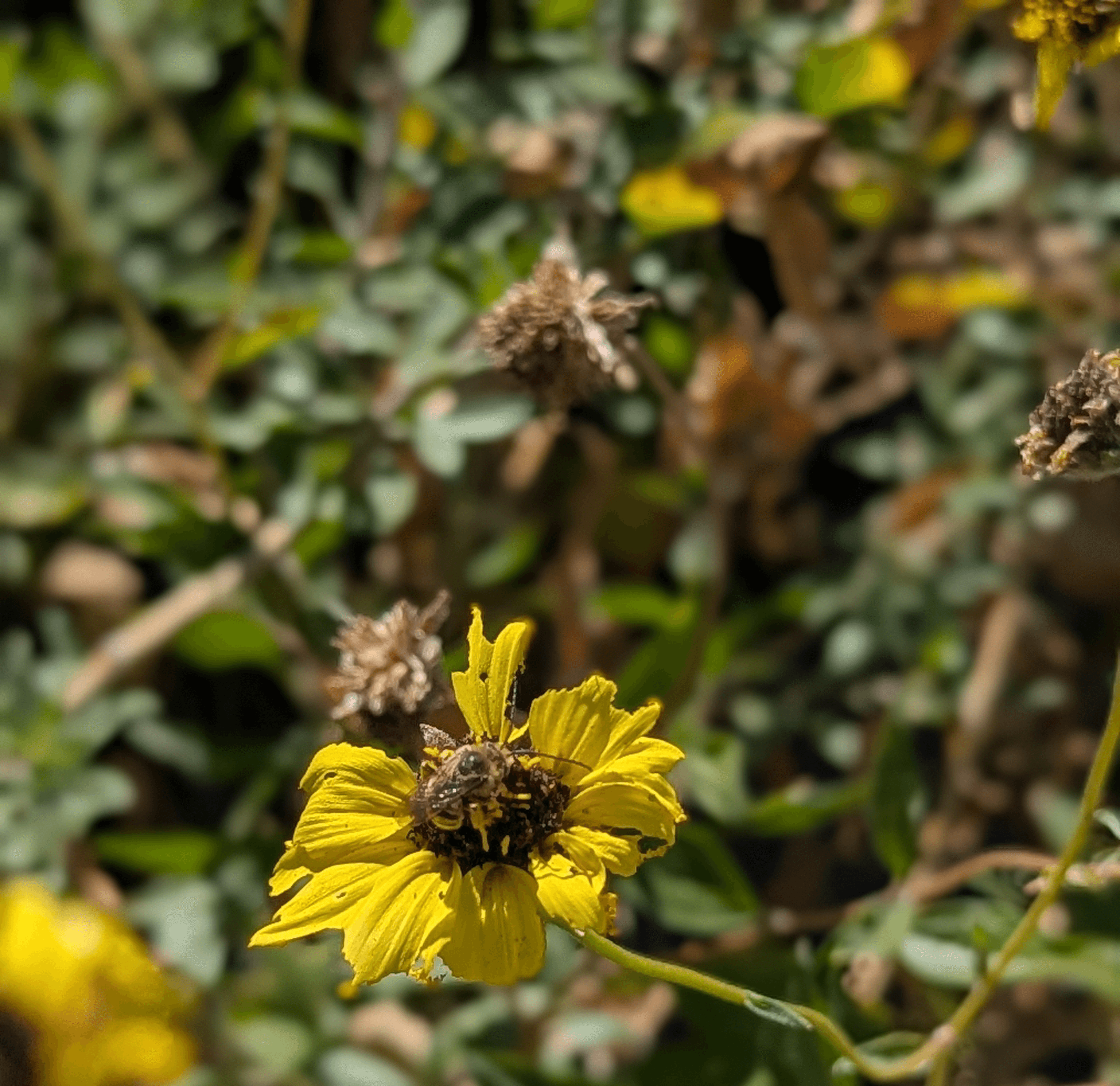
In addition to creating a space to showcase California native plants, I wanted the Corridor to become habitat for pollinators, insects, birds, lizards, and other small animals. Most importantly I noticed that pollinators desperately needed space in the urban environment where they could find food and shelter. Before the vandalism, I noticed so many bees, both natives and honeybees, as well as butterflies and other insects using the Corridor as a habitat. After most of the flowers were ripped out and only the California buckwheat flowers were available I definitely noticed less insect activity.
In the summer of 2024 my son was working on an X-Kids workbook, and in this workbook I discovered the existence of the Bee City USA affiliate initiative by the Xerces Society for Invertebrate Conservation. Bee City USA affiliates is a certification program that recognizes, supports, and encourages pollinator conservation in cities, towns, townships, and counties (https://beecityusa.org/apply-to-bee-city-usa).
With my son, I drafted a petition to have the City of Los Angeles become a Bee City USA affiliate (https://change.org/LosAngeles-BeeCityUSA). In order for Los Angeles to become a Bee City, we need the Los Angeles City Council to agree to the Bee City commitments, complete an application form and draft a resolution for certification by the Xerces Society. The online petition, which can be signed by constituents who live in the City of Los Angeles, presents the case for LA to become a Bee City using the Corridor as an example of what can be done in the urban environment. When we reach our goal of 7,500 signatures, we will send the petition to the LA City Council to vote on.
Xerces Society can only certify an entire city, which means we need signatures from all 15 council districts so that the petition has significant backing from a good swath of LA constituents. Having a strongly supported petition is a good step towards having LA City Council vote to make LA a Bee City. If you haven’t already done so please sign this petition!
Would you say it’s been a smooth road, and if not what are some of the biggest challenges you’ve faced along the way?
It has definitely not been a smooth road to creating a public native plant garden. In addition to the most recent vandalism, there was also a homeless encampment near the southern end of the Corridor. After about a year, the City finally removed the encampment when one of the unhoused persons attacked a neighbor with a knife. Cleaning up after the encampment was removed, sheetmulching this area and planting it was back-breaking work but thanks to help from local residents we were able to plant this last section of the Corridor.
Trash is a constant feature of the Corridor. Every day I go to maintain the Corridor, the first order of business is picking up trash. I have had to remove an antique oven, a dog house, mattresses, refrigerators, clothes, and various other unmentionables that people dump in this space. The level of trash has reduced a little, but as soon as I think that people are starting to respect the space more, some crazy new thing appears.
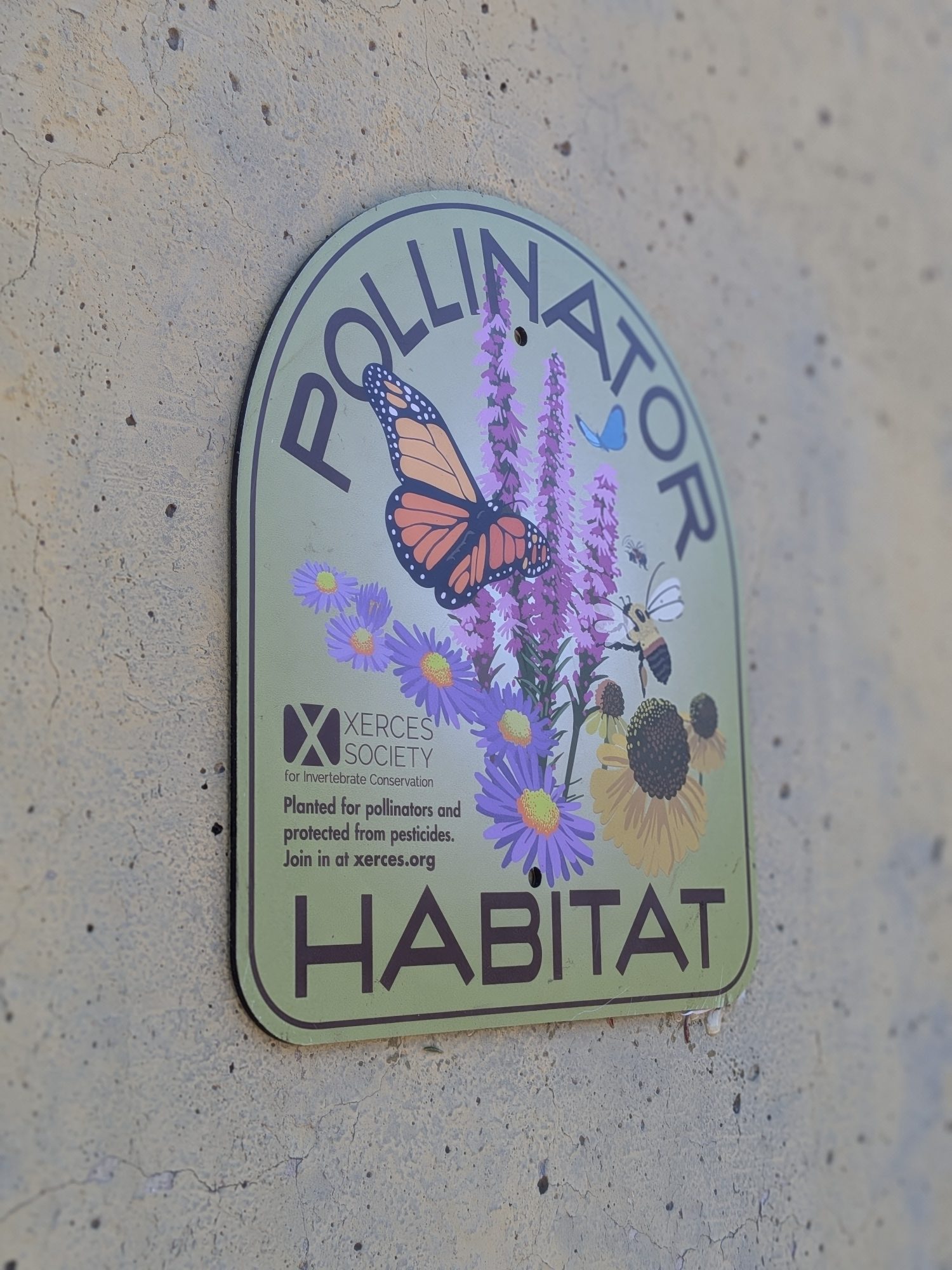
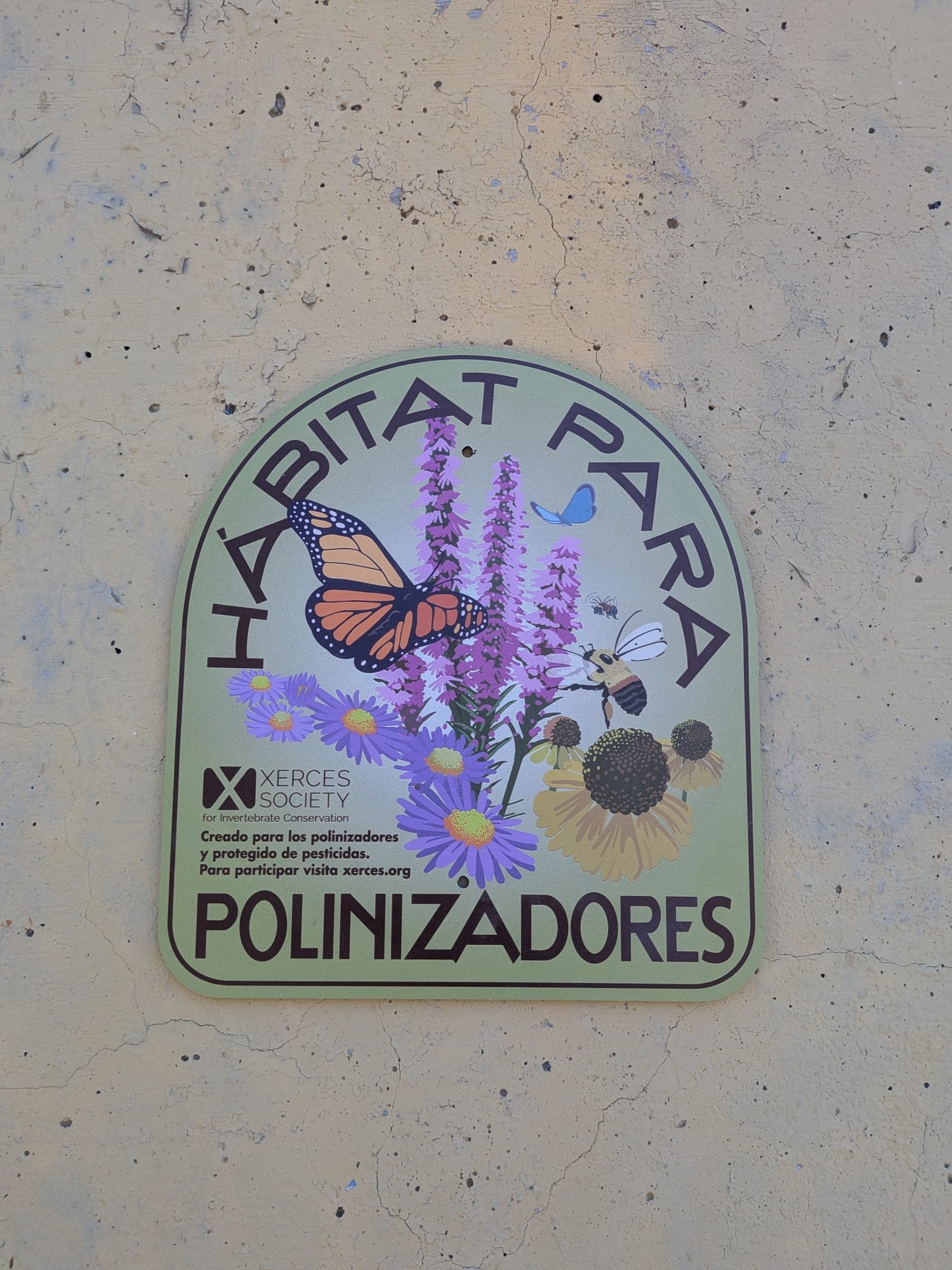
As a way to tell passerbys that the Corridor is habitat for insects, birds, and lizards I put up Pollinator Habitat signs, in both English and Spanish, that the Xerces Society/Bee City sent me. Hopefully these signs will help people understand that this space is not only full of beautiful plants but is also home for creatures that we share this planet with.
Finding the time to care for and replant the Corridor is always a challenge as my first priority is being a mom for my son. Thanks to my family’s support I have been able to juggle the Corridor and being a stay-at-home mom.
Can you tell our readers more about what you do and what you think sets you apart from others?
Before becoming a stay-at-home mom, I was a horticulturalist at the native gardens of the Natural History Museum of Los Angeles County. I started to learn about California native plants in 2008 by volunteering at the Mildred E. Mathias Botanical Garden at UCLA and at the Theodore Payne Foundation. I also worked at TPF for several years before moving to NHM. After working with native plants for over 15 years, I definitely feel I have learned so much about this amazing flora and I hope I can continue to learn more about these plants and the insects that rely on them. I am probably known for my perseverance in continuing the Corridor going and advocating for these important plants as well as their insect pollinators.
I am extremely proud of my son who continues to help me with Corridor over the summers and who helps me get the word out about the Bee City petition. I am also proud that other people in Los Angeles are now starting Corridors in downtown Los Angeles and even in Orange County.
Having time to work on the Corridor, using my knowledge of native plants to create a design, and making connections with community organizations and nurseries has really made this project come to life and survive the obstacles that the Corridor has encountered. Having the tenacity to keep going and not give up, which definitely crossed my mind, I believe sets me apart and has made this corner of Lincoln Heights a better place.
If you had to, what characteristic of yours would you give the most credit to?
Taking the time to learn about California’s native flora, working at the Theodore Payne Foundation, the Natural History Museum and volunteering at the Mildred E. Mathias Botanical Garden at UCLA, the Audubon Center at Debs Park, and the Hahamongna Native Plant Nursery has given me the chance to meet many amazing people and learn about why these plants are so important to the natural environment, but also how they help create a sense of place and season here in Los Angeles. Really understanding that creating a space where others can see and appreciate native plants is a necessary step to saving what is left of open natural spaces in urban Los Angeles.
Contact Info:
- Instagram: @ave20nativeplants
- LinkedIn: https://www.linkedin.com/in/marie-massa-4b6539114/
- Other: https://change.org/LosAngeles-BeeCityUSA
Popular
-

Portraits of the Valley
-

LA’s Most Inspiring Stories
-

Greg Hex Is Turning the Everyday Kitchen Knife Into a Modern Design Object
-

Rick Norris Learned That Building a Successful Business Means Building a Life You Actually Want to Live
-
How Olivia Rush Turned Survival Into a Mission to Help Others Keep Going
-

How Bibi Goldstein Is Helping Entrepreneurs Reclaim Their Time by Embracing the Power of Delegation


