




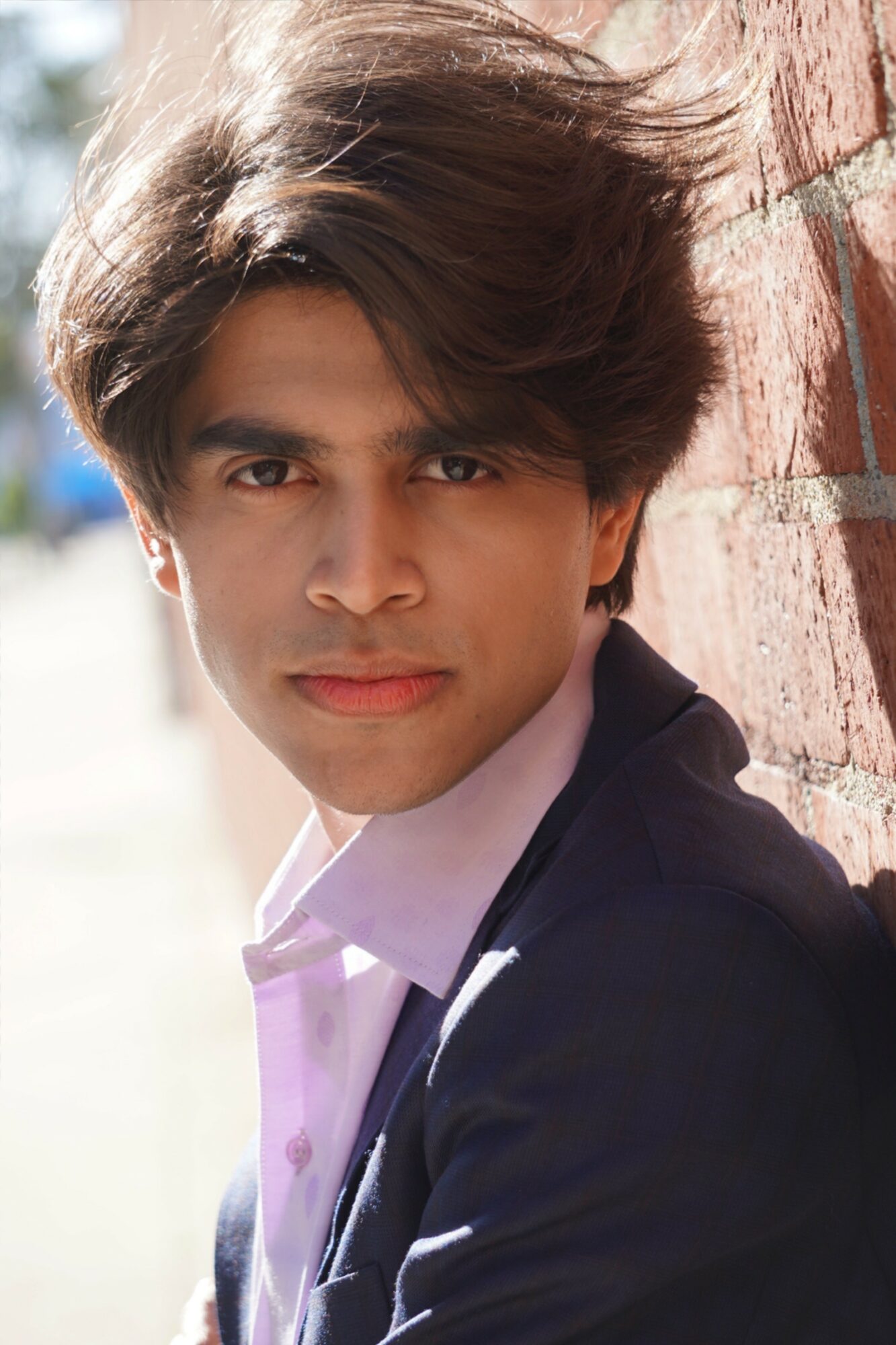
Today we’d like to introduce you to Kuldeep Kosamia.
Alright, so thank you so much for sharing your story and insight with our readers. To kick things off, can you tell us a bit about how you got started?
I’m from India. I grew up loving movies, but acting wasn’t something I thought about early on. Because I didn’t understand or speak English at the time, I mostly watched films in my own language, and foreign films that were dubbed into Hindi. I enjoyed them, but I wasn’t thinking about acting seriously.
Everything changed the day I watched The Aviator (2004), directed by Martin Scorsese. That film made me stop and question what acting actually is. Watching Leonardo DiCaprio, I remember thinking, “Wait, is this what real acting looks like?” It completely shifted how I saw performance. After that, I watched almost every Leonardo DiCaprio film that was available to me in Hindi dubbing.
There were still some of his most powerful performances I hadn’t seen, like The Revenant, What’s Eating Gilbert Grape, and The Wolf of Wall Street, because they weren’t dubbed. But I was so drawn to his acting that I decided to watch them anyway. The first English film I ever watched was The Revenant. I honestly fell asleep within the first half hour because I couldn’t understand what anyone was saying. But I kept going back to it. Slowly, film by film, my fear of English started fading. I still couldn’t speak it, but I began to understand it little by little. This was around 2019.
At that time, I was living in another city training at a cricket academy. Cricket was my original path. In India, it’s as big as baseball is in the United States. After long days at the academy, I would come back at night and watch films. That’s when my interest in acting became serious, even though I hadn’t fully committed to it yet.
The moment I truly decided to become an actor came after watching The Master by Paul Thomas Anderson. Joaquin Phoenix’s performance stunned me. I still don’t fully understand how a human being can do what he did in that film. That performance made my decision clear.
In March 2020, COVID hit, and I returned home. A few months later, I told my father that I didn’t want to be a cricketer anymore and that I wanted to become an actor and go to Mumbai. That was my original plan, not Hollywood. My father was shocked, mostly because I’m a very quiet and shy person. But he understood. After a few days, he suggested something unexpected: that I go to the United States and study acting there first.
At the time, I believed I could pursue acting without formal training. Many of my favorite actors, like Leonardo DiCaprio and Joaquin Phoenix, didn’t go to acting school. But my father said, “Then learn the language.” From 2020 to 2023, I focused on learning English. Alongside that, I educated myself by watching films from the 1970s through the 2020s. I discovered Al Pacino, Robert De Niro, Philip Seymour Hoffman, and most importantly Daniel Day-Lewis. Leonardo DiCaprio once said he spent a year just watching films, and I followed the same idea. I believe watching great performances is essential for understanding the standard of work required at the highest level.
By 2023, I was able to speak English. I auditioned for Theatre of Arts, was accepted, and in August 2023 I moved to Los Angeles. There, I met teachers who didn’t just teach acting, but taught awareness, fundamentals, and how the industry actually works. I learned voice acting, motion capture, combat, and stunt work. I learned that without fundamentals, you’re not acting, you’re just saying lines in front of a camera or an audience.
After my showcase, I signed with an agent. I started getting auditions and working on projects, including collaborations with my friend Pater Kulengula Memphis. Through all of this, I realized what acting school truly gave me. It wasn’t just training, it was a language. Not English, but the language actors speak. Before, I would watch interviews where actors discussed technique and process, and I didn’t understand any of it. Now I do. Acting school matured me as an actor.
Throughout the course, I genuinely enjoyed the process. I’m grateful I pursued formal training. I overcame my fear of language and my fear of the stage. I’ve always been a quiet, shy person. My mother used to worry about how I could become an actor when I barely speak to guests at home. Honestly, that part is still true.
But acting is different. I don’t like being myself on stage or camera. I can’t stand five seconds in front of an audience as myself. Kuldeep can’t do that. But the characters I play can. I like becoming someone else. I like going beyond who I am. That’s why I act.
I’m sure it wasn’t obstacle-free, but would you say the journey has been fairly smooth so far?
The biggest obstacle I faced was language. Not just speaking English, but understanding it well enough to study, communicate, and express myself creatively. When I first started watching English films, I barely understood anything. Even my first English-language movie experience involved me falling asleep halfway through because I couldn’t follow the dialogue.
Instead of avoiding it, I worked through it consistently. I watched English films repeatedly, then moved to sitcoms like Friends and The Office to understand conversational English, rhythm, and tone. Over time, my fear of the language disappeared. I slowly became comfortable listening, then understanding, and eventually speaking.
Because I addressed the language barrier early and deliberately, the transition to the United States felt smoother than people might expect. There were challenges, but none that stopped me from moving forward. Once the language gap closed, I was able to fully engage with acting training, connect with people, and adapt to the environment.
Looking back, the obstacle wasn’t dramatic, but it was foundational. Overcoming it gave me confidence that I could work through limitations step by step instead of being held back by them.
Can you tell our readers more about what you do and what you think sets you apart from others?
I’m an actor. My focus is on character-driven work rather than surface-level performance. I’m most interested in roles that require internal transformation, psychological depth, and emotional specificity rather than exaggeration or spectacle.
My background is unconventional. I didn’t grow up speaking English, and I came to acting through film observation first. I spent years studying performances by actors like Daniel Day-Lewis, Joaquin Phoenix, Philip Seymour Hoffman, Al Pacino, and Robert De Niro before formal training. That habit shaped how I approach work. I’m detail-oriented, patient, and more focused on truth than presentation.
Through formal training, I developed a strong foundation in acting technique, voice work, motion capture, combat, and movement. What I value most from that process is learning the language of acting. I’m able to break down text, understand objectives, behavior, and inner life, and translate that into grounded performance rather than simply delivering lines.
What I’m most proud of is the internal shift I’ve made as an actor. I’m naturally quiet and reserved in life, but acting allows me to access parts of myself that don’t exist in daily interaction. I’m not interested in playing myself on camera. I’m interested in disappearing into characters and letting them exist fully.
What sets me apart is not confidence or volume, but seriousness about the craft. I work slowly, observe deeply, and commit fully once I understand a character. I’m still early in my professional journey, but I approach the work with discipline, humility, and long-term focus.
What were you like growing up?
Growing up, I was quiet, observant, and inward-focused. I wasn’t someone who spoke much or tried to be the center of attention. I spent more time watching people than talking to them, and I was comfortable being in my own head.
My main interests were sports and films. Cricket played a big role in my early life and taught me discipline, routine, and how to work through pressure without expressing much emotion outwardly. Alongside that, movies gradually became important to me, not as entertainment at first, but as something I returned to repeatedly. I didn’t analyze them consciously at the time, but I was absorbing behavior, emotion, and human interaction.
Personality-wise, I was shy and reserved. Social situations didn’t come naturally to me, and expressing myself verbally was difficult. I preferred listening over speaking. That didn’t change overnight, and in many ways it’s still true. What did change was discovering acting as a space where silence, observation, and restraint were not weaknesses, but tools.
Looking back, growing up quietly gave me a strong sense of internal awareness. I learned to notice details, mood shifts, and unspoken dynamics. Those traits later became essential to my work as an actor, even though I didn’t recognize them as such at the time.
Contact Info:
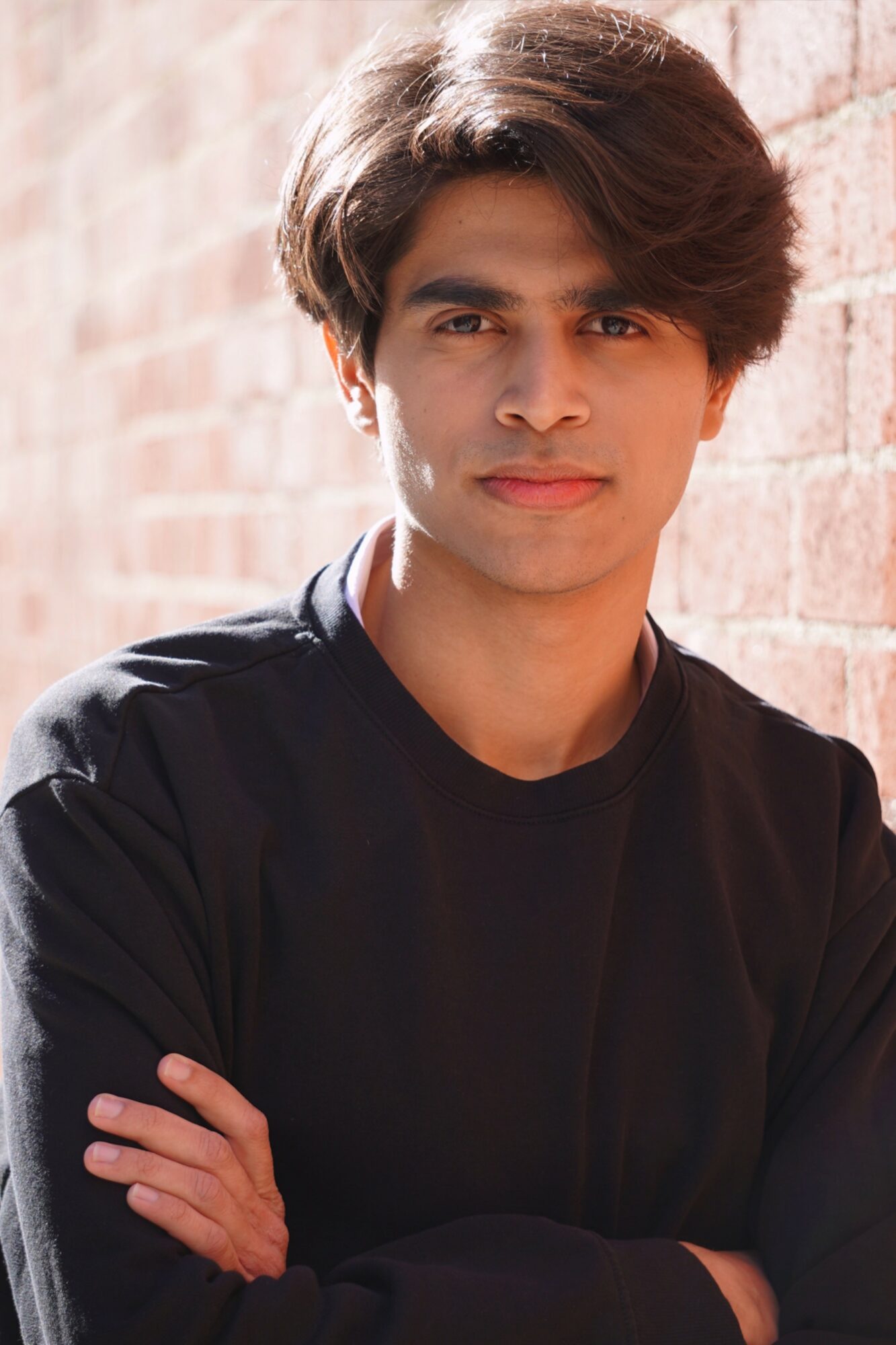
Image Credits
Jazmine Drucilla Jackson
Popular
-

Que Johnson on Building Brands That Last: From Visibility to True Market Authority
-

Christina Wren Steps Into the Director’s Chair to Tell Stories That Feel Like Home
-

Portraits of the Valley
-

LA’s Most Inspiring Stories
-

JordanL on ‘Breathe,’ Belief, and Building a Movement Beyond the Music
-

Megan Birney Rudert on How Access to Light Is Powering a More Sustainable and Equitable Future


