



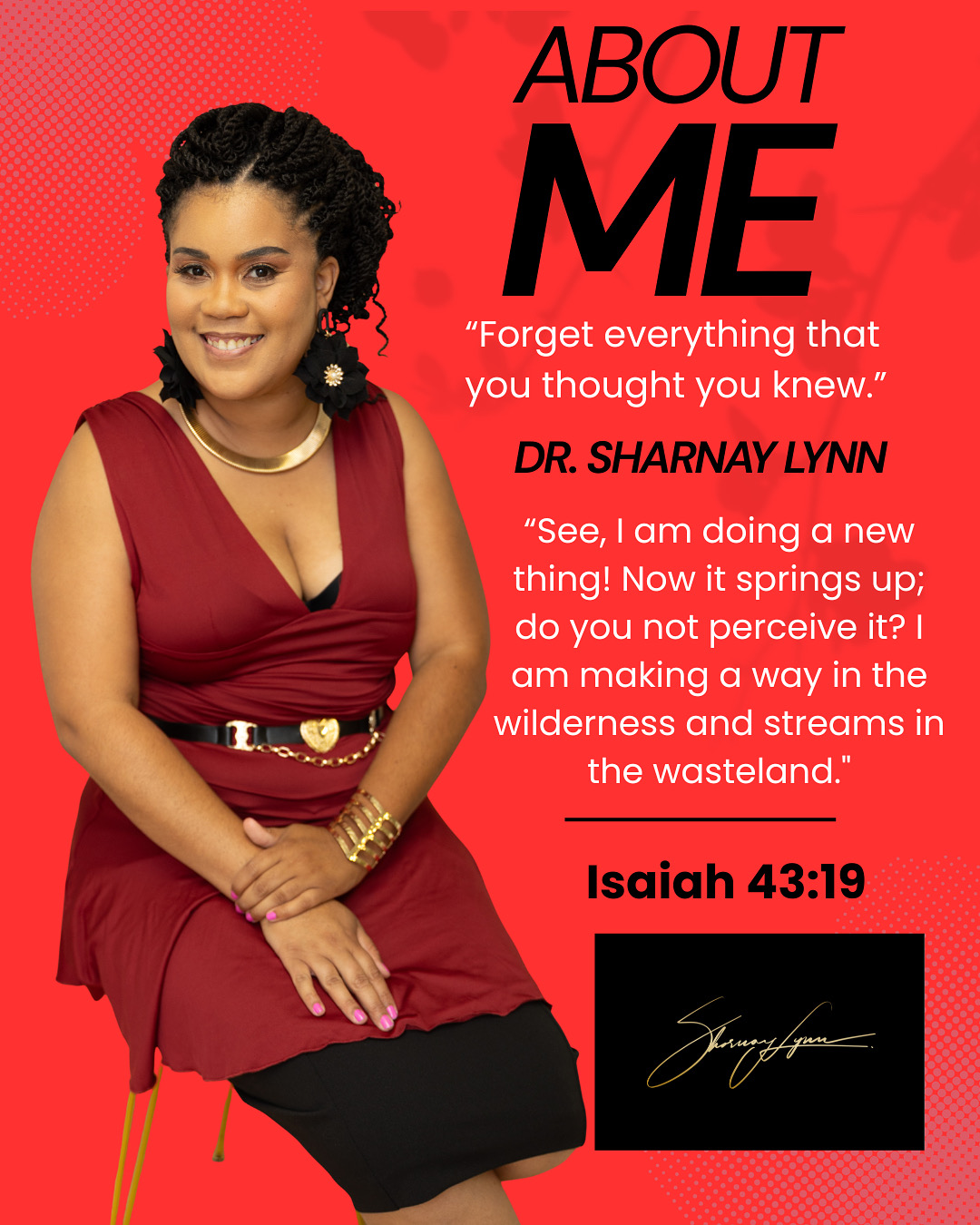
Today we’d like to introduce you to Dr. Sharnay Hearn Davis.
Hi Dr. Sharnay, thanks for sharing your story with us. To start, maybe you can tell our readers some of your backstory.
First and foremost, I want to express my deepest gratitude to VoyageLA for this incredible hidden gem spotlight. When my big sister and executive coach Kibi Anderson recently asked me, “What part of your life do you want to share?”, it became the ultimate guiding question for this interview. Being seen and validated on a platform like this allows me to answer that question authentically—sharing not just the accolades, but the raw, sacred work of rebuilding. My name is Dr. Sharnay Lynn. As I look across my life, my brand, and the different iterations of my name—Sharnay Grayson, Sharnay Hearn, or Sharnay Hearn Davis—this current season is about a profound, intentional return to self. Grayson was my mother’s maiden name until she married. My dad stepped in and supported raising me from a very young age, eventually adopting me and legally changing my last name simply because he was tired of us traveling with three people named Hearn and one named Grayson. I carried his name with immense pride, even keeping it after I got married. Unfortunately, life happened, and our relationship became strained as we each walked our own paths. Compounding that, I find myself after 15 years of partnership and 10 years of marriage going through a divorce. This season has forced me into a powerful space of rebuilding—rebuilding my identity and my values not just on my own terms, but anchored entirely in God’s.
I have never thought about my identity in the way I have since becoming a mother, and now, truly thinking about who I am as an individual woman. Growing up, my identity was strictly anchored by wanting to be a “good girl” based on my Christian values. I was taught early on that I was a child of God, and from there, that children of God acted a certain way, constantly striving to live by the Ten Commandments. Some of my favorite childhood treasures were a Ten Commandments bracelet and those classic “What Would Jesus Do?” bands. Going into my teenage years, my identity started taking shape around character versus reputation—wondering what people thought of me when my name crossed their minds. I remember in college writing one of my very first papers about “who am I,” and it was so heavily tied to my roles: a daughter, a sister, roles that would eventually evolve into a wife, a mother, and a nonprofit founder, though which one took precedence always depended on the day.
Through it all, I have always fought fiercely not to be put in a box. The Bible says God created us in His image and His likeness, therefore I believe I also have the ability to create. I am in my happiest form when I have the freedom to create—whether I am writing, building a program, or planning an event. I also believe that God is the ultimate healer, which means I am operating at my absolute best when I get to combine that creative spark with supporting the healing of others.
Above all, my career is dedicated to dismantling gender and social disparities by unifying educational strategy, civic policy, and community-driven empowerment. This September marks 11 years of impact for the Sisters Lifting as We Climb Network, a milestone that stands as a testament to over a decade of building spaces where Black women and marginalized communities can thrive. I hold a Doctorate in Educational Leadership and a Master’s in Community Leadership from Duquesne University, and I’ve worked to advance these truths whether through co-authoring our book The Realities of Black Women or representing international changemakers as a One Young World Ambassador.
My work is deeply anchored in the sociodemographic and sociopolitical realities of my hometown: Pittsburgh, Pennsylvania. Pittsburgh is a city with a rich historical tapestry as an Underground Railroad sanctuary, yet it’s burdened by a modern legacy of redlining, structural racism, and economic division. It’s a city constantly searching for its identity—routinely celebrated as “America’s Most Livable City,” while simultaneously documented as one of the most challenging urban environments for Black women to survive and thrive. As scholar Junia Howell famously noted, “[e]xist[ing] while Black in Pittsburgh” reflects a stark tale of two cities—a region divided between the “haves” and the “have-nots.”
In my TEDx talk, Fierce Urgency of Now: No Black Woman Left Behind, I challenged our institutions to move beyond static metrics and confront the sociopolitical dynamics that keep Black women marginalized. While my doctoral dissertation systematically analyzed these institutional barriers, today that research is my active, living reality.
My personal reality reflects a terrifying national crisis. Across this country, over 400,000 Black women have been displaced by systemic layoffs, economic contraction, and institutional disinvestment. We are witnessing devastating increases in murder-suicide rates within African American families and homes, alongside an ongoing, unaddressed epidemic of missing Black women and girls whose disappearances are routinely ignored by public systems and media. Holding a doctorate and an 11-year track record of executive advocacy while personally navigating these same systemic gaps defines the profound duality of my life right now. It is a raw, active battle—and my faith, motherhood, and leadership compel me to speak up and fight for systemic change.
I’m sure it wasn’t obstacle-free, but would you say the journey has been fairly smooth so far?
It has been anything but a smooth road. My journey has been forged through high-stakes institutional battles, personal loss, and navigating the profound dualities of leadership as a Black mother, scholar, and advocate.
In December 2025, I walked across the stage to obtain my Doctorate in Educational Leadership from Duquesne University, and it was the loneliest I have ever felt. All the success I had accumulated and the joy of that milestone felt like it was stolen away from me in the quiet spaces.
Throughout my career, I have repeatedly encountered the silent resistance that comes with challenging entrenched power structures—fighting for equitable funding for Black women-led initiatives, confronting institutional inertia in municipal and educational spaces, and carrying the emotional weight of community advocacy. But the most grueling struggle of my life began when the systemic gaps I studied became my daily survival. In April I found myself fleeing to shelter with my children after a domestic violence incident,
Today, as a mother navigating housing displacement with my family, I am fighting through the very public support systems, housing policies, and governmental frameworks I have dedicated my career to reforming.
Overnight, I went from holding executive seats, visiting the United Nations headquarters during women’s history month for the Women Breaking Brriers event, to navigating housing displacement and fighting through the very public safety-net systems I have spent my career attempting to reform. People see the “Dr.” in front of my name and assume I’m insulated from crisis, but experiencing these broken systems from the inside out changed everything.
Sharing my story with VoyageLA in the middle of this chapter is a powerful validation of my calling and assignment. I refuse to be silenced by temporary circumstance. Being granted a platform in the middle of a valley is an explicit mandate to speak with authority for the millions of Black women who are currently displaced, unheard, or unprotected. I am sharing my story not from the safety of a finished destination, but from the frontlines of the fight. By speaking openly about these struggles, I am using my platform to ensure that every survivor, mother, and leader navigating crisis knows she is validated, seen, and not alone.
Thanks for sharing that. So, maybe next you can tell us a bit more about your work?
At my core, I am a cultural strategist, executive leader, and scholar operating at the intersection of educational reform, civic policy, gender equity, and community empowerment. Through my consulting practice and as the Founder and Executive Director of the Sisters Lifting as We Climb Network—I specialize in institutional strategy, cross-sector coalition building, and designing crisis-intervention frameworks for vulnerable families. Whether through workshop facilitation or as a keynote speaker, my lived experiences make me an expert in many different capacities, and it is an honor to be considered a hidden gem during this time as I look to expand and tap into new areas, especially in Los Angeles.
What I am most proud of is not just the credentials behind my name, but my unyielding resilience as a mother. I am proud that I had the courage to step away, and stand in my faith. What sets me apart is my rare combination of academic rigor, executive expertise, and raw, real-time lived authority. I do not analyze housing instability or gender disparities from an armchair; I know where the cracks are because I am actively fighting through them.
Transitional seasons are powerful incubators for movement building, and I am actively channeling my expertise into high-impact collaborations:
• Keynote Speaking & Panel Facilitation: I deliver transformative presentations on strategic leadership, work-life integration, navigating systemic duality, maternal protection, and my signature address: “Knowing the Difference Between Being Quiet and Silenced.”
• Executive Consulting & Policy Advisory: I partner with universities, municipal entities, philanthropic foundations, and non-profit boards to audit equity frameworks, overhaul crisis-intervention pipelines, and redesign community engagement models.
• Strategic Partnerships & Collaborations: I am eager to align with cross-sector leaders seeking to fund, build, or scale sustainable infrastructure, rapid-response protection, and economic security for Black women and families.
Is there a quality that you most attribute to your success?
At the end of the day, the quality most central to my success comes down to intentional empathy transformed into structural access. Success has never been about climbing an isolated ladder just to stand at the top alone. For me, it has always been about how wide I can hold the door open for the women walking behind me.
When I was completing my doctoral dissertation at Duquesne University, my research findings led me to create the SPACE Framework. I wanted to give institutions, leaders, and everyday people an actionable blueprint for what it actually looks like when we commit to Making SPACE for Others:
• S – Safety First / Safety for Sisterhood: Cultivating internal and external safety—emotionally, physically, and spiritually—where Black women and survivors don’t have to perform, carry the weight of the world, or pretend they’re okay when they’re not.
• P – Presence & Positioning: Showing up authentically, honoring the weight of our lived experiences, staying close to the ground, and placing ourselves and those closest to the pain where we are truly valued at decision-making tables instead of leading from a distant pedestal.
• A – Accountability to Equity & Access: Demanding honesty from the systems we navigate, doing away with gatekeeping, and intentionally opening doors, sharing resources, and pulling chairs up to the table so grassroots leaders and mothers get the funding and platforms they deserve.
• C – Community Care / Continuum of Care: Rejecting isolation, building genuine networks of collective wellness, leaning on faith, and showing up for the long haul to build lasting support systems that walk alongside a woman through every stage of her struggle and healing.
• E – Empathy, Encouragement & Empowerment: Meeting people with genuine human connection, speaking life into them when systems have tried to break them down, and handing them back their own power so they can lead their own transformation.
Living out this framework—especially while fighting through my own severe personal trials—is what truly defines my work. The SPACE Framework wasn’t just a theoretical model I wrote for a dissertation defense; it is the daily ethos of my motherhood, my faith, and my leadership. When we make real space for one another, we make sure no woman is left behind.
“As Black women, we’re always given these seemingly devastating experiences—experiences that could absolutely break us. But what the caterpillar calls the end of the world, the master calls the butterfly. What we do as Black women is take the worst situations and create from that point.” — Viola Davis
Contact Info:
- Website: https://givebutter.com/power100
- Instagram: @Dr.SharnayLynn
- Facebook: Sharnay Hearn Davis
- LinkedIn: https://www.linkedin.com/in/sharnaylhearn
- Youtube: https://youtu.be/_yDiD5LjXI8
- Other: @SlAWC_Network
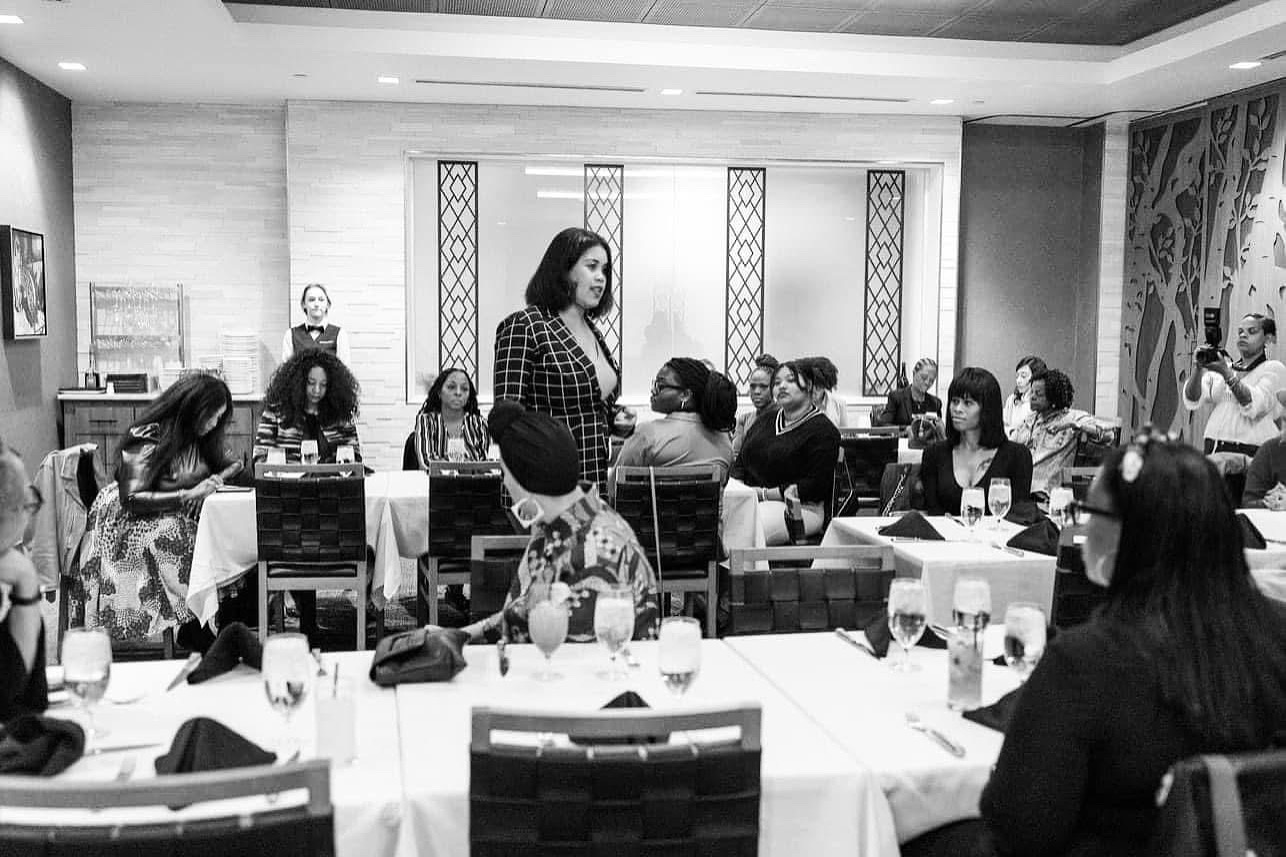
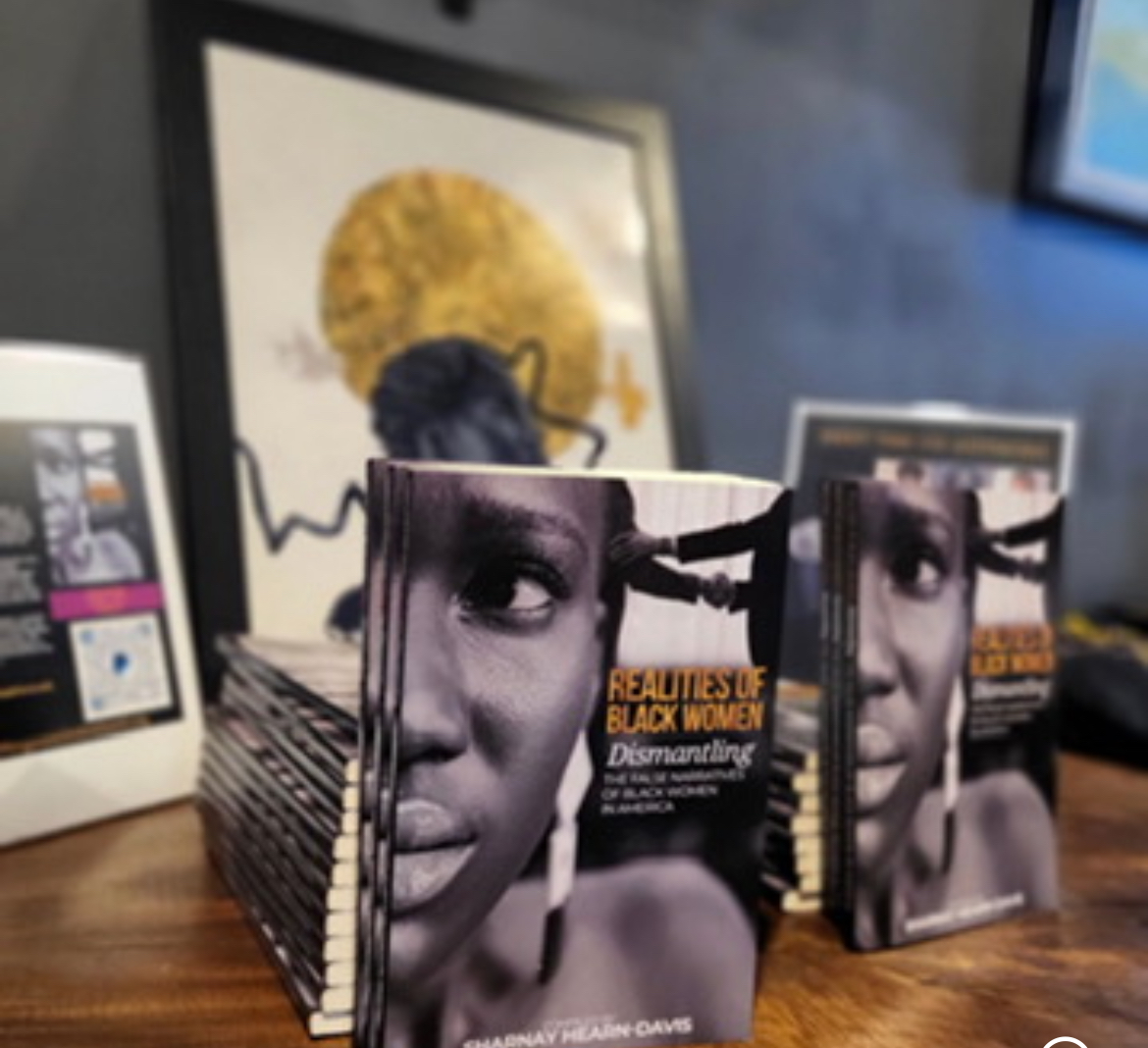
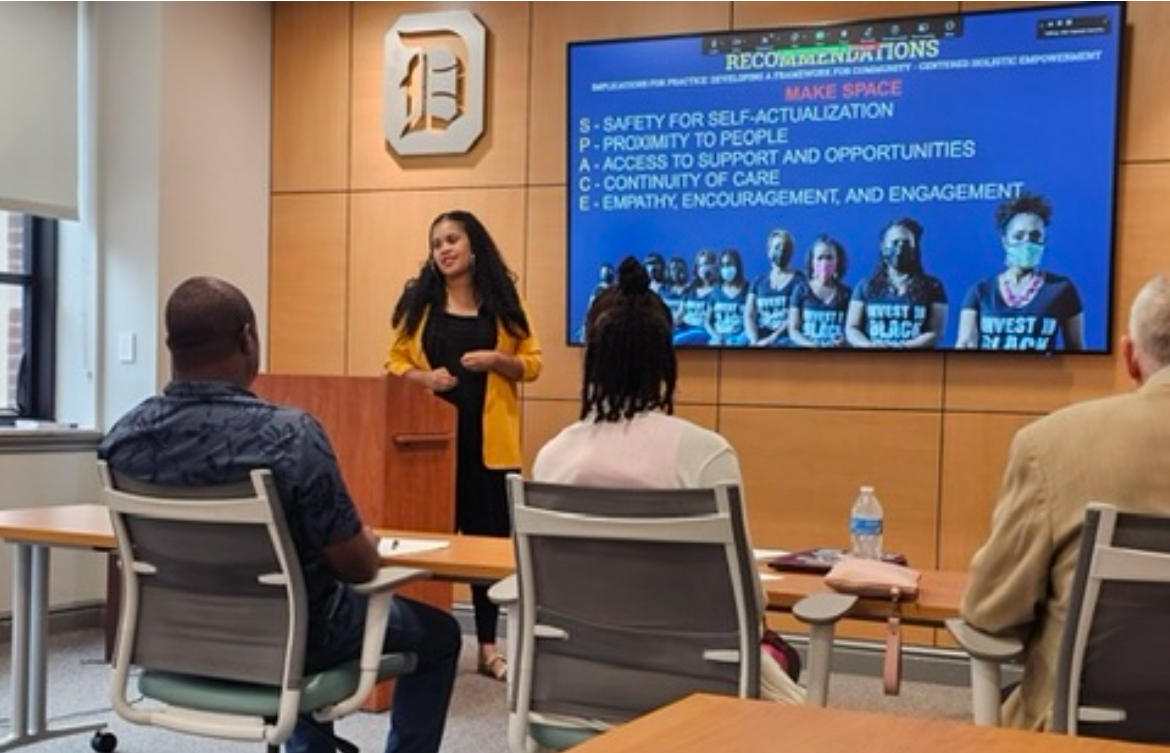
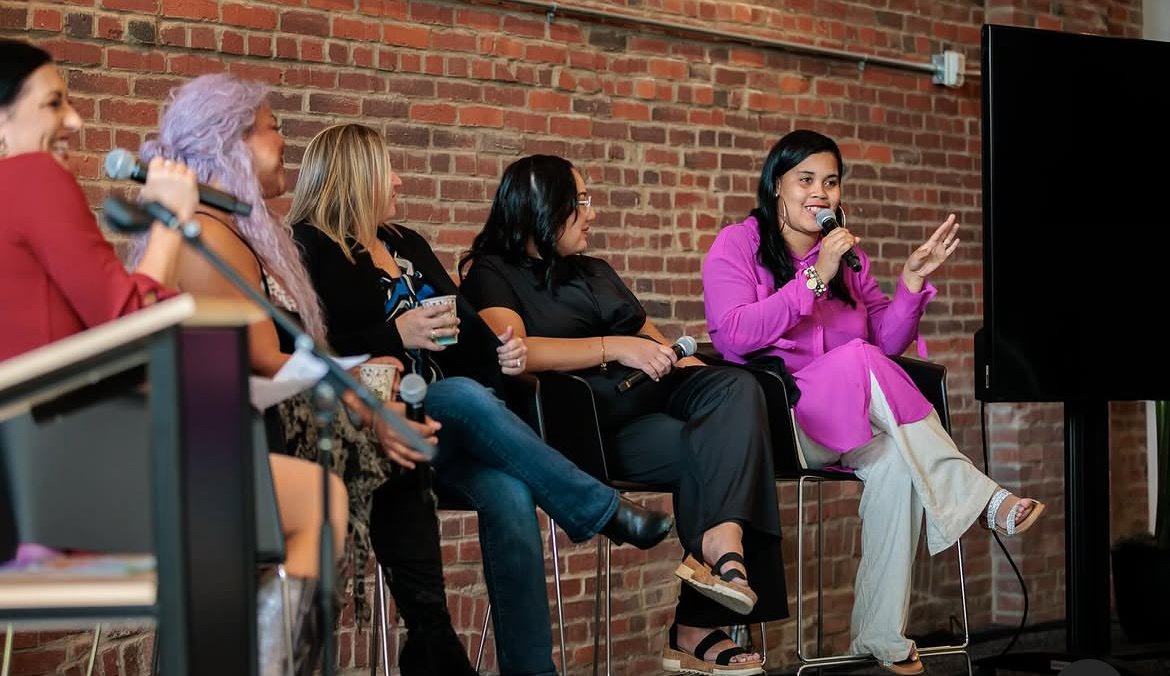
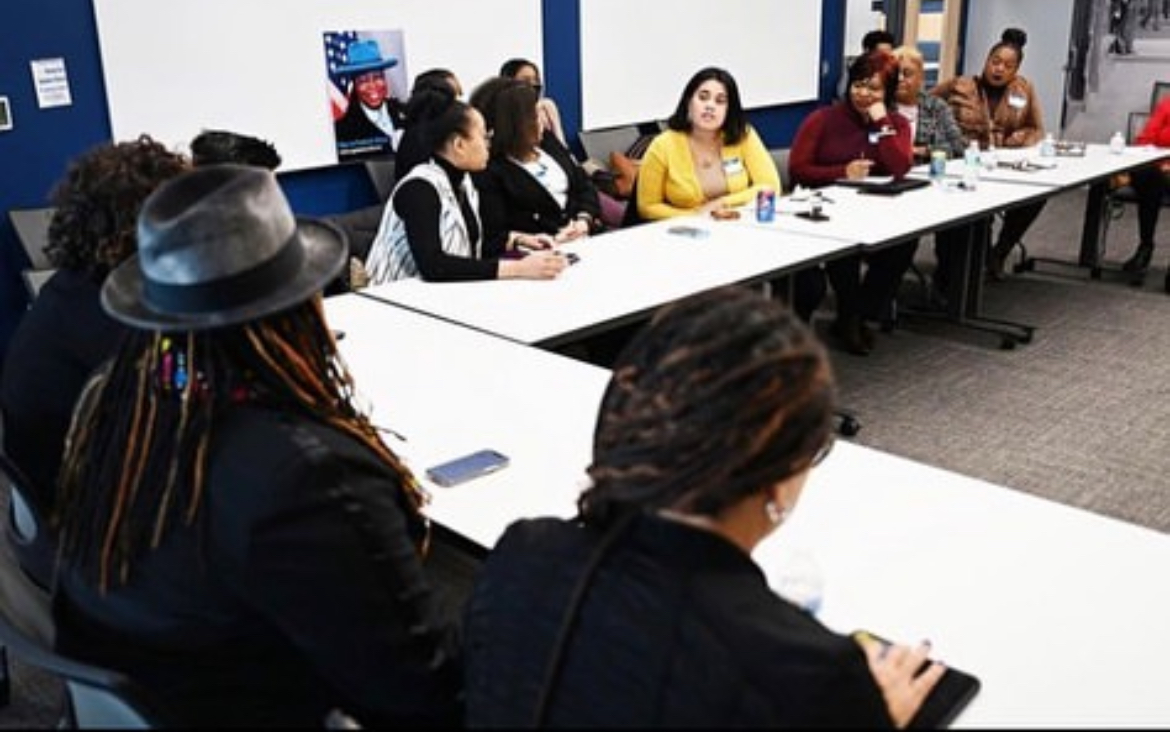
Image Credits
Ray Carrington
Chad Isaiah
Popular
-

Portraits of the Valley
-

LA’s Most Inspiring Stories
-

Greg Hex Is Turning the Everyday Kitchen Knife Into a Modern Design Object
-

Rick Norris Learned That Building a Successful Business Means Building a Life You Actually Want to Live
-

How Olivia Rush Turned Survival Into a Mission to Help Others Keep Going
-

How Bibi Goldstein Is Helping Entrepreneurs Reclaim Their Time by Embracing the Power of Delegation


