




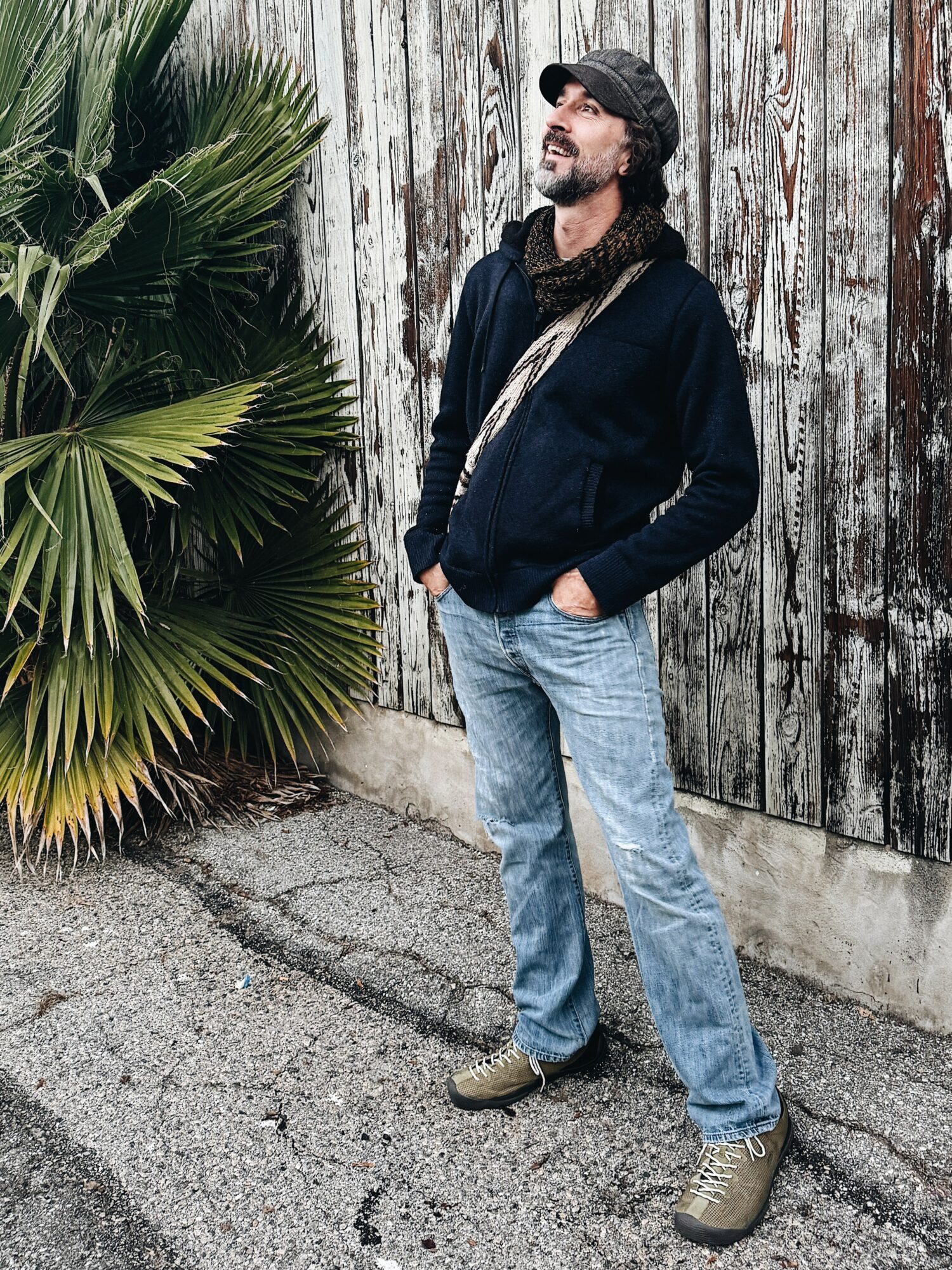
Today we’d like to introduce you to Andres.
Hi Andres, thanks for sharing your story with us. To start, maybe you can tell our readers some of your backstory.
Los Angeles. This city has been my playground and laboratory for understanding what’s possible when you commit to creative exploration and intercultural dialogue. I moved here from Colombia 25 years ago, timing my arrival with a seismic shift in the music business, back then when file sharing sites and mp3 players disrupted the old model of physical sales. In this climate, my first attempts at breaking through in music were met with the cold shoulder of an industry in crisis. But slowly and patiently pulling at the loose ends of that knot, I started to find an independent path that would grant me the freedom I wanted.
Learning DIY-production was a clear step in the right direction, as was expanding my network of collaborators, musicians, and artists, and Los Angeles proved a fertile ground for this approach. Naturally, figuring out a working business model to finance my projects and make a living was a central preoccupation of mine, and one that threads through my story.
For nearly two decades, I’ve worked as an educator. Most recently, as Director of Arts & Environmental Programs at Seven Arrows Elementary, where I’ve had the privilege of exploring how we can teach children to understand their relationship with the natural world and intersecting this with music, storytelling and art. I’ve maintained an active musical career throughout it all, releasing music as a solo artist under the name Caminante, and with other bands and projects, notably La Cienaga Collective and L’équipe Tambora.
Due to a lifelong interest and my family’s involvement, themes of conservation and the environment, as well as cultural causes related to the indigenous communities of Colombia, have always been part of my life. However, it wasn’t until I got involved with the Malibu-based organization Creative Visions, and learned about their great work supporting creative activism, that I started to incorporate that aspect of my life into my art, my expression and my vision for the future.
I founded MUSÉ Intercultural, an organization that uses storytelling, music and art as a platform for intercultural dialogue. At MUSÉ, we believe that intercultural dialogue is a way to find new solutions for humanity’s biggest challenges. With this ulterior motivation, I set out to promote an authentic nexus between the Sierra Nevada de Santa Marta and Los Angeles. The benefits of a genuine dialogue between the ancestral wisdom of the indigenous communities I was close to in those mystical mountains on Colombia’s north Caribbean shore, and the community of the city of angels became my calling. I would dedicate my life to bridging the creativity and spiritual curiosity I knew in LA, and the uniquely powerful ancestral wisdom that the Arhuacos, Koguis and Wiwas had delivered to humanity into the XXI Century.
I came onboard as a cultural liaison for the curatorial team from LACMA, as they prepared an exhibition that would be called: The Portable Universe / El Universo en Tus Manos: Thought and Splendor of Indigenous Colombia, in 2022. We travelled together to the Sierra Nevada de Santa Marta five times in the three years leading up to the exhibition, visiting indigenous communities and having conversations that explored the questions they set out to answer. It was in this context that I had the privilege of meeting my childhood hero—Ernesto “Teto” Ocampo. I sought him out and introduced him to the curatorial team, knowing his story would greatly enrich LACMA’s exhibition. We became close friends through this collaboration, and through our travels.
Teto is a legendary figure in Colombian music. In the 1990s, alongside Carlos Vives, he was part of a musical revolution that fundamentally changed the sound of Colombian music by blending traditional folklore with rock and roll. A musical prodigy and cultural sponge, Teto grew up surrounded by all sorts of music, including Colombian folkloric rhythms as well as jazz, rock, classical and world music.
When I first arrived in LA, I studied music at Musicians Institute in Hollywood. I had learned about this music school by reading about Teto in a Colombian magazine. He had studied guitar there in 1989. When I found myself working with Teto and in LACMA’s exhibition, I had the opportunity to tell him how he had so significantly influenced my life. This shared experience became one of many bonding points between us.
Our conversations went beyond the scope of LACMA’s exhibition as we began to discuss how intercultural music could enrich the collective understanding of music and its meaning, not just for us as artists, but for humanity. In essence, we saw intercultural dialogue as a sure way of expanding our horizons.
Right as we were reaching an inflection point in the development of our project, an unexpected turn of events placed me on a hospital bed. I suffered an ischemic stroke. From the hospital I called Teto to inform him of what had happened to me and, and as a horrible coincidence, Teto himself was checking into the hospital. Soon he would be diagnosed with an aggressive lung cancer, and within months, he was gone.
Before he passed, I made him a promise: I would continue our work. As a genuine commitment to the vision we had developed together. That promise has become the driving force of everything I’m doing now. It’s shaped MUSÉ Intercultural’s direction, and it’s about to bear fruit in ways that feel both honoring to Teto’s memory and genuinely visionary for the future.
Through Creative Visions, we found support from the Students Rebuild Campaign. In 2026, we will be releasing an album of modern electronic intercultural music, Zamayuna.
Each track on the album is based on arrangements of ancestral melodies that Teto published, where he brought his tremendous mastery of Western music into deep dialogue with indigenous and ancestral traditions. Along with my partner in this project, Jose Castillo of Astropical, we have invited artists with a deep sensibility to participate. Simón Mejía, one of the founding members of Bomba Estéreo, is the artist behind our first single, “Mochila,”.
The goal with Zamayuna is to show how contemporary artists at the vanguard of culture can find a deep well of inspiration in ancestral culture.
I’m the executive producer of the project, and I am proud to have found the way of earning support for our genuine cultural mission and work in partnership with the indigenous communities, while supporting independent music production and generating a commercially viable product that I hope will find an audience.
I’m sure it wasn’t obstacle-free, but would you say the journey has been fairly smooth so far?
It hasn’t been a smooth ride, of course, but it has been beautiful. I mentioned the stroke I suffered in 2023. The first big lesson from that experience is one of deep gratitude—gratitude for my wife, whose quick thinking and presence of mind literally saved my life, and gratitude for the superb medical care I received. The healthcare professionals at St. Johns treated me with excellence and compassion. Then, through physical therapy I made a full recovery.
But in that moment, lying in a hospital bed, I confronted something fundamental about existence: life is fragile. We’re here for such a brief moment. The stroke gave me the urgency of being focused on my true mission, and not postponing the work that feels most essential.
To provide for my family, I have sustained full-time employment, having to adhere to the rhythm of a working life, which popular wisdom suggests is not fully compatible with the needs of an artist. A challenge, but certainly a blessing.
At the moment, I feel like I am holding my breath with the political situation in the Caribbean. I’m hoping the situation does not escalate further, and that our elder brothers in the Sierra Nevada continue to thrive in their sacred mountain, and that the progress that has taken decades to foster does not get washed away in a wider conflict with the United States.
Thanks for sharing that. So, maybe next you can tell us a bit more about your work?
I work at the intersection of music, culture, education, and environmental conservation, and in particular as a bridge between Los Angeles and Colombia. I imbue everything I do with a curiosity and attention, always coming back to a fundamental question: How can we find the power in our relationships with each other, with the natural world, and with the deeper dimensions of what it means to be human?
As a cultural curator, I’m dedicated to creating spaces where ancestral wisdom can be heard, honored, and engaged with by modern audiences. I’m interested in exploring how different cultures can genuinely converse with each other and what new horizons can be unlocked through intercultural dialogue.
What I’m most proud of is the relationships I have cultivated. First and foremost my family; my wife and two daughters, and my mother who lives with us in Santa Monica. A wider constellation of friends and family spanning Colombia and Los Angeles, and other places around the world. I’m proud of the trust we’ve built with indigenous communities in the Sierra Nevada as well as with the community of Santa Monica, Pacific Palisades and greater LA. I’m proud of the support we’ve received from Creative Visions Foundation and Students Rebuild Campaign, which validates that this work resonates and matters.
I have integrated environmental conservation with arts education in ways that actually transform how young people see themselves and their capacity to affect the world. And I’m genuinely proud that we’re creating pathways for musicians who may have exhausted the possibilities of deepening their practice through Western musical methods alone to find tremendous expansive growth by engaging with ancestral music.
I am proud of my songwriting. The songs I make explore my world and reflect who I am. They go from Spanish to English within the same verse, they draw from the blues and cumbia, as historical cousins from our American continent.
From a young age, I recognized that people around me were my teachers and that it was my unique privilege to soak up all their experiences. My childhood memories are filled with moments of listening to my grandfather and his friends tell stories about their adventures.
I also think I have a particular way of seeing how things are interconnected. My life has always taken me to places and situations at the edge between different worlds. That ability to see connections and to build things based on those connections—I think that’s distinctive.
Can you talk to us a bit about the role of luck?
I’ve been very lucky. I’ve spent nights at sea, encountered marvelous creatures in their natural habitats, and traveled to remote places. My two daughters are healthy and strong, and they’ve had the privilege of attending excellent schools in Los Angeles. I was born into a family of explorers and conservationists who inspired me and supported me throughout my life. I have played on international stages, and I’ve sat in with master musicians from Studio City and Silverlake, to the Sierra Nevada and Barranquilla. That’s tremendous luck. The people I have met, the beautiful sunsets.
Contact Info:
- Website: https://www.museintercultural.org/
- Instagram: https://www.instagram.com/andresospina.caminante/
- Youtube: https://www.youtube.com/@caminantedelviento
- Other: https://open.spotify.com/artist/2b8mmv3qJp6RNLEZrdhw5v?si=ySTROfICR9OxL8N51Thn-w
Popular
-

Que Johnson on Building Brands That Last: From Visibility to True Market Authority
-

Christina Wren Steps Into the Director’s Chair to Tell Stories That Feel Like Home
-

Portraits of the Valley
-

LA’s Most Inspiring Stories
-

JordanL on ‘Breathe,’ Belief, and Building a Movement Beyond the Music
-

Megan Birney Rudert on How Access to Light Is Powering a More Sustainable and Equitable Future


