




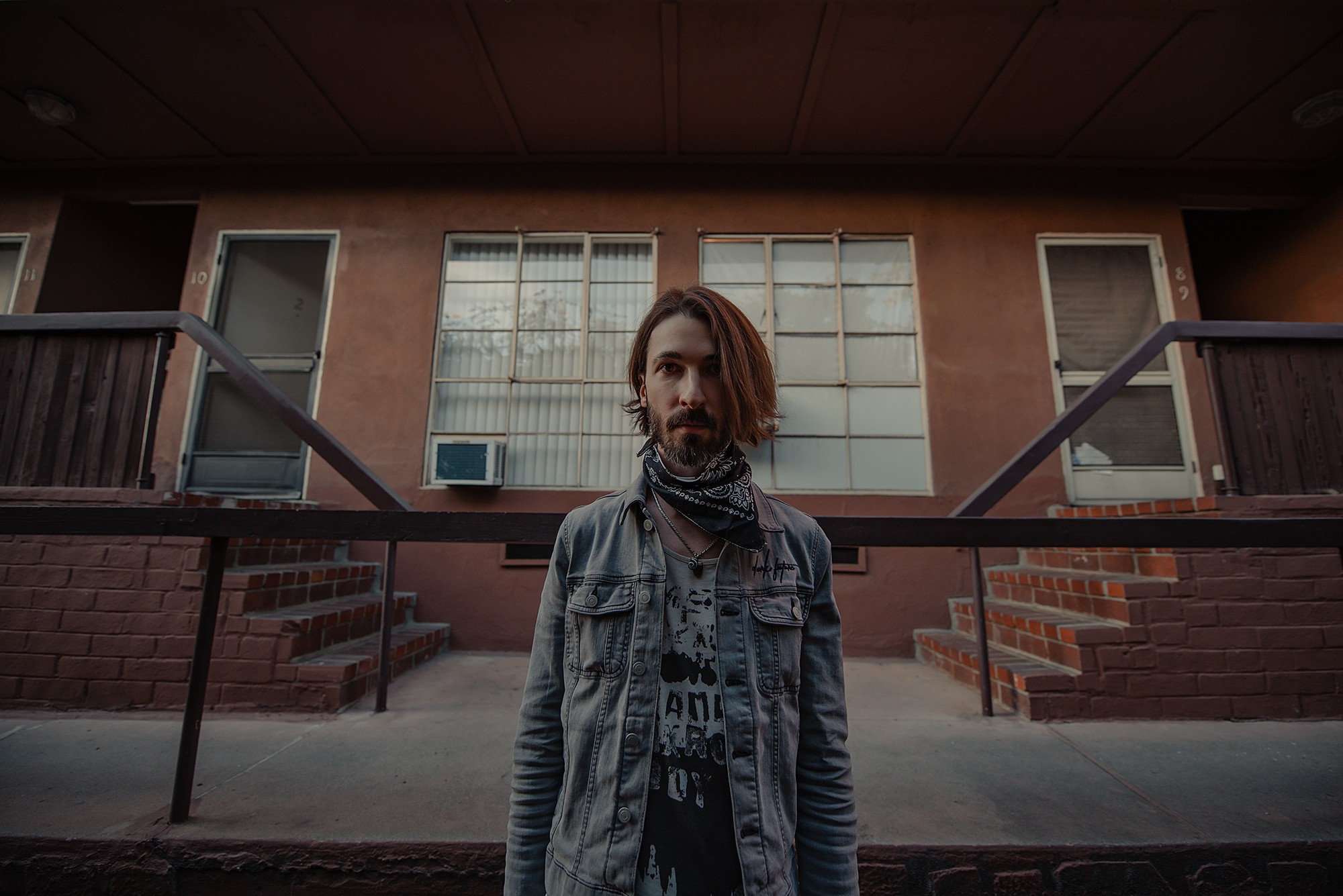
Today we’d like to introduce you to Alex Pratsyuk.
Hi Alex, so excited to have you with us today. What can you tell us about your story?
My path into music and audio has been anything but linear. I’ve always been drawn to creating things, figuring out how things work, and finding ways to turn ideas into something tangible. Music eventually became the place where all of those interests came together.
I was born in Ukraine and moved with my family to Canada when I was a teenager, eventually growing up in Toronto. Even before music became a major part of my life, I was always fascinated by technology. I was the kid who was constantly interested in computers, electronics, and figuring out how things worked.
Music eventually took over. I was already listening to a wide range of music, from metal and rock to pop, but discovering Nirvana’s *Nevermind* completely changed the way I thought about the guitar. I became obsessed with the alternative and grunge music coming out of Seattle and started playing guitar seriously. My first guitar was a black Squier Stratocaster, and once I started learning, I played constantly. I would spend as much time as I could playing and learning songs. In high school, there was also a small music scene where students could stay after class, use the auditorium, and rehearse or just make a lot of noise together. I loved that.
Eventually I wanted to pursue music more seriously, so I moved to Los Angeles and attended Musicians Institute. I initially studied guitar performance, but I also studied audio engineering. The transition into audio felt surprisingly natural. I was already a musician, and I had always loved technology, so learning about microphones, recording equipment, audio systems, and the technical side of making records brought those two interests together in a way that really clicked for me.
After graduating from Musicians Institute, I started working at a professional recording studio in Los Angeles. There wasn’t really a grand plan behind it. I was looking for a way to stay involved in music and make a living, and audio engineering gradually became the path that made the most sense.
Working in studios became a huge part of my education. I had the opportunity to work alongside many different artists, producers, and engineers, and every session taught me something different about recording, music, people, and the creative process. Over time, I gradually moved from assisting into doing more of my own recording, production, mixing, and mastering work. Because I had already been recording myself for years, becoming an engineer and producer was less of a sudden transition and more of a gradual evolution.
One thing that has remained consistent throughout all of this is curiosity. I’ve never been particularly interested in staying inside one defined job description. If there’s something I don’t understand, I want to learn it. If there’s a problem, I want to figure out how to solve it. If I have an idea, I generally want to understand how to actually build it. That curiosity has led me to teach myself a lot of things outside of traditional audio engineering, from technology and systems to building tools and solving problems that come up in creative environments. It has become a useful part of how I approach my work, even though music is always at the center of it.
Alongside engineering and production, I’ve always continued making my own music. Being a musician and recording artist has also given me a deeper understanding of the creative process and of what goes into turning an idea into a finished recording. I’ve also spent time recording meditation music, singing bowls, and other unique sound healing instruments, which has given me the opportunity to explore a very different side of sound and recording.
Looking back, I don’t really see myself as one thing. I’ve always followed whatever aspect of music and technology I was most curious about at the time, and one thing naturally led to another. I started with a guitar, became fascinated by recording, and eventually found myself involved in almost every part of the process of turning an idea into a finished piece of music.
Today, my work sits at the intersection of music, recording, production, technology, and creativity, but ultimately it all comes back to sound. Whether I’m writing, recording, producing, mixing, or working through the technical side of a project, I’m interested in how an idea becomes something you can actually hear and experience. That process is still what keeps me interested, and I’m still learning, experimenting, and trying to understand where it can lead.
Alright, so let’s dig a little deeper into the story – has it been an easy path overall and if not, what were the challenges you’ve had to overcome?
It definitely hasn’t been a smooth road, although I don’t think most creative careers are. A lot of the difficulty has come from the realities of trying to build a long-term career in music and audio while dealing with irregular schedules, long hours, constant changes, and the pressure to keep creating at the same time. Sessions come and go, schedules change, and building something sustainable takes time.
The hours can also be extreme, and the work can consume a lot of your personal time. It can be difficult to balance working on other people’s projects with finding the time and energy to develop your own creative work.
I’m also naturally pretty introverted, so networking and putting myself out there hasn’t always come naturally to me. A lot of the music industry is built around relationships, collaboration, and simply being willing to meet people and stay connected, so that’s something I’ve had to learn over time.
There have definitely been periods where the combination of demanding schedules and trying to keep moving creatively has been difficult. But I think those experiences have also taught me to be adaptable. The industry is constantly changing, and working in music and audio requires a willingness to change with it. There isn’t necessarily a straight path through this kind of career, and I’ve learned not to expect one. You have to keep finding ways to make things work, keep learning, and be willing to rethink what you’re doing when something no longer works. I think one of the biggest things I’ve learned is that persistence isn’t necessarily about following the same path no matter what. Sometimes it’s about being willing to change the path while continuing toward what matters to you.
Can you tell our readers more about what you do and what you think sets you apart from others?
My work spans several areas of audio and music. I work as a recording, mixing, and mastering engineer, producer, and musician, and I’ve spent a large part of my career working in professional recording studios. I also work on more specialized projects involving meditation music, singing bowls, gongs, and other unusual acoustic instruments, which has become an interesting part of what I do.
I don’t really think of myself as being known for one specific thing, and I’ve never been very interested in defining myself too narrowly. I’m probably most proud of being able to work across different kinds of projects and different parts of the process, from recording and production to mixing, mastering, and the technical side of audio. For me, the common thread is sound itself and finding the right approach for whatever the project needs.
We’d be interested to hear your thoughts on luck and what role, if any, you feel it’s played for you?
I’m not sure I think about luck in the traditional sense. I tend to think more in terms of timing, alignment, and being in the right place at the right time. There have definitely been people, opportunities, and situations that entered my life at exactly the right moment, and you could certainly call some of that luck.
At the same time, I think you have to be moving in a direction for those moments to mean anything. An opportunity can appear, but you still have to recognize it, be prepared for it, and decide what to do with it. Some of the most important things in my life probably came from a combination of circumstances I couldn’t control and decisions I made along the way.
So I’d say luck has played a role, but I see it less as random good or bad fortune and more as those moments when timing, preparation, and direction happen to line up.
Contact Info:
- Website: https://www.lexxenbourg.com
- Instagram: @lexxenbourg


Popular
-

Greg Hex Is Turning the Everyday Kitchen Knife Into a Modern Design Object
-

Portraits of the Valley
-

LA’s Most Inspiring Stories
-

Rick Norris Learned That Building a Successful Business Means Building a Life You Actually Want to Live
-

How Olivia Rush Turned Survival Into a Mission to Help Others Keep Going
-

How Bibi Goldstein Is Helping Entrepreneurs Reclaim Their Time by Embracing the Power of Delegation


